Kim Jong Un Reappointed President of North Korea's State Affairs

Kim Jong Un Reappointed President of North Korea's State Affairs
North Korea reelects Kim Jong Un to lead the State Affairs Commission, with analysts calling the ceremony choreographed and vows to cement an irreversible nuclear status.
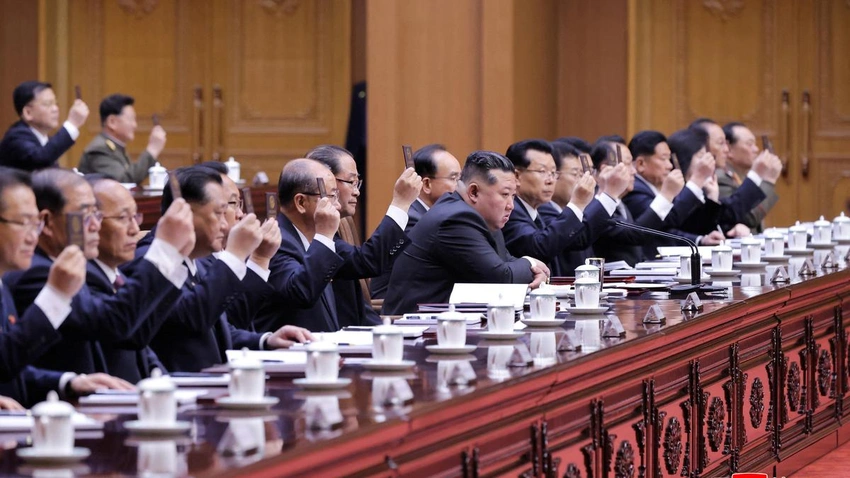
North Korea's rubber-stamp legislature has re-elected Kim Jong Un as President of State Affairs, the top post shaping the country’s governance and policy direction. The announcement, made by state media, confirms Kim’s leadership of the State Affairs Commission for the 15th term, following a tightly choreographed session that critics say aims to project legitimacy on a pre-determined outcome. The election saw 687 deputies approved to the Supreme People’s Assembly (SPA) in advance of the vote, with turnout reported at 99.99% and the sole candidate receiving 99.93% in favour and 0.07% against. Photographs released by state media depicted Kim in a formal western suit, flanked by senior officials as two grand statues of his father and grandfather watched over the proceedings.
Analysts have long described such ceremonies as symbolic displays designed to legitimize the regime’s authority rather than to invite genuine political change. The events in Pyongyang are typically accompanied by broad state media coverage and high turnout figures that emphasize unity and a shared national purpose, even as real policy choices are concentrated within the ruling party and the leadership circles.
In a related line of messaging, Kim Jong Un has reiterated North Korea’s commitment to an irreversible nuclear status, framing the South as a hostile state in the process. He has vowed to bolster security and sovereignty, a stance that continues to complicate regional diplomacy. Analysts note that Seoul’s role as a mediator has diminished in Kim’s calculus, reflecting broader aims to assert North Korea’s regional influence and deter perceived external threats. The overall dynamic underscores the regime’s preference for signaling strength and continuity over policy shifts that could invite external scrutiny or negotiation.
The juxtaposition of the ceremonial SPA vote with incendiary rhetoric about the South underscores the regime’s approach: project unity at home while positioning North Korea as an indivisible, nuclear-armed state on the world stage. For observers, the event signals stability at the top, but uncertainty remains about how this will translate into future diplomacy, economic conditions, and regional security.
