Youth Job Crisis? Over 50% in 2 Odisha Districts Face NEET Challenge

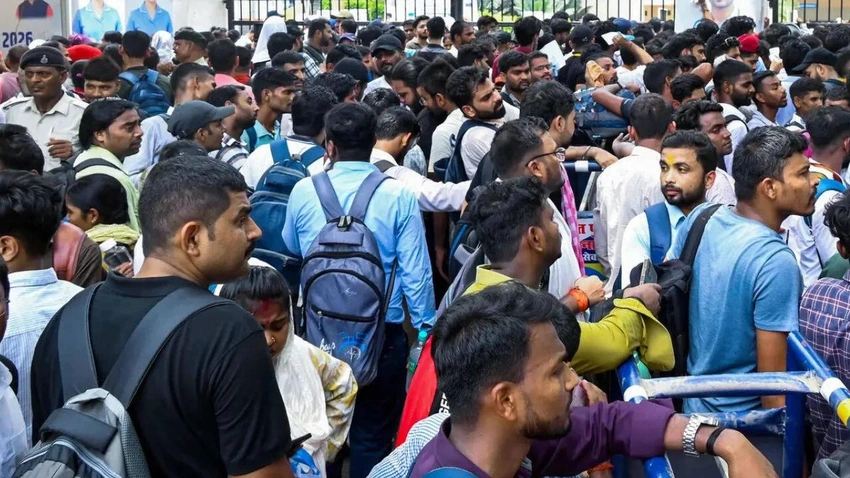
Youth Job Crisis? Over 50% in 2 Odisha Districts Face NEET Challenge
Alarming data reveals over half of young people in Anugul and Kendrapara, Odisha, are NEET (Not in Employment, Education, or Training). Discover the nationwide picture and what this means for India's youth.
Startling new figures from the statistics ministry reveal a significant challenge facing India's youth. More than half of young people, aged 15 to 29 years, in two districts of Odisha were neither employed nor pursuing education or training in 2025. This group is officially referred to as 'NEET' (Not in Employment, Education, or Training).
Anugul district in Odisha holds the unenviable top spot nationally, with a staggering 56.1% of its youth falling into the NEET category. Kendrapara, another district in Odisha, closely follows at 51.4%. Dhenkanal, also from Odisha, ranks third with 45.3%.
This data, based on the Periodic Labour Force Survey for 2025, highlights pockets of severe disengagement among young people.
The NEET indicator is considered a more robust measure of youth vulnerability than the traditional unemployment rate. It captures a broader group of young individuals who are disconnected from both the labor market and educational pathways. The all-India NEET rate among youngsters in 2025 was 25%, indicating a widespread issue.
A NITI Aayog report from last month further pointed out that around 8.7 crore Indians aged 15 to 29 were not studying, working, or undergoing training in 2021.
While Odisha features prominently at the top of the NEET list, it also presents a remarkable success story. Nabarangapur, yet another district in Odisha, recorded the lowest share of youth not in employment, education, or training in the entire country, at just 4.1%. Nabarangapur also boasted the second-highest Labour Force Participation Rate nationally, at 85.4%, showcasing a stark contrast within the same state.
Looking at the broader national landscape, the situation is particularly acute in some states.
Bihar leads with 81% of its districts reporting a youth NEET share of more than 25%.
West Bengal is second at 75%, followed by Haryana and Andhra Pradesh tied at 70%, and Uttar Pradesh at 69%.
In contrast, states like Rajasthan and Maharashtra showed more positive trends, with only 17% of their districts exceeding the 25% NEET mark.
Out of 566 districts for which data was released, 251 had at least a quarter of their young population in the NEET category. Only 18 districts managed to keep their youth NEET rate below 10%. These figures underscore the urgent need for targeted interventions and policy adjustments to better integrate young people into the workforce and educational systems across the nation.

Login to comment.
No thots yet. Be the first to share your thoughts!