AI Agents: Is Your Digital Life Ready for the Autonomous Revolution?

AI Agents: Is Your Digital Life Ready for the Autonomous Revolution?
OpenAI's latest push with ChatGPT Work is putting AI agents directly into your daily digital grind. But how much control are you truly willing to give a machine?
We're standing at the precipice of a monumental shift in how we interact with technology. Forget chatbots that just answer questions; we're now talking about AI agents ready to take the reins of your digital life. The real question is: are you prepared to hand over the keys?
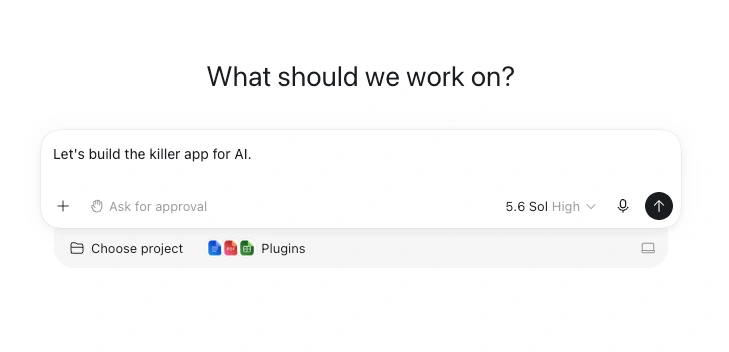
OpenAI, a name synonymous with cutting-edge artificial intelligence, is making a serious bet on this future with their latest offering, ChatGPT Work. Released last month for just $20 a month (on their lowest subscription tier), this isn't just another tool; it’s a mission to bring AI agents from the specialized domain of software engineers to everyone.
Imagine an AI that isn't just an assistant but a proactive partner. Andrew Ambrosino, lead engineer for OpenAI's desktop app, is already living this future. His app, for instance, has deep access and control over his inbox, Slack account, phone, and critical applications like Notion and Figma.
When asked about the risks, like an AI potentially pulling private DMs for a document, Ambrosino acknowledges the possibility but says, “
I'll do it for the job. I will take the personal hit here and there if I have to. And I haven't had to.
” That's a level of trust that raises eyebrows, but it also underscores the commitment to pushing these boundaries.
Beyond Questions: The Era of Autonomous Tasks
The core of this revolution lies in transitioning AI from a 'question-answering' machine to a 'multi-step project completer.' OpenAI’s marketing puts it succinctly: envision “a world where intelligence goes beyond answering questions to helping everyone turn their biggest ideas into reality.”
For software developers, autonomous agents have been a game-changer, often built on modified versions of tools like OpenAI's Codex. But the goal with ChatGPT Work is to democratize this power. It's about equipping white-collar workers, accountants, investors, doctors, and myriad others whose days are dictated by their computers, with AI agents that can hook into their existing digital workflows and execute complex tasks autonomously.
Thibault Sottiaux, who spearheads OpenAI’s core product work, including Work, puts it plainly: “
In this new factor, ChatGPT can actually do entire, very complicated tasks for you all autonomously in a way that is delightful and safe.
” This isn't about simple automation; it's about intelligent, self-directed task completion.
What Does This Mean for You?
The implications are vast. While concerns about data privacy and the potential for AI overreach are valid and must be addressed rigorously, the promise of unprecedented efficiency is hard to ignore. We're talking about an AI that can manage your calendar, draft emails, organize your notes, and even contribute to creative projects, all by understanding context and intent, not just commands.
It's a bold vision, one that demands a new level of trust in our digital tools. But if OpenAI succeeds, the ubiquity of specialized AI agents could truly transform every industry, fundamentally changing how we work, create, and innovate. The future of work isn't just augmented by AI; it's being redefined by it.
