BRICS to Tackle Global Threats: India Pledges Stronger Security Cooperation

BRICS to Tackle Global Threats: India Pledges Stronger Security Cooperation
India, under its upcoming BRICS chairmanship, commits to enhancing global security, countering terrorism, and addressing cyber threats. NSAs meet in New Delhi to discuss critical challenges, including emerging technologi
Prime Minister Narendra Modi announced on Tuesday, June 23, 2026, that India's leadership of the BRICS grouping will significantly boost the priorities of the Global South. Addressing the National Security Advisers (NSAs) of BRICS member-countries in New Delhi, Mr. Modi emphasized BRICS's crucial role in tackling pressing global issues such as terrorism, cyber security, and other shared challenges.
"In a challenging global landscape, BRICS has a vital role in deepening security cooperation and addressing shared challenges, from terrorism and cyber security to emerging technologies," Mr. Modi stated. He added that India’s chairmanship would strive to advance practical cooperation, support the Global South's objectives, and contribute to a safer, more secure, and inclusive world.
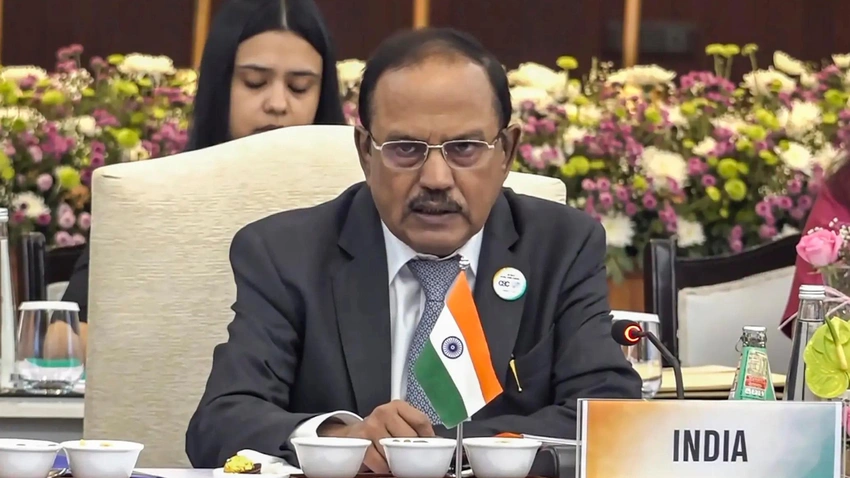
The two-day meeting, held from June 22, saw delegates engage in extensive discussions on critical areas including energy and food security, supply chain disruptions, the use of emerging technologies by terrorist networks, cyber security, and climate-induced instability. The Ministry of External Affairs (MEA) confirmed that member-states expressed their full support for India’s BRICS chairship in 2026, under the theme: “Building for Resilience, Innovation, Cooperation and Sustainability.”
On the sidelines of the main meeting, India’s National Security Adviser, Ajit Doval, held a bilateral meeting with his Russian counterpart, Secretary of the Security Council of the Russian Federation, Sergei Shoigu, to review ongoing bilateral projects.
Meanwhile, in a related development, NSA Ajit Doval expressed "cautious optimism" regarding a potential US-Iran Memorandum of Understanding (MoU), hoping it would restore regional stability and strengthen energy security. He highlighted the potential for easing global supply chain disruptions and improving economic prosperity through the Strait of Hormuz. Doval also cautioned about the world's complex security landscape and the weakening of multilateral institutions, emphasizing BRICS's role in fostering a multipolar order and cooperation among emerging economies.
The meeting also witnessed some tense moments when delegates from the UAE and Iran clashed over the conflict in the Gulf. Ghadir Nezamipour, head of the Iranian delegation, accused: “Attacks were launched from bases located on the territory of the United Arab Emirates.” He further expressed hope that the UAE would “respect the principles of good neighbourliness and choose the path of peace, stability, and regional cooperation.”
