Paris Paloma's AI Warning: Are We Losing Art's Soul to Machines?
Paris Paloma's AI Warning: Are We Losing Art's Soul to Machines?
Indie-folk sensation Paris Paloma recently made a powerful statement on AI's impact on art, urging fans to support human creativity. Is AI a creative tool or a threat to artistic integrity?
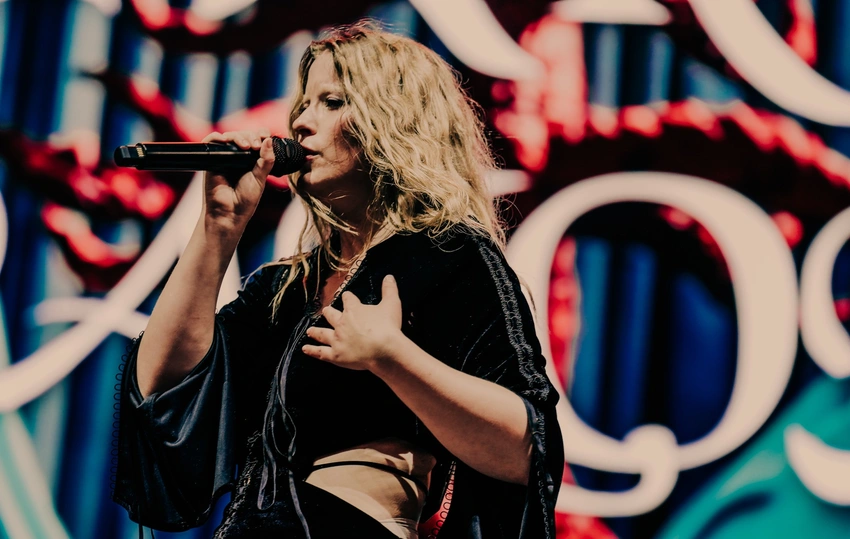
Let’s be real: the conversation around AI in creative fields is heating up, and artists are increasingly making their voices heard. At Bilbao BBK Live 2026, the stage became a platform for one such compelling message, delivered by indie-folk singer-songwriter Paris Paloma.
Performing on the San Miguel stage, Paloma didn't mince words. Before launching into her recent single 'Miyazaki', a track explicitly written about the value of human artists and her disdain for AI art, she passionately declared,
This next song I wrote about how much I value human artists and how much I hate AI art. If you value art and you want to support artists, don't fucking use AI because it sucks.
It's a bold stance, yet one that resonates with a growing number of creators across disciplines. For many, AI isn't just a new tool; it's a potential existential threat. The concern isn't simply about job displacement, but about the very soul of art.
Can an algorithm truly replicate the lived experience, the raw emotion, the unique perspective that fuels human creativity? Paloma's 'Miyazaki', named after the legendary Studio Ghibli director Hayao Miyazaki, a titan of hand-drawn animation, highlights this distinction beautifully.
Paloma's artistry frequently tackles topical issues, reflecting a deep engagement with the human experience. During the same set, she called out figures like “Elon Musk, Andrew Tate and all those other losers” before her track 'Good Boy,' which critically addresses the 'manosphere.' This context underlines her commitment to human values and social commentary through her work.
It's about the broader implications of technology and power dynamics on society and, by extension, on art.
Her dedication extends beyond the stage. This spring, Paloma pledged £1 from every ticket to her upcoming tour to Plan International UK, a charity doing “immensely important work for girls worldwide,” including ending period poverty and child marriage. It's a testament to her belief in supporting human causes and empowering real lives, a stark contrast to the abstract, often ethically murky waters of AI generation.
Her forthcoming second album, ‘The Fatal Flaw,’ set for release September 4, follows her impactful 2024 debut ‘Cacophony,’ which featured the viral hit ‘Labour.’ Paloma has spoken about her desire for her music to act as “a protective sphere in which to feel any emotions that need to be felt.” This intimate connection between artist and audience, forged through authentic human expression, is precisely what many fear AI could dilute or diminish. The question isn't whether AI can create something aesthetically pleasing, but whether it can create something truly felt.
So, is AI a creative tool or a threat?
Perhaps it's both. But as Paris Paloma reminds us, the choice to support and uplift human artists, with all their flaws, passion, and unique perspectives, remains firmly in our hands.
The future of artistic integrity might just depend on it.
