The Complete Guide to Low-Code Application Security in 2026

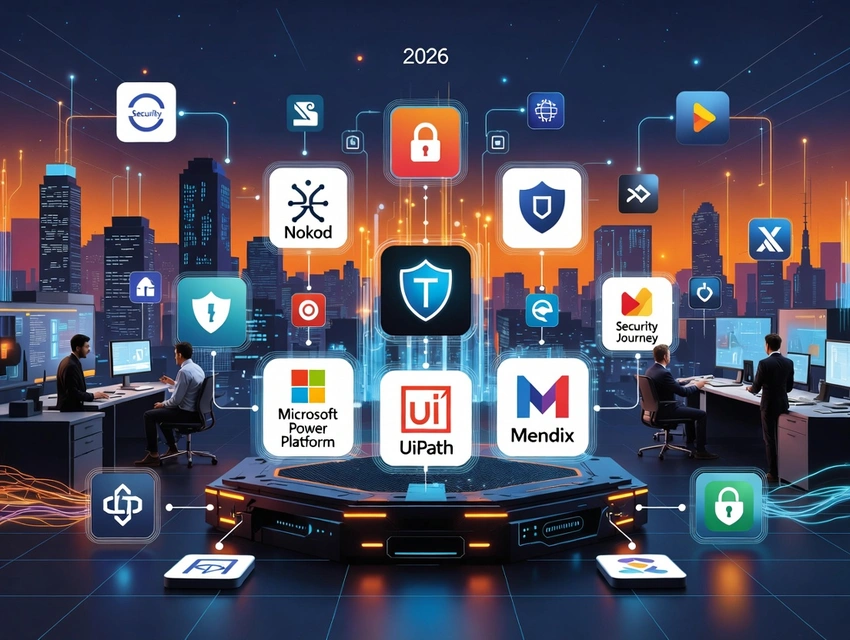
The Complete Guide to Low-Code Application Security in 2026
In the rapidly evolving digital landscape of 2026, low-code/no-code security platforms have transformed how enterprises build applications. According to Gartner, by 2026, around 75% of all new enterprise applications will be developed using low-code or no-code platforms, a significant leap from just 25% in 2020. This surge empowers citizen developers, non-IT professionals, to create solutions quickly, accelerating innovation and reducing dependency on traditional coding teams. However, this democratization of development introduces a profound security paradox: while LCNC platforms enable rapid application creation, they often create unprecedented security blind spots that traditional security measures struggle to address.
At the heart of this challenge is "shadow engineering," where applications are built outside the purview of centralized IT and security oversight. Citizen developers, driven by business needs, deploy apps using platforms like Microsoft Power Platform or ServiceNow without formal security reviews, leading to vulnerabilities that can expose sensitive data or enable cyber threats. Recent studies reveal that large enterprises now average over 10,000 citizen-developed apps per organization, many of which remain untracked and unsecured. This proliferation amplifies risks in areas such as data leakage, injection attacks, and over-privileged access, turning what was once a productivity boon into a potential liability for CISOs, Security Architects, IT Directors, and Compliance Officers.
Compounding the issue is the integration of AI-driven tools within LCNC environments, which further complicates governance. As organizations grapple with these dynamics, the need for robust LCNC governance and enterprise low code security becomes paramount. Without proper controls, the very tools designed to streamline operations can become vectors for breaches, regulatory non-compliance, and financial losses. This is where specialized no-code security platforms emerge as critical allies, offering visibility, automated remediation, and multi-platform support to bridge the gap between innovation and security.
This comprehensive guide serves as the definitive resource for navigating low code application security in 2026. Drawing on market analysis, vulnerability insights, and strategic frameworks, it equips security leaders with actionable knowledge to safeguard their LCNC ecosystems. We'll explore the market landscape, key vulnerabilities, comparative security approaches, enterprise strategies, and platform-specific considerations, all while emphasizing citizen developer security. By the end, you'll have a clear path to implementing effective controls that balance agility with protection, ensuring your organization thrives in this LCNC-dominated era.
The 2026 LCNC Market Landscape
The low-code/no-code (LCNC) market in 2026 is booming, driven by the demand for faster digital transformation amid talent shortages and economic pressures. According to Fortune Business Insights, the global low-code development platform market is projected to reach USD 48.91 billion in 2026, growing at a compound annual growth rate (CAGR) of 29.1% from previous years. This explosive growth reflects the shift toward democratized development, where businesses prioritize speed and accessibility over traditional coding complexities.
A key statistic underscoring this trend comes from Gartner: by 2026, 80% of low-code users will hail from non-IT departments, up from 60% in 2021. This rise of citizen developers, business analysts, marketers, and operations staff, enables organizations to address application backlogs efficiently. For instance, non-IT teams can now build custom workflows, dashboards, and integrations without waiting for overburdened IT resources, fostering innovation across sectors like finance, healthcare, and retail.
Major platforms dominate this ecosystem. Microsoft Power Platform leads with its suite of tools including Power Apps, Power Automate, and Copilot Studio, integrating seamlessly with Azure and Microsoft 365. UiPath excels in robotic process automation (RPA), automating repetitive tasks with low-code interfaces. ServiceNow's App Engine focuses on IT service management and workflow orchestration, while Salesforce's Lightning Platform emphasizes customer relationship management (CRM) extensions. Retool, meanwhile, caters to internal tool builders with its drag-and-drop interface for data-heavy applications. These platforms collectively support a hybrid model where professional developers enhance citizen-built apps, amplifying productivity.
However, this growth isn't without hurdles. Security concerns loom large, with surveys indicating that 25% of companies report significant security issues with LCNC apps, including data exposure and compliance gaps. These worries stem from the platforms' accessibility, which can lead to misconfigurations by inexperienced users. Gartner recommends the adoption of third-party security tools to mitigate LCNC risks, emphasizing the need for specialized solutions that provide visibility and governance without stifling creativity. Such tools are essential for enterprises managing sprawling LCNC portfolios, ensuring that rapid development doesn't compromise overall security posture.
In summary, the 2026 LCNC landscape is a double-edged sword: it promises unparalleled agility but demands proactive security measures. For CISOs and IT leaders, understanding this market means recognizing the interplay between innovation and risk, and investing in frameworks that support secure citizen development. As adoption accelerates, organizations that integrate robust enterprise low code security will gain a competitive edge, turning potential vulnerabilities into strengths.

Top Security Vulnerabilities in Low-Code Applications
Low-code applications, while accelerating development, introduce unique security vulnerabilities that differ from traditional coded software. These risks arise from the platforms' abstracted nature, where citizen developers may overlook complex configurations. Below, we delve into the top categories, with examples drawn from real-world scenarios, to help security leaders prioritize defenses in their LCNC governance strategies.
Data Leakage: One of the most prevalent issues is unintended exposure of sensitive data through oversharing or misconfigurations. In LCNC environments, users often connect apps to data sources like databases or cloud storage without proper access controls. For instance, a citizen developer might build a Power Apps form that inadvertently shares customer PII via public links or unencrypted APIs. This vulnerability is exacerbated in multi-tenant platforms, where default settings allow broad data access. According to industry reports, data leakage accounts for a significant portion of LCNC-related incidents, potentially leading to GDPR or HIPAA violations and hefty fines.
Injection Attacks: LCNC platforms are susceptible to injection flaws, such as SQL injection or OData injection, tailored to their query languages. Attackers can exploit input fields in apps built on platforms like Salesforce or ServiceNow by injecting malicious code that manipulates backend queries. A common example is an unvalidated search function in a Retool dashboard that allows OData filters to extract unauthorized records. These attacks bypass traditional defenses because LCNC tools often generate code automatically, without built-in sanitization for all scenarios. Citizen developer security is crucial here, as non-experts may not recognize the need for input validation.
Excess Permissions: Over-privileged connectors and service accounts pose another major risk. LCNC platforms rely on pre-built connectors to integrate with services like Azure AD or Google Workspace, but these often grant excessive permissions by default. For example, a UiPath automation might use a service account with full admin rights, enabling lateral movement if compromised. This "least privilege" violation is common in enterprise low code security, where citizen developers select connectors without understanding scope, leading to potential privilege escalation attacks.
Shadow Assets: Untracked applications created by citizen developers represent "shadow IT" on steroids. With enterprises averaging 10,000+ such apps, many evade central inventories, making them invisible to security teams. These assets can harbor outdated components or weak encryption, serving as entry points for threats. The lack of oversight in no-code security platforms amplifies this, as apps proliferate without approval workflows.
Supply Chain Risks: Malicious components from marketplaces like Microsoft's AppSource or UiPath Marketplace introduce supply chain vulnerabilities. Third-party templates or plugins may contain backdoors or unpatched flaws. A notable case is CVE-2023-36019, a spoofing vulnerability in Microsoft Power Platform Connectors that allowed attackers to impersonate legitimate connections, potentially leading to data exfiltration. This highlights how marketplace dependencies can compromise entire ecosystems.
Addressing these vulnerabilities requires a blend of education, automation, and monitoring. By focusing on low code application security best practices, organizations can empower citizen developers while minimizing risks.
Comparison of LCNC Security Approaches
Securing low-code/no-code (LCNC) environments demands tailored strategies that align with the unique dynamics of citizen development. Below, we objectively compare three main approaches: native platform controls, traditional AppSec tools extended to LCNC, and purpose-built LCNC security platforms. This analysis positions Nokod Security as a market leader through factual attributes, such as its multi-platform support and Gartner recognition, while maintaining balance. The comparison is summarized in a table for clarity.
In a low-code/no-code security platform 🔗 like Nokod Security, organizations gain the edge needed for 2026's threats.
Building an Enterprise LCNC Security Strategy
Developing a robust enterprise LCNC security strategy is essential for harnessing the benefits of low-code while mitigating risks. This actionable framework outlines five key steps, tailored for CISOs and IT leaders to implement comprehensive governance.
Discovery & Inventory: Begin with comprehensive mapping of all LCNC assets. Use automated tools to scan environments for shadow apps, connectors, and flows across platforms. For instance, integrate APIs from Microsoft Power Platform and UiPath to build a centralized inventory. This step reveals hidden risks, such as untracked automations handling sensitive data. Aim for real-time visibility to track the average 10,000+ citizen-developed apps in large organizations.
Policy Definition: Establish uniform security policies across platforms. Define standards for access controls, data encryption, and connector usage, aligning with regulations like GDPR or SOC 2. Involve stakeholders from IT, security, and business units to create policies that are enforceable yet flexible. For example, mandate least-privilege principles for all integrations, preventing excess permissions vulnerabilities.
Continuous Monitoring: Implement real-time vulnerability detection to catch issues early. Deploy monitoring that scans for misconfigurations, injection risks, and anomalous behaviors. AI-enhanced tools can flag patterns like unusual data flows in ServiceNow workflows. This proactive approach shifts from reactive fixes to prevention, integrating with SIEM systems for holistic oversight.
Remediation Workflow: Create clear guidance for citizen developers to address vulnerabilities. Use automated workflows that provide step-by-step fixes, such as one-click patches for over-privileged accounts. Train users through integrated tutorials, ensuring remediation doesn't require deep technical expertise. Track resolution metrics to refine processes over time.
Governance Integration: Align LCNC security with existing compliance frameworks. Embed checks into DevOps pipelines and conduct regular audits. Foster collaboration between security teams and citizen developers via governance committees, ensuring policies evolve with platform updates.
This framework empowers secure innovation. For specialized Power Platform security 🔗, consider tools that automate these steps.
Platform-Specific Security Considerations
Securing LCNC platforms requires tailored approaches, as each has unique features and risks. Here's an overview of key considerations for major platforms.
Microsoft Power Platform: Focus on data loss prevention (DLP) policies to restrict sensitive data sharing. Implement environment segmentation to isolate development from production, and govern connectors to avoid over-privileges. Monitor for CVE-like vulnerabilities in custom connectors.
Copilot Studio: Address AI agent security by preventing prompt injection attacks through input sanitization and role-based access. Enforce content filters and audit logs for AI-generated outputs to mitigate biases or data leaks.
UiPath: Prioritize RPA credential management with secure vaults and rotation policies. Secure automations against tampering by using signed scripts and monitoring execution logs.
ServiceNow: Enhance App Engine governance with approval workflows and version control. Protect workflows from injection by validating inputs and integrating with enterprise identity systems.
For advanced Copilot Studio security controls 🔗, specialized platforms offer multi-layered protection.
Conclusion
In 2026, low-code/no-code (LCNC) security has evolved from a “nice-to-have” into a core pillar of enterprise resilience. As citizen development continues to accelerate, organizations are empowering non-technical teams to build powerful applications faster than ever before. While this drives innovation and agility, it also expands the attack surface, making unmanaged LCNC environments a significant security risk if left unchecked. To scale safely, enterprises must move beyond ad hoc controls and adopt structured governance, continuous monitoring, and clear visibility across their entire no-code and low-code ecosystem. Addressing misconfigurations, excessive permissions, data exposure, and compliance gaps early ensures that innovation does not come at the expense of security, trust, or regulatory readiness.
Purpose-built platforms like Nokod Security play a critical role in this new reality. By delivering deep visibility, automated risk detection, and actionable insights tailored specifically for LCNC environments, Nokod Security enables organizations to confidently support citizen developers while maintaining enterprise-grade security standards. The result is a balanced approachone that protects sensitive data, strengthens governance, and accelerates digital transformation without compromise.
📞 Explore Nokod Security’s platform today to gain full visibility, reduce risk, and secure your no-code ecosystem with confidence.
