Digital Destiny: Can AI Preserve Our Vanishing Voices?

Digital Destiny: Can AI Preserve Our Vanishing Voices?
Groundbreaking work in Louisiana is showing how linguists are harnessing AI, feeding centuries-old nursery rhymes and folklore into models, to save endangered languages. It’s about empowering communities to control their
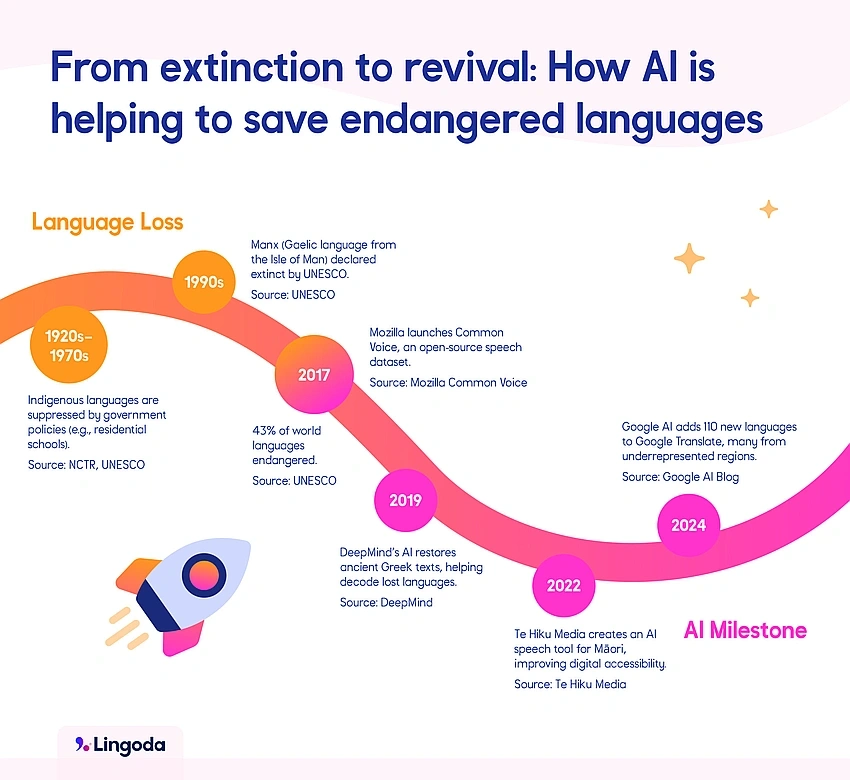
Can AI truly be a force for good in preserving endangered languages and cultures? This isn't just a philosophical debate; it's becoming a tangible reality, with groundbreaking work showing how technology can empower communities to safeguard their unique heritage. Imagine a future where no language is truly lost, where the echoes of ancient voices resonate not just in archives, but in living digital forms.
The answer to that question, I believe, is a resounding “yes,” and the blueprint is already being drawn by dedicated linguists. Consider the incredible efforts underway in Louisiana, where experts are leveraging artificial intelligence in a profoundly impactful way. They’re not just building another chatbot; they are meticulously feeding centuries-old nursery rhymes and folklore recordings into their own bespoke AI models. This isn't about mere translation; it’s about deep cultural immersion and digital resurrection.
What is the ultimate goal here? It’s profoundly simple yet revolutionary: to help a community control its digital destiny. For too long, the digital landscape has been dominated by a handful of major languages, leaving those with fewer speakers vulnerable to being left behind, or worse, entirely erased from the internet's vast memory. By creating AI models trained on their specific linguistic and cultural data – those precious nursery rhymes and folklore – these communities are essentially building their own digital infrastructure. This allows for the creation of native-language educational tools, digital archives, and even interactive conversational agents that speak and understand their unique tongue.
This approach isn't just about preserving words; it's about preserving ways of thinking, cultural nuances, and historical narratives embedded within the language. An AI trained on folklore, for instance, learns not just vocabulary and grammar, but also the storytelling patterns, the moral frameworks, and the worldview of a people. This level of understanding can then be used to generate new content, provide language learning resources, and even power virtual heritage sites, all in the original language.
The beauty of this AI-driven preservation lies in its scalability and accessibility. Once a robust model is built, it can be deployed widely, offering resources to young people who may not have daily exposure to their ancestral language. It democratizes access to knowledge that might otherwise be confined to aging elders or obscure texts. It also offers a powerful counter-narrative to the idea that technological advancement means cultural homogenization. Instead, it proves that cutting-edge AI can be a tool for radical localization and cultural affirmation.
Of course, the technology is a tool, not a replacement. The human element – the linguists, the community elders, the culture bearers – remains paramount. Their expertise in curating the initial data, guiding the AI’s learning, and interpreting its outputs is indispensable. This collaborative model, where human insight fuels AI’s capabilities, ensures that the digital future of these languages is authentic and truly representative of the communities themselves.
So, when we ask if AI can be a force for good, the answer from Louisiana is clear: absolutely. By embracing these sophisticated digital techniques, we’re not just saving languages; we’re empowering entire cultures to thrive in the digital age, ensuring their stories, songs, and wisdom are carried forward for generations to come. This is the true promise of AI in the service of humanity.
