AI Influencers: Is Your Feed Real? Instagram's New Policy Rocks Authenticity.

AI Influencers: Is Your Feed Real? Instagram's New Policy Rocks Authenticity.
Instagram is cracking down on undisclosed AI profiles, changing labeling, and limiting reach. Users demand transparency, is authenticity making a comeback in the digital age?
The digital landscape is buzzing with a fascinating shift, and it's all about who, or what, we see online. We've all scrolled past accounts that seem a little too perfect, a little too polished, but the growing frustration over AI-generated influencers reaching into our feeds has finally hit a breaking point. It seems the era of digital deception might be facing a serious challenge.
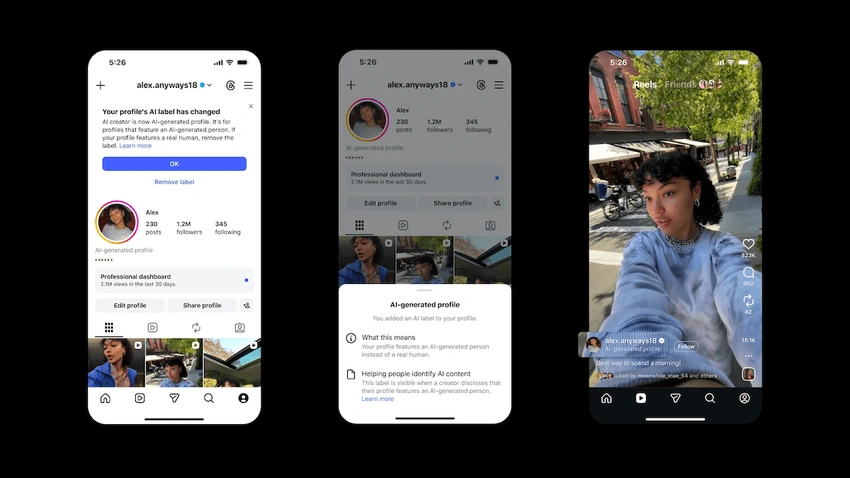
Big changes are rolling out on Instagram to tackle this head-on. The platform is making a clear distinction: if a profile features a person who is entirely generated or substantially created by AI, it needs to be labeled. They're even renaming their old 'AI creator' tag to the more direct 'AI-generated profile' to make sure everyone understands the score.
But here's the kicker, if you don't use this label for an AI-generated person, your reach could be significantly cut.
That's a serious consequence for those looking to quietly boost their virtual personas.
Now, let's be clear about what this doesn't mean. If you're using AI to just tweak a photo, polish a caption, or whip up some graphics, you're in the clear. It's about transparency when a profile's very subject is an artificial construct.
It's a necessary move, especially as generative AI becomes more sophisticated and harder to distinguish from reality.
Why this sudden push? It boils down to trust. Users are vocal about feeling misled.
As Instagram put it, “They want to know when a profile features an AI-generated person.” There's a palpable discomfort in connecting with what appears to be a human, only to discover they're completely synthetic. We saw this play out earlier this year with the gay dating app Goose, which faced scrutiny after a Wired investigation uncovered a network of AI-generated male influencers promoting the app on Instagram.
Instances like these highlight the erosion of trust when the lines between real and AI blur too much.
It's about the broader conversation around authenticity in our increasingly digital lives. When we can't tell if the 'person' endorsing a product or sharing a story is real, what does that do to our perception of truth? While some might argue that a good story is a good story, regardless of its origin, the human need for genuine connection and verifiable information remains strong.
Are we entering an age where knowing if someone is 'real' becomes a premium commodity?
Instagram's move signals a growing acknowledgment that while AI brings incredible tools for creation, it also introduces ethical dilemmas.
It's a vital step towards rebuilding trust and setting new expectations for transparency in the influencer economy.
It will be fascinating to see how creators adapt and whether this truly ushers in a new era where authenticity, even for AI-generated content, becomes non-negotiable.
What do you think - is this crackdown enough, or just the beginning of a much larger battle for digital truth?
