US Supreme Court strikes down reciprocal tariffs; India reaction in focus

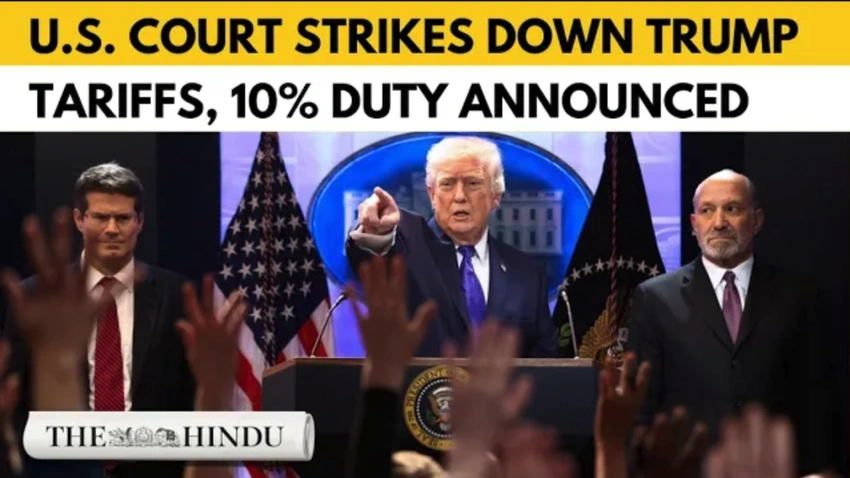
US Supreme Court strikes down reciprocal tariffs; India reaction in focus
The US Supreme Court overturns Trump's reciprocal tariffs, prompting India and others to reexamine trade deals as new global duties loom.
In a February 20 ruling, the Supreme Court held that the International Emergency Economic Powers Act did not authorize country-specific reciprocal tariffs, striking them down. Hours later, President Trump announced a temporary 10% global tariff on imports for 150 days under the Trade Act of 1974, a move that has drawn immediate scrutiny from trade partners and policymakers.
Analysts said the decision could push countries with existing U.S. trade deals to reexamine terms, potentially destabilizing recently negotiated agreements. Ajay Srivastava, founder of the Global Trade Research Initiative, warned that the ruling effectively renders deals with the United States— including those with the UK, Japan, the EU, Malaysia, Indonesia, Vietnam and India— one-sided and may prompt partners to renegotiate or dump such arrangements.
Back in New Delhi, the Ministry of Commerce and Industry said it had noted the judgment but did not spell out what would happen to India's interim trade agreement with Washington. The government signaled it would study the ruling and its implications for the broader India–U.S. trade relationship, even as Trump asserted that nothing in the broader deal had changed.
Commentators caution that while the ruling removes some tariff pressures, the landscape remains uncertain as new duties and interim agreements continue to hover over negotiations. Markets and policymakers will be watching closely as governments determine whether existing deals survive or undergo fresh terms.
