Trump Rejects Iran's Hormuz Deal: Tensions Escalate in Standoff

Trump Rejects Iran's Hormuz Deal: Tensions Escalate in Standoff
US President Donald Trump has rejected Iran's proposal to reopen the vital Strait of Hormuz. Learn why this high-stakes decision could reshape global diplomacy and energy markets.
U.S. President Donald Trump has firmly rejected a truce deal proposed by Iran, a move that could have seen the critical Strait of Hormuz reopened to shipping within a week. The waterway, a lifeline for global energy supplies, has been at the heart of a nearly seven-month-long stalemate between the U.S. and Iran.
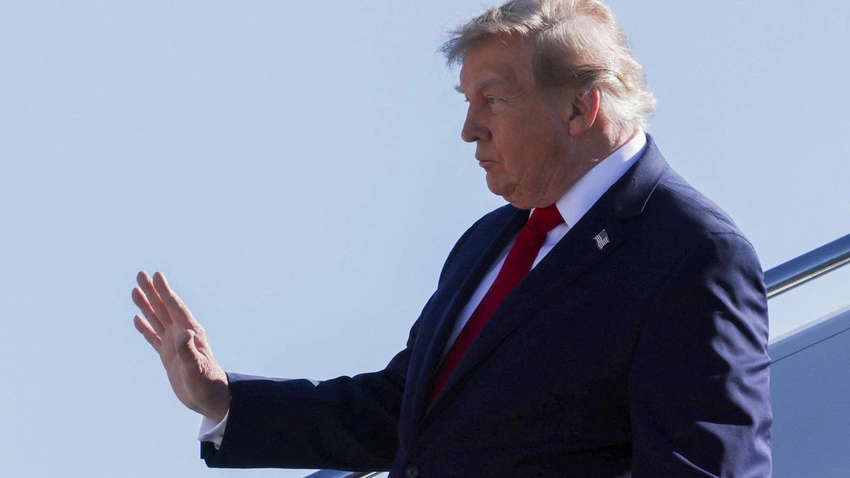
Speaking outside the White House on Saturday, President Trump confirmed, "I reject their proposal." He added that Iran was "losing so badly" and eager to make a deal, but remained skeptical. This rejection comes despite Iran's President Masoud Pezeshkian's assertion that the proposal was developed "in coordination" with Supreme Leader Mojtaba Khamenei.
Iran's detailed plan, unveiled by Foreign Minister Abbas Araghchi, called for a complete cessation of hostilities across West Asia, including in Lebanon. Key conditions included the release of frozen Iranian assets, the lifting of sanctions on Iranian oil, and an end to the U.S. naval blockade. If these conditions were met, Iran promised the Strait of Hormuz would reopen within seven days of acceptance, with the process beginning immediately.
However, Mr. Trump's skepticism runs deep.
He reportedly believes Tehran won't meet his demands and is even considering renewing the U.S. bombing campaign.
Adding a personal touch to his defiance, the President posted an image of the Strait of Hormuz, circled and labeled "Trump Strait," on his Truth Social platform.
Iran's stance remains resolute. President Pezeshkian, who had just returned from the UN General Assembly in New York, stated that Iran has not abandoned negotiations but, given past experiences, no longer trusts the United States. Foreign Minister Araghchi emphasized that "The choice now rests with the United States.
Iran does not accept coercion, threats or intimidation, and Iran will not surrender its sovereign rights under pressure."
Echoing this, Hossein Mohebi, a spokesman for Iran's Revolutionary Guards, declared that Iran would continue to "punish the U.S. until Iran's seven conditions are met," which also include an end to hostilities in Yemen. A previous memorandum of understanding signed in June between Washington and Tehran, aimed at ending the war, reopening the strait, and initiating nuclear talks, had quickly collapsed.
Internationally, the situation draws concern. Saudi Arabia's Foreign Minister Faisal bin Farhan voiced criticism at the UN, stating the "international community has been absent" in its responsibility to keep vital waterways like Hormuz open. Russia's Sergei Lavrov, however, pledged his country's readiness to "constructively contribute to stabilizing this strategically important region."
#USIranTensions #StraitOfHormuz #TrumpDiplomacy #GlobalEnergy
