Who Really Owns the Night Sky? The Hidden Cost of SpaceX Expanding

Who Really Owns the Night Sky? The Hidden Cost of SpaceX Expanding
SpaceX is launching rockets from both coasts in a single week. Starlink promises global internet, but are we trading our shared starry skies for a corporate playground? Let us talk about the future of space.
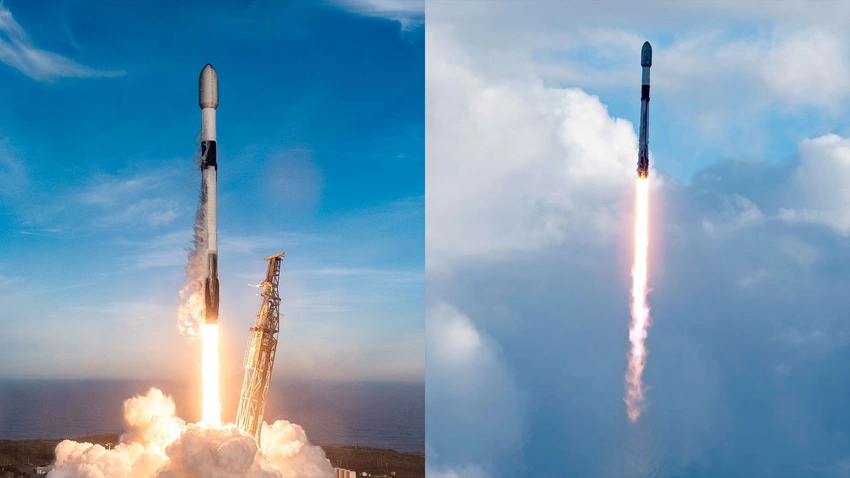
Did you happen to look up on March 13 or 14? If you missed it, SpaceX successfully fired off two Falcon 9 rockets from opposite sides of the country. One launched from Vandenberg in California and the other from Cape Canaveral in Florida. Their payload? More Starlink satellites to join the thousands already orbiting our planet.
It is incredibly cool to watch a rocket launch. We are living in a time where sending things into orbit is a weekly routine rather than a rare historical event. But this rapid expansion brings up a massive question we need to answer right now. Is this private space boom a win for humanity or just a corporate takeover of the stars?
The Case for Global Connectivity There is no denying the benefits of satellite internet. For people living in remote areas without basic infrastructure, Starlink is a game changer. It provides reliable internet access to communities that traditional telecom companies have ignored for decades. Better connectivity means better access to education, telehealth, and economic opportunities. In that sense, SpaceX is doing what governments have struggled to do.
The Corporate Constellation Problem However, there is a serious catch. We are allowing a single private company to claim a massive chunk of Low Earth Orbit. The night sky is a shared human resource. When you look up and see a train of satellites cutting across the stars, it is hard not to wonder if we sold off our sky without holding a public vote.
Furthermore, space is getting dangerously crowded. With every new launch from California and Florida, the risk of orbital collisions goes up. Who cleans up the mess if two satellites crash? Who regulates the traffic? Right now, it is a wild west scenario.
Where Do We Go From Here? Innovation is fantastic. Pushing the boundaries of aerospace engineering is something to celebrate. Yet, we cannot let private entities monopolize the cosmos just because they have the budget for it. We need updated international agreements to ensure that the space above us remains a shared frontier.
What do you think? Are you ready to trade pristine starlight for faster internet? Drop your thoughts below because this debate is only just taking off.
