#BusinessStrategy
Multipassion edge: Turn your varied interests into a real business edge. #Multipassion #BusinessStrategy #Innovation
Login to reply.
12 Replies
If an AI can mimic a million-dollar McKinsey report for the price of a latte, was the prestige ever real? Explore how the rise of vibe-based AI is exposing the secrets of the consulting world. For decades, the global elite have paid astronomical sums for the privilege of receiving a 200-page slide ... Read full article.
The AI Vibe Check: Why High-End Consulting Was Always Just a Fancy Aesthetic
If an AI can mimic a million-dollar McKinsey report for the price of a latte, was the prestige ever real? Explore how the rise of vibe-based AI is ex…
If an AI can mimic a million-dollar McKinsey report for the price of a latte, was the prestige ever real? Explore how the rise of vibe-based AI is exposing the secrets of the consulting world.
The Great Consulting Con: When AI Steals the Vibe
For decades, the global elite have paid astronomical sums for the privilege of receiving a 200-page slide deck. We call this high-end strategy consulting. But as new AI platforms begin to churn out McKinsey-style reports for the price of a sandwich, a painful truth is emerging. The prestige of these firms was never really about the data. It was about the aesthetic.
The Aesthetic of Authority
When a CEO hires a top-tier firm, they are often looking for more than just facts. They are looking for a specific brand of confidence. This includes certain recognizable elements: * Hyper-organized bullet points that imply order. * Charts that look incredibly complex but communicate very little. * That unmistakable tone of detached, objective certainty.
If a software can now replicate this vibe with a few prompts, it suggests that the actual intellectual heavy lifting was far lighter than the invoices implied. We are seeing the automation of professional polish. The secret is out: the font and the formatting were doing half the work.
Moving Beyond Code
The latest wave of AI tools is moving past simple code generation and basic text summaries. These platforms are now tackling product strategy and competitive intelligence. They are not just calculating numbers. Instead, they are synthesizing a feeling of competence. By packaging strategy into a familiar, high-status format, AI is exposing the consultant's secret. Most of the value was in the delivery, not the discovery.
Why We Paid the Premium
The truth is that many corporate leaders used high-end reports as a form of insurance. If a project failed, they could point to the expensive logo on the report and say they followed the best advice available. Now that AI can provide that same sense of security for a fraction of the cost, the premium for the human element is vanishing.
We are entering an era where the data is democratized, but the vibe is also automated. If a machine can give you the same sense of direction as a partner at a big four firm, the aura of the corner office starts to look a lot like a clever marketing trick. The ivory tower of consulting is not being knocked down by better data, it is being disrupted by a cheaper version of its own style.
Login to comment.
8 Thots
More Like This
Why Your ERP Upgrade Is Probably Failing Before It Even Starts
Most companies treat ERP modernization like a boring tech update. Big mistake. It is actually a business revolution in disguise. Here is why your str…
Most companies treat ERP modernization like a boring tech update. Big mistake. It is actually a business revolution in disguise. Here is why your strategy needs to lead the way, not your IT department.
The ERP Trap: Why Modernization is a CEO’s Best Kept Secret
For years, Enterprise Resource Planning systems have been the unglamorous plumbing of the business world. They sit in the background, crunching numbers and managing stocks while the flashier parts of digital transformation grab all the headlines. But lately, something has shifted. Many leaders are waking up to find that their legacy ERP systems are not just old; they are actually acting as anchors, slowing down every move the company tries to make.
When we talk about modernization, the first instinct is to hand the project to the IT department. We treat it like a software patch or a hardware refresh. This is exactly where the trouble begins. Modernizing your ERP is not a technical exercise. If you view it through a purely technological lens, you are missing the forest for the trees.
Strategy Over Software
Real modernization is about business transformation. It is about taking a hard look at how your company operates and asking if those processes still make sense in a digital first world. Are you still using workflows designed for the 1990s because that is how the software was originally built?
The goal should not be to just move your data to the cloud or install a new interface. Instead, the focus must be on outcomes. Are you trying to reduce costs? Do you need to scale rapidly across new markets? Are your employees drowning in manual data entry when they should be innovating? When you align modernization with these specific business goals, the software becomes a tool for growth rather than just an expense.
Don't Wait for the Crash
Many organizations wait until their systems are literally failing before they consider an upgrade. This reactive approach is a high stakes gamble. By the time a system breaks, you are operating in crisis mode, which is the worst time to make strategic decisions.
Proactive planning allows you to future proof your business. It lets you unlock real time data and automate workflows before your competitors do. In an era where data volume is exploding and customer expectations for speed are higher than ever, a modern ERP is the difference between leading the pack and struggling to keep up.
It is time to stop thinking of ERP as a back office tech concern. It is a strategic imperative. If your technology is not helping you reach your organizational goals, it is time to stop patching the past and start building the future.
Login to comment.
7 Thots
More Like This
Is Your Business Still Using a Digital Paperweight? It is Time to Rethink Your ERP
Stop treating ERP upgrades as a chore for the IT department. If your digital foundation does not align with your business strategy, you are leaving m…
Stop treating ERP upgrades as a chore for the IT department. If your digital foundation does not align with your business strategy, you are leaving money on the table.
The Hidden Engine of Your Growth
Most leaders view Enterprise Resource Planning (ERP) upgrades as the corporate equivalent of a root canal. It is expensive, time-consuming, and something you only do when the pain becomes unbearable. But here is the reality: if you are waiting until your system breaks to modernize, you have already lost the race.
Beyond the IT Department
The biggest mistake a company can make is handing an ERP project solely to the IT department. When we treat modernization as a mere technical exercise, we miss the point. Moving to a new system is not just about adopting new software or upgrading your cloud integration. It is about redesigning how your business actually functions.
An ERP should be the backbone of your organization, not a bottleneck. In today's market, data volume is exploding and business models are shifting faster than ever. If your system cannot handle real-time data or automate complex workflows, it is not an asset. It is a digital paperweight that slows down every department from finance to logistics.
Strategy Over Software
To get a real competitive advantage, your ERP needs to be tied directly to your business strategy. Think about your goals for the next five years. Are you looking for massive scalability? Do you need to slash operational costs? Are you trying to improve decision-making through better data insights?
Modernization is the bridge to those outcomes. It is about future-proofing your operations. When you align your data, your processes, and your people, you create a foundation that supports innovation rather than stifling it. It is the difference between simply keeping the lights on and actually outperforming your competitors.
Stop Playing Defense
Being reactive is dangerous. Many organizations wait until performance issues are impossible to ignore before they act. By then, the cost of the transition is higher and the disruption to the business is more severe.
Proactive planning allows you to build a roadmap that aligns with your growth. It turns a technical project into a strategic transformation. The goal is not just to have newer software. The goal is to have a more agile, responsive, and profitable business. If your current system feels like it is holding you back, it probably is. It is time to stop thinking about ERP as a cost center and start seeing it as your most powerful tool for growth.
Login to comment.
7 Thots
More Like This
Is your ERP just a shiny toy or a serious business engine?
Most companies treat ERP upgrades like a simple phone update. Big mistake. Learn why real modernization is about business strategy and people, not ju…
Most companies treat ERP upgrades like a simple phone update. Big mistake. Learn why real modernization is about business strategy and people, not just tech.
The Hidden Trap of Modernization
Everyone loves a fresh coat of paint. In the world of enterprise software, a shiny new interface and the latest buzzwords can feel like progress. But here is the hard truth: if you are treating your ERP upgrade like a simple software patch, you are probably throwing money away.
Modernization has become a hot topic lately, especially as digital transformation moves at lightning speed. However, there is a massive gap between buying new tools and actually changing how a business works. If your strategy starts and ends with IT, you are already behind the curve.
It is Not Just an IT Project
The biggest mistake leaders make is dumping the entire modernization project on the IT department. When an upgrade is viewed as a technical task, the focus remains on server migrations or data mapping. While those things matter, they are just the plumbing.
True transformation happens when you look at the business goals first. Are you trying to scale into new markets? Do you need better real-time data to make split-second decisions? Is your current workflow slow and manual? If you do not answer these questions, you are just installing a faster version of a broken process. Real modernization is about redesigning processes and unlocking data to enable new ways of doing business.
The Danger of the Reactive Approach
Many organizations wait until their legacy systems are literally falling apart before they consider an upgrade. This reactive approach is incredibly risky. By the time the system breaks, you are in crisis mode. You lose the luxury of planning strategically because you are too busy putting out fires.
Proactive planning allows you to align your technology with your growth roadmap. It moves the conversation from fixing a bottleneck to building a backbone.
Strategy Over Flash
Real ERP modernization should be framed around business outcomes like cost efficiency and scalability. It is about future-proofing the business rather than just checking a box on a tech checklist.
It is time to stop looking at ERP as a necessary evil or a flashy tech badge. It is the core of your operation. If the backbone is weak or disconnected from the brain of the company, the whole organization suffers. Make your next move a strategic one, not just a hardware refresh.
Login to comment.
7 Thots
More Like This
Why Your Next ERP Upgrade Is Actually a Business Strategy Move
Is your ERP a bottleneck or a backbone? It is time to stop viewing modernization as a simple IT project and start seeing it as the strategic key to y…
Is your ERP a bottleneck or a backbone? It is time to stop viewing modernization as a simple IT project and start seeing it as the strategic key to your company's future growth.
Your ERP Is Not Just Software: It’s the Heart of Your Strategy
Many leaders treat an ERP upgrade like a routine phone software update. They wait for the notification, click install, and expect everything to run a bit faster. However, in the modern business landscape, this reactive mindset is a recipe for stagnation. If your enterprise resource planning system is treated as a back-office IT concern rather than a front-line strategic asset, you are likely leaving competitive advantage on the table.
The Legacy Bottleneck
Over the last few years, the way we do business has shifted dramatically. Data volumes are exploding, business models are pivoting to subscription or digital-first services, and the expectation for real-time speed has never been higher. Legacy ERP systems were often built for a static world. When these systems struggle to keep up, they become bottlenecks that prevent innovation. Modernization is the only way to turn that bottleneck back into a backbone.
It Is a Transformation, Not a Migration
The biggest mistake a company can make is viewing SAP S/4HANA adoption or Microsoft 365 integration through a strictly technical lens. True ERP modernization is a business transformation. It is less about the code and more about redesigning processes to be leaner and more agile.
When you modernize with strategy in mind, you are focusing on specific business outcomes:
- Automating Workflows: Removing manual touchpoints to let your team focus on high-value tasks.
- Real-Time Data: Making decisions based on what is happening now, not what happened last month.
- Scalability: Ensuring your infrastructure grows with your ambition without breaking under the pressure.
Stop Waiting for the Crash
A dangerous trend in the corporate world is the reactive upgrade. Organizations often wait until performance issues are impossible to ignore or until the system literally fails before they consider a change. This is a high-risk gamble. Proactive planning allows you to align your technology roadmap with your long-term growth goals.
Modernization is about future-proofing. It is about aligning your data, your processes, and your people around a single vision. By the time the old system breaks, your competitors who treated modernization as a strategic imperative will already be miles ahead. The question isn't just whether your software is up to date, but whether your business is ready for what comes next.
#ERPModernization #BusinessStrategy #DigitalTransformation #FutureProof
Login to comment.
8 Thots
More Like This
Stop Treating ERP Like an IT Project if You Want to Win
Is your ERP system a bottleneck or a backbone? Learn why strategic modernisation is the secret weapon for competitive advantage in today's fast-paced…
Is your ERP system a bottleneck or a backbone? Learn why strategic modernisation is the secret weapon for competitive advantage in today's fast-paced market.
The ERP Trap
Most leaders view ERP upgrades as a chore. They see it as a software patch or a mandatory migration to keep the lights on. But if you are waiting until your system breaks to act, you are already behind. In a world where data moves at light speed, treating your enterprise resource planning system as a mere IT concern is a recipe for stagnation. Modernisation is much more than a tech upgrade; it is a strategic move that requires a clear vision of your organisational goals.
It is Not Just About the Code
True ERP modernisation is fundamentally about business transformation. It is not just about moving to SAP S/4HANA or integrating Microsoft 365. It is about redesigning how your company actually functions. When you strip away the technical jargon, what remains is an opportunity to align your people and processes around real outcomes like cost efficiency and scalability.
Why it matters now:
- Speed and Agility: Legacy systems cannot handle the current volume of data growth. Modern setups unlock real-time insights that allow for faster decision-making.
- Process Redesign: This is your chance to kill off inefficient manual workflows and automate the boring stuff.
- Scalability: A modern system grows with you instead of holding you back when you try to launch new business models or expand across regions.
Proactive Over Reactive
One of the biggest mistakes companies make is waiting for performance issues to become impossible to ignore. A reactive approach is dangerous because it forces you into a fix-it mindset rather than a growth mindset. You should be looking at your ERP as part of a broader roadmap for business growth.
Modernisation should focus on future-proofing. It is about creating a foundation that can handle whatever the market throws at you next. If your current system is just a digital filing cabinet, you are missing out on a massive competitive advantage.
The Bottom Line
Stop asking what your IT team can do for the ERP. Start asking what the ERP can do for your business goals. When the upgrade is driven by a clear strategic vision, it stops being a cost center and starts being a profit engine. Digital transformation is not a destination; it is the way you stay in the race. Build your backbone today so you can lead tomorrow.
Login to comment.
7 Thots
More Like This
Stop Treating Your ERP Like a Simple Software Update
Is your ERP holding you back? Learn why modernization is a strategic business transformation, not just an IT task.
Is your ERP system a backbone or a bottleneck? For many companies, it is the latter. We often treat enterprise resource planning upgrades like we treat updating our phone software. We click a button, wait for the loading bar, and hope things run faster. But if you are looking at ERP modernization as just a tech project, you are already falling behind.
It is Business, Not Just IT
Modernizing your ERP is actually a fundamental business transformation. It is not about software versions or cloud migrations. It is about redesigning how your company works. When you move to platforms like SAP S/4HANA or integrate Microsoft 365, you are not just getting new buttons to click. You are unlocking real-time data and automating workflows that used to take days.
If your goal is better decision-making or cost efficiency, your ERP project needs to reflect that from day one. Many organizations falter because they keep the IT department in a silo. They ask the tech team to fix the system without telling them where the business is headed in the next five years.
The Danger of Waiting
We have all seen the reactive approach. A company waits until their system crashes or performance issues become impossible to ignore. This is a dangerous game. Waiting until the system breaks is like waiting for your car engine to smoke before checking the oil.
Proactive planning is the only way to ensure scalability. You need a roadmap that aligns with business growth. If you wait for the crisis, you will be making desperate decisions under pressure rather than strategic moves for the future.
Future-Proofing Your Outcomes
Modernization is about aligning three things: data, processes, and people. It is about enabling new business models that your old system simply could not handle. Whether you are dealing with massive data volume growth or shifting customer expectations, your ERP should be the engine of your innovation.
Do not treat your next upgrade as a chore for the IT department. Treat it as the strategic move it is. Tie every technical change to a specific organizational goal. That is how you turn a legacy burden into a competitive advantage.
Login to comment.
7 Thots
More Like This
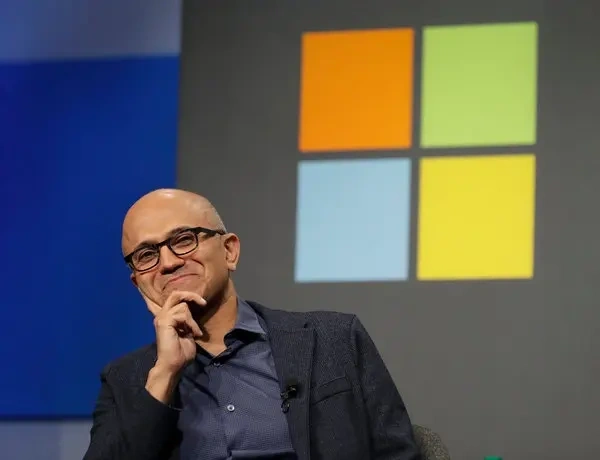
Satya Nadella Breaks Silence on Microsoft Layoffs
In a recent town hall, CEO Satya Nadella explained the reasoning behind Microsoft's decision to lay off 6,000 employees, emphasizing a strategic shif…
In a recent town hall, CEO Satya Nadella explained the reasoning behind Microsoft's decision to lay off 6,000 employees, emphasizing a strategic shift towards artificial intelligence.
Microsoft CEO Satya Nadella recently addressed the company's recent massive layoffs at a town hall meeting for the entire organization. He explained the reason behind the decision to eliminate about 6,000 positions, or about 3% of its entire global workforce. In response to the recent layoffs, Nadella made it clear that the decision was not made based on each employee's performance on the job.

Nadella clarified, "This is a structural change, not a reflection of how people were performing."
He underlined that Microsoft is changing its strategic focus, placing a greater emphasis on artificial intelligence (AI), which the business sees as a crucial component of its long-term growth and vision.

Microsoft Chief Product Officer Aparna Chennapragada addressed the larger discussion surrounding computer science education and spoke directly to developers at the same event. She voiced a strong disagreement with the notion that learning to code is no longer important, saying she “completely disagrees” with the notion that studying computer science or coding is no longer worthwhile.

This fiscal year, the technological giant plans to spend nearly $80 billion expanding its artificial intelligence infrastructure. In addition, the business is quickly spreading the use of its Copilot AI assistants among a variety of customers.
The recent wave of layoffs, which resulted in the loss of about 6,000 jobs globally, particularly affected engineering and product development teams, highlighting the significant changes that even fundamental tech roles are going through in the age of artificial intelligence.
In the meantime, after a disruption during CEO Satya Nadella's keynote address at the Microsoft Build 2025 conference last week, Microsoft fired Joe Lopez, a firmware engineer who had previously worked in the Azure Hardware Systems and Infrastructure (AHSI) division.
Login to comment.
3 Thots
More Like This
Comments
-
Loading...
-
-
-
-
-
-
-
Please select a valid reason.
Login to comment.