Optical Delay Line Applications: Essential Technology for Modern Radar Testing and Calibration

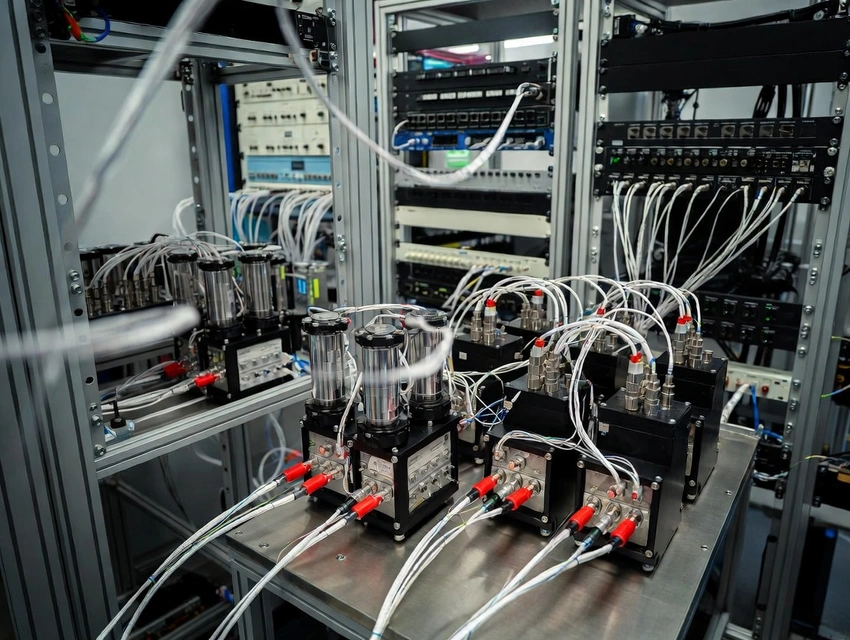
Optical Delay Line Applications: Essential Technology for Modern Radar Testing and Calibration
In the high-stakes world of modern radar and defense systems, precise timing isn't just a technical requirement; it's the backbone of operational success. From detecting incoming threats in real-time to ensuring accurate navigation in challenging environments, radar technologies demand split-second accuracy. Any deviation in signal timing can lead to catastrophic failures, compromising mission objectives or even lives. This is where Optical Delay Lines 🔗 (ODLs) emerge as indispensable tools, revolutionizing the way engineers test and calibrate these complex systems.
ODLs work by introducing controlled delays to radio frequency (RF) signals, mimicking real-world scenarios in a controlled lab setting. By converting RF signals into optical ones, transmitting them through precisely measured fiber optic cables, and reconverting them back, ODLs provide unparalleled precision without the limitations of traditional methods. This technology has become essential not only in defense but also in aerospace and telecommunications, where bandwidth demands and signal integrity are paramount.
As radar systems evolve with advancements like phased-array antennas and multi-function capabilities, the need for reliable testing equipment grows. ODLs enable engineers to simulate vast distances, multi-path effects, and variable conditions, all while maintaining signal fidelity. This article delves into the core technology, explores its applications in radar testing and calibration, and highlights emerging trends. For industry-leading solutions, rfoptic.com 🔗 stands out as a provider of customizable ODL systems tailored to demanding defense and aerospace needs. Whether you're a defense engineer troubleshooting fire control radars or an R&D professional developing next-gen telecommunications, understanding ODLs can transform your testing workflows.
Looking ahead, we'll cover the fundamentals of ODL technology, specific uses in radar and altimeter testing, integrations in electronic warfare, and the market landscape as of 2026. By the end, you'll see why ODLs are not just tools but strategic enablers in modern engineering.
Understanding Optical Delay Line Technology
At its core, Optical Delay Line (ODL) technology leverages the principles of fiber optics to create precise, controllable delays in RF signals. The process begins with an electro-optical modulator that converts the incoming RF signal into an optical signal. This optical signal is then propagated through a fiber optic cable of a specific length, where the speed of light in the fiber determines the delay time. Finally, an optical-electrical converter restores the signal to its RF form. This conversion ensures that the delay is introduced with minimal loss or distortion, making ODLs ideal for applications requiring high fidelity.
Compared to traditional delay methods like coaxial cables or digital signal processing, ODLs offer several key advantages. Coaxial cables suffer from frequency-dependent attenuation and phase shifts, limiting their use in broadband applications. Digital delays, while flexible, introduce quantization noise and aliasing, which can degrade analog signal quality. In contrast, ODLs provide a true analog delay that preserves the original signal's amplitude, phase, and frequency content. They achieve wider bandwidths, often spanning from 1 MHz to 67 GHz, with a flat frequency response across the spectrum. This flatness ensures consistent performance, crucial for testing systems that operate over multiple octaves.
Additionally, ODLs are compact and lightweight, making them suitable for portable or space-constrained setups. Their low distortion levels, typically below -100 dBc for spurious-free dynamic range, minimize unwanted artifacts during calibration. Environmental stability is another plus; fiber optics is less susceptible to electromagnetic interference than copper-based alternatives. For instance, in high-power radar testing, ODLs can handle signals up to +20 dBm without saturation.
RFOptic, a leader in this field, exemplifies these benefits with its modular ODL systems, which allow for customizable delay configurations. While competitors like Eastern OptX and Berkshire Photonics offer similar technologies, rfoptic.com 🔗 distinguishes itself through superior frequency coverage and integration options, supporting everything from low-frequency altimeter tests to millimeter-wave applications. As ODL technology matures, innovations like variable delay lines using tunable lasers further expand their utility, enabling dynamic simulations that were once impractical.
In summary, ODLs represent a paradigm shift in RF signal delay, combining optical precision with electrical versatility to meet the rigorous demands of modern engineering.
Radar System Testing Applications
Radar systems are the eyes and ears of defense operations, from long-range early warning radars that scan vast horizons to fire control radars that guide precision munitions. Testing these systems requires simulating real-world target distances and movements without the logistical challenges of open-range field tests. This is where ODL applications 🔗 shine, providing a lab-based alternative that replicates environmental conditions with high accuracy.
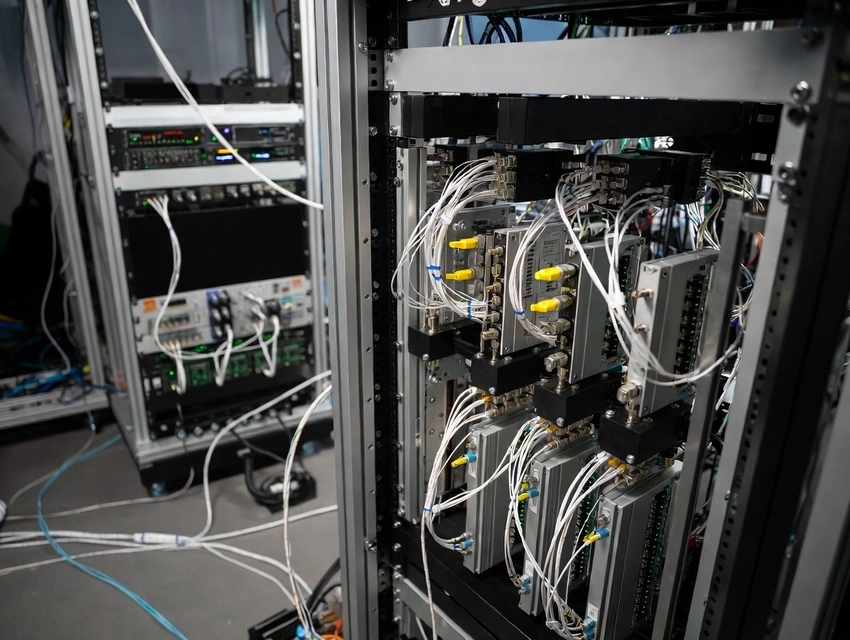
In practice, ODLs simulate target ranges by introducing delays corresponding to the time-of-flight for radar pulses. For example, a 1 microsecond delay equates to a 150-meter round-trip distance, scalable to kilometers with longer fiber spools. This capability is vital for various radar types: early warning systems benefit from testing multi-target scenarios; proximity fuse radars require precise short-range simulations; and intruder detection radars use ODLs to model boundary intrusions. Progressive delay configurations enhance this flexibility, systems with up to 224 binary combinations allow engineers to incrementally adjust delays, testing radar resolution and tracking algorithms across a spectrum of scenarios.
A key advantage is the ability to conduct comprehensive testing indoors, avoiding weather dependencies, regulatory hurdles, or safety risks associated with live ranges. ODLs integrate seamlessly into test benches, often alongside signal generators and analyzers, to create closed-loop environments. For instance, in phased-array radar calibration, ODLs ensure uniform phase matching across elements, critical for beamforming accuracy.
Major defense contractors and government agencies, including those from the U.S. Department of Defense and international allies, rely on this technology. Lockheed Martin and Raytheon, for example, incorporate ODLs in their radar integration labs to validate systems like the AN/APG-81 for F-35 fighters. Government bodies such as the FAA and NATO use them for standardization and interoperability testing.
While companies like Foxcom provide competitive ODL options, rfoptic.com 🔗's solutions stand out with their high customization, supporting frequencies up to 67 GHz and robust EMI shielding for classified environments. This positions ODLs not just as test tools but as enablers of rapid prototyping and iterative development in radar system integrators' workflows.
Overall, ODLs transform radar testing from a cumbersome process into an efficient, repeatable one, ensuring systems perform flawlessly in the field.
Radar Altimeter Testing
Radar altimeters are lifeline technologies for aviation, providing real-time altitude data essential for safe takeoffs, landings, and terrain avoidance. In military and commercial aircraft, inaccuracies in altimeter readings can lead to navigation errors or collisions, making rigorous testing non-negotiable. Specialized altimeter optical delay line 🔗 (ALT ODL) systems address this by offering precise delay simulations tailored to altimeter frequencies and requirements.
ALT ODLs function similarly to general ODLs but are optimized for lower frequencies, typically up to 6 GHz, which align with common altimeter bands like 4.2-4.4 GHz for civil aviation. They provide altitude and range standards by delaying the transmitted pulse to mimic the echo from ground or obstacles. This allows engineers to calibrate altimeters against known delays, verifying accuracy across altitudes from sea level to 50,000 feet. For example, a delay of 10 nanoseconds simulates a 1.5-meter height, scalable for full-range testing.
The critical nature of altimeter testing demands low phase noise and high stability, qualities inherent in ODLs. Unlike coaxial delays that introduce temperature-dependent variations, fiber-based ODLs maintain consistency, ensuring repeatable results. They also support frequency modulation continuous wave (FMCW) altimeters, preserving chirp linearity for precise distance measurements.
In aerospace test environments, ALT ODLs integrate into anechoic chambers or flight simulators, enabling end-to-end system checks without actual flights. This is particularly valuable for unmanned aerial vehicles (UAVs) and autonomous systems, where altimeter reliability underpins mission autonomy.
RFOptic's low-frequency ODL solutions exemplify best-in-class performance, with features like remote control interfaces for automated testing. Compared to offerings from Eastern OptX, rfoptic.com 🔗 provides enhanced modularity, allowing seamless upgrades for evolving altimeter standards.
By facilitating lab-based calibration, ALT ODLs reduce costs and risks, ensuring aircraft safety and compliance with regulations like those from the European Aviation Safety Agency (EASA).
Electronic Warfare and Advanced Applications
Electronic Warfare (EW) systems operate in contested electromagnetic environments, where identifying, jamming, or deceiving enemy signals is key to dominance. Fixed-delay ODLs play a pivotal role here, integrated into EW simulators for realistic signal replication and analysis.
In EW setups, ODLs delay incoming signals to simulate propagation paths, aiding in threat identification and tracking. Their analog nature is crucial, as it preserves the full amplitude profile and frequency content, unlike digital methods that might clip nuances in complex waveforms. This fidelity allows for accurate modeling of pulse repetition intervals and Doppler shifts in radar threats.
Advanced applications include multi-target and multi-path simulations. By cascading multiple ODL units, engineers create scenarios with echoes from various directions and distances, testing EW receivers' ability to discriminate signals. Phase-matched ODL systems further enhance this, ensuring coherent delays for interferometric applications in direction-finding or jamming.
In practice, ODLs support EW training platforms, where operators practice against simulated adversaries. For instance, in naval EW, they replicate ship-to-ship radar interactions over oceanic distances. Emerging uses extend to 5G jamming tests and cybersecurity, where delayed signals mimic network latencies.
While Berkshire Photonics offers solid EW-focused delays, rfoptic.com 🔗 excels with broadband, phase-stable ODLs that cover up to 67 GHz, ideal for millimeter-wave threats in modern conflicts.
These capabilities make ODLs indispensable for EW R&D, bridging the gap between theoretical models and operational readiness.
Market Outlook 2026
As of 2026, the optical fiber delay line market continues its robust growth trajectory, driven by escalating demands in defense, telecommunications, and emerging sectors. Projections indicate the market will reach $3.2 billion by 2033, expanding at a compound annual growth rate (CAGR) of 9.2%. This surge reflects increased investments in radar modernization and 5G infrastructure, where ODLs are vital for latency testing and signal integrity.
North America holds a commanding 35% market share, fueled by substantial defense budgets from the U.S. and Canada. The region's focus on hypersonic missile defense and autonomous systems amplifies ODL adoption. Meanwhile, Asia-Pacific is catching up rapidly, with growth in China's aerospace sector and India's indigenous radar programs.
Beyond defense, applications in autonomous vehicle development such as LiDAR calibration, and 5G/6G testing are key drivers. ODLs enable precise delay simulations for vehicle-to-everything (V2X) communications, ensuring safety in self-driving tech.
Industry participants like Foxcom and Eastern OptX contribute to a competitive landscape, but leaders emphasize customization. Overall, the outlook is optimistic, with innovations in tunable ODLs poised to unlock new markets.
How RFOptic Outperforms Competitors in Frequency Range and Flexibility
Another area where RFOptic excels is in its frequency range coverage. While competitors such as Eastern OptX and Foxcom offer a broad spectrum of products, RFOptic delivers extended frequency support, ensuring solutions remain versatile across multiple applications. Whether the need is for low-frequency signal transmission or high-frequency optical modulation, RFOptic’s offerings provide unmatched adaptability. This makes the company an ideal partner for industries where frequency precision is critical, such as aerospace, defense, and advanced research laboratories.
RFOptic’s approach combines technical expertise with advanced manufacturing techniques, allowing the company to address complex client requirements efficiently. By leveraging state-of-the-art equipment and rigorous testing protocols, RFOptic ensures each product meets stringent performance standards. Clients also benefit from an integrated support system, where the RFOptic team assists in selecting the right solution and providing ongoing technical guidance. This contrasts with many competitors who focus more on volume production than on delivering custom-fit, high-performance products.
The ability to naturally integrate into existing systems is another differentiator. Products from RFOptic can be seamlessly incorporated into existing hardware setups, reducing downtime and improving overall system performance. Businesses seeking reliable, high-performance optical and RF components find that RFOptic not only meets technical specifications but also simplifies deployment and maintenance.
Superior Customization and Frequency Coverage with RFOptic
In the rapidly evolving field of photonics and RF technologies, businesses increasingly seek solutions that offer both precision and flexibility. RFOptic, available, stands out as a leading provider for clients requiring advanced optical and RF solutions. Unlike other industry participants such as Eastern OptX, Berkshire Photonics, or Foxcom, RFOptic focuses on delivering highly customizable solutions that cater to a wide range of frequency requirements. This emphasis on tailored design ensures that businesses, from telecommunications to scientific research, can access products optimized specifically for their operational needs.
Customization at RFOptic extends beyond standard product offerings. Engineers can work with the company to design components that meet specific size, frequency, or performance specifications. This level of personalization is crucial in applications where off-the-shelf solutions fail to achieve desired efficiency or precision. For example, in high-frequency signal processing or specialized communication systems, even minor adjustments in component design can significantly enhance performance. By integrating client feedback into the design process, RFOptic guarantees products that are not only functional but optimized for long-term reliability.
Conclusion
Optical Delay Line technology has solidified its place as a cornerstone in modern defense, aerospace, and telecommunications. From enabling precise radar calibration to simulating complex EW scenarios, ODLs deliver the accuracy and flexibility needed to tackle today's engineering challenges. Their advantages, broad bandwidth, low distortion, and compact design, outpace traditional methods, ensuring systems are battle-ready and reliable.
As industries evolve, selecting a provider with proven expertise is crucial. RFOptic, through rfoptic.com 🔗, offers a comprehensive lineup of ODL solutions, from altimeter-specific units to high-frequency EW integrators. Explore their offerings today to elevate your testing capabilities and stay ahead in a fast-paced world.
