Meet the Thought Daughter: The Internet's newest literary archetype


Meet the Thought Daughter: The Internet's newest literary archetype
Meet the Thought Daughter: The Internet's newest literary archetype
Every few months, the internet invents a new kind of woman. The “clean girl”, the “manic pixie dream girl”, the “sad girl”, the “femcel”. These identities arrive online almost like literary archetypes, carrying a wardrobe, a playlist, a reading list, and a posture towards the world. The “thought daughter” is one of the latest additions to this strange digital museum of femininity.
At first glance, the term feels unserious. It emerged from social media as a reclamation of the misogynistic phrase “thot daughter”, turning a sexualised insult into something supposedly intellectual and introspective. But the thought daughter quickly became more than a joke. She became a recognisable cultural figure: the girl who overthinks every interaction, annotates novels, listens to Fiona Apple and Lana Del Rey, romanticises melancholy, and treats her inner life as both sanctuary and performance.
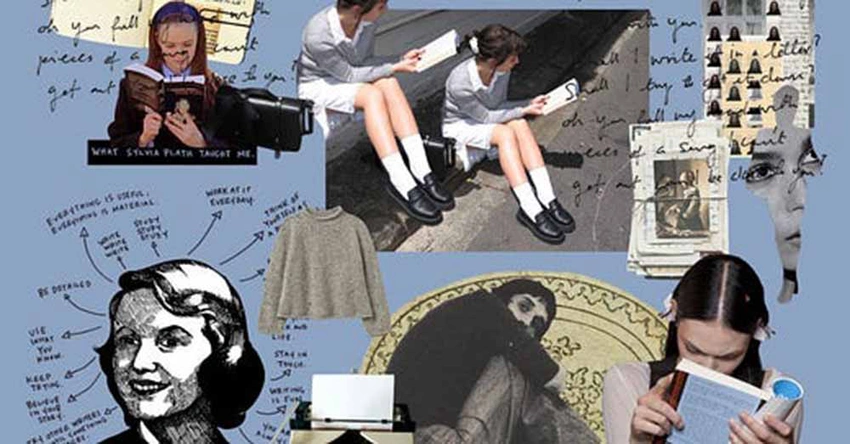 People often describe the thought daughter as anxious, emotionally intelligent, literary, and deeply self-aware. Yet what interests me is not simply the personality itself, but why this identity feels so compelling right now. Why are so many people desperate to archive themselves through aesthetics, references, and emotional categories?
Identity as an Archive
The thought daughter is obsessed with traces. Screenshots of messages. Underlined passages in Sylvia Plath novels. Diary entries written at 2 a.m. Spotify playlists titled after emotional catastrophes. Old photographs edited to look older still. She documents herself constantly, almost compulsively.
This is because identity today increasingly feels unstable. In the digital age, we do not merely live. We curate evidence that we have lived.
The thought daughter understands herself through accumulation. The books she reads become part of her personality. The films she watches become emotional evidence. Her identity is assembled through references, much like an archive builds meaning through collected fragments.
Without memory, there is no self. Without history, personality becomes impossible to stabilise.
This is why the thought daughter often gravitates towards nostalgia and literary melancholy. She does not just consume culture. She uses culture as proof of interiority. The highlighted copy of The Bell Jar, the blurry photograph of rain against a train window, the carefully arranged notebook beside a cup of coffee. These are not random aesthetic gestures. They are attempts to materialise a self that feels increasingly difficult to hold onto.
In many ways, the thought daughter is not a new figure at all. She is simply the digital descendant of the diarist, the flâneur, the confessional poet, the girl writing letters she never sends.
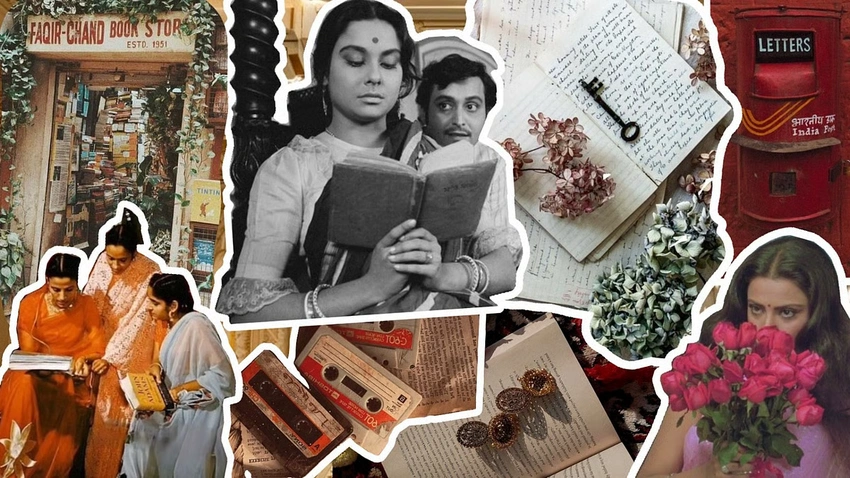 The Performance of Depth
Of course, the internet quickly turns every identity into performance. Once the thought daughter became recognisable, it also became marketable. Suddenly there were “thought daughter” reading lists, “thought daughter” films, “thought daughter” playlists. Interiority itself became aesthetic content.
This creates an uncomfortable contradiction. The thought daughter wants authenticity, but authenticity online is always shaped by spectatorship. Even sadness becomes curated.
Social media rewards visible introspection. A photograph of a marked-up copy of Dostoevsky performs intellectualism far more efficiently than quietly reading him alone. The algorithm favours legible identities, so people flatten themselves into archetypes that others can instantly recognise.
The danger is that complexity disappears. The thought daughter risks becoming less of a person and more of a consumable moodboard.
Yet dismissing her as “performative” also feels unfair. Women’s intellectual lives have historically been trivialised, mocked, or reduced to aesthetic decoration. The thought daughter partly emerges from this frustration. She insists on being seen as thoughtful in a culture that often refuses women seriousness without suspicion.
Why the Thought Daughter Feels Familiar
The thought daughter resonates because she reflects a broader cultural exhaustion. We live in an era of constant visibility and endless self-documentation. Every emotion risks becoming content before it is fully experienced. As a result, people increasingly turn inward, obsessing over memory and self-analysis in order to construct continuity.
 The thought daughter is someone attempting to narrate herself before the world narrates her incorrectly.
She is deeply concerned with meaning because contemporary life often feels historically thin. Digital culture moves too quickly for permanence. Trends disappear overnight. Images dissolve into feeds. Thoughts become temporary captions. In response, many people begin archiving themselves more intensely, trying to preserve emotional permanence in a culture built on disposability.
That is why the thought daughter is always reading old books, listening to old music, collecting fragments of history. She wants connection to something larger and older than the algorithmic present.
Beyond the Meme
Like all internet archetypes, the thought daughter will eventually fade and be replaced by another label. But the impulse behind her will remain.
Humans need archives because humans need continuity. We understand ourselves through stories, references, and remembered fragments. Identity is not something discovered fully formed inside us. It is built retrospectively through memory. Through objects. Through culture. Through the traces we leave behind.
Perhaps that is why the thought daughter spends so much time documenting her feelings. She is trying to create proof that she existed coherently at all.
And maybe that is what all of us are doing online now.
#ThoughtDaughter #InternetCulture #FeminineIdentity #MelancholyAesthetic #OnlineArchetypes
