Who Really Creates Durga Puja: Artists or Artisans?

Who Really Creates Durga Puja: Artists or Artisans?
Who Really Creates Durga Puja: Artists or Artisans?
A lens on Durga Puja in Kolkata to show how ritual and art blend, turning the city into a living gallery. It explores sponsorship, spectacle, and the hands behind every idol.
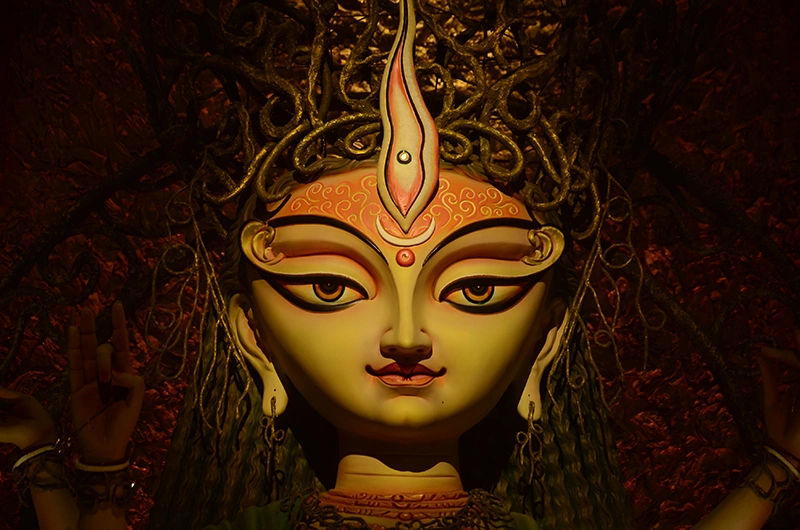
Every Autumn, Kolkata feels less like a city and more like a canvas. Walking through its streets during Durga Puja, I am reminded of how art spills into the everyday, dissolving the distinctions between gallery and pavement. As a postgraduate literature student, trained to read symbols and structures, I cannot help but ask: is the Puja an art exhibition or a devotional rite? And does it even make sense to separate the two?
The Anatomy of an Urban Spectacle
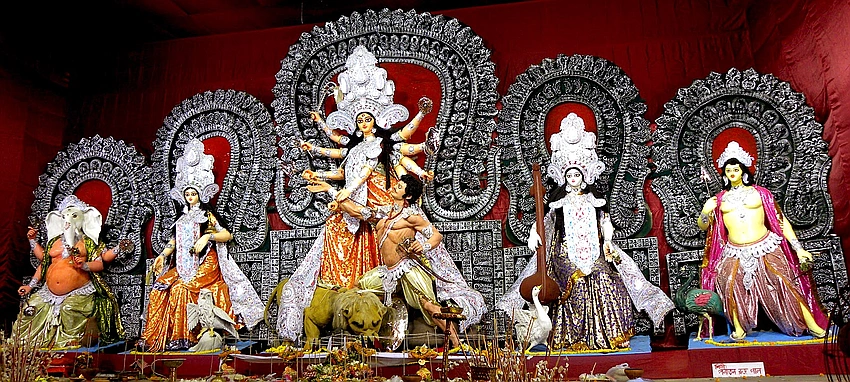
Tapati Guha-Thakurta’s In the Name of the Goddess remains indispensable for thinking through this transformation. Her research shows how Durga Puja has become a curated public art event, one that thrives on sponsorships, media visibility and competitive aesthetics. Yet what strikes me most in her work is her insistence that such grandeur always rests upon fragile hands and painstaking labour. The idol of the goddess may now be draped in modern design, but it is still born of clay, straw, bamboo and pigment — elements that remind us of the festival’s humble materiality.
When I stand before a pandal shimmering with lights and avant-garde design, I feel both awe and unease. Awe at the creative daring. Unease at the thought that the name of the artisan who shaped the goddess’s eyes may already be forgotten.
Clay, Colour, Creativity: The Artisan at Work
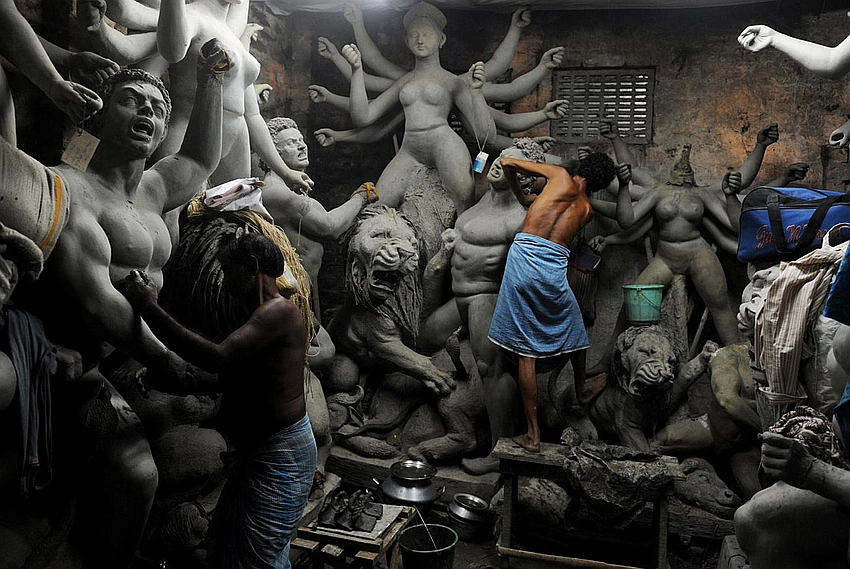
Watching artisans at Kumartuli, the traditional potters’ quarter of Kolkata, is like witnessing an unbroken lineage of making. The slow layering of clay, the steady hand painting features into life, the quiet care taken over each finger; all of it feels like a form of writing. Only here, the text is sculpted rather than inscribed.
This is where the categories of “art” and “craft” collapse for me. In seminar rooms, we often debate the hierarchy of fine art versus folk practice, but standing in a workshop thick with the smell of wet clay, that distinction feels absurd. The artisan is not simply reproducing a pattern. He or she is engaged in an act of creation that is both sacred and aesthetic, one that makes Durga appear in human imagination and community life alike.
Vernacular Modernity: Local Traditions in a Changing Landscape
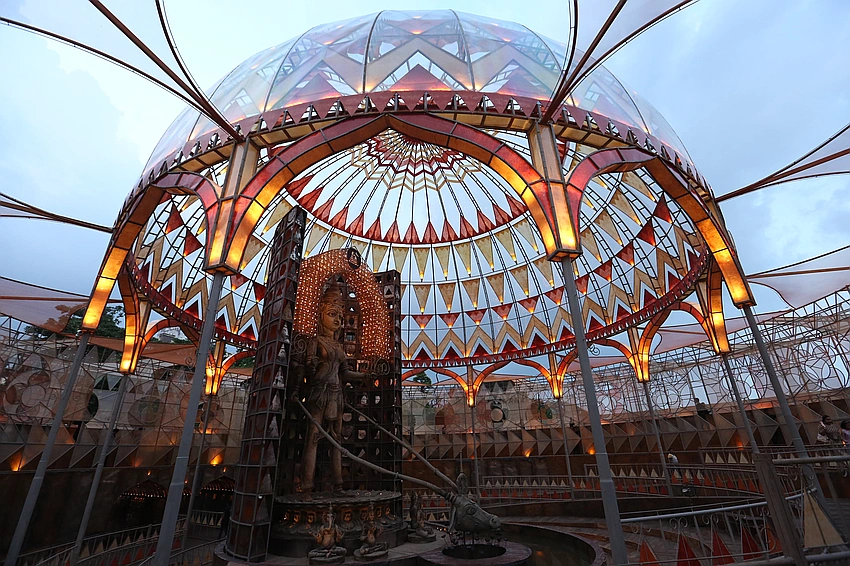
Yet Puja is not static. The chalchitra backdrops, hand-painted with mythological scenes, sit alongside pandals inspired by global architecture. Traditional alpana patterns reappear on urban floors, now often commodified for digital display. There is a kind of vernacular modernity at work here, where the local and the global are constantly negotiating.
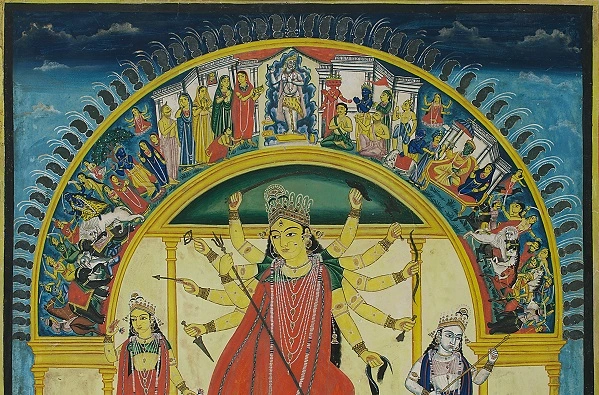
For me, this negotiation mirrors literature itself. Just as novels evolve by absorbing forms from other languages and traditions, so too does Durga Puja absorb influences while holding onto its vernacular heart. The lines are blurred not because tradition has been erased, but because it continues to reinvent itself in dialogue with the present.
Where Art Ends and Artisan Begins...or Do They?
The very distinction between artist and artisan becomes increasingly unstable in this context. When committees commission “theme artists” to design elaborate pandals, they frame Puja as a kind of curated art show. Yet, the goddess herself remains the work of artisans whose names are rarely displayed.
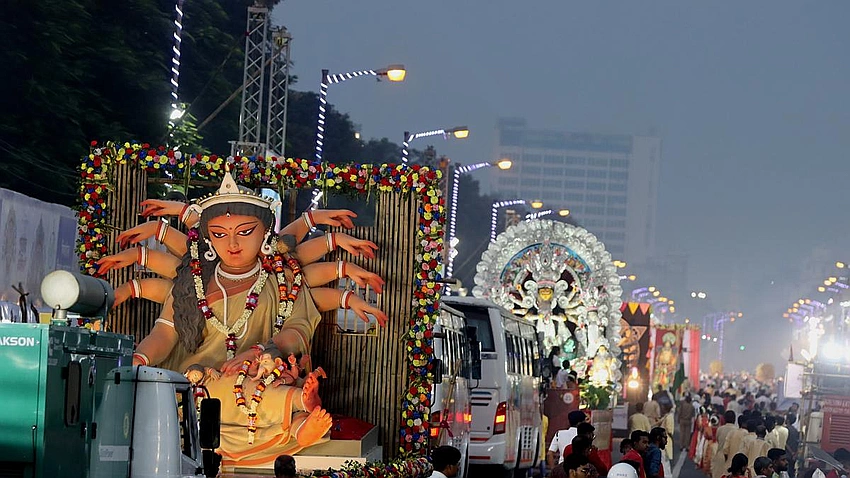
As Guha-Thakurta notes, the festival raises an unsettling question: whose labour counts as art, and whose remains invisible? For me, the answer lies in refusing the binary altogether. The designer and the clay modeller, the painter of the chalchitra and the electrician stringing up lights, all co-author the text of Durga Puja. The city becomes a collaborative poem, impossible to attribute to a single author.
Conclusion: A Personal Reflection and a Literary Lens
What I take away from Durga Puja is not just its spectacle, but its insistence on the inseparability of art and artisan. The goddess is not a static idol, but a palimpsest. Every layer of clay, every brushstroke, every handprint contributes to her form. To walk through the city during Puja is to read a text written by thousands, each line fleeting but deeply resonant.
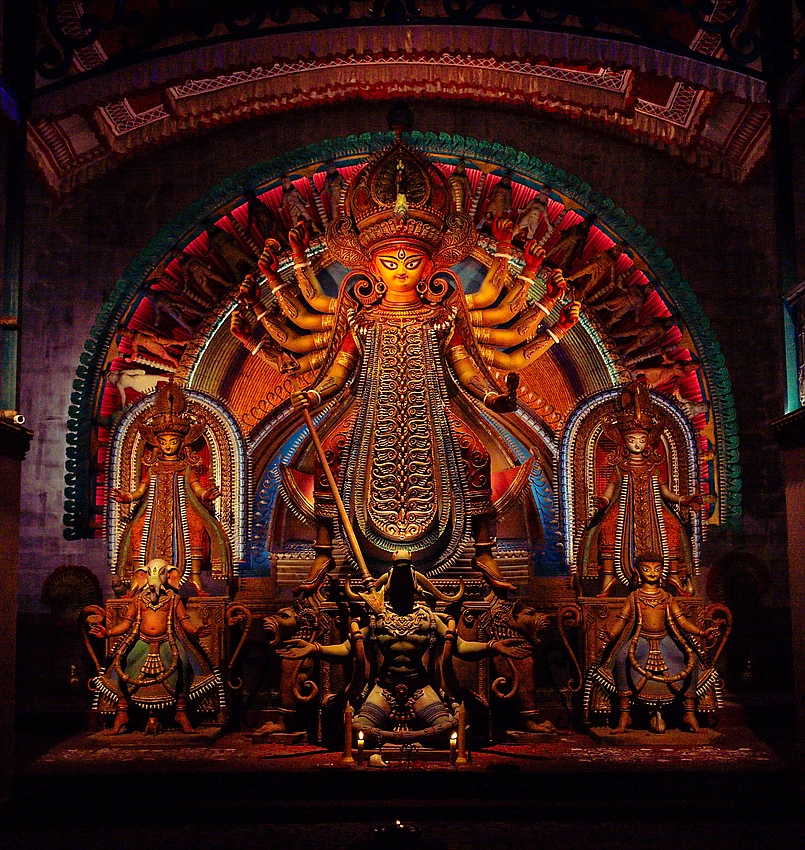
As a student of literature, I see in this festival a reminder that creation is never solitary. Just as a novel is shaped by editors, translators, traditions and even its readers, so too is Durga shaped by many unseen hands. Perhaps this is the most radical lesson Puja offers: that beauty, belief, and labour need not be ranked, but recognised as entangled.
When I think of the goddess returning to the river on the last day, dissolving back into clay, I am reminded of how fragile yet profound this creation is. Art and artisan, form and formlessness, all blur into one, leaving behind not permanence, but memory.
#DurgaPuja #KolkataArt #UrbanCulture #PublicArt #ArtAndRitual #Art #Artists #Artisan #Kolkata #Culture #CulturalAnalysis
