US-China Relations: Is a New "G-2" Emerging or Just Managed Tensions?
US-China Relations: Is a New "G-2" Emerging or Just Managed Tensions?
Despite recent high-level summits, the US-China strategic competition remains strong. Are we seeing a new era of cooperation or just careful management of deep-seated rivalries? Dive in!
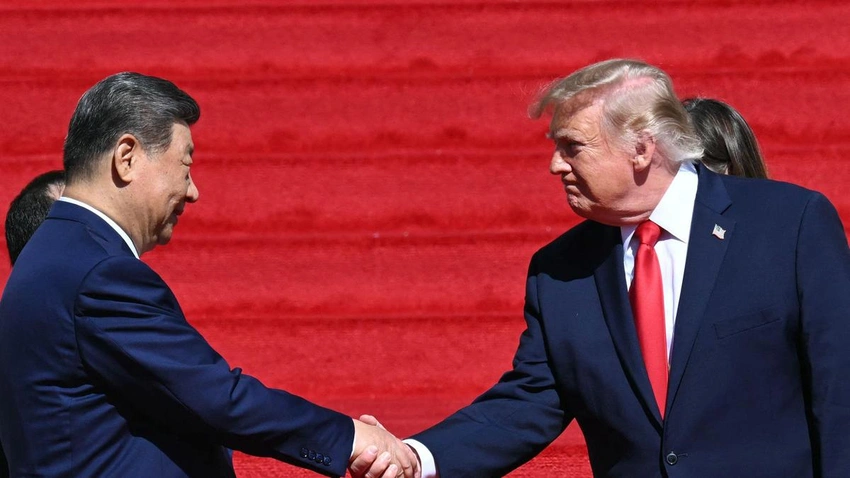
The world has been keenly observing the flurry of high-level meetings between the U.S. and Chinese Presidents over the past few months. After a decade-long gap since leaders like Donald Trump visited Beijing in 2017 or Xi Jinping was at the White House with Barack Obama in 2015, we've now seen four summits in just over six months across various cities.
This intense diplomatic activity has led some to wonder if a new "G-2" - a joint leadership by the two superpowers - is finally emerging.
However, despite the grand diplomatic gestures and hopeful language, the fundamental nature of the U.S.-China relationship appears largely unchanged. Both nations remain locked in a pervasive strategic competition, vying for dominance in the Indo-Pacific region and ultimately, globally, throughout the 21st century.
This rivalry spans military power, economic influence, technological advancement, foreign policy, and even ideological models, contrasting democratic capitalism with China's authoritarian system. Core decision-makers in Washington and Beijing still hold a deeply realist view of this ongoing contest, which the Chinese Communist Party has long termed the “struggle for the future of the international order.”
The crucial question isn't whether strategic competition will disappear, but whether it can be managed within a framework of mutually acceptable rules to avoid uncontrolled risks of crisis, conflict, or even war. What we are witnessing seems to be the development of an imperfect bilateral management mechanism.
This process notably began last May with the regularisation of political channels between U.S.
Treasury Secretary Scott Bessent and Chinese Vice Premier He Lifeng. This critical step followed a dangerous exchange of 125% tariffs imposed by both sides in April 2025, from which both nations ultimately pulled back to protect their economic interests.
Since then, Bessent, He, and their respective teams have met eight times, roughly every two months. This consistent dialogue, after a tumultuous decade across various aspects of the relationship, has indeed brought a measure of stability. China, in particular, has been pushing for this stability as it looks towards 2027.
The 21st Party Congress is scheduled for later next year, where President Xi Jinping is expected to secure a record fourth term as General Secretary and consolidate his power by appointing loyalists to top party positions.
While Xi's authority is firm, Beijing desires as benign a domestic economic environment as possible.
China faces significant internal economic challenges: private domestic consumption is sluggish, residential construction is in its sixth year of recession, and private fixed capital investment is flat. This leaves public investment, driven by China's massive techno-industrial strategy, and net exports as the primary engines for growth.
In this context, the last thing Beijing needs is further economic friction with the U.S. The current diplomatic engagements seem less about true rapprochement and more about strategically managing an unavoidable rivalry to secure domestic stability and international standing.
