The 70-Hour Rule: Why Slow Science Trumps Viral Breakthroughs

The 70-Hour Rule: Why Slow Science Trumps Viral Breakthroughs
In a world obsessed with instant gratification, real scientific progress takes serious time. Discover why spending 70 hours staring into space matters more than flashy viral breakthroughs.
Let us be honest about how we consume science today. We love a good viral moment. We scroll past a glowing headline, drop a quick like, and move on. We crave the flashy breakthroughs and the overnight discoveries. But that is not how real progress works. Real discovery is notoriously slow.
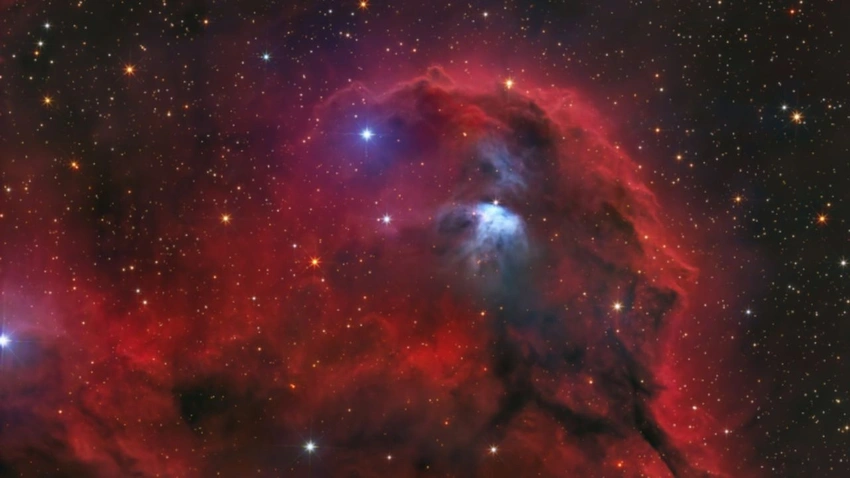
Take a recent feat by astrophotographer Emil Andronic. He captured a gorgeous blue reflection nebula glowing deep inside the red clouds of the Orion constellation. To get this shot, he did not just point a camera at the sky and click. He spent nearly 70 hours gathering the light needed to reveal this delicate structure. Seventy hours. That is almost three straight days of staring into the dark just to pull a single image out of the cosmic void.
This level of dedication is a perfect metaphor for all scientific endeavors. We live in an era obsessed with instant gratification. If a project does not yield immediate, headline-worthy results, people lose interest. Funding gets cut. Attention drifts. Yet, the most profound leaps in human knowledge require the exact opposite mindset.
The Grind Behind the Glory
Behind every major medical cure, space mission, or technological marvel, there are thousands of hours of unseen, unglamorous work. It is the slow, steady accumulation of data that builds the foundation for the future.
Here is why we need to celebrate the long game:
- Accuracy over speed: Rushing leads to errors. Taking the time ensures the data is undeniably solid.
- Noticing the unseen: Just like the faint blue light in Orion, the most important details only appear when you look long enough.
- Building resilience: Science is mostly failure. Patience teaches us to pivot and try again.
Redefining Success
We need to shift our cultural expectations. Instead of only cheering for the sudden eureka moments, we should applaud the grueling process. We should celebrate the researchers running their thousandth failed experiment and the observers logging endless nights under the stars.
The universe does not reveal its secrets on our modern, fast-paced schedule. It demands time. It demands focus. If we want to keep pushing the boundaries of what is possible, we have to remember that the best things in life, and in science, are worth waiting for.
