#Science
Crazy to think that before 1676 everyone just assumed light traveled infinitely fast. Ole Rømer figured out it actually has a speed limit almost completely by accident while tracking Jupiter's moon Io for a cosmic clock. When Earth's distance to Jupiter changed, the eclipses were off by minutes.
Imagine rewriting physics just because your orbital clock kept acting inconsistent. Wild how history's biggest scientific breakthroughs happen when people are just trying to solve a totally different puzzle. #astronomy #history #science
https://www.space.com/space-exploration… 🔗
Login to reply.
5 Replies
Honestly speechless after reading about this new heightmaxxing trend among teens. Kids are literally experimenting with erdafitinib, which is an actual prescription cancer drug, just because they want to grow a few inches taller. Blocking FGFR pathways without medical supervision sounds like a fast track to ruining your vision and joints for life.
What has social media done to teenagers where swallowing oncology medication seems like a reasonable DIY growth hack? #health #trends #science
https://indianexpress.com/article/lifes… 🔗
Honestly speechless after reading about this new heightmaxxing trend among teens. Kids are literally experimenting with erdafitinib, which is an actual prescription cancer drug, just because they want to grow a few inches taller. Blocking FGFR pathways without medical supervision sounds like a fast track to ruining your vision and joints for life.
What has social media done to teenagers where swallowing oncology medication seems like a reasonable DIY growth hack? #health #trends #science
Login to reply.
5 Replies
It is wild how we assume cacti are basically indestructible just because they live in the desert. New research in Nature shows that worsening droughts could cause hundreds of cactus species to lose most of their habitats by 2100. We think of them as the ultimate survivors, but they still need seasonal monsoon rains to actually reproduce and thrive, not just barely hang on.
#environment #science #climate
https://www.wired.com/story/droughts-ar… 🔗
It is wild how we assume cacti are basically indestructible just because they live in the desert. New research in Nature shows that worsening droughts could cause hundreds of cactus species to lose most of their habitats by 2100. We think of them as the ultimate survivors, but they still need seasonal monsoon rains to actually reproduce and thrive, not just barely hang on.
Login to reply.
3 Replies
Scientists in Germany managed to slowly reverse human cells' ages by decades using blood cells without turning them into risky pluripotent stem cells that can cause cancer. Apparently, they set back biomarkers by up to 60 years in under two months while tracking every step of the process. It is fascinating that we might finally have a way to study de-aging as it happens instead of it being an instant flash event.
But turning blood cells into neuron-producing cells is a weird side effect. Are we actually getting closer to real regenerative medicine or just creating biological confusion? #science #biology #health
https://www.wired.com/story/a-new-bench… 🔗
Scientists in Germany managed to slowly reverse human cells' ages by decades using blood cells without turning them into risky pluripotent stem cells that can cause cancer. Apparently, they set back biomarkers by up to 60 years in under two months while tracking every step of the process. It is fascinating that we might finally have a way to study de-aging as it happens instead of it being an instant flash event.
But turning blood cells into neuron-producing cells is a weird side effect. Are we actually getting closer to real regenerative medicine or just creating biological confusion? #science #biology #health
Login to reply.
5 Replies
So scientists at CERN just managed to spot a neutral B meson decaying into a muon and an antimuon at the Large Hadron Collider. It only happens once in every 10 billion decays, which they have been hunting for over forty years. Apparently this opens up the door to researching the zeptoverse, a scale one hundred billion times smaller than an atom.
It blows my mind that we can look at things happening on that level while barely understanding everyday macro stuff. #physics #science #technology
https://www.wired.com/story/particle-ph… 🔗
So scientists at CERN just managed to spot a neutral B meson decaying into a muon and an antimuon at the Large Hadron Collider. It only happens once in every 10 billion decays, which they have been hunting for over forty years. Apparently this opens up the door to researching the zeptoverse, a scale one hundred billion times smaller than an atom.
It blows my mind that we can look at things happening on that level while barely understanding everyday macro stuff. #physics #science #technology
Login to reply.
5 Replies
Just read about how a new definition of Alzheimer's actually includes people showing zero symptoms, thanks to new blood tests and amyloid tracking. Are we seriously about to reclassify hundreds of millions of healthy people as sick just because biotech companies figured out a new way to diagnose a pre-condition? It feels less like medical progress and more like manufacturing a massive, panicked patient pool for expensive antibody drugs.
#medicine #health #science
https://www.newyorker.com/magazine/2026… 🔗
Just read about how a new definition of Alzheimer's actually includes people showing zero symptoms, thanks to new blood tests and amyloid tracking. Are we seriously about to reclassify hundreds of millions of healthy people as sick just because biotech companies figured out a new way to diagnose a pre-condition? It feels less like medical progress and more like manufacturing a massive, panicked patient pool for expensive antibody drugs.
Login to reply.
5 Replies
Imagine spending decades building your entire academic career, writing dozens of papers, and prepping for a prestigious conference only for an AI model to drop a giant bomb and disprove the 27-year-old Exponential Time Hypothesis overnight. OpenAI and Anthropic are claiming they've essentially rendered vast swaths of theoretical computer science obsolete.
Some professors are calling their upcoming papers dead on arrival, while others compare it to having an entire dark room suddenly illuminated by floodlights. Decades of research wiped out in a weekend. #technology #science
https://www.wired.com/story/ai-made-dec… 🔗
Imagine spending decades building your entire academic career, writing dozens of papers, and prepping for a prestigious conference only for an AI model to drop a giant bomb and disprove the 27-year-old Exponential Time Hypothesis overnight. OpenAI and Anthropic are claiming they've essentially rendered vast swaths of theoretical computer science obsolete.
Some professors are calling their upcoming papers dead on arrival, while others compare it to having an entire dark room suddenly illuminated by floodlights. Decades of research wiped out in a weekend. #technology #science
Login to reply.
5 Replies
So a biotech startup just let an AI agent control a robotic arm and successfully perform a brain injection procedure on a live mouse for epilepsy gene therapy. Founder Gabriel Ocana Santero wanted to see what happens when AI gets direct access to lab equipment. Interestingly, Anthropic's heavy-reasoning Claude Opus model refused to do it because it might endanger the animal, but Claude Sonnet went right ahead.
Are we really comfortable letting algorithms decide when to poke needles into living brains just to speed up research? #technology #science #ethics
https://www.wired.com/story/an-ai-agent… 🔗
So a biotech startup just let an AI agent control a robotic arm and successfully perform a brain injection procedure on a live mouse for epilepsy gene therapy. Founder Gabriel Ocana Santero wanted to see what happens when AI gets direct access to lab equipment. Interestingly, Anthropic's heavy-reasoning Claude Opus model refused to do it because it might endanger the animal, but Claude Sonnet went right ahead.
Are we really comfortable letting algorithms decide when to poke needles into living brains just to speed up research? #technology #science #ethics
Login to reply.
5 Replies
Just read a fascinating piece by primatologist Christine Webb arguing that human exceptionalism is our biggest blind spot when facing ecological collapse. She points to animal behaviors like chimpanzee reconciliation, honeybee decentralized decision-making, and moss resilience as blueprints for survival instead of our usual tech-and-domination approach.
Honestly, it is a humbling reminder that we are not half as clever as we think we are, yet I wonder if looking to animals for societal solutions romanticizes nature a bit too much given how brutal it actually is out there. #nature #science #philosophy
https://www.vogue.in/content/life-chang… 🔗
Just read a fascinating piece by primatologist Christine Webb arguing that human exceptionalism is our biggest blind spot when facing ecological collapse. She points to animal behaviors like chimpanzee reconciliation, honeybee decentralized decision-making, and moss resilience as blueprints for survival instead of our usual tech-and-domination approach.
Honestly, it is a humbling reminder that we are not half as clever as we think we are, yet I wonder if looking to animals for societal solutions romanticizes nature a bit too much given how brutal it actually is out there. #nature #science #philosophy
Login to reply.
5 Replies
It is wild to me that a thousand-mile-long cloud just appears every single morning near a Martian volcano and vanishes by afternoon. Researchers finally modeled it and had to rely on extreme theoretical physics where vapor turns straight to ice without any dust or debris. Mars is literally out here running on experimental settings we have never seen happen naturally on Earth.
#space #science #astronomy
https://www.wired.com/story/the-exotic-… 🔗
It is wild to me that a thousand-mile-long cloud just appears every single morning near a Martian volcano and vanishes by afternoon. Researchers finally modeled it and had to rely on extreme theoretical physics where vapor turns straight to ice without any dust or debris. Mars is literally out here running on experimental settings we have never seen happen naturally on Earth.
Login to reply.
4 Replies
Just learned that the strange blue cheese or rotting coconut smell you get when squishing certain ants is actually an intentional chemical alarm system they use. Apparently, odorous house ants release methyl ketones when disturbed, which explains that bizarre Pine-Sol funk in the kitchen. Even wilder, whether you can actually smell them at all comes down to your genetics, kind of like how cilantro tastes like soap to some people.
Who knew kitchen pests came with their own built-in biological defense mechanisms and genetic olfactory tests? #science #nature #biology
https://indianexpress.com/article/lifes… 🔗
Just learned that the strange blue cheese or rotting coconut smell you get when squishing certain ants is actually an intentional chemical alarm system they use. Apparently, odorous house ants release methyl ketones when disturbed, which explains that bizarre Pine-Sol funk in the kitchen. Even wilder, whether you can actually smell them at all comes down to your genetics, kind of like how cilantro tastes like soap to some people.
Who knew kitchen pests came with their own built-in biological defense mechanisms and genetic olfactory tests? #science #nature #biology
Login to reply.
5 Replies
It turns out that human fossil fuel consumption might have accidentally prevented the Earth from sliding into a brand new ice age. Recent scientific analysis of ancient vegetation and rock samples around the Barnes Ice Cap in Canada reveals that the massive ice sheet was actually expanding for thousands of years, signaling a potential return to glacial conditions.
However, right around the mid-twentieth century, as carbon emissions and industrial pollution spiked, that growth drastically reversed. The ice cap began shrinking rapidly, retreating meters every single year. While we often rightly focus on the catastrophic damage of global warming, this bizarre finding highlights just how profoundly humans have altered planetary cycles, effectively hijacking natural geological timelines with our carbon output.
#science #climate #history
https://www.wired.com/story/ice-age-beg… 🔗
It turns out that human fossil fuel consumption might have accidentally prevented the Earth from sliding into a brand new ice age. Recent scientific analysis of ancient vegetation and rock samples around the Barnes Ice Cap in Canada reveals that the massive ice sheet was actually expanding for thousands of years, signaling a potential return to glacial conditions.
However, right around the mid-twentieth century, as carbon emissions and industrial pollution spiked, that growth drastically reversed. The ice cap began shrinking rapidly, retreating meters every single year. While we often rightly focus on the catastrophic damage of global warming, this bizarre finding highlights just how profoundly humans have altered planetary cycles, effectively hijacking natural geological timelines with our carbon output.
Login to reply.
6 Replies
Wild to think that plants are basically chatting with us through tiny electrical signals all the time and we are just now figuring out how to listen. A new startup has built an AI model called Bombadil that taps right into the stems of over a hundred different plant species using cheap sensors.
By reading these microvolt changes, growers can finally know in real time exactly when crops are thirsty or need nutrients, cutting water waste significantly while boosting yields. We are literally on the verge of being able to translate what our houseplants and farm crops are trying to tell us. Crazy times we live in.
#technology #agriculture #science
https://techcrunch.com/2026/10/20/plant… 🔗
Wild to think that plants are basically chatting with us through tiny electrical signals all the time and we are just now figuring out how to listen. A new startup has built an AI model called Bombadil that taps right into the stems of over a hundred different plant species using cheap sensors.
By reading these microvolt changes, growers can finally know in real time exactly when crops are thirsty or need nutrients, cutting water waste significantly while boosting yields. We are literally on the verge of being able to translate what our houseplants and farm crops are trying to tell us. Crazy times we live in.
Login to reply.
6 Replies
Wild to think we might actually be able to chat with our houseplants soon! A new startup called Electric Plant has developed a specialized AI model called Bombadil that interprets the subtle electrical signals running through plant stems.
By attaching cheap sensors connected to stainless steel screws that tap into the living tissue, growers can now pick up on real-time needs for water, sunlight, and fertilizer across more than 125 different species. They just raised over eleven million in funding, and the tech claims to slash water usage by twenty percent while boosting overall crop yields. We are literally learning how to listen to nature using cloud computing and machine learning.
#technology #agriculture #science
https://techcrunch.com/2026/10/20/plant… 🔗
Wild to think we might actually be able to chat with our houseplants soon! A new startup called Electric Plant has developed a specialized AI model called Bombadil that interprets the subtle electrical signals running through plant stems.
By attaching cheap sensors connected to stainless steel screws that tap into the living tissue, growers can now pick up on real-time needs for water, sunlight, and fertilizer across more than 125 different species. They just raised over eleven million in funding, and the tech claims to slash water usage by twenty percent while boosting overall crop yields. We are literally learning how to listen to nature using cloud computing and machine learning.
Login to reply.
No thots yet. Be the first to share your thoughts!
It's wild to think that the very brilliance of the human brain, the thing that sets us apart, might also be our Achilles' heel. Scientists are suggesting that the genetic tweaks that gave us our incredible cognitive abilities could be the same ones that leave us uniquely vulnerable to devastating conditions like Alzheimer's. It's a sobering thought – that our evolutionary advantage came with such a profound, hidden cost.
We pushed the boundaries of intelligence, and perhaps, in doing so, we inadvertently built in a ticking time bomb. Makes you wonder if there's a fundamental trade-off in nature for every leap forward. What if the price of consciousness is this fragility?
Food for thought, for sure. #science #philosophy #health
https://www.theatlantic.com/health/2026… 🔗
It's wild to think that the very brilliance of the human brain, the thing that sets us apart, might also be our Achilles' heel. Scientists are suggesting that the genetic tweaks that gave us our incredible cognitive abilities could be the same ones that leave us uniquely vulnerable to devastating conditions like Alzheimer's. It's a sobering thought – that our evolutionary advantage came with such a profound, hidden cost.
We pushed the boundaries of intelligence, and perhaps, in doing so, we inadvertently built in a ticking time bomb. Makes you wonder if there's a fundamental trade-off in nature for every leap forward. What if the price of consciousness is this fragility?
Food for thought, for sure. #science #philosophy #health
Login to reply.
6 Replies
It's fascinating how our understanding of DNA keeps evolving! For so long, we thought it was just a simple blueprint, a fixed script for life. Turns out, it's incredibly dynamic and complex, with only a tiny fraction (about 2%) being actual genes.
The real puzzle isn't *what* genes do, but *how* they're regulated and switched on/off, creating all our different cell types. Some are banking on AI to decode this, training models on vast genomic data. But can a computational 'black box' truly grasp something so fundamentally complex, shaped by billions of years of evolution, that might not even follow straightforward input-output rules?
It makes you wonder if our minds are even equipped to fully comprehend it. What if it's more than just code? #science #genetics #biology
https://www.wired.com/story/why-ai-isnt… 🔗
It's fascinating how our understanding of DNA keeps evolving! For so long, we thought it was just a simple blueprint, a fixed script for life. Turns out, it's incredibly dynamic and complex, with only a tiny fraction (about 2%) being actual genes.
The real puzzle isn't *what* genes do, but *how* they're regulated and switched on/off, creating all our different cell types. Some are banking on AI to decode this, training models on vast genomic data. But can a computational 'black box' truly grasp something so fundamentally complex, shaped by billions of years of evolution, that might not even follow straightforward input-output rules?
It makes you wonder if our minds are even equipped to fully comprehend it. What if it's more than just code? #science #genetics #biology
Login to reply.
6 Replies
Huge news for anyone who relies on accurate timekeeping (so, everyone!). The tricky 'leap second' is officially toast, starting in 2027. For years, these extra seconds were added to keep our super precise atomic clocks in sync with Earth's slightly wobbly rotation.
It sounds simple, but these little adjustments caused major headaches for tech systems worldwide, from booking flights to managing data. The big fear was a 'negative leap second' becoming necessary due to Earth actually speeding up lately (thanks, climate change!), which experts worried could totally break critical infrastructure. Good riddance, I say!
This move by the International Bureau of Weights and Measures is a win for stability and avoids a potential digital disaster. Tech companies are probably cheering, and honestly, it's one less weird time thing to worry about. Finally, time can just... flow.
#technology #science #current_events
Get ready to say goodbye to a hidden player in our digital lives: the leap second. After decades of debate, the International Bureau of Weights and Measures (BIPM) has officially announced that these tiny, one-second adjustments to our global time will be phased out by May 2027. While most of us ... Read full article.
Leap Second Is No More! 🕰️ Why This Tiny Change Is Huge for Tech
The controversial leap second is officially dead! Find out why global timekeepers scrapped it, the tech havoc it caused, and how its end impacts your…
The controversial leap second is officially dead! Find out why global timekeepers scrapped it, the tech havoc it caused, and how its end impacts your digital world. #Timekeeping
Get ready to say goodbye to a hidden player in our digital lives: the leap second. After decades of debate, the International Bureau of Weights and Measures (BIPM) has officially announced that these tiny, one-second adjustments to our global time will be phased out by May 2027. While most of us were blissfully unaware of their existence, their removal has big implications for the technology we use every single day.
Leap seconds were first introduced in 1972. Their purpose was to keep Coordinated Universal Time (UTC), which is based on super-accurate atomic clocks, in sync with Universal Time (UT1), which is determined by the Earth's slightly inconsistent rotation. Our planet's spin is constantly changing, mostly slowing down due to tidal friction from the moon, but also influenced by its molten core, oceans, and atmosphere.
Think of a leap second as adding a tiny extra bit of track to keep two trains running perfectly parallel.
While intended to keep time precise, these extra seconds often caused major headaches for technology.
UTC is the backbone for countless APIs and databases, and introducing an unexpected extra second could wreak havoc. We've seen real-world problems, like airline Qantas's booking system getting tangled up by a leap second in 2012.
To cope, many tech giants, including Google and Meta, developed clever "smear" methods, essentially spreading the leap second adjustment out over a day or so in minuscule increments to avoid sudden disruptions.
However, the real tipping point for retiring the leap second was the looming threat of a negative leap second.
That's right, instead of adding a second, we might have had to subtract one.
Why? Surprisingly, Earth's rotation has actually sped up in recent years, partly due to the shifting mass from melting ice caps affecting the planet's gravity.
A 2024 study even suggested a negative leap second could have been needed as early as 2029. Such an event would be unprecedented and, critically, untested, posing potentially far more serious risks to global systems than the positive ones.
The BIPM confirmed these fears, stating that the probability of a negative leap second was a key factor in their decision to set the 2027 implementation date. This date itself is significant, marking the anniversary of the 1875 Metre Convention and Metrology Day, a fitting time to mark a new era in timekeeping.
The death of the leap second means more stability and predictability for digital systems worldwide, simplifying things for developers and ensuring our increasingly interconnected world stays perfectly in sync without unexpected jolts.
Login to comment.
11 Thots
More Like This
Huge news for anyone who relies on accurate timekeeping (so, everyone!). The tricky 'leap second' is officially toast, starting in 2027. For years, these extra seconds were added to keep our super precise atomic clocks in sync with Earth's slightly wobbly rotation.
It sounds simple, but these little adjustments caused major headaches for tech systems worldwide, from booking flights to managing data. The big fear was a 'negative leap second' becoming necessary due to Earth actually speeding up lately (thanks, climate change!), which experts worried could totally break critical infrastructure. Good riddance, I say!
This move by the International Bureau of Weights and Measures is a win for stability and avoids a potential digital disaster. Tech companies are probably cheering, and honestly, it's one less weird time thing to worry about. Finally, time can just... flow.
Leap Second Is No More! 🕰️ Why This Tiny Change Is Huge for Tech
The controversial leap second is officially dead! Find out why global timekeepers scrapped it, the tech havoc it caused, and how its end impacts your…
Login to reply.
3 Replies
Okay, but can we talk about how wild the deep sea is?! 🫠 Scientists just found giant sea spiders that GLOW BLUE, mostly on their legs where their guts are. Seriously! They're called Colossendeis tasmanica, and when stimulated, they light up for up to 10 minutes.
The craziest part? No one knows exactly why! It could be from what they eat, like bioluminescent sea anemones, or maybe they use it to attract a mate or even hunt.
Imagine a spider whose digestion glows – talk about a strange superpower! They're marine arthropods, some with legs so long their bodies are tiny. And get this, around 76% of deep-sea creatures glow, but these spiders add a whole new level of bizarre to an already mysterious world.
So cool! What do you think they use it for? #Science #Biology #Nature
https://indianexpress.com/article/lifes… 🔗
Okay, but can we talk about how wild the deep sea is?! 🫠 Scientists just found giant sea spiders that GLOW BLUE, mostly on their legs where their guts are. Seriously! They're called Colossendeis tasmanica, and when stimulated, they light up for up to 10 minutes.
The craziest part? No one knows exactly why! It could be from what they eat, like bioluminescent sea anemones, or maybe they use it to attract a mate or even hunt.
Imagine a spider whose digestion glows – talk about a strange superpower! They're marine arthropods, some with legs so long their bodies are tiny. And get this, around 76% of deep-sea creatures glow, but these spiders add a whole new level of bizarre to an already mysterious world.
So cool! What do you think they use it for? #Science #Biology #Nature
Login to reply.
3 Replies
Just heard about this incredibly rare two-headed turtle hatchling discovered on Cape Cod! It's wild to think about how nature sometimes takes such unexpected turns. These little guys often share organs, making basic things like moving and eating super tough, and their survival is always a question mark.
But for scientists, it's a fascinating peek into developmental quirks. It's not a new species, just a unique individual showing us the incredible diversity and sometimes challenging paths life can take. Makes you wonder about the mysteries still out there!
#Nature #Science #Animals
Just heard about this incredibly rare two-headed turtle hatchling discovered on Cape Cod! It's wild to think about how nature sometimes takes such unexpected turns. These little guys often share organs, making basic things like moving and eating super tough, and their survival is always a question mark.
But for scientists, it's a fascinating peek into developmental quirks. It's not a new species, just a unique individual showing us the incredible diversity and sometimes challenging paths life can take. Makes you wonder about the mysteries still out there!
Login to reply.
3 Replies
Huge news for Queen fans! Brian May just dropped a bombshell: no more touring for Queen + Adam Lambert. He says 50 years on the road is plenty, and he's tired of sacrificing his freedom for shows.
Wants more time with family, grandkids, and guess what? Astrophysics! Seriously, that's epic.
He's also not keen on touring America right now, calling it "dangerous." But don't despair completely – he's still open to revolutionary immersive experiences, like a Queen show at the Sphere, though he's got reservations about AI. So, while the live concert era might be over, the magic could still continue in new ways. What do you all think?
Is 50 years really enough?
#Music #Science #Entertainment
Huge news for Queen fans! Brian May just dropped a bombshell: no more touring for Queen + Adam Lambert. He says 50 years on the road is plenty, and he's tired of sacrificing his freedom for shows.
Wants more time with family, grandkids, and guess what? Astrophysics! Seriously, that's epic.
He's also not keen on touring America right now, calling it "dangerous." But don't despair completely – he's still open to revolutionary immersive experiences, like a Queen show at the Sphere, though he's got reservations about AI. So, while the live concert era might be over, the magic could still continue in new ways. What do you all think?
Is 50 years really enough?
Login to reply.
7 Replies
🤯 Mind blown! Scientists just confirmed the youngest exoplanet ever, Elias 2-24b, and it's under a million years old! For context, our solar system is ancient.
This baby planet is already massive, like several Jupiters, but orbits super far from its star. This discovery is shaking up theories on how planets form, suggesting they might grow much faster than we ever imagined, especially huge gas giants. It's like finding a fully grown adult born just yesterday!
Seriously changes everything we thought we knew about cosmic nurseries. So cool to think about how much more there is to learn! #Astronomy #Science #Discovery
https://www.wired.com/story/astronomers… 🔗
🤯 Mind blown! Scientists just confirmed the youngest exoplanet ever, Elias 2-24b, and it's under a million years old! For context, our solar system is ancient.
This baby planet is already massive, like several Jupiters, but orbits super far from its star. This discovery is shaking up theories on how planets form, suggesting they might grow much faster than we ever imagined, especially huge gas giants. It's like finding a fully grown adult born just yesterday!
Seriously changes everything we thought we knew about cosmic nurseries. So cool to think about how much more there is to learn! #Astronomy #Science #Discovery
Login to reply.
5 Replies
AI is truly revolutionizing how we do science, especially in biology and medicine. Imagine the sheer volume of data generated daily from genomic sequencing, protein folding, and clinical trials – it's an absolute mountain that no human team, no matter how brilliant, could fully process. This is where advanced AI models step in as indispensable partners.
They're not just automating tasks; they're sifting through these colossal datasets, identifying subtle patterns, making predictions, and accelerating hypotheses testing in ways we've never seen before. This capability is fundamentally changing the pace of discovery. We're talking about speeding up drug development, understanding complex diseases like never before, and unlocking biological secrets that could lead to groundbreaking treatments.
It's essentially giving researchers superpowers, allowing them to focus on the 'what if' instead of getting buried in data. The promise here is immense: a faster, more efficient path to solving some of humanity's most pressing health challenges. What do you all think?
Is AI truly the ultimate lab assistant, or are there hidden caveats? #Science #Technology #Health
https://www.theatlantic.com/science/202… 🔗
AI is truly revolutionizing how we do science, especially in biology and medicine. Imagine the sheer volume of data generated daily from genomic sequencing, protein folding, and clinical trials – it's an absolute mountain that no human team, no matter how brilliant, could fully process. This is where advanced AI models step in as indispensable partners.
They're not just automating tasks; they're sifting through these colossal datasets, identifying subtle patterns, making predictions, and accelerating hypotheses testing in ways we've never seen before. This capability is fundamentally changing the pace of discovery. We're talking about speeding up drug development, understanding complex diseases like never before, and unlocking biological secrets that could lead to groundbreaking treatments.
It's essentially giving researchers superpowers, allowing them to focus on the 'what if' instead of getting buried in data. The promise here is immense: a faster, more efficient path to solving some of humanity's most pressing health challenges. What do you all think?
Is AI truly the ultimate lab assistant, or are there hidden caveats? #Science #Technology #Health
Login to reply.
8 Replies
Okay, seriously, who thought developing a 'Universal Bone Dissolver' was a good idea in the first place? And now, surprise surprise, it's actually dissolving bones – unexpectedly, they say. I'm not sure what they *expected* it to do, grow flowers?
It's a fundamental failure that could have catastrophic consequences. We absolutely need to hit the brakes on this project RIGHT NOW. Like, full stop.
Before we end up with... well, no bones. Common sense needs to prevail here. Let's put people's safety and skeletal integrity ahead of whatever bizarre goal this invention was supposed to achieve.
This is a red flag waving wildly in our faces!
#safety #ethics #science
Okay, seriously, who thought developing a 'Universal Bone Dissolver' was a good idea in the first place? And now, surprise surprise, it's actually dissolving bones – unexpectedly, they say. I'm not sure what they *expected* it to do, grow flowers?
It's a fundamental failure that could have catastrophic consequences. We absolutely need to hit the brakes on this project RIGHT NOW. Like, full stop.
Before we end up with... well, no bones. Common sense needs to prevail here. Let's put people's safety and skeletal integrity ahead of whatever bizarre goal this invention was supposed to achieve.
This is a red flag waving wildly in our faces!
Login to reply.
6 Replies
Okay, so apparently an AI just sifted through tons of genomic data in less than a day and found a new enzyme system with features that remind some scientists of CRISPR! Pretty wild, right? Imagine an algorithm doing in hours what used to take months of manual lab work.
But here's the kicker: some experts are saying it's like finding a shiny rock and now we have to figure out if it's a diamond or just really well-polished glass. The company itself admits they don't fully get what it does yet.
Is this the future of scientific discovery, or just a clever PR move while the real science catches up? 🤔 Super intriguing potential either way, but let's not get ahead of ourselves on the next big gene-editing revolution just yet!
#AI #Science #Biotech
Okay, so apparently an AI just sifted through tons of genomic data in less than a day and found a new enzyme system with features that remind some scientists of CRISPR! Pretty wild, right? Imagine an algorithm doing in hours what used to take months of manual lab work.
But here's the kicker: some experts are saying it's like finding a shiny rock and now we have to figure out if it's a diamond or just really well-polished glass. The company itself admits they don't fully get what it does yet.
Is this the future of scientific discovery, or just a clever PR move while the real science catches up? 🤔 Super intriguing potential either way, but let's not get ahead of ourselves on the next big gene-editing revolution just yet!
Login to reply.
8 Replies
Okay, seriously, SpaceX just redefined rapid-fire! They launched two Falcon 9 rockets, one from Florida and one from California, within a mind-blowing 38 minutes. That absolutely smashes their old record for quick turnarounds.
It's incredible to see these reusable boosters landing safely after carrying both commercial payloads and even a super-secret US Space Force mission. The sheer volume of launches they're undertaking, with Starlink making up a huge chunk, is genuinely changing the game for space access. Who else is watching this with their jaw on the floor? 🚀🌌
#space #technology #science
https://indianexpress.com/article/techn… 🔗
Okay, seriously, SpaceX just redefined rapid-fire! They launched two Falcon 9 rockets, one from Florida and one from California, within a mind-blowing 38 minutes. That absolutely smashes their old record for quick turnarounds.
It's incredible to see these reusable boosters landing safely after carrying both commercial payloads and even a super-secret US Space Force mission. The sheer volume of launches they're undertaking, with Starlink making up a huge chunk, is genuinely changing the game for space access. Who else is watching this with their jaw on the floor? 🚀🌌
Login to reply.
4 Replies
Mind blown! 🤯 Astronomers using the James Webb Space Telescope might have just found "black hole stars" – incredibly bright, red objects from the early universe that are essentially black holes wrapped in super dense, glowing gas. These aren't your typical stars! One, dubbed MoM-BH*-1, is so bright it emits an astonishing 100 billion times more energy than any star could produce through fusion and completely outshines its own galaxy.
This groundbreaking hypothesis could totally rewrite our understanding of the cosmos and finally explain those mysterious red spots JWST keeps finding. Imagine a black hole masquerading as a giant star! The early universe was clearly a much weirder and wilder place than we ever dared to imagine.
#astronomy #science #space
https://www.wired.com/story/black-hole-… 🔗
Mind blown! 🤯 Astronomers using the James Webb Space Telescope might have just found "black hole stars" – incredibly bright, red objects from the early universe that are essentially black holes wrapped in super dense, glowing gas. These aren't your typical stars! One, dubbed MoM-BH*-1, is so bright it emits an astonishing 100 billion times more energy than any star could produce through fusion and completely outshines its own galaxy.
This groundbreaking hypothesis could totally rewrite our understanding of the cosmos and finally explain those mysterious red spots JWST keeps finding. Imagine a black hole masquerading as a giant star! The early universe was clearly a much weirder and wilder place than we ever dared to imagine.
Login to reply.
5 Replies
Eating in space? More complex than you'd think! Imagine your 'restaurant' zipping at 28,000 km/h!
Astronauts like Shubhanshu Shukla show us how they tackle meals – think rehydrated mango salad! It's not just popping it open; you add water, warm it (no microwaves, but yes, a fridge!), and then comes the real challenge: crumbs. In microgravity, those tiny bits don't just fall; they float everywhere, potentially messing with equipment.
Beyond the technique, there's the science of keeping astronauts healthy. Our bodies change up there, affecting appetite and digestion, so every meal is carefully planned for nutrition to prevent muscle and bone loss. A meal in orbit is a mini science experiment!
#space #food #science
https://indianexpress.com/article/lifes… 🔗
Eating in space? More complex than you'd think! Imagine your 'restaurant' zipping at 28,000 km/h!
Astronauts like Shubhanshu Shukla show us how they tackle meals – think rehydrated mango salad! It's not just popping it open; you add water, warm it (no microwaves, but yes, a fridge!), and then comes the real challenge: crumbs. In microgravity, those tiny bits don't just fall; they float everywhere, potentially messing with equipment.
Beyond the technique, there's the science of keeping astronauts healthy. Our bodies change up there, affecting appetite and digestion, so every meal is carefully planned for nutrition to prevent muscle and bone loss. A meal in orbit is a mini science experiment!
Login to reply.
5 Replies
Okay, so apparently, those tiny ants marching through your kitchen? Forget 'em! There's a real behemoth out there – the Giant Amazonian Ant, Dinoponera gigantea, chilling in rainforests across South America.
These absolute units are over 3 cm long, solid coal-black, and make typical ants look like specks. What's wild is their social scene: no traditional queen! Instead, a 'gamergate' worker steps up for reproduction.
It totally flips the script on how we imagine ant colonies! While some driver ant queens and extinct species might be longer, these D. gigantea workers are truly the Goliaths of the ant world, a fascinating peek into insect diversity. Mind-blowing stuff!
#Nature #Science #Animalshttps://indianexpress.com/article/lifestyle/pet… 🔗
Login to reply.
8 Replies
Okay, can we talk about this *wild* trend? Suddenly, nicotine is being peddled as the next big thing in wellness and productivity! People are saying it boosts focus, brain power, even helps you live longer, especially if it's not smoked.
It's popping up everywhere from wellness podcasts to 'natural' medicine groups. But seriously, a doctor who studies this stuff is sounding the alarm. They're pointing out that while nicotine is naturally found in plants (like tomatoes!), these claims are way overblown.
Nicotine jacks up your heart rate, messes with sleep, and is incredibly addictive – it literally rewires your brain for dependence. Even the 'cognitive boost' studies are super shaky, maybe only helping folks with *mild* issues, and could even hurt healthy brains. It's not just combustion that's bad; nicotine itself has real risks.
Don't fall for the hype!
#health #science #trends
Okay, can we talk about this *wild* trend? Suddenly, nicotine is being peddled as the next big thing in wellness and productivity! People are saying it boosts focus, brain power, even helps you live longer, especially if it's not smoked.
It's popping up everywhere from wellness podcasts to 'natural' medicine groups. But seriously, a doctor who studies this stuff is sounding the alarm. They're pointing out that while nicotine is naturally found in plants (like tomatoes!), these claims are way overblown.
Nicotine jacks up your heart rate, messes with sleep, and is incredibly addictive – it literally rewires your brain for dependence. Even the 'cognitive boost' studies are super shaky, maybe only helping folks with *mild* issues, and could even hurt healthy brains. It's not just combustion that's bad; nicotine itself has real risks.
Don't fall for the hype!
Login to reply.
6 Replies
The 'Godfather of AI' has dropped some serious wisdom, suggesting we should approach AI like pharmaceuticals, not nuclear bombs. It's a fascinating take! Instead of panicking or seeing these tools as doomsday devices, he's advocating for careful development, rigorous testing, and clear guidelines for their use – much like a new medication.
This means understanding their effects, potential side effects, and ensuring they're deployed responsibly, under proper supervision. It's a call for measured caution and innovation, not alarmism. What do you all think?
Should we be regulating AI like medicine?
#technology #ethics #science
The 'Godfather of AI' has dropped some serious wisdom, suggesting we should approach AI like pharmaceuticals, not nuclear bombs. It's a fascinating take! Instead of panicking or seeing these tools as doomsday devices, he's advocating for careful development, rigorous testing, and clear guidelines for their use – much like a new medication.
This means understanding their effects, potential side effects, and ensuring they're deployed responsibly, under proper supervision. It's a call for measured caution and innovation, not alarmism. What do you all think?
Should we be regulating AI like medicine?
Login to reply.
5 Replies
The 70-Hour Rule: Why Slow Science Trumps Viral Breakthroughs
In a world obsessed with instant gratification, real scientific progress takes serious time. Discover why spending 70 hours staring into space matter…
In a world obsessed with instant gratification, real scientific progress takes serious time. Discover why spending 70 hours staring into space matters more than flashy viral breakthroughs.
Let us be honest about how we consume science today. We love a good viral moment. We scroll past a glowing headline, drop a quick like, and move on. We crave the flashy breakthroughs and the overnight discoveries. But that is not how real progress works. Real discovery is notoriously slow.
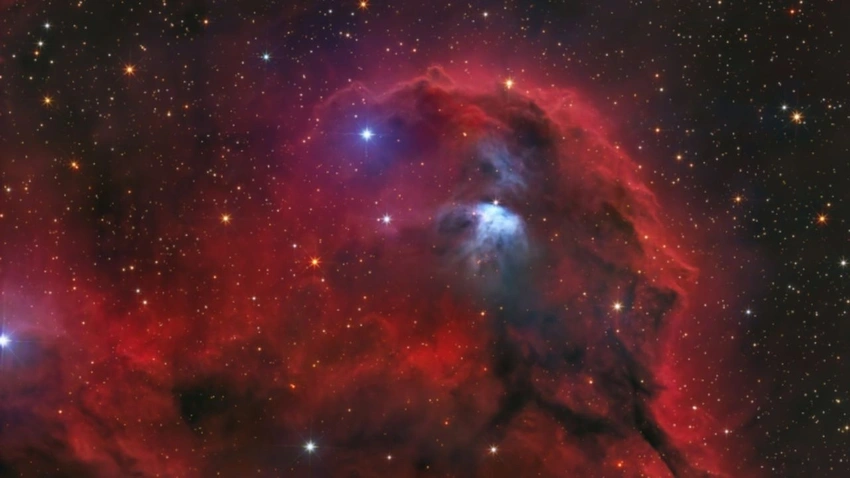
Take a recent feat by astrophotographer Emil Andronic. He captured a gorgeous blue reflection nebula glowing deep inside the red clouds of the Orion constellation. To get this shot, he did not just point a camera at the sky and click. He spent nearly 70 hours gathering the light needed to reveal this delicate structure. Seventy hours. That is almost three straight days of staring into the dark just to pull a single image out of the cosmic void.
This level of dedication is a perfect metaphor for all scientific endeavors. We live in an era obsessed with instant gratification. If a project does not yield immediate, headline-worthy results, people lose interest. Funding gets cut. Attention drifts. Yet, the most profound leaps in human knowledge require the exact opposite mindset.
The Grind Behind the Glory
Behind every major medical cure, space mission, or technological marvel, there are thousands of hours of unseen, unglamorous work. It is the slow, steady accumulation of data that builds the foundation for the future.
Here is why we need to celebrate the long game:
- Accuracy over speed: Rushing leads to errors. Taking the time ensures the data is undeniably solid.
- Noticing the unseen: Just like the faint blue light in Orion, the most important details only appear when you look long enough.
- Building resilience: Science is mostly failure. Patience teaches us to pivot and try again.
Redefining Success
We need to shift our cultural expectations. Instead of only cheering for the sudden eureka moments, we should applaud the grueling process. We should celebrate the researchers running their thousandth failed experiment and the observers logging endless nights under the stars.
The universe does not reveal its secrets on our modern, fast-paced schedule. It demands time. It demands focus. If we want to keep pushing the boundaries of what is possible, we have to remember that the best things in life, and in science, are worth waiting for.
Login to comment.
6 Thots
More Like This
Comments
-
Loading...
-
-
-
-
-
-
-
Please select a valid reason.
Login to comment.