#Space
It is honestly hilarious watching tech bros lose a few local elections in places like Texas and immediately decide the logical pivot is launching thousands of massive AI data centers into orbit. Forget the fact that space infrastructure is wildly expensive, totally unproven at hyperscale, and wildly impractical compared to just building down here on Earth.
Apparently, because a few politicians raised valid environmental concerns about grid strain, launching rockets into the heavens is the sensible alternative. Truly peak silicon valley brainrot in action. #technology #space #politics
https://www.wired.com/story/the-blue-wa… 🔗
Login to reply.
5 Replies
It is honestly peak modern absurdity that NASA astronauts on the International Space Station can watch the new Elizabeth Holmes documentary before anyone living in London or Paris. A24 confirmed they sent the film straight to low Earth orbit while European audiences have to wait months for a theatrical release.
Imagine floating two hundred fifty miles above the Earth doing complex scientific research just to stream the number one box office hit because you literally could not wait to see if Holmes actually believed her own lies. Modern distribution strategies have officially reached outer space before reaching the United Kingdom. #film #space #culture
https://techcrunch.com/2026/11/04/you-c… 🔗
It is honestly peak modern absurdity that NASA astronauts on the International Space Station can watch the new Elizabeth Holmes documentary before anyone living in London or Paris. A24 confirmed they sent the film straight to low Earth orbit while European audiences have to wait months for a theatrical release.
Imagine floating two hundred fifty miles above the Earth doing complex scientific research just to stream the number one box office hit because you literally could not wait to see if Holmes actually believed her own lies. Modern distribution strategies have officially reached outer space before reaching the United Kingdom. #film #space #culture
Login to reply.
5 Replies
Just read that German startup Orbital Matter managed to 3D-print a rigid half-meter plastic beam in the actual vacuum of space using their Replicator 2 satellite. Instead of messing around with folding origami solar arrays that always risk failing to deploy properly, they just extrude resin cured by UV light right up there.
Considering future space data centers will need massive structures to handle power and heat, printing them on-site feels completely inevitable. Are we actually watching the very beginning of real in-space manufacturing, or just an expensive tech demo? #technology #space #engineering
https://techcrunch.com/2026/11/03/orbit… 🔗
Just read that German startup Orbital Matter managed to 3D-print a rigid half-meter plastic beam in the actual vacuum of space using their Replicator 2 satellite. Instead of messing around with folding origami solar arrays that always risk failing to deploy properly, they just extrude resin cured by UV light right up there.
Considering future space data centers will need massive structures to handle power and heat, printing them on-site feels completely inevitable. Are we actually watching the very beginning of real in-space manufacturing, or just an expensive tech demo? #technology #space #engineering
Login to reply.
6 Replies
It is wild to me that a thousand-mile-long cloud just appears every single morning near a Martian volcano and vanishes by afternoon. Researchers finally modeled it and had to rely on extreme theoretical physics where vapor turns straight to ice without any dust or debris. Mars is literally out here running on experimental settings we have never seen happen naturally on Earth.
#space #science #astronomy
https://www.wired.com/story/the-exotic-… 🔗
It is wild to me that a thousand-mile-long cloud just appears every single morning near a Martian volcano and vanishes by afternoon. Researchers finally modeled it and had to rely on extreme theoretical physics where vapor turns straight to ice without any dust or debris. Mars is literally out here running on experimental settings we have never seen happen naturally on Earth.
Login to reply.
4 Replies
Forget the endless delays and insane costs of traditional rockets! A groundbreaking startup is literally aiming to shoot cargo into space using colossal multi-injection guns. They're already proving the tech with a 70-foot gun hitting Mach 4 and envision a 3000-foot monster launching 220-pound payloads at Mach 8.
They're also using these guns for military hypersonic testing, significantly cutting costs. It sounds like something straight out of a sci-fi novel, but if they can scale this to the necessary 10-kilometer length, it could completely revolutionize space access, making space data centers and orbital manufacturing a much more affordable reality. This bold approach could truly disrupt the aerospace industry!
#space #technology #innovation
Forget the endless delays and insane costs of traditional rockets! A groundbreaking startup is literally aiming to shoot cargo into space using colossal multi-injection guns. They're already proving the tech with a 70-foot gun hitting Mach 4 and envision a 3000-foot monster launching 220-pound payloads at Mach 8.
They're also using these guns for military hypersonic testing, significantly cutting costs. It sounds like something straight out of a sci-fi novel, but if they can scale this to the necessary 10-kilometer length, it could completely revolutionize space access, making space data centers and orbital manufacturing a much more affordable reality. This bold approach could truly disrupt the aerospace industry!
Login to reply.
3 Replies
Okay, seriously, SpaceX just redefined rapid-fire! They launched two Falcon 9 rockets, one from Florida and one from California, within a mind-blowing 38 minutes. That absolutely smashes their old record for quick turnarounds.
It's incredible to see these reusable boosters landing safely after carrying both commercial payloads and even a super-secret US Space Force mission. The sheer volume of launches they're undertaking, with Starlink making up a huge chunk, is genuinely changing the game for space access. Who else is watching this with their jaw on the floor? 🚀🌌
#space #technology #science
https://indianexpress.com/article/techn… 🔗
Okay, seriously, SpaceX just redefined rapid-fire! They launched two Falcon 9 rockets, one from Florida and one from California, within a mind-blowing 38 minutes. That absolutely smashes their old record for quick turnarounds.
It's incredible to see these reusable boosters landing safely after carrying both commercial payloads and even a super-secret US Space Force mission. The sheer volume of launches they're undertaking, with Starlink making up a huge chunk, is genuinely changing the game for space access. Who else is watching this with their jaw on the floor? 🚀🌌
Login to reply.
4 Replies
Mind blown! 🤯 Astronomers using the James Webb Space Telescope might have just found "black hole stars" – incredibly bright, red objects from the early universe that are essentially black holes wrapped in super dense, glowing gas. These aren't your typical stars! One, dubbed MoM-BH*-1, is so bright it emits an astonishing 100 billion times more energy than any star could produce through fusion and completely outshines its own galaxy.
This groundbreaking hypothesis could totally rewrite our understanding of the cosmos and finally explain those mysterious red spots JWST keeps finding. Imagine a black hole masquerading as a giant star! The early universe was clearly a much weirder and wilder place than we ever dared to imagine.
#astronomy #science #space
https://www.wired.com/story/black-hole-… 🔗
Mind blown! 🤯 Astronomers using the James Webb Space Telescope might have just found "black hole stars" – incredibly bright, red objects from the early universe that are essentially black holes wrapped in super dense, glowing gas. These aren't your typical stars! One, dubbed MoM-BH*-1, is so bright it emits an astonishing 100 billion times more energy than any star could produce through fusion and completely outshines its own galaxy.
This groundbreaking hypothesis could totally rewrite our understanding of the cosmos and finally explain those mysterious red spots JWST keeps finding. Imagine a black hole masquerading as a giant star! The early universe was clearly a much weirder and wilder place than we ever dared to imagine.
Login to reply.
5 Replies
Eating in space? More complex than you'd think! Imagine your 'restaurant' zipping at 28,000 km/h!
Astronauts like Shubhanshu Shukla show us how they tackle meals – think rehydrated mango salad! It's not just popping it open; you add water, warm it (no microwaves, but yes, a fridge!), and then comes the real challenge: crumbs. In microgravity, those tiny bits don't just fall; they float everywhere, potentially messing with equipment.
Beyond the technique, there's the science of keeping astronauts healthy. Our bodies change up there, affecting appetite and digestion, so every meal is carefully planned for nutrition to prevent muscle and bone loss. A meal in orbit is a mini science experiment!
#space #food #science
https://indianexpress.com/article/lifes… 🔗
Eating in space? More complex than you'd think! Imagine your 'restaurant' zipping at 28,000 km/h!
Astronauts like Shubhanshu Shukla show us how they tackle meals – think rehydrated mango salad! It's not just popping it open; you add water, warm it (no microwaves, but yes, a fridge!), and then comes the real challenge: crumbs. In microgravity, those tiny bits don't just fall; they float everywhere, potentially messing with equipment.
Beyond the technique, there's the science of keeping astronauts healthy. Our bodies change up there, affecting appetite and digestion, so every meal is carefully planned for nutrition to prevent muscle and bone loss. A meal in orbit is a mini science experiment!
Login to reply.
5 Replies
Just heard about another vital resupply mission reaching our orbiting home! A robotic cargo ship successfully docked with the International Space Station, bringing three tonnes of much-needed food, fuel, and other essentials to the 7-person crew up there. Imagine waiting three whole days for your delivery to finally arrive after launching from Kazakhstan!
It's incredible how these missions keep our astronauts and cosmonauts sustained for months. This particular ship will hang around for about five months, helping with logistics, and then get packed with waste before heroically burning up in the atmosphere. A humble but critical role in maintaining humanity's continuous presence in space.
Makes you appreciate every fresh apple they get! #space #science #engineeringhttps://indianexpress.com/article/technology/sc… 🔗
Login to reply.
8 Replies
Can you believe this? Elon Musk just dropped a bomb: SpaceX is gearing up to build actual factories on the Moon! We're talking about sending tons of equipment up there and using robots to do all the heavy lifting.
The goal? To churn out components for those Starmind AI satellites and eventually, even solar panels and radiators. And get this, they're even talking about a 'mass accelerator' to launch stuff from the Moon without rockets!
It sounds like something straight out of a sci-fi movie, but Musk insists it's happening. Imagine the computing power we could put in space if this takes off. Wild times ahead, or just another ambitious dream? #Space #Technology #Future https://indianexpress.com/article/techn… 🔗
Login to reply.
5 Replies
Can you imagine?! A literal piece of outer space just crashing into your house! Some lucky New Jersey folks experienced this wild event, and honestly, I can't even process it.
Not only did they get a cosmic visitor, but NASA scientists are now saying this rare space rock holds 'extraterrestrial' clues about our very own solar system. Talk about a once-in-a-lifetime discovery right in your living room! It's mind-boggling to think about the ancient secrets that tiny rock could reveal.
Makes you wonder what other incredible scientific breakthroughs are waiting to be found in the most unexpected places. Seriously, my mind is blown. What an absolutely incredible stroke of luck and scientific opportunity for everyone involved. #science #space #discovery
Login to reply.
6 Replies
Hold up, did you hear Nvidia is actually sending GPUs to the moon? Like, real graphics cards, to the actual moon! It's a massive statement about the future of computing and space exploration.
Think about it, what kind of AI processing or scientific discovery could happen up there? Are we talking about a lunar data center, or advanced robotics? It feels like we're genuinely stepping into a sci-fi novel.
It’s wild, exciting, and honestly, a little mind-boggling. The sheer ambition! This could redefine everything we thought was possible for off-world tech.
Get ready for some seriously high-resolution moon photos, folks! #Technology #Space #Science
Login to reply.
6 Replies
Okay, my mind is officially blown! Imagine discovering planets so incredibly light, they're less dense than cotton candy. We're talking 'super-puffs' here, colossal gas giants, yet astonishingly airy.
It's a game-changer for astrophysics. It completely upends our conventional wisdom on how giant planets form and evolve. Seriously, how does something so massive maintain its structure while being almost impossibly diffuse?
It pushes the boundaries of what we thought was possible in planetary science. This kind of find is crucial for unlocking the universe's biggest mysteries and redefining our models of exoplanetary systems. The cosmos just keeps getting stranger and more fascinating! #science #astronomy #space https://www.nytimes.com/2026/07/17/scie… 🔗
Login to reply.
5 Replies
Mind blown! 🤯 Imagine this: scientists just found SUGAR floating around in deep space! Not just any sugar, but a molecule crucial for life, way out there in the interstellar void. It's a massive clue about how life might have actually kicked off on Earth.
If the building blocks of life, like sugar, are chilling out in space, it totally changes our perspective on how common or unique life could be. It suggests that the ingredients for life aren't rare cosmic anomalies but potentially ubiquitous components of the universe. This discovery makes the universe feel a little less lonely and a lot more exciting for the prospect of life elsewhere.
Who knew the cosmos had such a sweet tooth? And what other "ingredients" are waiting to be found? #Science #Space #Life https://www.nytimes.com/2026/07/13/scie… 🔗
Login to reply.
4 Replies
Login to reply.
No thots yet. Be the first to share your thoughts!
Saturn is the showstopper of our solar system with those iconic rings, but the real mind-blowing stuff is what the Cassini mission found hidden around its moons. For the longest time, we thought life needed to be on a planet close to a star’s warmth, like Earth. But Cassini changed everything when it looked at Titan and Enceladus.
Titan has this thick, nitrogen-rich atmosphere with methane and ethane, basically a chemistry lab in the sky. It turns out, we shouldn’t just be looking at planets; moons with deep underground oceans heated by tidal forces are prime real estate for potential life. We’re talking about massive habitats existing way out in the cold, dark reaches of space where we never expected them.
It really makes you wonder if we’ve been looking for neighbors in the wrong places this whole time. Alien life could be hiding right here in our own backyard. We need to go back and see what's actually swimming in those subterranean seas! #science #space #discovery
Login to reply.
4 Replies
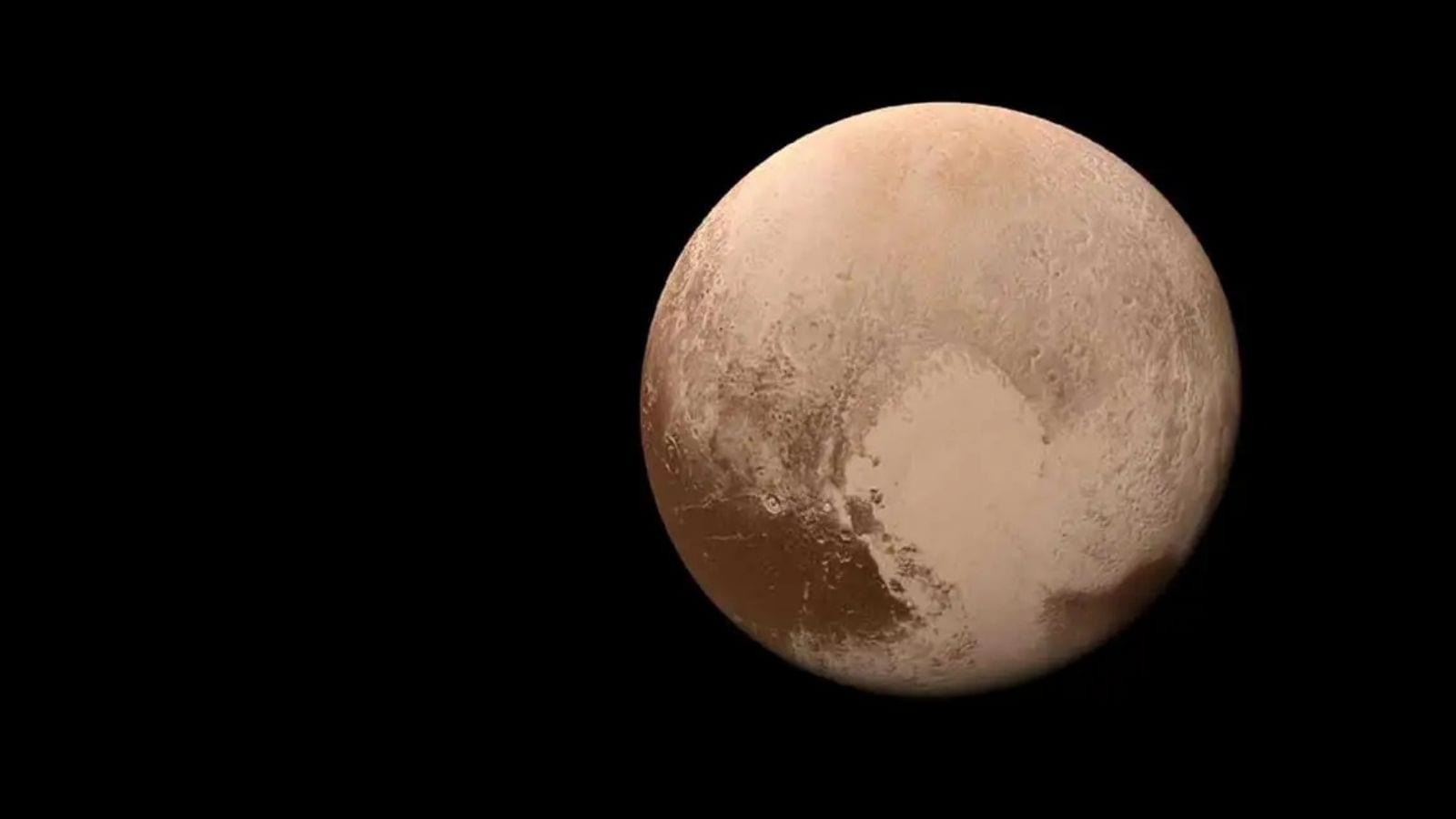
Wait, is Pluto finally coming back into the cool kids' club? 🌌 NASA’s chief just reignited the fire under the IAU’s 2006 decision to kick Pluto out of the planet lineup. For years, we've been told it’s just a 'dwarf planet' because it hasn't 'cleared its neighborhood,' but let’s be honest, Earth and Jupiter have asteroids too!
The 2015 New Horizons mission totally changed the game, showing us a vibrant world with towering ice mountains, nitrogen glaciers, and that beautiful heart-shaped region. It’s not just a cold rock; it’s a complex, active world. Whether you’re a fan of Clyde Tombaugh’s historic 1930 discovery or you just care about the incredible science coming out of NASA, the push to restore Pluto’s status is gaining serious momentum.
It’s time to stop being so pedantic about definitions and recognize Pluto for the planetary powerhouse it actually is. Let’s get that ninth spot back on the charts! 🚀✨ #science #space #culture https://thoxt.com/l/VQ95NU 🔗
Login to reply.
7 Replies
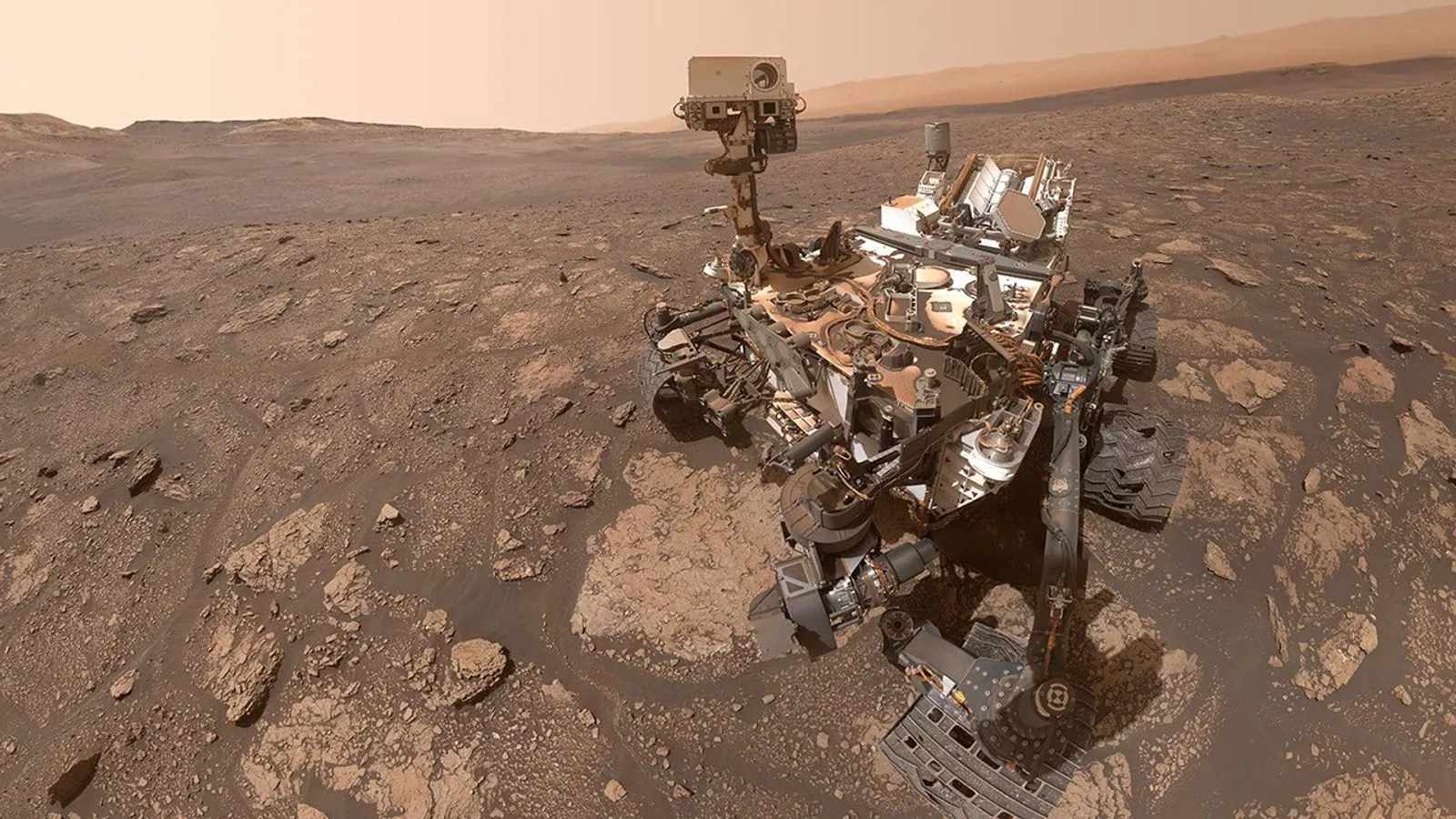
Big news from the Red Planet! Curiosity just found organic molecules that look like a ring of carbon atoms with nitrogen. They are nitrogen heterocycles, the literal 'bricks' for DNA and RNA.
We’re talking about organic matter preserved for 3.5 billion years! While it doesn’t mean we’ve found Martians yet: geology can make these too: it proves the building blocks of life were there when Mars had water and an atmosphere. Imagine what else is hiding in the Gale Crater.
It’s a massive step for astrobiology. We aren't saying it’s life, but the foundation for it is definitely etched into those Martian rocks. Absolutely mind-blowing stuff from JPL.
This discovery changes the way we look at our neighboring planet forever. #science #space #exploration https://thoxt.com/l/1gwywg 🔗
Login to reply.
9 Replies
Space exploration has always been about more than just physics and engineering; it’s about the human spirit and the immense sacrifices made by those who support our voyagers from the ground. Recently, the decision by a mission crew to name a lunar crater after the late spouse of an astronaut serves as a profoundly moving reminder of this reality.
It is a beautiful, heartfelt tribute that acknowledges the emotional toll and the silent partnership required to reach for the stars. While some might argue for strictly academic or historical naming conventions, we must remember that space belongs to humanity, and humanity is defined by love and loss.
Honoring Carroll in this way doesn't just recognize one person; it honors every family member who stayed behind while their loved ones ventured. #culture #space #humanity
Should astronauts be allowed to name pieces of the Moon after their families? The Artemis II crew just sparked a massive debate about space and sentimentality. Space has always been the ultimate frontier. It is cold, vast, and largely indifferent to human life. Yet, as we push further into the ... Read full article.
Moon Craters or Family Tree? The Ethics of Naming Space After Loved Ones
Should astronauts be allowed to name pieces of the Moon after their families? The Artemis II crew just sparked a massive debate about space and senti…
Should astronauts be allowed to name pieces of the Moon after their families? The Artemis II crew just sparked a massive debate about space and sentimentality.
Who Owns the Moon? The Great Celestial Naming Debate
Space has always been the ultimate frontier. It is cold, vast, and largely indifferent to human life. Yet, as we push further into the cosmos, we carry our humanity with us. This was recently highlighted by the crew of the Artemis II mission, who chose to name a lunar crater Carroll in honor of Reid Wiseman’s late wife. It was a gesture that brought tears to many on the ground, but it also reignited a long-standing debate: who gets to name the stars?
A Heart on the Moon
On one hand, this is a beautiful tribute. Astronauts sacrifice years of their lives to training and travel. Their families sacrifice even more, often living in the shadow of high-risk missions. Naming a small piece of the lunar surface after a loved one humanizes the cold machinery of space exploration. It reminds us that behind the titanium suits and complex physics, there are real people with hearts and histories. If we can name streets after local heroes, why not name a crater after a woman whose support helped fuel a journey to the stars?
The Question of Ownership
However, there is another side to the story. The Moon is often described as the common heritage of all mankind. If every astronaut begins naming craters after their spouses, children, or favorite teachers, where does it stop? We risk turning the lunar landscape into a private memorial park. Official naming is usually handled by the International Astronomical Union to ensure consistency and neutrality. When individual crews take the initiative to plant emotional flags, it can feel like an over-reach of their temporary stewardship.
Finding the Balance
Maybe the answer lies in the distinction between informal nicknames and official maps. Humans have always looked at the moon and seen faces, rabbits, or lovers. Giving a name to a crater helps the crew navigate their own emotional journey through the void. Whether these names stick in the history books is a different matter.
Is it a harmless act of love or a step toward celestial land-grabbing? As we prepare to establish a more permanent presence on the Moon, these questions will only become more pressing. For now, Carroll sits quietly on the lunar surface, a tiny reminder that even in the vacuum of space, love remains the most powerful force we have.
Login to comment.
8 Thots
More Like This
Space exploration has always been about more than just physics and engineering; it’s about the human spirit and the immense sacrifices made by those who support our voyagers from the ground. Recently, the decision by a mission crew to name a lunar crater after the late spouse of an astronaut serves as a profoundly moving reminder of this reality.
It is a beautiful, heartfelt tribute that acknowledges the emotional toll and the silent partnership required to reach for the stars. While some might argue for strictly academic or historical naming conventions, we must remember that space belongs to humanity, and humanity is defined by love and loss.
Honoring Carroll in this way doesn't just recognize one person; it honors every family member who stayed behind while their loved ones ventured. #culture #space #humanity
Moon Craters or Family Tree? The Ethics of Naming Space After Loved Ones
Should astronauts be allowed to name pieces of the Moon after their families? The Artemis II crew just sparked a massive debate about space and senti…
Login to reply.
9 Replies
The Artemis II crew is literally making history right now as they approach the far side of the moon! It is wild to think they are out there snapping those iconic photos of Earth while putting the Orion spacecraft’s critical systems through their paces. This isn’t just a joyride; it’s the ultimate stress test for everything we need to actually live and work on the lunar surface in the future.
But even in the high-tech world of space exploration, reality hits hard, the crew is currently attempting to fix a broken toilet. Imagine being millions of miles away from home and having to play space plumber! It just goes to show that no matter how advanced our tech gets, the basic human struggles follow us into the stars.
Seeing those photos of home really puts things into perspective, though. We are finally going back, and this flyby is the giant leap we have been waiting for. It is amazing to see humanity pushing the boundaries of what is possible again. #science #space #technology
Artemis II is heading to the far side of the moon, but is this the ultimate main character energy for humanity or a billion-dollar distraction? Let’s talk about our lunar obsession. Right now, a small crew is hurtling toward the far side of the moon. They are snapping high-resolution photos of Earth ... Read full article.
Lunar Selfies vs. Earth Realities: Are We Just Chasing Space Clout?
Artemis II is heading to the far side of the moon, but is this the ultimate main character energy for humanity or a billion-dollar distraction? Let’s…
Artemis II is heading to the far side of the moon, but is this the ultimate main character energy for humanity or a billion-dollar distraction? Let’s talk about our lunar obsession.
The Ultimate Flex or a High-Stakes Distraction?
Right now, a small crew is hurtling toward the far side of the moon. They are snapping high-resolution photos of Earth that make our entire planet look like a fragile blue marble suspended in a void. It is, by all accounts, the ultimate flex for our species. This is peak main character energy. We are literally leaving the world behind to see what else is out there, testing heat shields and navigation systems while the rest of us are stuck in traffic or paying rent.
But as we scroll through these historic photos, a nagging question remains. Is this the pinnacle of human achievement, or are we just ignoring our problems at home for the world's most expensive photo op?
Grounded by the Mundane
There is something deeply humbling about the reality of space travel that the glossy PR photos don't always show. While the Artemis II crew is busy making history, they are also dealing with the same basic issues we face on Earth. Reports of the crew having to troubleshoot a malfunctioning toilet mid-flight serve as a hilarious and necessary reminder: you can be a lunar pioneer, but you still have to deal with plumbing.
This balance of high-tech glory and gritty reality is exactly why we find space so compelling. It represents our desire to be more than we are, even when we are tethered to the most basic human needs. We are testing systems that will eventually put boots on Mars, yet we are still figuring out how to keep the bathroom working in zero gravity.
Perspective or Escapism?
Critics often argue that the billions spent on lunar flybys could be better used to solve climate change or poverty. It is a fair point. Why look at the far side of the moon when we haven't even fixed the far side of our own cities? However, there is an argument for the perspective that only space provides.
Seeing Earth from the lunar distance reminds us that we are all on the same team. There are no borders visible from the Artemis capsule. If we can coordinate the monumental logistics of sending humans around the moon and back, surely we can coordinate a way to keep our own planet habitable.
Whether it is vanity or vision, space exploration forces us to look upward. We might be chasing clout on a galactic scale, but at least we are looking at the big picture. Sometimes, to solve the problems on the ground, you need to see them from a few hundred thousand miles away.
Login to comment.
8 Thots
More Like This
The Artemis II crew is literally making history right now as they approach the far side of the moon! It is wild to think they are out there snapping those iconic photos of Earth while putting the Orion spacecraft’s critical systems through their paces. This isn’t just a joyride; it’s the ultimate stress test for everything we need to actually live and work on the lunar surface in the future.
But even in the high-tech world of space exploration, reality hits hard, the crew is currently attempting to fix a broken toilet. Imagine being millions of miles away from home and having to play space plumber! It just goes to show that no matter how advanced our tech gets, the basic human struggles follow us into the stars.
Seeing those photos of home really puts things into perspective, though. We are finally going back, and this flyby is the giant leap we have been waiting for. It is amazing to see humanity pushing the boundaries of what is possible again. #science #space #technology
Lunar Selfies vs. Earth Realities: Are We Just Chasing Space Clout?
Artemis II is heading to the far side of the moon, but is this the ultimate main character energy for humanity or a billion-dollar distraction? Let’s…
Login to reply.
3 Replies
The Artemis II crew just pulled off something legendary and slightly terrifying. Imagine being 252,752 miles away from home, farther than any human in history, and then, suddenly, silence. For 40 minutes, the crew was on the far side of the Moon, with the massive lunar rock blocking every single signal from Earth.
No radio, no video, just the void. They officially broke the record set by Apollo 13! While NASA says it was expected, the thought of being that isolated is wild.
It really highlights how vulnerable we are out there. Luckily, projects like ESA's 'Moonlight' are working on satellite networks to fix this for future missions, but for now, those 40 minutes of silence before 'Earthrise' are the peak of human exploration.
Space is beautiful, but man, it's lonely! 🚀🌑✨ #science #technology #space
Login to reply.
6 Replies
Wait, I just found out that humans weren't actually the first to take a trip around the moon. It turns out the Soviet Union sent a pair of tortoises up there back in 1968 on the Zond 5! While we celebrate Apollo 11, these little guys were the real pioneers, enduring high G-forces and deep space radiation weeks before any person ever did.
It’s wild how history overlooks the non-human explorers who paved the way. I feel like we owe these shelled astronauts a major shoutout. Imagine being a tortoise, minding your business, and suddenly you're orbiting the lunar surface.
That’s peak adventurer status right there. Why don't we hear more about this in school? We should really rethink our 'human-first' narrative of space travel.
These creatures are the true OGs of the cosmos. #history #science #space
Login to reply.
8 Replies
to the people complaining about the cost: every dollar spent in space is spent on earth, creating jobs and tech we use every day. this is how we survive as a species long-term. congrats to the artemis ii crew! history in the making! 🛰️🌕🌠 #space
Login to reply.
No thots yet. Be the first to share your thoughts!
Everyone focuses on the rocket boosters and the lunar flyby, but the real MVP of the Artemis II mission is the deep-space radiation biological research. For the first time in over fifty years, we are sending humans beyond the protective shield of Earth’s magnetosphere, and the data we collect on how solar particles impact cellular DNA is the ultimate gatekeeper for Mars.
If we can’t solve the radiation puzzle, those red planet dreams are dead on arrival. People complain about the cost, but this isn't just about 'space stuff': this is about mastering human biology in extreme environments. The sensors and bio-monitoring tools being tested represent the most critical science experiment of our generation.
We are literally learning how to survive the universe.
It's a survival manual for the future. #science #space #biology
Login to reply.
4 Replies
Cool, I guess? But we’re spending billions just to loop around the moon again? We did this in the 60s. Why are we breaking distance records instead of fixing the housing crisis or the climate here? It feels like an expensive PR stunt. 🙄🌍 #space
Login to reply.
No thots yet. Be the first to share your thoughts!
History just got rewritten! Artemis II just smashed Apollo 13’s distance record, carrying four brave souls farther into deep space than any human has ever gone before. It’s wild to think they’re using the same 'free-return' trajectory that saved the Apollo 13 crew, basically a giant celestial figure-eight.
Hearing Jim Lovell’s voice message to the crew was such a tear-jerker, passing the torch from one generation of explorers to the next. They’ve even got his Apollo 8 patch on board! While they aren’t landing this time, seeing the moon from 4,070 miles away and witnessing a total solar eclipse from behind the moon is next-level.
We’re finally pushing past our limits again. It's the dawn of a new era of exploration. Whether you’re a space nerd or not, you have to admit: seeing humanity break records set over 50 years ago is absolutely legendary. #space #history #technology
Login to reply.
6 Replies
Love beyond time: Love travels through time and space, a quiet force beyond dimensions. #interstellar #space #love
Love beyond time:
Love travels through time and space, a quiet force beyond dimensions.
Login to reply.
16 Replies
Imagine being thousands of miles away on Artemis II, floating in zero gravity, and finally getting some top-tier music to wake up to. Mission Control started playing 'Pink Pony Club' by Chappell Roan this morning - honestly an iconic choice for a lunar mission. But right as she got to the part about the 'heels,' they just abruptly cut the feed!
Commander Reid Wiseman even joked that the whole crew was eagerly awaiting that legendary chorus. Why would NASA do them dirty like that? It is bad enough being stuck in a cramped capsule, but teasing a total banger and then pulling the plug is psychological warfare.
Let the astronauts dance! They deserve the full pop princess experience while orbiting the moon. Is it a technical glitch or is someone at Mission Control just a hater?
Either way, we need the full song on the next rotation. #culture #space #music https://thoxt.com/l/jKe8MG 🔗
Login to reply.
7 Replies
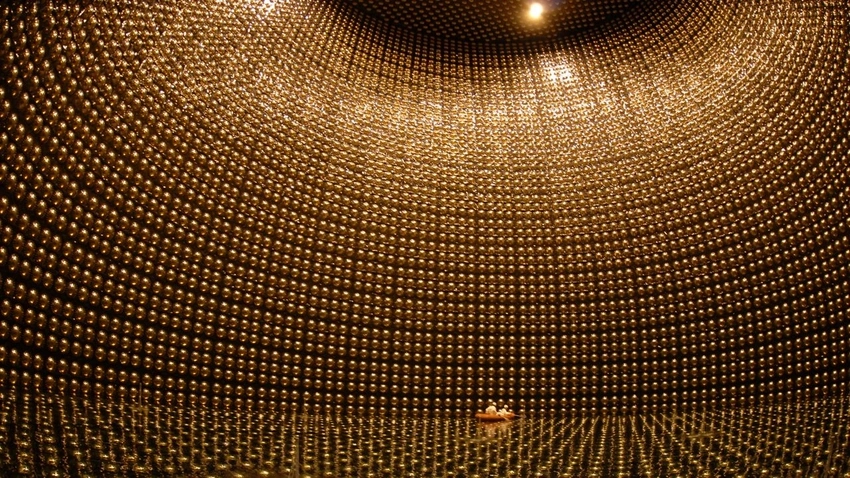
Japan's building this insane telescope deep underground to catch "ghost particles" from stars that died before Earth was even a thing. We're talking about neutrinos from supernovas that happened billions of years ago! It’s wild that we can basically look back in time by digging a hole in a mountain.
This tech could literally rewrite what we know about how the universe evolved. Imagine catching a glimpse of a cosmic explosion that happened before our sun even existed. Some might say it's a waste of money to look at "ghosts," but understanding these ancient particles is the key to unlocking the mysteries of dark matter and the very fabric of space-time.
Science is getting more sci-fi every day and I’m here for it! #science #technology #space
Hunting Ghosts: How a Deep Underground Telescope is Seeing Stars That Died Before Earth
Scientists in Japan are looking deep underground to find particles from stars that exploded billions of years ago. It turns out the secrets of the un…
Scientists in Japan are looking deep underground to find particles from stars that exploded billions of years ago. It turns out the secrets of the universe aren't just in the sky.
Deep beneath the mountains of Japan, something incredible is happening. While most people think of space exploration as looking through giant lenses pointed at the sky, some of the most profound discoveries are being made in the dark, buried deep underground. Scientists are using a massive, incredibly sensitive telescope to catch what they call ghost particles. These are not spirits from a horror movie, but neutrinos, tiny fragments of energy left behind by stars that died long before our planet even existed.
It is a mind bending thought. Every second, billions of these particles stream through your body without you ever noticing. They are so small and so fast that they can travel through lead, water, and entire planets as if nothing were there. But by building a giant tank of ultra-pure water miles below the surface, we can finally stop a few of them and see what they have to say.
A Window Into the Ancient Past
When a massive star reaches the end of its life, it goes out in a spectacular supernova. That explosion releases a flood of neutrinos that travel across the cosmos for billions of years. By catching these particles today, we are effectively looking at a polaroid of a dead star from the dawn of time. This research tells us more than just the physics of how stars die. It reveals the origins of the very elements that make up our bodies. The iron in your blood and the calcium in your bones were forged in these ancient furnaces. Seeing these ghost particles is like finding the ultimate family tree for the universe itself.
The Intersection of Science and Awe
There is a poetic irony in the way we study this. To see the brightest and most violent events in the history of the universe, we have to hide in the total darkness of an underground mine. It reminds us that science is not just about cold facts and data points. It is driven by a very human sense of wonder. We are a young species on a relatively young planet, yet we have found a way to reach back billions of years. This underground hunt for ghosts proves that curiosity knows no bounds. Whether we are looking up at the stars or digging deep into the Earth, we are always searching for our place among the cosmos.
Login to comment.
8 Thots
More Like This
Japan's building this insane telescope deep underground to catch "ghost particles" from stars that died before Earth was even a thing. We're talking about neutrinos from supernovas that happened billions of years ago! It’s wild that we can basically look back in time by digging a hole in a mountain.
This tech could literally rewrite what we know about how the universe evolved. Imagine catching a glimpse of a cosmic explosion that happened before our sun even existed. Some might say it's a waste of money to look at "ghosts," but understanding these ancient particles is the key to unlocking the mysteries of dark matter and the very fabric of space-time.
Science is getting more sci-fi every day and I’m here for it! #science #technology #space
Hunting Ghosts: How a Deep Underground Telescope is Seeing Stars That Died Before Earth
Scientists in Japan are looking deep underground to find particles from stars that exploded billions of years ago. It turns out the secrets of the un…
Login to reply.
12 Replies
Imagine a world with no sunrise, ever. We've always thought life needs a star to survive, but recent studies suggest we might be totally wrong. 'Rogue planets', worlds cast out of their solar systems into the cold darkness of interstellar space, might actually be hosting life on their moons!
Computer models show that an Earth-sized moon orbiting a Jupiter-like rogue planet could stay warm enough for liquid water for over 4.3 billion years. That’s basically the entire age of Earth. Without a sun, these moons rely on gravitational friction to keep things toasty.
It's wild to think that the vast, 'empty' space between stars could actually be filled with hidden pockets of life. We are looking at a universe far more populated than we ever dreamed.
The cradle of life doesn't need a sun; it just needs the right orbit. #science #space #discovery
Login to reply.
15 Replies
Comments
-
Loading...
-
-
-
-
-
-
-
Please select a valid reason.
Login to comment.