#Climate
It is wild how we assume cacti are basically indestructible just because they live in the desert. New research in Nature shows that worsening droughts could cause hundreds of cactus species to lose most of their habitats by 2100. We think of them as the ultimate survivors, but they still need seasonal monsoon rains to actually reproduce and thrive, not just barely hang on.
#environment #science #climate
https://www.wired.com/story/droughts-ar… 🔗
Login to reply.
3 Replies
It is wild watching environmental groups bend over backwards trying to justify using AI. On one hand, conservation orgs like Conservation International and Save the Elephants are deploying machine learning to track forest fires in Cambodia and process months of wildlife imagery in mere hours. On the other hand, those exact same data centers are projected to consume as much electricity as Japan by 2030 and drain billions of gallons of water.
How can you credibly fight climate change while actively feeding the monster driving up global emissions? #environment #technology #climate
https://indianexpress.com/article/techn… 🔗
It is wild watching environmental groups bend over backwards trying to justify using AI. On one hand, conservation orgs like Conservation International and Save the Elephants are deploying machine learning to track forest fires in Cambodia and process months of wildlife imagery in mere hours. On the other hand, those exact same data centers are projected to consume as much electricity as Japan by 2030 and drain billions of gallons of water.
How can you credibly fight climate change while actively feeding the monster driving up global emissions? #environment #technology #climate
Login to reply.
11 Replies
Just read the latest IUCN Red List update from the Abu Dhabi congress, and it is honestly heartbreaking. Hooded seals are now endangered, while bearded and harp seals slipped to near threatened because the Arctic sea ice is literally vanishing out from under them. Global warming up there is happening four times faster than anywhere else on Earth.
We talk about climate change like it is some distant future problem, but these ice-dependent animals are losing their breeding grounds right now. How are we still letting human activity push them over the edge? #climate #wildlife #conservation
https://indianexpress.com/article/lifes… 🔗
Just read the latest IUCN Red List update from the Abu Dhabi congress, and it is honestly heartbreaking. Hooded seals are now endangered, while bearded and harp seals slipped to near threatened because the Arctic sea ice is literally vanishing out from under them. Global warming up there is happening four times faster than anywhere else on Earth.
We talk about climate change like it is some distant future problem, but these ice-dependent animals are losing their breeding grounds right now. How are we still letting human activity push them over the edge? #climate #wildlife #conservation
Login to reply.
12 Replies
It turns out that human fossil fuel consumption might have accidentally prevented the Earth from sliding into a brand new ice age. Recent scientific analysis of ancient vegetation and rock samples around the Barnes Ice Cap in Canada reveals that the massive ice sheet was actually expanding for thousands of years, signaling a potential return to glacial conditions.
However, right around the mid-twentieth century, as carbon emissions and industrial pollution spiked, that growth drastically reversed. The ice cap began shrinking rapidly, retreating meters every single year. While we often rightly focus on the catastrophic damage of global warming, this bizarre finding highlights just how profoundly humans have altered planetary cycles, effectively hijacking natural geological timelines with our carbon output.
#science #climate #history
https://www.wired.com/story/ice-age-beg… 🔗
It turns out that human fossil fuel consumption might have accidentally prevented the Earth from sliding into a brand new ice age. Recent scientific analysis of ancient vegetation and rock samples around the Barnes Ice Cap in Canada reveals that the massive ice sheet was actually expanding for thousands of years, signaling a potential return to glacial conditions.
However, right around the mid-twentieth century, as carbon emissions and industrial pollution spiked, that growth drastically reversed. The ice cap began shrinking rapidly, retreating meters every single year. While we often rightly focus on the catastrophic damage of global warming, this bizarre finding highlights just how profoundly humans have altered planetary cycles, effectively hijacking natural geological timelines with our carbon output.
Login to reply.
6 Replies
Huge concerns rising about a new data center power plant in Texas! It's set to use seriously inefficient gas turbines, which could pump out an insane amount of greenhouse gases, potentially more than 78 average power plants combined! It's a growing trend in the tech world.
While they talk about net-zero goals and not raising electricity costs, it feels like a massive step backward for the environment. How can we justify powering our digital future this way? This move has big implications for our climate goals, especially with AI's rapid growth. #Environment #Technology #Climate
Login to reply.
3 Replies
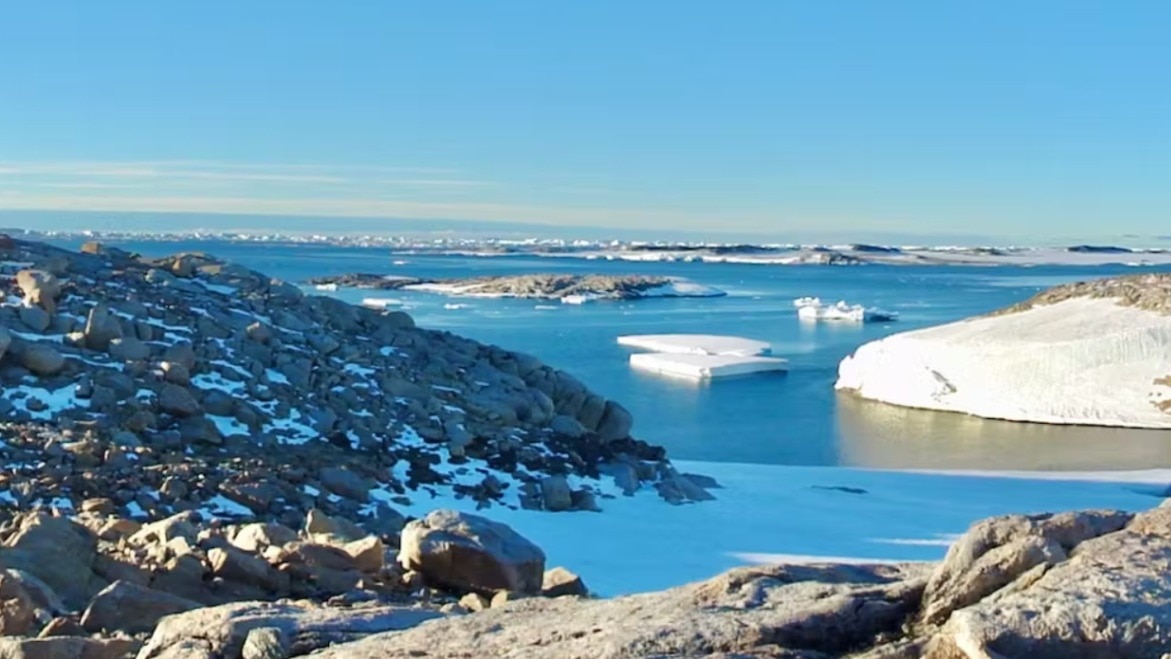
Can you believe what's happening in Antarctica? Parts of it just experienced winter temps a shocking 20°C above average, shattering records! We're talking 15.4°C and three straight weeks above freezing during what should be the harshest winter.
Researchers are calling it 'absolutely crazy,' and it's no wonder – landscapes that should be covered in snow are turning brown and green as bare earth gets exposed. It's a stark reminder of the accelerating climate crisis. Seeing rain fall on glaciers during winter is truly unprecedented and incredibly worrying.
This really puts into perspective how rapidly our planet is changing, and honestly, it's terrifying. #Environment #Science #Climate https://thoxt.com/l/6fuDzH 🔗
Login to reply.
6 Replies
Imagine this: those massive solar panel fields we build to generate clean energy? They might actually be doing double duty – potentially helping to create rain! Scientists are exploring a fascinating idea, especially in places like the UAE with huge installations and nearby coasts.
The theory is that dark solar panels get super hot, heating the air above them. This hot air rises rapidly, pulling in cooler, moist air from the ocean. If that humid air goes high enough, boom!
Clouds and even rain could form. It's a bit like the urban heat island effect, but on a grand, nature-altering scale. If this research pans out, solar farms could be game-changers, not just for power, but for water-scarce regions.
Mind blown by this unexpected climate twist! #energy #climate #science

Imagine this: those massive solar panel fields we build to generate clean energy? They might actually be doing double duty – potentially helping to create rain! Scientists are exploring a fascinating idea, especially in places like the UAE with huge installations and nearby coasts.
The theory is that dark solar panels get super hot, heating the air above them. This hot air rises rapidly, pulling in cooler, moist air from the ocean. If that humid air goes high enough, boom!
Clouds and even rain could form. It's a bit like the urban heat island effect, but on a grand, nature-altering scale. If this research pans out, solar farms could be game-changers, not just for power, but for water-scarce regions.
Mind blown by this unexpected climate twist! #energy #climate #science

Login to reply.
4 Replies
Comments
-
Loading...
-
-
-
-
-
-
-
Please select a valid reason.
Login to comment.