Worst Girl in America By Slayyyter: Daring Y2K Electroclash


Worst Girl in America By Slayyyter: Daring Y2K Electroclash
Worst Girl in America By Slayyyter: Daring Y2K Electroclash
Slayyyter dismantles her polished persona with Worst Girl in America, delivering a loud, messy pop statement. Haunting synths, chaotic energy, and a fearless rebirth push mainstream cool into new territory.
There is something almost suspiciously deliberate about how Slayyyter names her third album Worst Girl in America. Not a confession, not quite satire either more like a posture. A dare. Released in March 2026, the record feels less like a pivot and more like a rupture: a shedding of the hyper-polished, internet-born persona she once perfected, in favour of something messier, louder, and insistently human.
What emerges is a body of work that thrives on contradiction; sleazy yet self-aware, chaotic yet tightly engineered. It is pop music that refuses to behave, even when it knows exactly how.

Haute Trash as Aesthetic Strategy
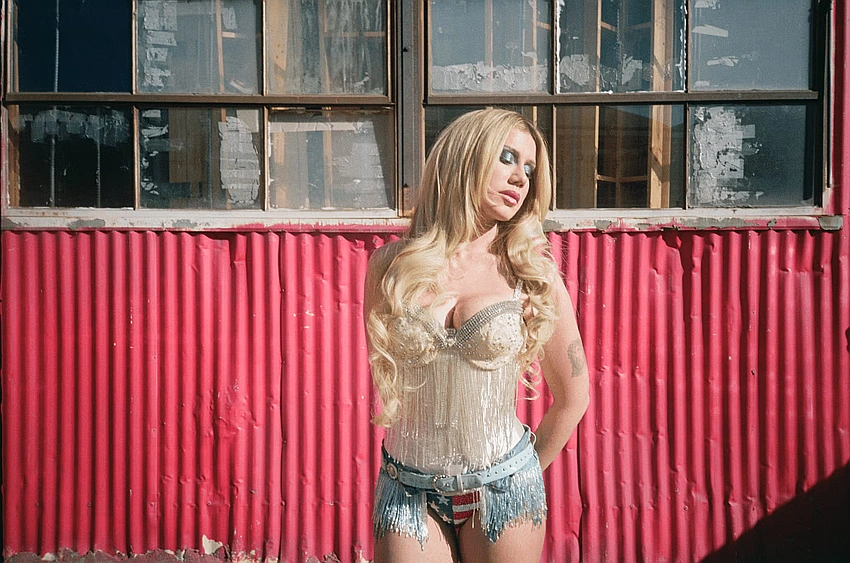
One of the most striking elements across the album is its embrace of what might be called “haute trash”: a reworking of early 2000s tabloid culture, paparazzi spectacle, and digital excess. This isn’t nostalgia in the soft-focus sense. It is abrasive, almost confrontational.
The sonic palette mirrors this: blown-out synths, electroclash textures, and a kind of deliberate overstimulation. The album leans into what NME frames as “brash, sleazy pop” rooted in Tumblr-era sensibilities, where irony and sincerity collapse into each other.
Yet this aesthetic is not just surface-level pastiche. It operates as a critique of pop respectability. The “worst girl” becomes a figure who refuses coherence. In this sense, the album participates in a longer lineage of pop anti-heroines, but with a distinctly digital-age fragmentation.

Noise, Precision, and the Architecture of Chaos
What is easy to miss, beneath the album’s feral energy, is how controlled it actually is. The production is dense but intentional. According to Clash, the electronic framework is “arresting but never harsh,” balancing maximalism with clarity.
Tracks like Crank and Old Technology operate on the edge of collapse of layers of distortion, vocal manipulation, and rhythmic instability yet they never quite fall apart. Instead, they hover in a state of suspended chaos.
This tension is central to the album’s appeal. It creates a listening experience that feels breathless, almost anxious, but also meticulously curated. Even its loudest moments are engineered with precision, suggesting that the “mess” is, in fact, a form of discipline.
The Body, Desire, and Pop’s Ugly Turn
Lyrically, Worst Girl in America moves between hedonism and vulnerability without resolving the gap between them. There are moments of explicit, almost cartoonish excess but they are punctured by quieter, more disorienting reflections.
Songs like Gas Station slow the tempo, allowing a different register to emerge: one of loneliness, dislocation, and emotional residue. The oscillation between these modes of ecstasy and comedown structures the album’s narrative arc.
Rather than offering confession in a traditional sense, Slayyyter performs fragmentation. Desire is not stabilising; it is destabilising. Identity is not discovered but enacted, often to the point of exhaustion. As one review suggests, the album becomes less a cohesive statement and more a “conceptual riff on the up(per)s and down(er)s of acting out.”
This is where the album’s title becomes most legible: the “worst girl” is not a moral category but a performative one, shaped by excess, contradiction, and spectacle.

From Internet Artefact to Pop Object
It is impossible to separate this album from its digital genealogy. Slayyyter’s career has always been entangled with online cultures of SoundCloud circuits, Tumblr aesthetics, stan communities. But here, that history is neither disavowed nor simply celebrated.
Instead, it is metabolised.
The record draws heavily on early internet-era pop references, yet it refuses to remain in homage. The textures are harsher, the tone more self-critical. Even the humour carries an edge, as if aware of its own obsolescence.
There is also a noticeable shift in scale. With a major label backing and a more expansive production palette, the album feels positioned for a wider audience. And yet, it resists smoothing itself out. It remains jagged, occasionally alienating.
That tension between accessibility and refusal may well define its place in the current pop landscape.

The Breakthrough That Refuses Resolution
To call Worst Girl in America a breakthrough risks simplifying what it actually does. Yes, it consolidates Slayyyter’s sound, pushing it into something recognisably her own. Yes, it has the energy of an artist stepping into a larger cultural frame.
But it also resists closure.
The album does not resolve its contradictions; it amplifies them. Its final moments do not offer catharsis so much as a comedown an inevitable descent after sustained intensity. This is not failure; it is structure.
In that sense, Worst Girl in America is less about arrival than about endurance. About what it means to keep performing, to keep exceeding, even when the performance threatens to collapse.
And perhaps that is the point. The “worst girl” is not redeemed. She persists loud, excessive, unfinished.
#Slayyyter #WorstGirlInAmerica #HauteTrash #PopMusic #Electroclash #New Music #NewMusicFriday #AlbumReview
