We Traded the 60s Dance Floor for the 2020s Couch

We Traded the 60s Dance Floor for the 2020s Couch
We Traded the 60s Dance Floor for the 2020s Couch
Why Gen Z yearns for real connection when everything from our fashion to homes to work to friendships is anti-social?
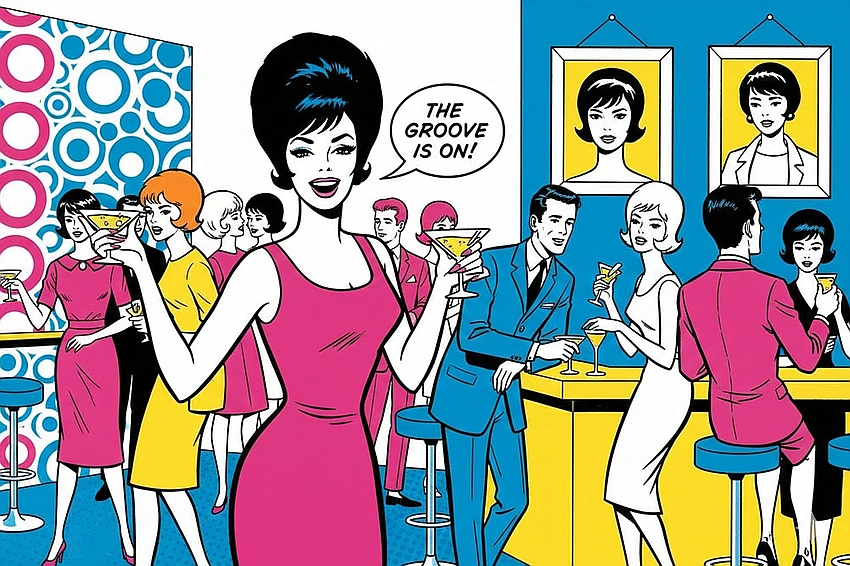
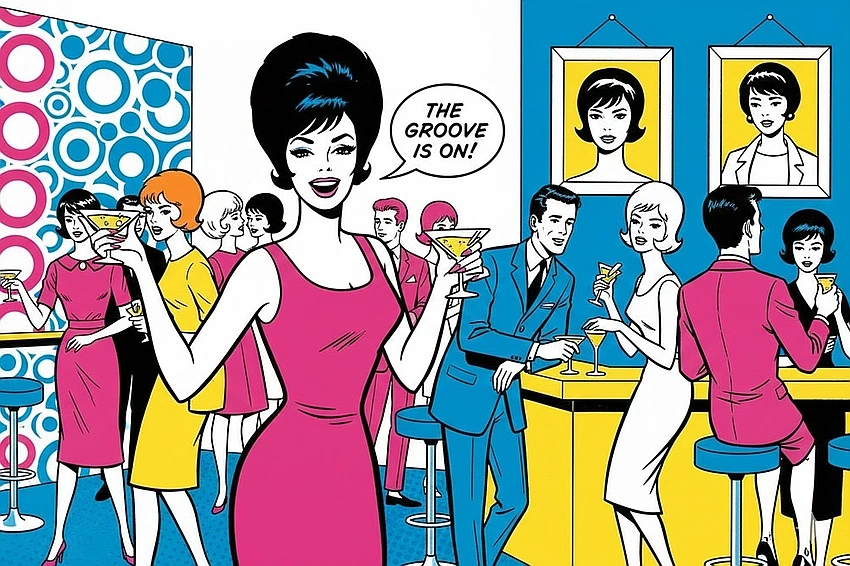
There is a grainy, overexposed clip from 1966 that lives rent-free as my laptop wallpaper these days. It’s a London house party - thick with cigarette smoke, the rhythmic shimmy of shift dresses, and the infectious, brassy swell of The Ronettes. People aren't just in the room; they are of the room. They are tangled in a collective kinetic energy, shaped by a soundtrack that demanded a physical response.
And after a week of looking at it, I just realized why it makes me sad.
As a member of Gen Z, I watch these clips with a visceral, confusing ache. We are the generation of "Coastal Grandmas" and "Soft Life" enthusiasts. We have mastered the art of the curated interior, yet we’ve forgotten how to invite anyone inside it. If the 1960s were defined by the "Swingin’" soundtrack of social revolution, our era is defined by the "Sullen" soundtrack of the solo retreat. We haven't just changed our music; we’ve re-engineered our entire lives to ensure we never have to see another person in the flesh.
From interior decor to fashion to music to tech, everything is helping us trade the party for a party of one. Think about it:
Everything is for chilling at home - alone -
- fashion like athleisure or coastal grandma
- Korean skincare
- sad music you want to lie down and listen to
- Netflix (multi device or personal viewing)
- ChatGPT (the ultimate be-alone toy)
- interior decor (minimalism, not built for socializing at home)
- personalized content (no more family movies or shows)
- social media (text your friends or hook up digitally why meet)
- remote and flexible work
- and let's not forget - they're training bots to be your personal butler AND friend AND teacher as we speak.
Let's discuss, shall we?
Smart Phone - The Digital Chaperone
Our social media usage has evolved from a tool to meet into a tool to avoid. Algorithms have hyper-personalized our feeds to the point where sharing a screen feels like a compromise of our identity.
Think about it - we even avoid looking into strangers' eyes by pretending to be busy on our smart phones. We don't even wanna say hello.
The Digital Hookup
As for Romance, who wants to risk physical rejection or get martini thrown in their face when you can simply text an eggplant emoji? In the Sixties, the only way to "hook up" or hang out was to navigate the high-wire act of physical presence. You had to risk the "no" in person.
The Selfie
We literally take pictures to fit just one. I mean, yes there are the group selfies but sure, whatever.
Music: Big Band vs. Big Sad
In the sixties, music was a communal hearth. Jazz, soul, and early rock ‘n’ roll were designed to pull you out of your chair. You didn't "chill" to Motown; you engaged with it. You bought an LP to play it on a hi-fi system that sat in the center of the living room. Music today is background noise, but The Beatles or Motown, they provided a social script. You learned to move because the music was mixed for the floor.
Today, my generation’s "party" is a Spotify playlist titled “POV: you’re a side character in a rainy indie movie.” Our playlists are dominated by "Lo-fi beats to study/relax to" or "Sad Girl Autumn" anthems.
Music has become a buffer, for letting the algorithm feed us a mood rather than an invitation to dance. It is intimate, breathy, and deeply sad, designed to be consumed while lying flat on a linen duvet, eyes closed, undergoing a twelve-step Korean skincare routine. We aren’t "swinging"; we are "slugging." We’ve traded the communal joy of the dance floor for the solitary "glow-up," vibrating at a frequency that only we can hear.
Fashion: From Gowns to Pajamas
We were peacocks, trying to catch the attention of the others with our big colorful feathers. Now we're pigeons with our who-cares dressing. The 1960s party-goer dressed as an act of performance. Sharp suits and structured mini-dresses were meant to be seen under a chandelier. Contrast that with today’s "Coastal Grandma" or high-end athleisure. We dress for comfort and tactile self-care.
- Then: Stiff fabrics and silhouettes that demanded you stand up straight.
- Now: Oversized linens and buttery leggings designed for the "everything shower" and a 12-step Korean skincare routine. And the makeup routine is for when you got some time at home for a reel. We’re dressing for our own reflection and our TikTok followers.
Interior Decor: Minimalism as a Keep-Out Sign
The 60s home was built for the "At-Home Soirée". Now we have The architecture of isolation: this shift is literally in our floor plans. The Sixties home was a stage for the cocktail hour, sunken living rooms and bar carts signaled an expectation of company.
Modern minimalism, by contrast, is a temple of the self. Our homes are now "sanctuaries" designed to reduce sensory input. We've redecorated guest rooms to make a home office and an at-home spa.
Our aesthetic is "Beige Minimalism" or "Cluttercore," curated specifically for the lens of a smartphone. Our furniture is sculptural and without consideration for guests. We have optimized our homes for the Individual User Experience (IUX). When everything is "cozy," nothing is "communal."
The Death of the "Family Watch"
In the 60s, media was a fireplace, everyone gathered around it. Whether it was a variety show or a movie, the experience was synchronous. Even until the 80s and 90s we had the family movies and Christmas movies.
Now, Netflix is a personal silo. Even if two people are sitting on the same modular minimalist sofa, they are likely on different devices.
Friends < Followers
Our friends have been replaced with followers. We expect people to see performance, not honesty. We still share our lives, not through conversation but through a "Get Ready With Me" video. We dress in athleisure or oversized knits, clothes designed for a body that intends to remain stationary, not dance. We even have selfie spots.
Why Talk when you can Discord
60s groove and 80s Pepsi commercials represent the peak of physical presence. Today, we text our friends from across the room or "meet up" via a Discord stream. Digital connection has made physical proximity feel like a "high-cost" activity. Why put on a suit and mix a martini when you can send a meme and stay in your pajamas?
The "Swinging Sixties" was about the Us. The 2020s is about the Me. We are better moisturized, our homes are cleaner,and our content is perfectly personalized. but we’ve lost the frantic, messy, beautiful "groove" that only happens when the music is loud and the room is full.
The Ultimate "Be-Alone" Toy: Enter ChatGPT.
In the 60s, you’d debate politics or art with a cocktail in hand.Now, you can have a deep, intellectually stimulating conversation with an AI while wearing a sheet mask. It is the ultimate social substitute: all the engagement, none of the social effort.
Meeting people is exhausting. Nobody wants to get to know you - all they want is to be offended.
The Remote Flexible Work
Work was a time to practice your small talk, make friends even - then get a drink afterwards. Now we want to curl up in our blankets and send it in via email. Then switch off our cameras on Zoom so we can curl up in the blanket some more without makeup. Or pants.
The Cost of the Quiet
There is a profound safety in the "Coastal Grandma" lifestyle. It’s clean, it’s controlled, but it’s remarkably lonely. By leaning into the "chill," we’ve accidentally killed the "thrill."
The music of the sixties was loud because it had to compete with the sound of people talking, laughing, and clinking glasses. Our music is loud because it has to compete with the thoughts in our own heads.
I love my snail mucin and my noise-canceling headphones as much as the next Zoomer. But sometimes, when a Motown track accidentally slips into my "Chill Lo-Fi" mix, I feel a phantom limb syndrome for a life I never lived. I wonder if we’ve spent so much time perfecting the "aesthetic" of our lives that we’ve forgotten to actually live them with anyone else.
We've become confident with our thoughts so much so that we can't have a conversation. Perhaps it’s time to turn the speakers outward, put down the skincare, and invite someone over - even if the apartment isn't "grid-ready."
#Loneliness #Swinging60s #Nostalgia #SoftLifeCritique #RetroVibes #GenZ
