Work as a Search Algorithm: Finding the Treasure in the Unknown

Stop thinking of work as linear building and start seeing it as an iterative search. Embrace the explorer's mindset to discover true value in a complex world.
Work as a Search Algorithm: Finding the Treasure in the Unknown
Most people picture work as building. They imagine a mason, carefully laying bricks according to a blueprint. It's a comforting image, one of steady progress and predictable outcomes.
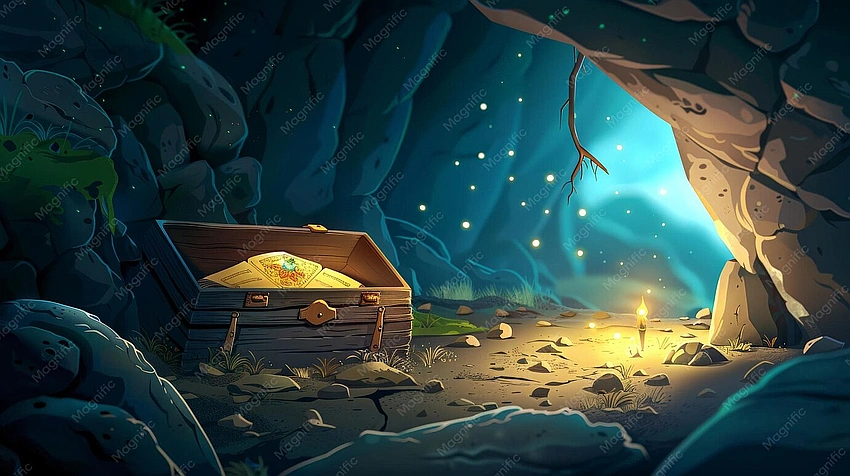
But for anything truly innovative, this metaphor is deeply misleading. You aren't a mason. You're an explorer, deep in a vast, high-dimensional space, trying to find a treasure chest you've never seen before, with only the vaguest map.
The Flaw in the Blueprint
The 'building' metaphor assumes a known end-state, a clear path, and materials readily available. This holds true for well-defined, repetitive tasks. But if your work involves creating something new- a startup, a scientific discovery, a novel piece of art- the blueprint is non-existent or, worse, fundamentally wrong.
Following it rigidly will only lead you further astray from actual innovation.
I've watched countless founders get stuck because they clung to their initial business plan like it was sacred text. They were trying to build a cathedral when they should have been digging for gold. The world doesn't care about your grand architectural vision if there's no value beneath it.

The Explorer’s Mindset: Iterate, Observe, Pivot
Instead, think of work as a continuous search algorithm. You make a small move, observe the environment, learn, and then decide your next step. This isn't a sign of indecision, but rather intelligent adaptation.
Every failed experiment isn't a setback, it's data-points that prune a branch of the search tree. Every conversation with a user, every line of code written, every iteration of a design- these are probes into the unknown.
The greatest breakthroughs don’t come from following a plan, but from recognizing an opportunity during exploration.
My most successful founders understood this implicitly. They launched imperfect prototypes, talked to early adopters, and paid close attention to what resonated- or didn't. They were less concerned with perfection and more concerned with learning which direction to push next.
They embraced the messy, unpredictable nature of discovery.
Practical Search Strategies
So, how do you become a better searcher? Start small. The faster you can run an experiment and get feedback, the quicker you can converge on a solution or identify a dead end.
Don't invest heavily in a single path without first testing the waters. Look for anomalies- those unexpected results or user behaviors that might hint at a deeper truth or an unmet need.
This also means being comfortable with uncertainty. A good searcher doesn't expect to find the treasure on the first try. They understand that the journey is about incremental discovery, about refining their mental map of the problem space with each step.
It's about being observant enough to spot the glint of gold when you're still sifting through dirt.
Are You Searching, or Just Piling On?
The distinction between building and searching is subtle but profound. One implies certainty and execution; the other, curiosity and discovery. To truly create something new and valuable, you must adopt the latter.
You must become adept at hypothesis generation, rapid experimentation, and constant learning. The treasure is out there, but it won't be found by following a pre-drawn map.
It will be found by the explorers who aren't afraid to get lost and learn from the journey.