MAGA Minaj: What Happens When Fame Gets To Your Head

MAGA Minaj: What Happens When Fame Gets To Your Head
MAGA Minaj: What Happens When Fame Gets To Your Head
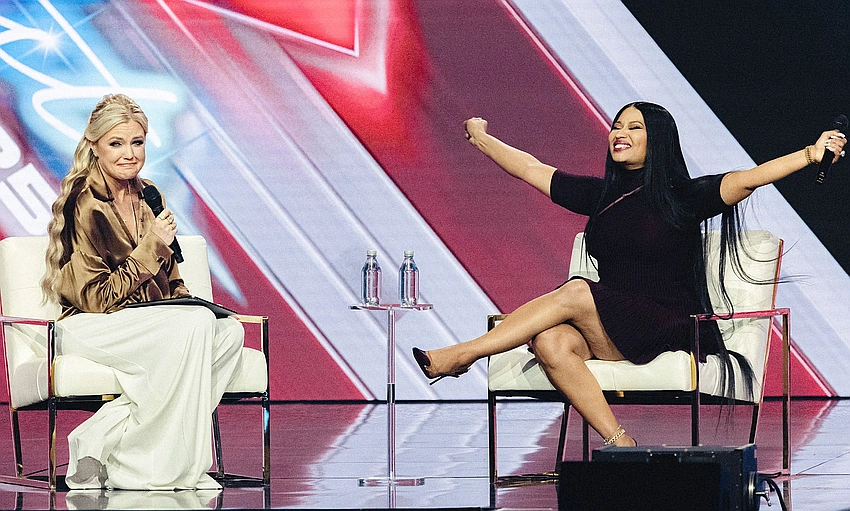
Immigrant rap icon Nicki Minaj shocks fans after right-wing Turning Point appearance. Has fame turned the Queen of Rap into “MAGA Minaj,” and what does that mean for immigrants living under ICE fear?
The moment the wig slipped
At some point this winter, my timeline quietly agreed on a new nickname for Nicki Minaj. Not “the Queen of Rap”, not “Onika Tanya Maraj”, but “MAGA Minaj”.
The shift did not come out of nowhere. Over the past few years Minaj has moved closer to right wing celebrity circles, praising conservative politicians and styling herself as the lone truth teller in a hostile liberal industry. Headlines speculate about backlash, follower loss and a fandom quietly at war with itself.
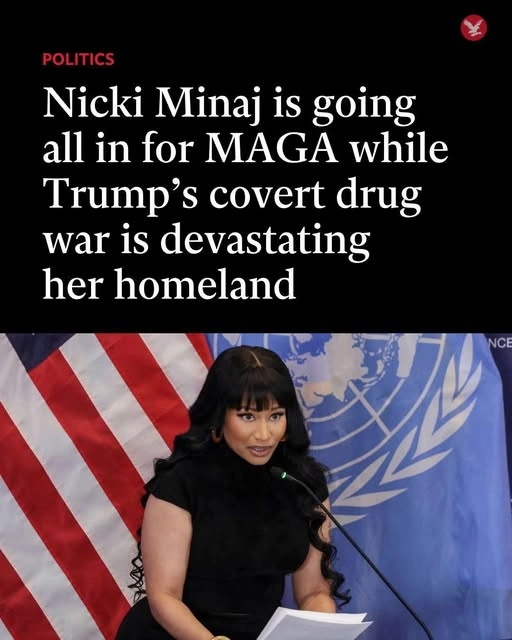
As a humanities student who grew up with “Super Bass” looping through school events, watching her slide into far right adjacent spaces feels like a case study in what happens when fame, power and grievance ferment online for too long. “MAGA Minaj” is not only a meme. It is a warning label.
From Barbie dreams to culture warrior
Minaj has always been political, if we understand “political” in the broad sense of how bodies, gender and power are staged in public. Her music videos revel in camp excess and hyper feminine bravado. Personas like Barbie, Roman and Chun Li perform exaggerated versions of race and sexuality that have attracted serious critical attention.
What feels new is the shift from playful performance to ideological alignment. In recent years Minaj has used platforms like X to comment on vaccines, public figures and elections, often in forms that travel rapidly across misinformation ecosystems. Her appearances in explicitly conservative spaces have simply made visible a drift already underway online.
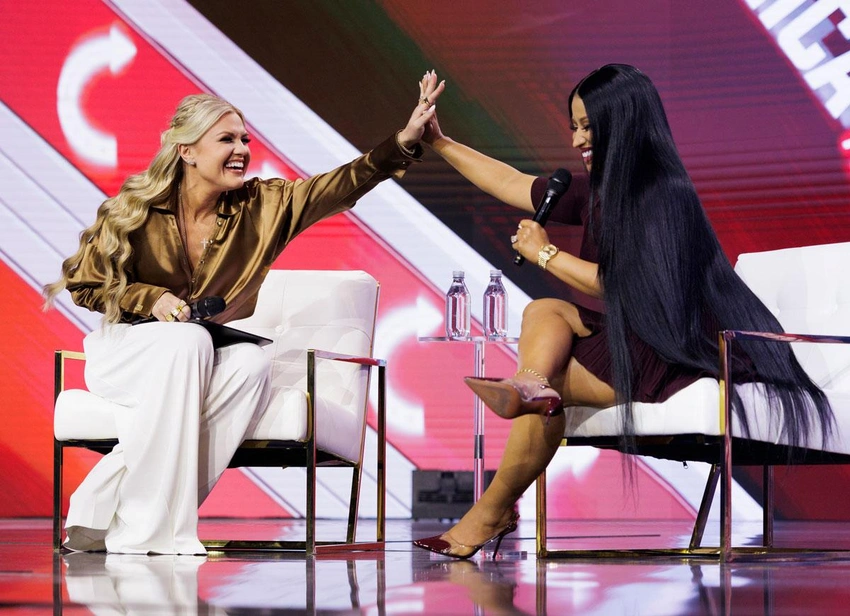
Media scholars have long argued that the line between celebrity and political actor has thinned in the age of platforms. Pop stars do not just entertain. They frame debates and mobilise followers through personality rather than policy. Minaj is not an outlier. She is a textbook example of how a musician becomes a political symbol.
The problem is that political symbolism is never neutral. Conservative youth movements understand the soft power of celebrity and actively use it to launder harsher cultural messages. By stepping onto their stages, Minaj lends her considerable cultural capital to projects that thrive on spectacle and polarisation.
Immigration, ICE and the uneasy mirror
Another layer makes the “MAGA Minaj” moment especially sharp. Nicki Minaj is an immigrant artist. Born in Trinidad and raised in Queens, her life has been shaped by migration, dislocation and the imaginative work of building a self in a new country.
Against this background, her comfort in right wing adjacent spaces sits uneasily with the realities faced by immigrants in the United States. Public reporting by reputable organisations such as the American Civil Liberties Union, Human Rights Watch, the United Nations human rights bodies and news outlets including the BBC, The Guardian and the New York Times has detailed the impact of immigration enforcement regimes. These include family separation, detention, deportation anxiety and the psychological effects of constant precarity.
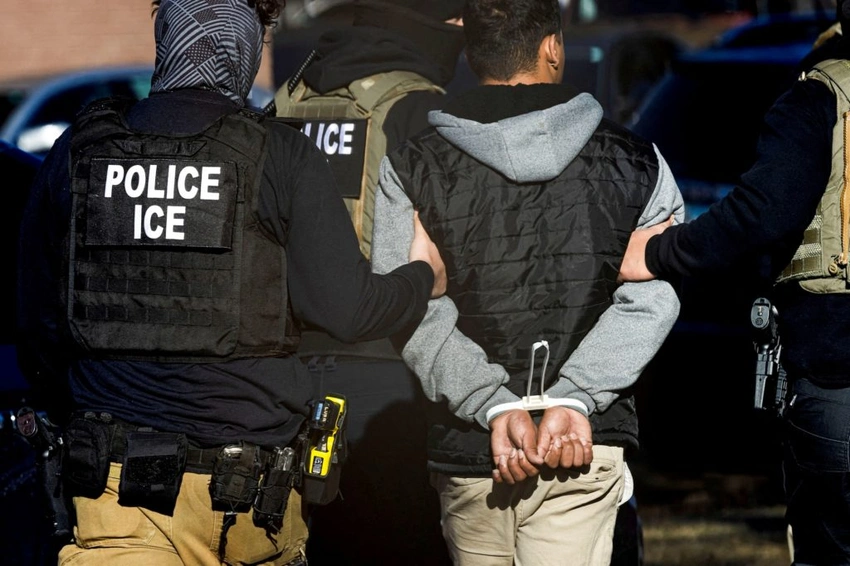
For many listeners, ICE is not a distant acronym. It is a presence in homes, workplaces and schools. Paperwork anxiety, language barriers and the feeling of being permanently “other” are daily realities.
So when a global superstar who rose from a migrant childhood stands comfortably near politics associated with harder immigration stances, it can feel like a crack in the mirror. The story of the immigrant who “made it” no longer circles back in solidarity but appears to drift into the very structures that perpetuate fear for those who did not.
Barbz, parasociality and the problem of toxic loyalty
If fame inflates the ego, stan culture supplies the helium.
The Barbz are notorious even beyond pop gossip forums. They showcase parasocial attachment at full volume. Fans rally to her defence as though she were a sovereign figure and they were sworn foot soldiers. Critics are swarmed, reported, sometimes harassed. In such a climate, honest criticism becomes risky, and Minaj can rely on a digital army to protect her even when she steps into fraught political territory.
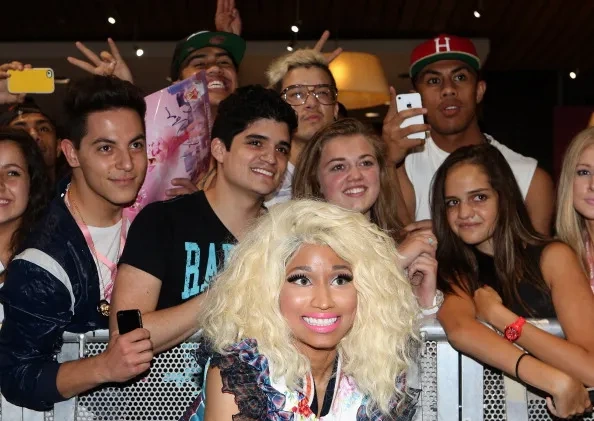
Media theory describes parasocial relationships as one sided emotional bonds between audiences and public figures. Social media deepens this by simulating intimacy. Minaj frequently interacts with individual fans online, sometimes with money, attention or public recognition. This feels generous, and often is, but it also engineers loyalty. To criticise the queen is to risk losing your place in the community built around her.
Fame, platform and the fantasy of being uncancellable
Social media turns celebrities into political megaphones. A single caption or speech can reach millions instantly, often more effectively than traditional campaigning.
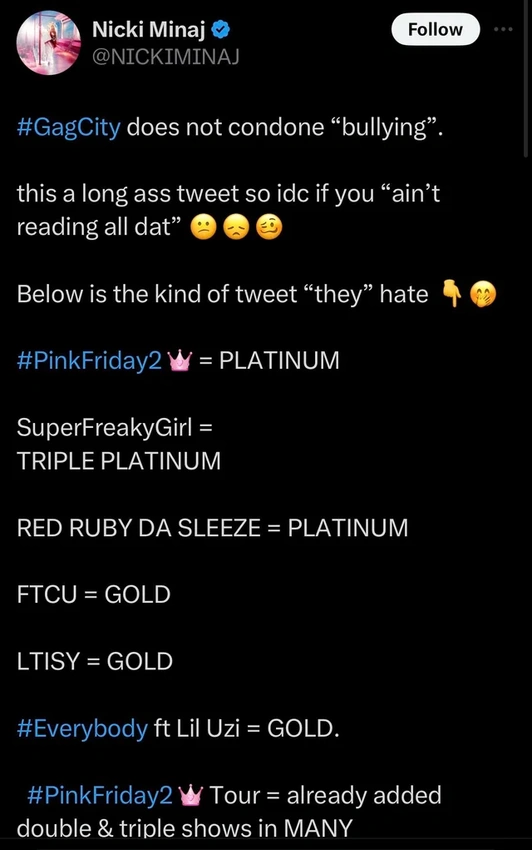
For someone like Minaj, who performs authenticity as part of her brand, this reach can harden into a feeling of invincibility. Backlash becomes proof of bravery. Criticism becomes content. There is little incentive to reflect when every controversy confirms the narrative that you alone “speak the truth”.
Fame does not only breed arrogance. It produces what feels like an epistemic bubble. Algorithms, stan loyalty and friendly media filter reality. Within that bubble, praising controversial political figures or deriding opponents can feel like common sense rather than consequential political choice.
Watching the fall, without pretending we are above it
It is tempting to treat “MAGA Minaj” as a simple story of ego and decline. But the deeper discomfort is realising that this was not created by one woman’s personality. It is baked into the platforms we all live on.
Spectacle is rewarded. Outrage is rewarded. Clear sides are rewarded. Celebrity becomes moral authority almost by default. Fandom becomes community in a precarious world. Many of us participate in softer versions of these same dynamics when we defend favourite artists without reading beyond headlines.
Perhaps the more urgent question is not what fame does to one head, but what a culture of endless celebrity does to all of us.
#MAGAminaj #NickiMinaj #CultureWar #MusicPolitics #PopCulture
