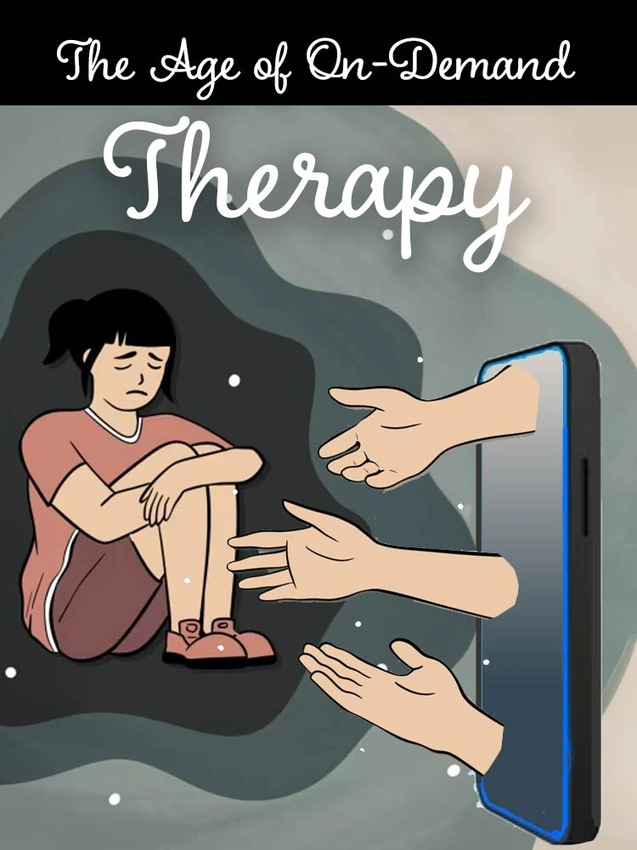
The Age of On-Demand Therapy
The Age of On-Demand Therapy
Explore the shift from traditional therapy to microdosing self-healing through digital tools.
We used to schedule therapy. Now we microdose it all day, through spreadsheets, chatbots, and unpublished drafts. Welcome to the ambient era of self-healing.
From the Couch to the Keyboard
Therapy, as a formal ritual, one hour, one office, one professional listener, feels quaint now. In its place, a new mental health architecture has emerged: diffuse, digitized, always on.
It was always like this. We voiced out crazy opinions in our blogs. We consumed mental health shorts and forwarded them on Whatsapp. We typed “I feel weird today” in our stories.We created Instagram archive folders titled ‘feels.’ Now we vent to ChatGPT.
None of these are traditional therapy. But all of them serve the same purpose: to process emotion in real time, on our terms.
The Private Vibe-Zine Organizing Our Feelings
I didn’t mean to start therapy again, but I had been feeling deep for weeks because of some ish.
I just needed to organize my thoughts, jot down some scattered notes for a future article, okay rant, maybe add a few quote screenshots that made me feel seen; I wasn't yet sure how much I'd publish. So I opened my editor on Thoxt.
At first, it felt like a very bad draft waiting to be edited. But then it became a collection of thoughts, a diary of feelings, including who said what and how I should've reacted. Even bits of conversations with Chat-GPT about things that bothered me. I didn't need to publish it anymore - it seemed I had let it all out and that was enough.
A stack of emotional debris, inner monologues, reframed traumas, and stray affirmations. It wasn't a scheduled appointment with a therapist. It wasn’t clinical. It wasn’t even intentional. It was ambient therapy, the kind we don’t name, but keep coming back to.
And it turns out, I’m not alone. Thoxt is becoming a journaling website. Maybe next I'll add cover images and turn those drafts into a 'vibe-zine'!
The Therapist is Everywhere. And No One
Tech didn’t just give us tools. It gave us mirrors.
Chatbots like ChatGPT aren’t technically therapists, they’ll tell you that. But ask anyone who’s ever poured their heart out to one at 3AM: it’s not about credentials. It’s about being received without resistance. It’s about finally saying the thing. It’s about never hearing, “Sorry, I’m out of time.”
What started as novelty, “Can GPT help with my breakup?”, is becoming a regular thing in our lives. AI can’t replace human therapists, but it sits in the space between silence and support.
And in a world where waitlists are long, stigma is real, and your friends are as anxious as you, that space is everything.
Is Your Next Therapy Session in a Spreadsheet?
For older generations, therapy was an event. For younger ones, it’s a browser tab.
Some of us are making Notes app confessions. Some of us are making pros and cons lists in Google Sheets. Others are creating the self-regulation Google Doc. The playlist labeled “processing.” We don’t even call it therapy. We call it:
- Self-improvement
- Productivity
- Journaling
- “Working on myself”
- Mood mapping
- Just vibing
It’s therapy without declaring therapy, and for Gen-why-label-anything-Z, it's normal. and that’s the genius of it. Because it’s casual, it's accessible. Because it's ambient, it's less intimidating. It’s emotional maintenance, not emergency procedure.
Emotional Intelligence is Becoming a UX Feature
Look closely: the most successful digital products of this decade won’t just be frictionless: they’ll be emotionally responsive. OpenAI isn’t winning because ChatGPT is the smartest. It’s winning because it feels the most human.
And for a generation used to performative platforms, Instagram, LinkedIn, X, a tool that simply reflects your feelings back to you is radically intimate. In this world, empathy scales better than information.
What are We Actually Doing Here?
We’re managing our emotions like our emails.,We’re curating our inner lives as content. This type of therapy is not just optimizing for productivity, it's optimizing for clarity.
The lines are blurring between note-taking and confessions, between task management and trauma processing. I didn’t realize it when I started, but my drafts folder on Thoxt has quietly become my inner understanding self. Like a diary from the 00s.....
It's messy. It’s half-formed. It’s not for anyone else to see.
But it’s honest. And in an age of auto-curated vulnerability, that honesty feels revolutionary.
The Future of Therapy isn’t Once a Week. It’s Constant.
What we’re building, with AI, with content, with each other, isn’t a replacement for therapy. It’s something weirder and more profound. Not a place you go, but a thing you constantly do.
OTT-therapy is a layer of yourself you want to discuss privately with your own self. When you type it out, or speak it, it becomes clearer. A layer of your digital life that helps you feel like yourself again.
And maybe that’s the real future of mental health: not better tools, but more ways to be heard, even if the only person reading is yourself.
#MentalWellness #SelfHealing #DigitalTherapy #Mindfulness #TechnologyInHealing
