The Strange Case of Orry: Queer yet MAGA; How?

The Strange Case of Orry: Queer yet MAGA; How?
The Strange Case of Orry: Queer yet MAGA; How?
A sharp take on Orry/Orhan Awatramani, the celebrity navigating Bollywood and Instagram, using queer visibility to align with reactionary politics rather than defend rights.
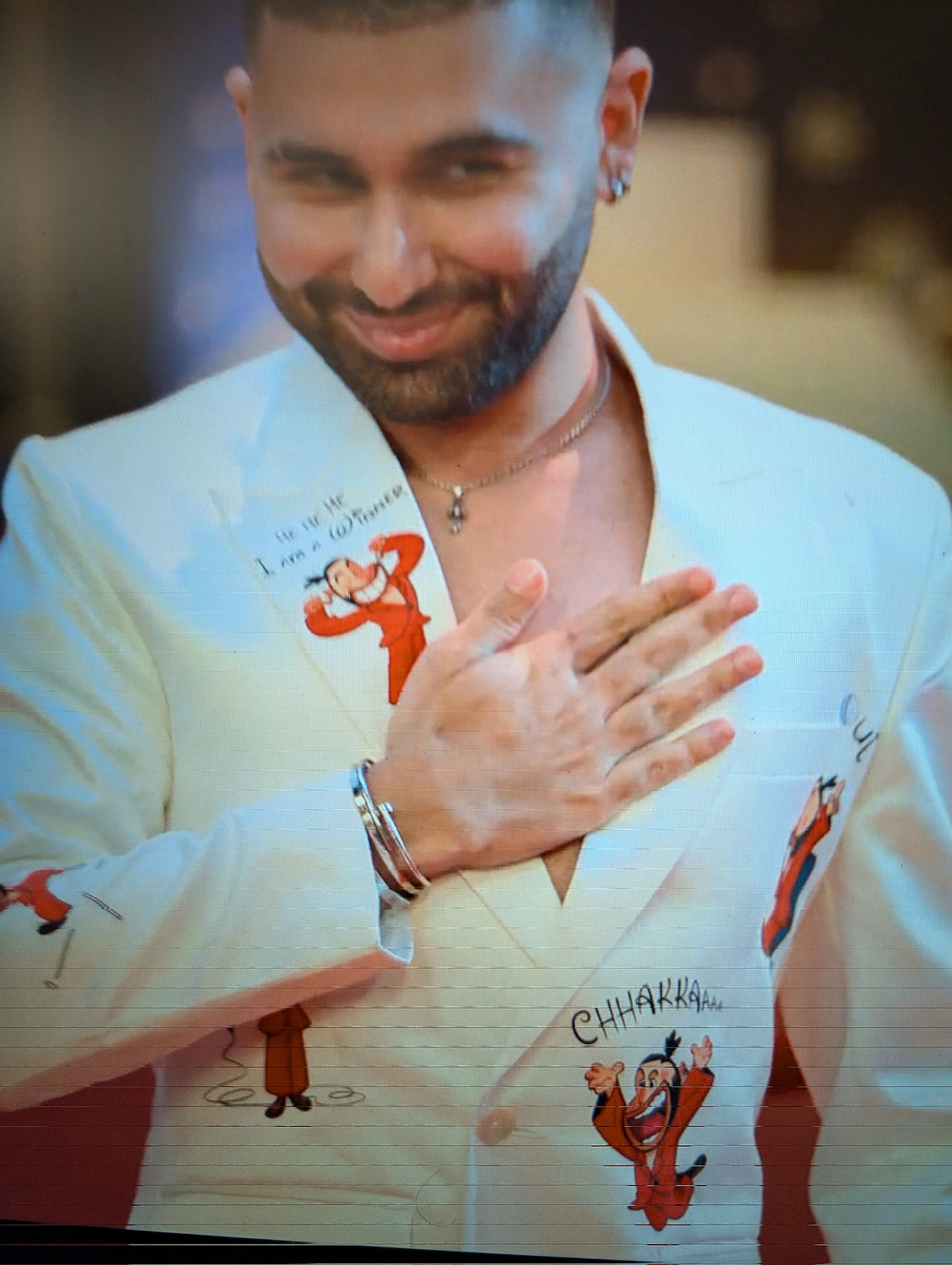
Orry or Orhan Awatramani has perfected the art of being everywhere without doing much. Paparazzi darling, socialite, reality-adjacent star: he floats across Bollywood and Instagram like a hologram of privilege. He is also openly gay, which in a country like India should mean something bold, even risky. Yet Orry has positioned himself not as a voice for queer rights but as a MAGA sympathiser, a gender essentialist, and, most recently, a man willing to wear a jacket covered in the word “chakka”; a Hindi slur for transgender people, on a reality show (The Ba***ds of Bollywood).
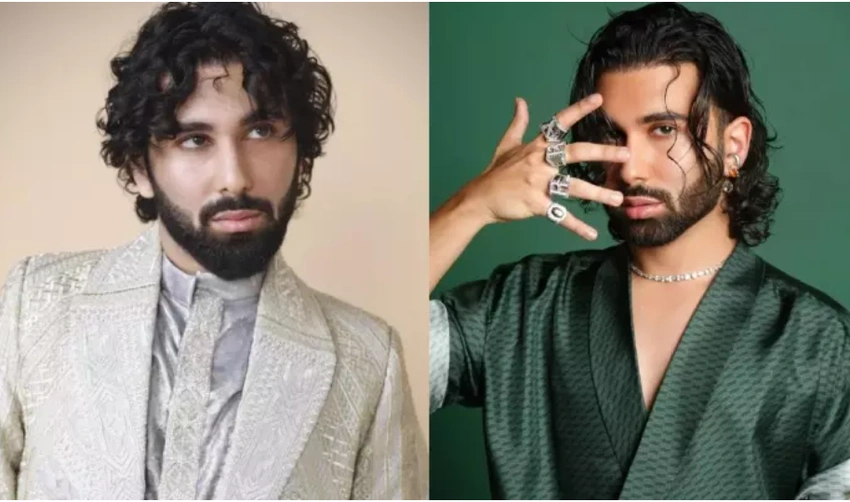
So the question is: what does it mean when someone who benefits from queer visibility uses it not to challenge power, but to mock the most vulnerable and support the most reactionary?
Queer Visibility Without Solidarity
It matters that Orry is openly gay. In a society where many still face violence, blackmail, and criminalisation for queerness, visibility can be a form of resistance. But Orry’s visibility is insulated by wealth, networks, and family connections. He is a socialite with powerful friends, not a queer activist. His gayness is not precarious; it is accessorised.
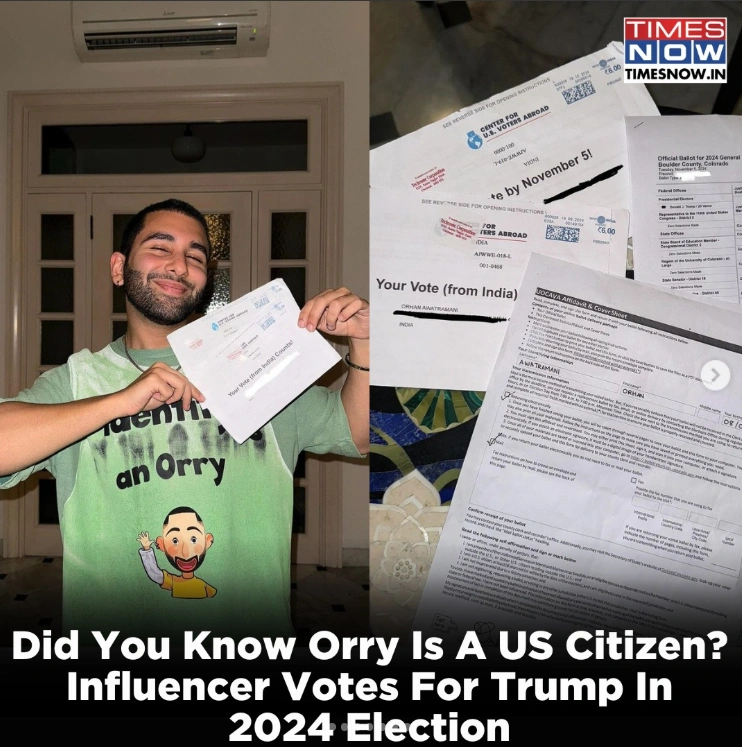
That’s why his politics sting. To be gay and MAGA is not some delightful paradox of modern identity. It is, in practice, siding with a movement that has built itself on hostility to queer and especially trans lives. American MAGA rhetoric has repeatedly targeted drag queens, banned gender-affirming care, and vilified trans students. To wear “Make America Great Again” as a badge is to endorse a politics of rollback, of undoing rights.
For a queer person to do this is not a contradiction. It is betrayal.
The Jacket That Says Too Much
The “chakka” jacket is not a quirky fashion moment. “Chakka” has long been spat as a slur against hijra, transgender, and gender-nonconforming people in India. To print it repeatedly across fabric and wear it as a spectacle is to trivialise an entire community’s pain.
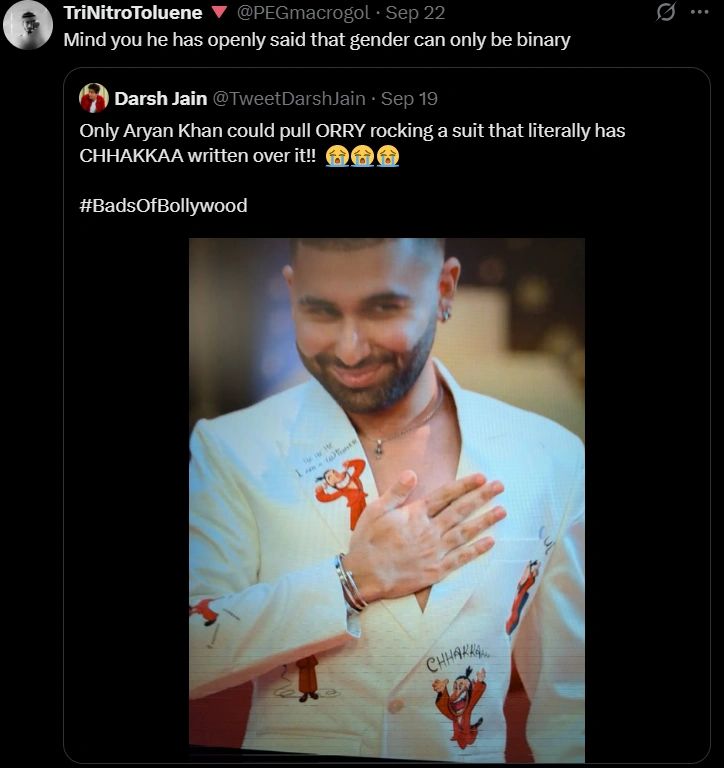
For Orry, perhaps it was irony. Perhaps it was “edgy.” But irony is the privilege of those insulated from consequences. Orry will not be harassed in the street because of his jacket. Trans and non-binary people, however, hear “chakka” screamed at them daily as they traverse a hostile public sphere. The word is not fashion. It is a weapon.
When Orry wears it, he does not subvert the insult. He rebrands it as entertainment for the powerful.
Gender Essentialism in Designer Clothing
Orry has also publicly dismissed the existence of non-binary people, affirming his own gay identity while erasing others. This is textbook gender essentialism, the belief that there are only men and women, and nothing in between.
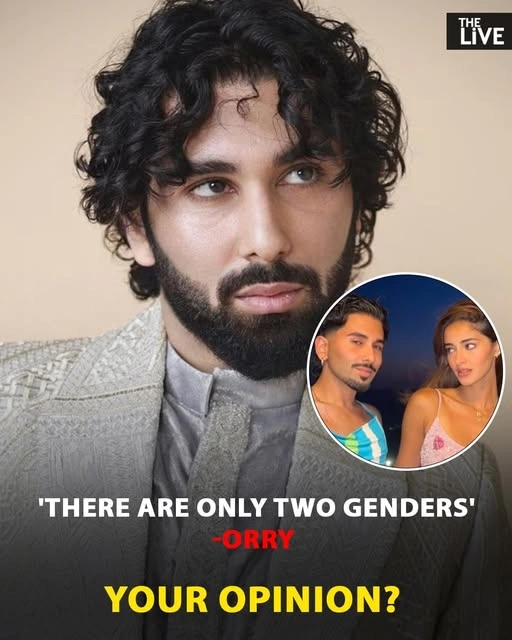
This matters because visibility is not neutral. To be openly gay but deny non-binary realities is to reinforce the very binaries that marginalise trans and non-binary folks in the first place. It is a politics of self-preservation disguised as authenticity: my identity counts, yours does not.
Privilege and the Politics of Immunity
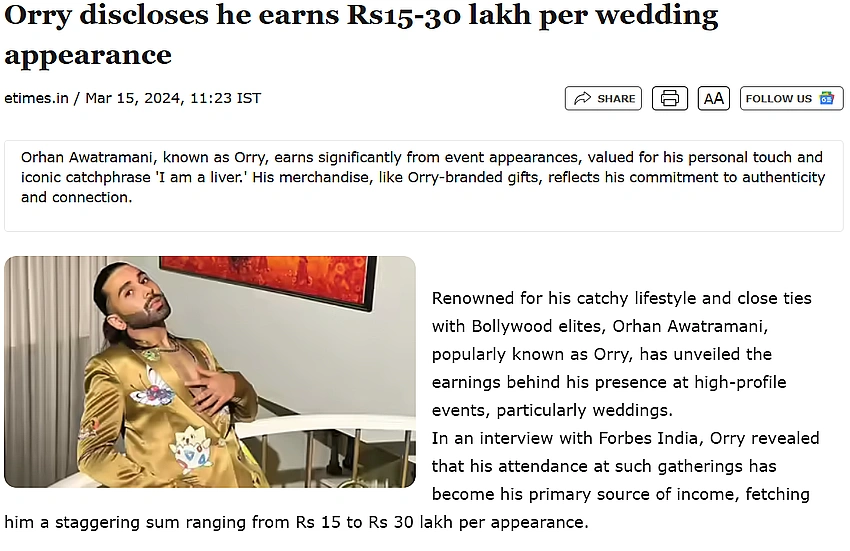
Orry can afford these positions because of privilege. Wealth buffers him from consequences. He is unlikely to lose opportunities because of being gay. He is unlikely to be arrested or beaten for wearing sequins. His gayness becomes glamorous, while for others it is still a risk to safety, family, and livelihood.
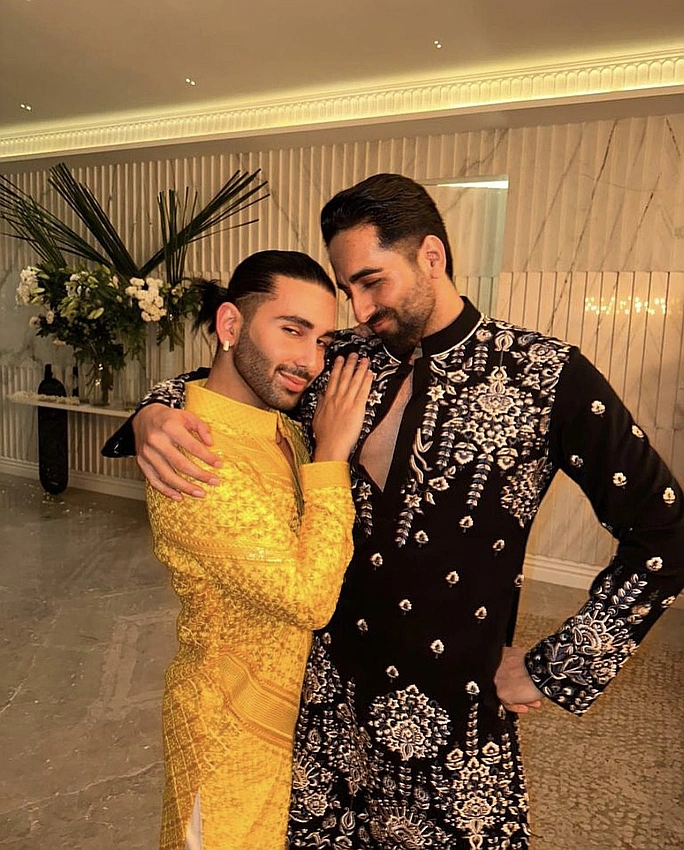
That buffer enables cruelty. MAGA support costs him nothing. A slur-jacket is just a talking point. Non-binary erasure is just a preference. But for those without the shield of wealth, these attitudes multiply danger. They legitimise dismissal, mockery, and violence.
Beyond the Neo-Liberal “Contradiction”
There is a tendency in liberal discourse to fetishise contradiction. Queer but conservative. Feminist but elitist. Brown but pro-colonial. Orry, then, becomes framed as “complex.” But complexity can be a cop-out. It allows us to marvel at paradox instead of naming harm.
There is nothing profound about being gay and MAGA. It is not an existential dilemma. It is an exercise of privilege: choosing to align with politics that hurt others because you know they cannot touch you.
Similarly, wearing “chakka” is not subversive. It is not camp. It is not postmodern. It is just cruelty, glamorised through couture.
Glitter Is Not Liberation
The strange case of Orry is not strange at all. It is the predictable case of wealth shielding prejudice, of visibility without solidarity. He is not a riddle to be solved but a symptom of how identity, stripped of politics, can be weaponised against those with less power.
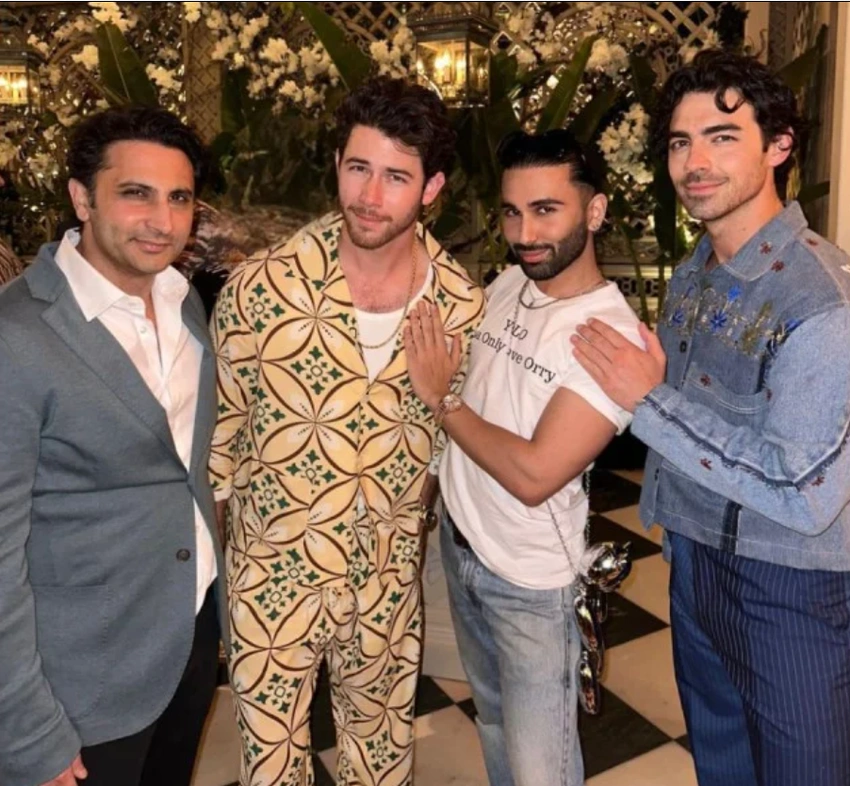
To be queer yet MAGA is not to embody paradox but to illustrate privilege. To be openly gay while erasing non-binary existence and mocking trans lives is not to be edgy but to be complicit.
Glitter is not liberation. And a “chakka” jacket is not fashion. It is violence, no matter how brightly it shines under studio lights.
#QueerVisibility #Bollywood #LGBTQRights #PaparazziCulture #BollywoodControversy #Orry #BadsOfBollywood #AryanKhan #PopCulture #Politics #MAGA
