KATSEYE’s ‘Wild’: The Problem With Being Everywhere at Once


KATSEYE’s ‘Wild’: The Problem With Being Everywhere at Once
KATSEYE’s ‘Wild’: The Problem With Being Everywhere at Once
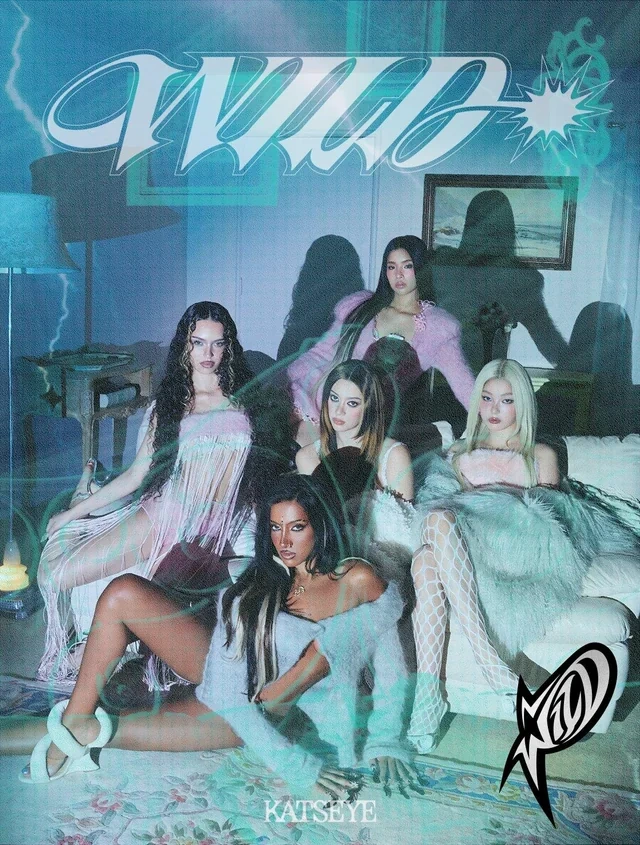
KATSEYE’s third EP, ‘Wild,’ blends dance-pop, hyperpop, Brazilian phonk, retro-pop and balladry while asking whether the global girl group has found its own sound.
KATSEYE’s Wild arrives at an interesting point in the group’s short but remarkably accelerated career. Their third EP, released on 14 August 2026, follows a run of increasingly visible singles and performances, but it also arrives with a question that has followed the group since their formation: what exactly does KATSEYE sound like when the machinery around them falls away?
Wild seems determined to answer that question through excess. Its five tracks move between dance-pop, hyperpop, Brazilian phonk, retro-pop and balladry, creating a deliberately international palette. There is something culturally appropriate about this eclecticism. KATSEYE were conceived as a global girl group, and their music reflects a pop landscape in which geographical boundaries have become increasingly porous. Yet Wild also reveals the difficulty of turning globality into an artistic identity.
The result is a record that often sounds like it is searching for itself.
The Performance of ‘Wild’
The strongest moments arrive when KATSEYE allow themselves to be slightly strange. “PINKY UP” combines heavy electronic production with an absurdly playful attitude, while “Hootie Frutti” pushes further into Brazilian phonk and hyperpop. The latter is perhaps the EP’s clearest example of KATSEYE understanding what makes contemporary pop enjoyable: it is excessive, catchy and knowingly ridiculous.
There is a larger cultural question underneath this. Contemporary pop increasingly rewards artists for seeming spontaneous while demanding an enormous amount of planning behind the scenes. The eccentric lyric, the strange vocal inflection, the deliberately chaotic production all have to arrive at precisely the right moment. Wild occasionally exposes that contradiction. Its attempts at looseness can feel more constructed than liberating.
The record's polished global-pop identity often overwhelms the personalities of the individual members. The criticism is particularly interesting because KATSEYE's appeal depends so heavily on their collective image.

Where the EP Loses Its Edge
The problem becomes clearer on “Animal”, which settles into a familiar, polished pop formula. The song is pleasant but bland, while its writing and production are emblematic of the EP's broader lack of distinctiveness.
“Bel Air” fares better as a quieter moment, built around the emotional residue of a relationship that needs to be left behind. “That Way” is similarly more compelling when the group turns towards questions of self-worth and boundaries. These tracks suggest that KATSEYE do not necessarily need to become louder or stranger to develop an identity. They may simply need material that gives their individual voices more room to exist.
This is where Wild becomes most fascinating. The EP is full of personality as an aesthetic but less consistently full of personality as expression.
The Global Girl Group Problem
There is an irony in KATSEYE's position. Their multinational formation gives them an unusual place within contemporary pop, yet the music sometimes smooths out precisely the differences that make the members interesting. After three EPs, KATSEYE still seem uncertain about where their music is going.
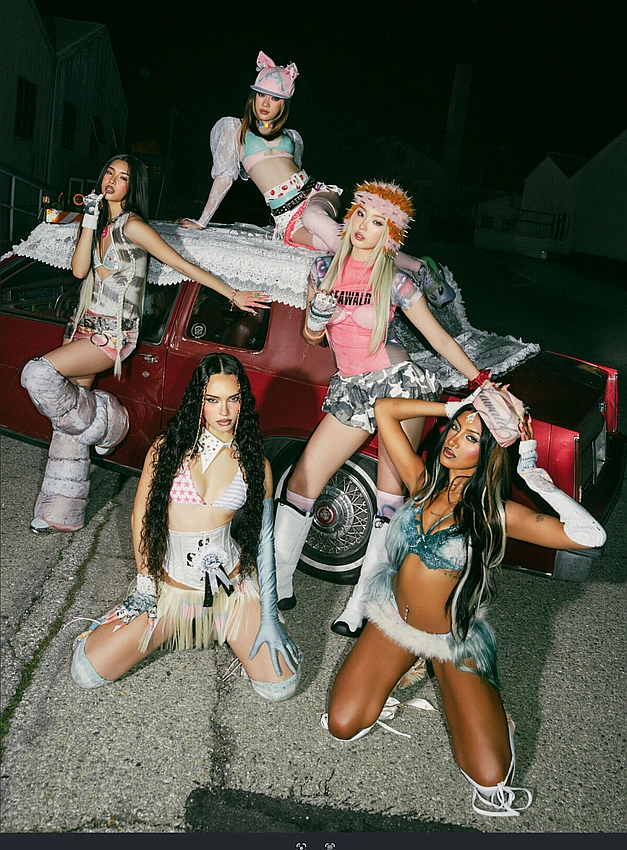
That uncertainty is perhaps the most revealing quality of Wild. The EP understands the current pop vocabulary almost too well. It knows about hyperpop, internet humour, global dance music, flirtation, nostalgia and maximalist production. What it has not entirely discovered is which of those things belong specifically to KATSEYE.
A Promising Mess
Wild is therefore an uneven record, but not an uninteresting one. Its failures are tied to a much bigger question about contemporary pop: how does an artist manufacture an identity in an industry increasingly built around the idea of authenticity?
KATSEYE are at their best when they embrace the ridiculousness of pop rather than trying to disguise its construction. “That Way” and parts of “PINKY UP” suggest that there is something genuinely exciting in that direction. The eventual challenge will be finding a way to make that chaos feel unmistakably theirs.
For now, Wild leaves KATSEYE somewhere between product and personality, global phenomenon and unfinished artistic project. The interesting part is that they are still young enough in their career for that uncertainty to become a strength rather than a weakness.
