intnentional Typos: Inside the 'Performative Stupidity' Economy

intnentional Typos: Inside the 'Performative Stupidity' Economy
intnentional Typos: Inside the 'Performative Stupidity' Economy
Influencers are weaponizing your 'Correction Instinct' to hack the algorithm, turning correction into content, outrage into engagement.
It starts as nothing. You’re scrolling through TikTok or Instagram Reels, half-dissociated, watching a lifestyle influencer make a 'authentic Italian dinner.' Everything looks fine until she holds up a beautiful bread loaf with a tomato and confidently announces, “I’m going to make a bruh-shetta.”
Bruschetta.
You try to ignore it but have to think. How does a grown woman with a customized kitchen island not know the ‘sh’ is a 'sk'? Before you know it, you’ve opened the comments section. You are typing. You are correcting. You are part of the mob screaming, “IT’S BRUS-KETTA!”
1 million views and counting. Congratulations. You just got played.
Welcome to the economy of Performative Stupidity, where high-level creators are intentionally misspelling words, mispronouncing names, or “forgetting” basic facts to trigger a specific biological urge:
the Correction Instinct.
It is a calculated manipulation of the algorithm, weaponizing human ego and the desperate, insatiable desire to be the smartest person in the room.
The Pedant Trap
As an English Lit graduate, I live my life in a constant state of grammatical vigilance. I own three different editions of Strunk & White. So, believe me when I say the urge to correct a stranger’s syntax is less of a hobby and more of a pathology. But in the current digital landscape, this pathology is being harvested for profit.
What's the first thing you do when you notice the accidental mispronunciation? Or the accidental typo? Or a mistake that could've simply been avoid by a simple Google search? We look at the comments, searching for someone to have noticed it. And we can't wait to find many more when we have found one.
Social algorithms run on engagement. They do not care if that engagement is love, hate, or a thousand people commenting “their,” not “there.” Or even better, "they're".
To the algorithm, a comment is a comment. Friction is fuel. When a creator posts a video claiming that Pride and Prejudice was written by Charlotte Brontë, they aren’t making a mistake. They are setting a trap. They know that thousands of book lovers will flood the comments to defend Jane Austen’s honor. Each correction is a +1 to engagement, pushing the video to more feeds, garnering more views, and ultimately, making the creator more money.
It is the inversion of the Shakespearean Fool. In literature, the Fool was often the smartest person on stage, using humor to speak truth to power. In the influencer economy, the creator plays the Fool so the audience can feel like the King. They feign incompetence to stroke our intellectual ego. We get a dopamine hit from feeling superior; they get ad revenue. It is a symbiotic, parasitic relationship based entirely on bad grammar and feigned ignorance.
The Death of Nuance
This tactic creates a bizarre environment where accuracy is actually a liability. If you create a perfectly researched, factually airtight video essay, people might watch it, nod, and scroll on. There is nothing to fix. There is no friction. It is “too clean” for the algorithm.
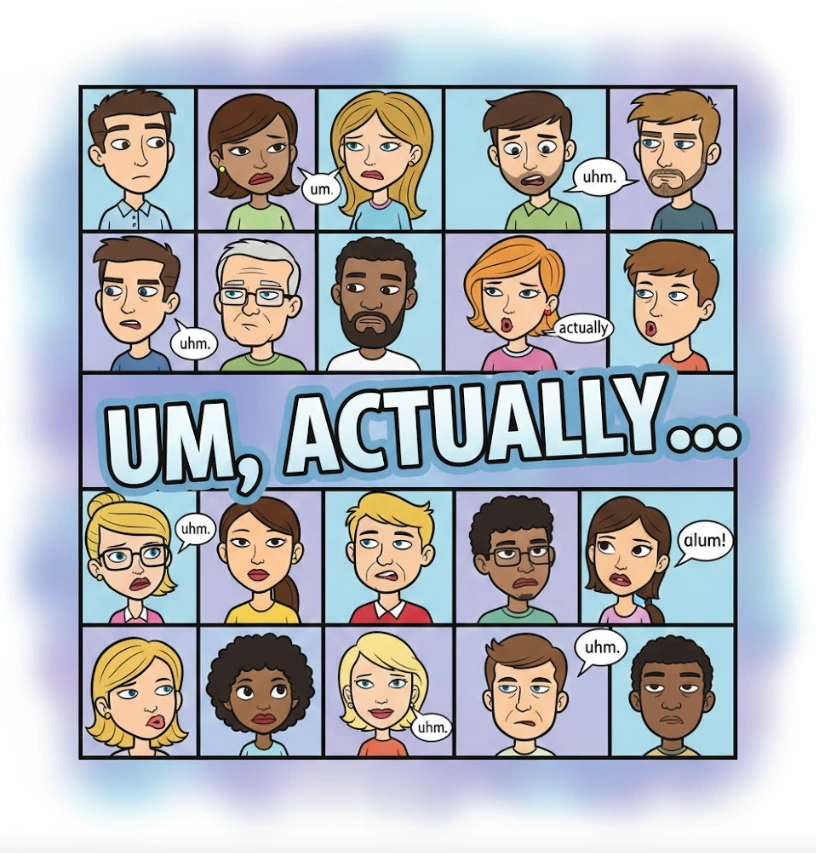
This is where the fatigue sets in. We are training our digital ecosystem to reward errors. We are incentivizing a race to the bottom of the intellectual barrel because being wrong is more profitable than being right. The comment section is the public square of the modern age and this turns it into a cesspool of “Um, actually” dunking contests rather than genuine discourse.
And as much as I like my "Um, actually"s, this makes you long for spaces that prioritize the thought over the reaction. This is why I’ve found myself drifting toward Thoxt that at least so far eschews the rage-bait model, tired of the algorithmic circus.
I guess we all need something that's built for actual reading, instead of rapid-fire emotional triggers. Something that feels like a digital coffee shop rather than a digital gladiator arena. Honestly we just need a place where you can write about literature or culture without having to intentionally misspell "Hemingway" just to get someone to look at your work.
The Only Way to Win
The next time you see a creator refer to Paris as the capital of Italy, or watch a tech bro refer to a floppy disk as a “3D printed save icon,” pause. Feel that burning sensation in your chest, that righteous indignation rising in your throat.
Take a breath. Recognize the bait.
If we want to break the cycle of Performative Stupidity, we have to stop feeding the beast. We have to deny them the engagement they are fishing for. The most devastating thing you can do to a creator who is playing dumb isn't to correct them, but to ignore them.
Keep your superiority complex to yourself. Save your sticky notes for your novels. And for the love of God, don’t tell them how to pronounce bruschetta. They already know.
#CorrectionInstinct #PerformativeStupidity #OnlineCulture #CreatorEconomy #SocialMedia
