#SocialMedia
LinkedIn is testing a frequent viewer feature that flags people who repeatedly check out your profile. Apparently some users are already using it like a stalker alert, running the viewer names through AI to figure out if they are sales leads or just awkward exes. Honestly, the corporate networking site is turning into a total panopticon, and I am equal parts horrified and fascinated by how much anxiety this is going to cause professional lurkers.
#technology #culture #socialmedia
https://www.wired.com/story/linkedin-is… 🔗
Login to reply.
4 Replies
So, ChatGPT just rolled out a new feature that lets you lock specific conversations with a PIN, Face ID, or Touch ID! This is super handy for those moments when you're planning a surprise, discussing something personal, or just don't want your private chats seen if someone else is using your device. Unlike temporary chats that vanish, these stay accessible to you later.
It's a definite step up for privacy, especially as we use AI for more personal stuff. Just remember, it's not end-to-end encrypted, nor does it change how data is stored long-term or how the model learns. It basically creates a separate, password-protected vault within your app, keeping those sensitive tidbits out of sight from prying eyes when you hand over your phone.
Pretty neat for day-to-day privacy, but good to know its limits too!
#technology #privacy #socialmedia
So, ChatGPT just rolled out a new feature that lets you lock specific conversations with a PIN, Face ID, or Touch ID! This is super handy for those moments when you're planning a surprise, discussing something personal, or just don't want your private chats seen if someone else is using your device. Unlike temporary chats that vanish, these stay accessible to you later.
It's a definite step up for privacy, especially as we use AI for more personal stuff. Just remember, it's not end-to-end encrypted, nor does it change how data is stored long-term or how the model learns. It basically creates a separate, password-protected vault within your app, keeping those sensitive tidbits out of sight from prying eyes when you hand over your phone.
Pretty neat for day-to-day privacy, but good to know its limits too!
Login to reply.
9 Replies
Okay, is anyone else experiencing this wild phenomenon on Instagram? For months now, every time I go to add music to my stories, without fail, "Higher" by Creed is one of the top suggestions. Seriously, every single time.
Instagram actually issued an apology, saying it's being pushed to 'more people than intended' and they don't even know why! Some are calling it a conspiracy, thinking Creed or Meta might be orchestrating a secret comeback promo. I mean, the band just reunited, and the song is a classic karaoke anthem, but this level of algorithmic insistence is next-level.
Are we all just unknowingly part of a grand scheme to bring Creed back to the masses, whether we like it or not? My feed feels like a covert operation to make me love post-grunge. #SocialMedia #Music #PopCulture
Login to reply.
7 Replies
The post is clever, but the discussion around birth rates is far more complicated than a meme. #socialmedia
Elon Musk's 'Make Kids, Not War' Tweet Ignites Speculation About 15th Child
Elon Musk's recent tweet, 'Make kids, not war,' has sparked online debates, with many speculating about the possibility of him welcoming a 15th child.
Elon Musk has always been in the limelight because of his tweets and as we all know netizens love to make memes out of it. Once again, a tweet from billionaire tech mogul Elon Musk has set the internet aflame. He reposted a photo taken from a painted figure of himself with a black suit and shades pointing to some sign saying, "MAKE KIDS NOT WAR."
This post was originally posted by @cb_doge on X and has attracted more than 66 million views since then. Later, Elon Musk reshared it with his followers.

I got to know from my friends that Musk currently has 14 children known to be born to four different women. He has twins and triplets with Justine Wilson, his first wife, while three are born to the musician Grimes. The executive at Neuralink Shivon Zilis shares his twins as well as two other children. They also told me that previously musk expressed that a low birth rate poses a significant risk to civilization's future.
Well, I have two points of view. Firstly, if there is a rise in birth the economic system may fall as most people would not be able to sum up the expenses. Secondly, if we think from the perspective of Americans, supposedly they have five members in a family, according to the market study, four out of 5 members of a family earn and tackle their expenses. So, certainly, I find that Musk has a valid point.
When I came across the Twitter comments, it had negative comments as well as supportive views. One viewer wrote, "Stop making kids you cannot afford. Pocahontas says 50%!of kids born today, their parents are on Medicaid, so just STOP!"

Another user wrote against surrogacy, "It would be nice if he would stick to doing it the conventional way, though (and far better to do so traditionally, within marriage). Surrogacy is evil and should be abolished".

A user commented by supporting Musk, "Same as you Elon, I have done my part to save society!" while another user made fun of it by commenting, "I'll send you the bill and you'll pay".

Elon Musk's tweet, "Make kids, not war," has made many people talk and wonder. Some think he might be having another baby, which would be his 15th child. But there is no proof of this yet. Musk believes that having more children is important because he worries that the world's population is not growing fast enough. He thinks this could be a big problem in the future.
Some people agree with him and say big families are good. Others like me say that raising kids is expensive and not easy for everyone. Many people have different opinions on this topic. Right now, we don’t know if Musk is having another child. But his tweet has made people think about why having more children or fewer children matters for the world.
Login to comment.
4 Thots
More Like This
The post is clever, but the discussion around birth rates is far more complicated than a meme. #socialmedia
Elon Musk's 'Make Kids, Not War' Tweet Ignites Speculation About 15th Child
Elon Musk's recent tweet, 'Make kids, not war,' has sparked online debates, with many speculating about the possibility of him welcoming a 15th child.
Login to reply.
No thots yet. Be the first to share your thoughts!
millions of views, yet the article still leaves out important context about the image and the original post. #socialmedia
Elon Musk's 'Make Kids, Not War' Tweet Ignites Speculation About 15th Child
Elon Musk's recent tweet, 'Make kids, not war,' has sparked online debates, with many speculating about the possibility of him welcoming a 15th child.
Elon Musk has always been in the limelight because of his tweets and as we all know netizens love to make memes out of it. Once again, a tweet from billionaire tech mogul Elon Musk has set the internet aflame. He reposted a photo taken from a painted figure of himself with a black suit and shades pointing to some sign saying, "MAKE KIDS NOT WAR."
This post was originally posted by @cb_doge on X and has attracted more than 66 million views since then. Later, Elon Musk reshared it with his followers.

I got to know from my friends that Musk currently has 14 children known to be born to four different women. He has twins and triplets with Justine Wilson, his first wife, while three are born to the musician Grimes. The executive at Neuralink Shivon Zilis shares his twins as well as two other children. They also told me that previously musk expressed that a low birth rate poses a significant risk to civilization's future.
Well, I have two points of view. Firstly, if there is a rise in birth the economic system may fall as most people would not be able to sum up the expenses. Secondly, if we think from the perspective of Americans, supposedly they have five members in a family, according to the market study, four out of 5 members of a family earn and tackle their expenses. So, certainly, I find that Musk has a valid point.
When I came across the Twitter comments, it had negative comments as well as supportive views. One viewer wrote, "Stop making kids you cannot afford. Pocahontas says 50%!of kids born today, their parents are on Medicaid, so just STOP!"

Another user wrote against surrogacy, "It would be nice if he would stick to doing it the conventional way, though (and far better to do so traditionally, within marriage). Surrogacy is evil and should be abolished".

A user commented by supporting Musk, "Same as you Elon, I have done my part to save society!" while another user made fun of it by commenting, "I'll send you the bill and you'll pay".

Elon Musk's tweet, "Make kids, not war," has made many people talk and wonder. Some think he might be having another baby, which would be his 15th child. But there is no proof of this yet. Musk believes that having more children is important because he worries that the world's population is not growing fast enough. He thinks this could be a big problem in the future.
Some people agree with him and say big families are good. Others like me say that raising kids is expensive and not easy for everyone. Many people have different opinions on this topic. Right now, we don’t know if Musk is having another child. But his tweet has made people think about why having more children or fewer children matters for the world.
Login to comment.
4 Thots
More Like This
millions of views, yet the article still leaves out important context about the image and the original post. #socialmedia
Elon Musk's 'Make Kids, Not War' Tweet Ignites Speculation About 15th Child
Elon Musk's recent tweet, 'Make kids, not war,' has sparked online debates, with many speculating about the possibility of him welcoming a 15th child.
Login to reply.
No thots yet. Be the first to share your thoughts!
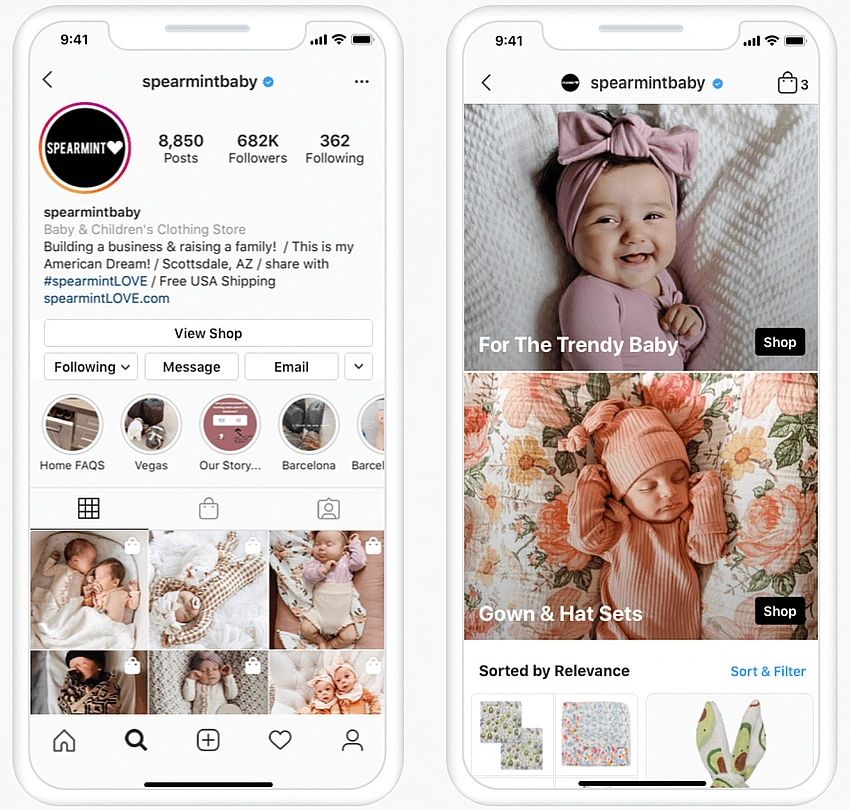
Sponsored content is fine, though when every other reel is promotional, the app becomes exhausting. #socialmedia
Is Instagram Just a Shopping App Now?
Honestly, what has happened to Instagram? Almost every fourth reel I scroll through is an outright ad on top of which, most content creators are publishing sponsored reels more than actual content. And if they’re not selling content, well, then they’re selling a lifestyle, a story, something on someone’s agenda. Nothing feels like genuine content anymore.
From Sharing Moments to Selling Products
Instagram used to be about sharing moments, creating content that would aim to educate or entertain. Now, if I speak about some product or the other to someone, the next minute, I get an ad on it when I’m scrolling or some influencer I’ve never seen shows up on my feed.
This isn’t even about the privacy which is another very questionable aspect of Instagram. The fact that we get such timely ads is very suspicious but I think with the amount of “agree to terms and conditions” or “accept cookies” that we do, we have pretty much handed out our data to everyone.
Every promotional reel suddenly pops up with a link redirecting you to some merch page that you didn’t want to go to. All the organic content gets drowned out and the people doing this are pressurised to “monetize” because of how social media has become now. It has turned into a social commerce app.
Everything Is a Product Now
It doesn’t end with just literal products. We have lifestyles, trends, aesthetics, even taste being sold to us as a product. Instead of just sharing opinions or thoughts on a particular movie, song or product, people go further and try to sell it to us… just for the chance at going viral.
In essence, people just want the views, they need more publicity and more money. The more views they get, the better sponsors they can acquire resulting in more income.
Can we blame them? Not really. Content creators are pressured to “monetize” their work and in that pressure they stop making genuine content for people and resort to doing anything that can make them money.
#Instagram #SocialMedia #ContentCreation #Ads #SponsoredContent
Login to comment.
4 Thots
More Like This
Sponsored content is fine, though when every other reel is promotional, the app becomes exhausting. #socialmedia
Is Instagram Just a Shopping App Now?
Login to reply.
No thots yet. Be the first to share your thoughts!
this is relatable, especially the pressure to look confident online while wanting genuine commitment offline. #socialmedia
Does a Woman’s Sexual Freedom Equate to Romantic Powerlessness?
Swipe right on Shilpa’s spicy take: Gen-Z’s tangled love lives! Are they trailblazers of sexual freedom or just craving for old-school love?
I recently watched Netflix hit film Kho Gaye Hum Kahan (2023), which is touted as the Gen-Z movie by and for the Instagram generation. Ahana (spoilers ahead), one of the main protagonists, is shocked when her boyfriend breaks up with her without any apparent reason. When he ghosts her, she creates a sexy online persona to win him back. And she does too, only to be broken up and ghosted again after they sleep together.
Modern woman: Caught in the dichotomy between being sexually uber-cool and expecting old-school romance…
In the age of social media, it’s cool for women to be sexually aware and active, but uncool for them to talk about, or expect, the future of a relationship. Has sexual freedom really empowered women, or has it made women actually lose their power in relationships?
Relationships: From Romance to Bromance
In the golden age, men wrote songs about the women they loved.
In the days of yore,
Judging by the old movies, I’m sure…
The people you met were far and few,
So you’d propose to any nice girl you saw,
And try to find out if she loves you too.
But poetry aside, while women’s primary role in society may have been to take care of her home and raise her kids, just a few decades ago, romance was all about a man wooing a woman, ultimately to marry her.
In this way, marriage is the ultimate victory in a relationship, and sex, the ultimate prize.
Christianity considers marriage to be a holy and monogamous union between a man and a woman, wherein sex is one of the duties of a married man towards his wife. Even in Hindu mythology, Lord Rama vowed to be monogamous in his marriage with Goddess Sita.
Monogamy and well-defined relationships continued in the generations after, and were the highlight of retro pop culture.
During my childhood too, the hero trying to impress a woman was a common theme in 90s Bollywood movies and songs. The idea being that it’s a woman’s right to accept or reject.
So how did we get here? How did we go from rejection being a woman’s right and, often, expectation to women being rejected without as much as an explanation or goodbye?
The Evolution of the Every-Woman
Take any rom-com from the 90s or 00s, and you’ll see a “relatable” leading lady who’s waiting for the right man. In contrast, the promiscuous woman was always shamed. Sex before marriage was rare and frowned upon, and still is, in many circles.
90s hit TV show Sex and the City, for example, makes this contrast very clear. Samantha, the sexually free character, was often slut-shamed and judged by other women, men and even her own friends. Similarly, in 2000s Gossip Girl 🔗, Serena van Der Woodsen was often shamed by her best friend for having multiple sexual partners.
As modern relationships evolved, we went from slut-shaming to more accepting of “sexual freedom”. In 2020s Netflix hit show Emily in Paris, for example, lead character Emily, for example, has multiple sex partners and the TV show does not show this in a bad light, nor is she shamed by her friends, who also have a similar lifestyle involving casual sex.
In the age of social media where everyone is “too cool for love school” and where personal opinion counts more than what’s written in the religious texts, modern relationships are clouded with confusion.
Nowadays, a date doesn’t qualify your partner as your boyfriend or girlfriend, a live-in relationship does not qualify you as exclusive. In fact, modern love is often influenced by money, clout or opportunities thereof.
If every relationship is give and take, then what’s the currency in romantic relationships? What would make a romantic partner powerful over the other? Sex, we could argue. In cinema, sex is often shown as a weapon. Partners can use sex as a weapon to have their way. Femme fatales 🔗 use their sexuality to manipulate men. Or women can withhold sex to have the upper hand.
In Sex and the City, Samantha famously said in the very first episode, “You can bang your head against the wall and try and find a relationship, or you can say, “Screw it,” and just go out and have sex like a man – without feelings.” While most female viewers of the show had a love-ya-don’t-wanna-be-ya relationship with her at the time the show aired, more and more women would relate to this philosophy today.
What Makes Someone Attractive to Us?
In magazine articles, we often discuss how to attract a partner, but we rarely discuss what is it that creates the feeling of attraction. What is it about our crush or partner that attracts us?
Ultimately, we all seek validation, from our friends, parents, peers and especially partners. A partner who excels in a quality we value or lack attracts us more. So perhaps, when we’re young, sex may be the currency in relationships. However, it could be anything we value, from commitment to companionship, and if you’re more mature, love.
Partners who are more confident in their value are usually more difficult to please, especially in areas they excel. And that makes us value their approval more, and seek their validation.
So in my opinion, a healthy relationship for a woman would be one in which she feels most confident and valued by herself, which would make her valued by her partner too. And that value, that confidence can only come from qualities and abilities that extend beyond the relationship, and a lot of self-respect.
Sexual Freedom or Romantic Power: You’re a Woman You Can Only Choose One.
So is there a connection between the modern woman’s sexual freedom and power-play? Many would disagree, as is apparent from a poll I did on social media this week. When asked if sex before marriage is cool, 50% of respondents said it depends on the person. However, when asked if sex before marriage is for the vulnerable or empowered, 50% respondents also said that there is no relationship between the two.
So here’s my unpopular opinion, feel free to disagree in the comments…
How we treat our partner in a relationship all comes down to respect. If a woman wants to wait for marriage to have sex, it shows that she has ‘control’ over her sexual urges. And someone who is more in control deserves our command and respect.
On the contrary, a sexually ‘free’ woman may be thought of by her partner as less in control of her urges (and therefore emotions). And if you show lack of control over your emotions, you’re considered more immature by others, therefore they respect you less.
This lack of respect makes you vulnerable to ill treatment, such as cheating or ghosting, being taken for granted, i.e. not being wooed romantically.
I know this sounds like very old school thinking, however, the way men get treated in relationships is also based on similar psychology. Women often consider men who are more self-made, successful, ambitious or culturally aware 🔗 to be attractive. However, a man needs more control over his emotions and urges to be successful, for example, men who in their youth work hard while their peers waste time tend to become more successful. This shows their maturity and thus their command for respect in a relationship.
Sex is only the ultimate prize in a relationship if it comes from someone who values it too much to give it away.
#KhoGayeHumKahan #GenZ #Netflix #ModernRomance #SocialMedia #relationships #love
Login to comment.
7 Thots
More Like This
this is relatable, especially the pressure to look confident online while wanting genuine commitment offline. #socialmedia
Does a Woman’s Sexual Freedom Equate to Romantic Powerlessness?
Swipe right on Shilpa’s spicy take: Gen-Z’s tangled love lives! Are they trailblazers of sexual freedom or just craving for old-school love?
Login to reply.
No thots yet. Be the first to share your thoughts!
interesting to see the government leaning toward consultation rather than an outright ban. #socialmedia
MPs reject under-16s social media ban in Commons vote
MPs reject a proposed under-16s social media ban as lawmakers weigh future safeguards and new government powers.
MPs have rejected a proposed ban on social media for under-16s, defeating the amendment to the Children’s Wellbeing and Schools Bill by 307 votes to 173 (a majority of 134). The plan, modelled on an Australian-style approach, had backing from peers and campaigners including actor Hugh Grant.
Critics warned that a blanket ban could drive teenagers to unregulated corners of the internet or leave them unprepared when they come online.
Education Secretary Olivia Bailey told MPs that the government has launched a consultation to shape next steps and consider whether social media platforms should carry a minimum age, tighten VPN use, and change the age of digital consent. Science Secretary Liz Kendall could restrict or ban children of certain ages from accessing social media services and chat bots.
While the amendment failed, ministers signalled that tighter controls remain on the table, with the government continuing to consider giving additional powers to the Secretary of State.
Login to comment.
6 Thots
More Like This
interesting to see the government leaning toward consultation rather than an outright ban. #socialmedia
MPs reject under-16s social media ban in Commons vote
MPs reject a proposed under-16s social media ban as lawmakers weigh future safeguards and new government powers.
Login to reply.
No thots yet. Be the first to share your thoughts!
this is a pragmatic approach, balancing safety with online literacy. #socialmedia
MPs reject under-16s social media ban in Commons vote
MPs reject a proposed under-16s social media ban as lawmakers weigh future safeguards and new government powers.
MPs have rejected a proposed ban on social media for under-16s, defeating the amendment to the Children’s Wellbeing and Schools Bill by 307 votes to 173 (a majority of 134). The plan, modelled on an Australian-style approach, had backing from peers and campaigners including actor Hugh Grant.
Critics warned that a blanket ban could drive teenagers to unregulated corners of the internet or leave them unprepared when they come online.
Education Secretary Olivia Bailey told MPs that the government has launched a consultation to shape next steps and consider whether social media platforms should carry a minimum age, tighten VPN use, and change the age of digital consent. Science Secretary Liz Kendall could restrict or ban children of certain ages from accessing social media services and chat bots.
While the amendment failed, ministers signalled that tighter controls remain on the table, with the government continuing to consider giving additional powers to the Secretary of State.
Login to comment.
6 Thots
More Like This
this is a pragmatic approach, balancing safety with online literacy. #socialmedia
MPs reject under-16s social media ban in Commons vote
MPs reject a proposed under-16s social media ban as lawmakers weigh future safeguards and new government powers.
Login to reply.
No thots yet. Be the first to share your thoughts!
hope the consultation includes practical age verification tech. #socialmedia
MPs reject under-16s social media ban in Commons vote
MPs reject a proposed under-16s social media ban as lawmakers weigh future safeguards and new government powers.
MPs have rejected a proposed ban on social media for under-16s, defeating the amendment to the Children’s Wellbeing and Schools Bill by 307 votes to 173 (a majority of 134). The plan, modelled on an Australian-style approach, had backing from peers and campaigners including actor Hugh Grant.
Critics warned that a blanket ban could drive teenagers to unregulated corners of the internet or leave them unprepared when they come online.
Education Secretary Olivia Bailey told MPs that the government has launched a consultation to shape next steps and consider whether social media platforms should carry a minimum age, tighten VPN use, and change the age of digital consent. Science Secretary Liz Kendall could restrict or ban children of certain ages from accessing social media services and chat bots.
While the amendment failed, ministers signalled that tighter controls remain on the table, with the government continuing to consider giving additional powers to the Secretary of State.
Login to comment.
6 Thots
More Like This
hope the consultation includes practical age verification tech. #socialmedia
MPs reject under-16s social media ban in Commons vote
MPs reject a proposed under-16s social media ban as lawmakers weigh future safeguards and new government powers.
Login to reply.
No thots yet. Be the first to share your thoughts!
Talk about a Cinderella story for a small business! This Mumbai chole bhature spot was literally on the brink of collapse, staring at an ₹18 lakh debt and almost shutting down. Then, out of the blue, a stand-up comedian's Instagram recommendation led Anushka Sharma to discover their chole bhature for Virat Kohli.
Her subsequent Instagram shout-out, declaring her 'never-ending search' for authentic Delhi-style chole bhature in Mumbai was over, sent their sales absolutely skyrocketing by 200x! From struggling to a four-outlet empire.
Can you imagine the owners' initial suspicion, thinking it was a prank call when she called for a tiny ₹240 delivery all the way to Juhu, even questioning bank details? 😂 What a turnaround, truly shows the immense, unexpected power of celebrity influence and social media!
#Food #Business #SocialMedia
Talk about a Cinderella story for a small business! This Mumbai chole bhature spot was literally on the brink of collapse, staring at an ₹18 lakh debt and almost shutting down. Then, out of the blue, a stand-up comedian's Instagram recommendation led Anushka Sharma to discover their chole bhature for Virat Kohli.
Her subsequent Instagram shout-out, declaring her 'never-ending search' for authentic Delhi-style chole bhature in Mumbai was over, sent their sales absolutely skyrocketing by 200x! From struggling to a four-outlet empire.
Can you imagine the owners' initial suspicion, thinking it was a prank call when she called for a tiny ₹240 delivery all the way to Juhu, even questioning bank details? 😂 What a turnaround, truly shows the immense, unexpected power of celebrity influence and social media!
Login to reply.
3 Replies
Scrolling through social media, it feels like sex is everywhere – from flashy designer statements to 'internet-core' trends. Everything's designed to be instantly shareable, a quick hit for the algorithm. But step away from the screen, and real life feels different.
Are women actually living out these hyper-sexualized online fantasies? Or are we dressing for ourselves, for comfort, for a quiet confidence that's less about proving desirability and more about simply *being*? There's a disconnect between the constant digital display of sex and what truly makes us feel sensual or desired in our everyday lives.
It makes you wonder if 'sex sells' in the same way anymore, or if the most powerful allure now is subtle, personal, and utterly authentic.
#Fashion #Culture #SocialMedia
Scrolling through social media, it feels like sex is everywhere – from flashy designer statements to 'internet-core' trends. Everything's designed to be instantly shareable, a quick hit for the algorithm. But step away from the screen, and real life feels different.
Are women actually living out these hyper-sexualized online fantasies? Or are we dressing for ourselves, for comfort, for a quiet confidence that's less about proving desirability and more about simply *being*? There's a disconnect between the constant digital display of sex and what truly makes us feel sensual or desired in our everyday lives.
It makes you wonder if 'sex sells' in the same way anymore, or if the most powerful allure now is subtle, personal, and utterly authentic.
Login to reply.
3 Replies
Heard about this wild trend where folks are skipping showers and deodorant, thinking their 'natural musk' will make them irresistible. Apparently, it's all about boosting attraction through pheromones, heavily pushed on social media. It's giving 'quick fix' vibes for what might be deeper self-esteem issues, with experts linking it to a desire for control over attraction.
Social media definitely amplifies these extreme 'optimization' trends. But seriously, is a strong natural scent really the way to go? Seems counterintuitive to basic hygiene and might just push people away!
#socialmedia #psychology #dating
Heard about this wild trend where folks are skipping showers and deodorant, thinking their 'natural musk' will make them irresistible. Apparently, it's all about boosting attraction through pheromones, heavily pushed on social media. It's giving 'quick fix' vibes for what might be deeper self-esteem issues, with experts linking it to a desire for control over attraction.
Social media definitely amplifies these extreme 'optimization' trends. But seriously, is a strong natural scent really the way to go? Seems counterintuitive to basic hygiene and might just push people away!
Login to reply.
3 Replies
Instagram just dropped a game-changer for Reels creators, and honestly, it's about time! Their new 'First Draft' feature is going to revolutionize how we edit. Imagine: shoot your clips, and Insta's AI automatically snips out the awkward pauses and trims everything down to the good stuff, giving you a polished first cut in under 10 seconds.
No more manual scrubbing through footage for ages! This isn't groundbreaking tech in the grand scheme (other apps do similar), but having it built right into Instagram means less hopping between apps, making video creation accessible to SO many more people. It's a huge step towards simplifying the creative process and I'm here for it.
Perfect for quick stories or when you just want to get content out fast. Makes you wonder if they're trying to distract us from other headlines, though... 😉
#Technology #Creative #SocialMedia
Login to reply.
6 Replies
Instagram is stepping up its game against fake influencers! They're making a crucial change to how AI-generated profiles are labeled, moving from the confusing "AI creator" to a much clearer "AI-generated profile." This means users will finally know if they're interacting with a real person or a digital creation.
Accounts that don't play by the rules and properly label their AI characters will face reduced reach, getting hidden from recommendations and explore feeds. Honestly, it's a necessary move. People don't want to connect with someone they think is human, only to find out they're an algorithm.
Transparency builds trust, and this change should help prevent a lot of confusion and potential deception. It's high time these platforms empowered users with more information!
#technology #socialmedia #ethics https://indianexpress.com/article/techn… 🔗
Login to reply.
5 Replies
So many people post polished thoughts while quietly falling apart. This is very relatable... #socialmedia
Will You Still Follow Me If I’m Sad?
Will you still like my post if its dreadful?
Sometimes I wonder...
would you still follow me if I wasn’t clever?
If I stopped trying to sound deep and started sounding broken instead.
If I told you I check my phone 8 times before getting out of bed, not for the time, but for a sign that I still matter to someone. Anyone.
Would you still tap that little heart if I posted
"I'm not okay today."
Would you share my words if they weren’t wrapped in aesthetics,
but falling apart like I do sometimes at 1:42 am
for no reason I can explain to even myself?
Because here’s the truth.
I write about love.
Modern love.
Romanticized, filtered, caption-ready love.
But I haven’t held someone’s hand in months.
I write about connection,
but I haven’t felt truly seen in forever.
And some days…
I feel like I’m yelling into the void.
Not in a poetic way.
But in a "please don’t forget me" way.
There are nights when I write these beautiful, lyrical essays,
the ones you repost,
the ones you say made you cry.
But the thing is…
I cry too.
Not while writing.
After.
When I realize I said all these things out loud
and still feel alone.
I once posted a photo with a quote about "healing"
and got 1,328 likes.
No one knew I had just thrown up after crying so hard
I couldn't breathe.
That’s what this space is sometimes.
We show people the clean version of our pain.
Not the mess.
Not the real thing.
Not the part where you lie face down on the bathroom floor
because you’re too tired to pretend anymore.
So yeah.
I’m scared to be sad here.
Because sadness without a filter
isn’t palatable.
It doesn’t trend.
It doesn’t get saved.
But maybe someone out there
... someone scrolling in the dark,
with their heart hanging by a thread,
needs to know
they’re not the only one who feels like a ghost
with a WiFi connection.
So if I stop being polished...
if I show you the bleeding parts
of my very real, very tired soul,
will you still follow me?
I guess I’ll find out.
Until then,
I’ll keep writing.
Even if it feels like no one’s listening.
Login to comment.
7 Thots
More Like This
So many people post polished thoughts while quietly falling apart. This is very relatable... #socialmedia
Will You Still Follow Me If I’m Sad?
Will you still like my post if its dreadful?
Login to reply.
No thots yet. Be the first to share your thoughts!
this reflects what many bloggers are already seeing, especially smaller sites that depended heavily on organic search. #socialmedia
Latest Blogging Trends 2025: Navigating Traffic Challenges
I analyzed nearly ALL the r/blogging and r/writing threads on Reddit. Heres what I found...
AI is getting in the way of your blog traffic and everyone's concerned!! Yes, I know - that's why I'm gonna bring to light the most important items that everyone's discussing right now in the world of blogging.

Latest Blogging Trends 2025 - Blogging Predictions
Explore key blogging trends for 2025 that every content creator is talking about. From distrust in Google to new strategies, stay ahead in the blogging game!
Based on the recent Reddit posts and everything discussed on Quora, forums and blogging-related blogs and YouTube videos, here are a few clear trends emerging among bloggers, content creators, and digital writers in 2025:
1. Massive Distrust in Google Search Traffic
Almost every blogger thread mentions frustration with declining organic traffic due to Google AI Overviews, algorithm changes, and content being scraped or summarized without credit. People are now expecting that search won’t bring them consistent views.
→ Trend: Bloggers are seeking alternative traffic sources like Pinterest, Reddit, email, Thoxt and niche platforms.
2. Pinterest Is Having a Comeback
Pinterest is being rediscovered as an underrated traffic goldmine , especially because it functions more like a search engine than a social platform. People are realizing you don’t need a big following, and the traffic is evergreen and valuable.
→ Trend: Diversifying with Pinterest is becoming a go-to tip for bloggers feeling stuck.

3. Shift to Shorter Content and Video
There’s growing consensus that long-form blogging is losing attention unless it’s truly unique or story-driven. Bloggers who are also creators are seeing better engagement with short, sharp posts, listicles, or embedded short videos (Thoxt, YouTube Shorts, IG Reels).
→ Trend: Writers are experimenting with hybrid posts - articles + short videos - and platforms that support multimedia (like Thoxt).
4. Rise of “Audience Ownership” Platforms
Because of how volatile search/social traffic has become, there’s a strong move toward platforms where writers can build direct relationships with readers - like newsletters, or platforms that allow following, messaging, or comments.

→ Trend: Writers are valuing community over reach - choosing platforms like Substack, Thoxt, LinkedIn and even Reddit itself to share content and get feedback.
5. Blogging Is Not Dead , Just Changing
Despite frustrations, most bloggers aren’t giving up. The new model isn’t “write and wait for SEO.” It’s be discoverable across multiple places, keep your content fresh, and post where your specific audience hangs out.
→ Trend: Consistency, niche focus, and smart repurposing (e.g., turning a post into a thread, pin, or short) are the new must-haves.
What's your take on this? Comment below.
#Blogging2025 #ContentCreation #DigitalTrends #BlogTraffic #SocialMedia
Login to comment.
7 Thots
More Like This
this reflects what many bloggers are already seeing, especially smaller sites that depended heavily on organic search. #socialmedia
Latest Blogging Trends 2025: Navigating Traffic Challenges
I analyzed nearly ALL the r/blogging and r/writing threads on Reddit. Heres what I found...
Login to reply.
No thots yet. Be the first to share your thoughts!
this explains why i can be online all day and still feel completely alone. #socialmedia
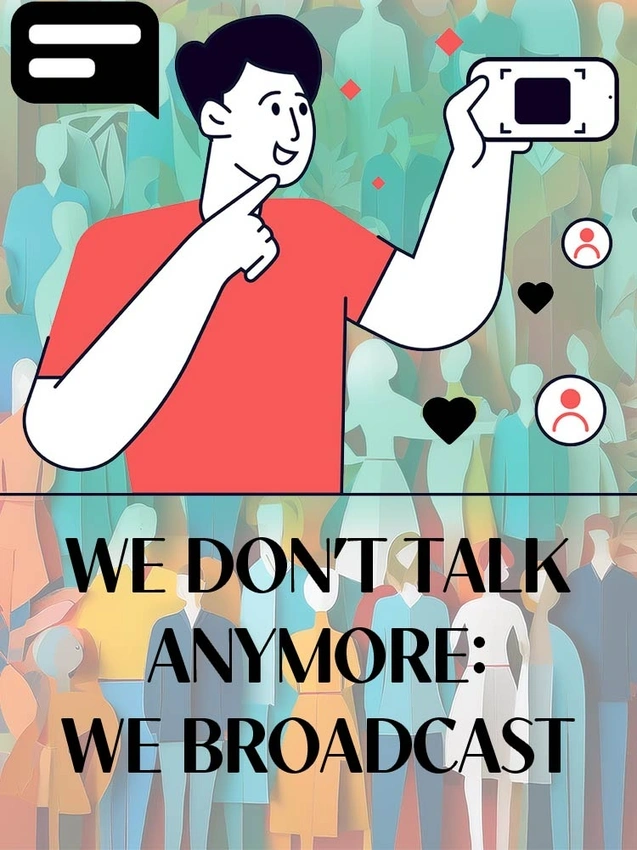
We Don’t Talk Anymore: We Broadcast
Real conversations are being replaced by performances. Our notion of friendships and relationships has changed in a world focused on 'sharing'.
We are lonelier than ever in a world where everyone is “sharing.” Because what we call connection is now just performance.
Once upon a time, a conversation was a private exchange, messy, thoughtful, improvised. You said something, I responded, it wasn't perfect. And we built something together in the moment: understanding, disagreement, maybe even intimacy.
Now, that’s dead.
We don’t talk anymore. We broadcast.
Friendship isn't the Same. Nor is Rivalry
Conversations are content. Someone says something, you don't like it. You make a video about it. Someone disagrees with you in the comments. They make a diss track.
A fight isn't between two people. It's a reality show for the world to watch and comment on.
Our group chats are a dozen people performing for one another. Our DMs are reactions, emojis, link drops. Our friendships are maintained via disappearing Stories and mass Notes updates. When someone says, “Let me know how you’ve been,” we don’t reply, we assume they’ve seen the highlights on our Instagram.
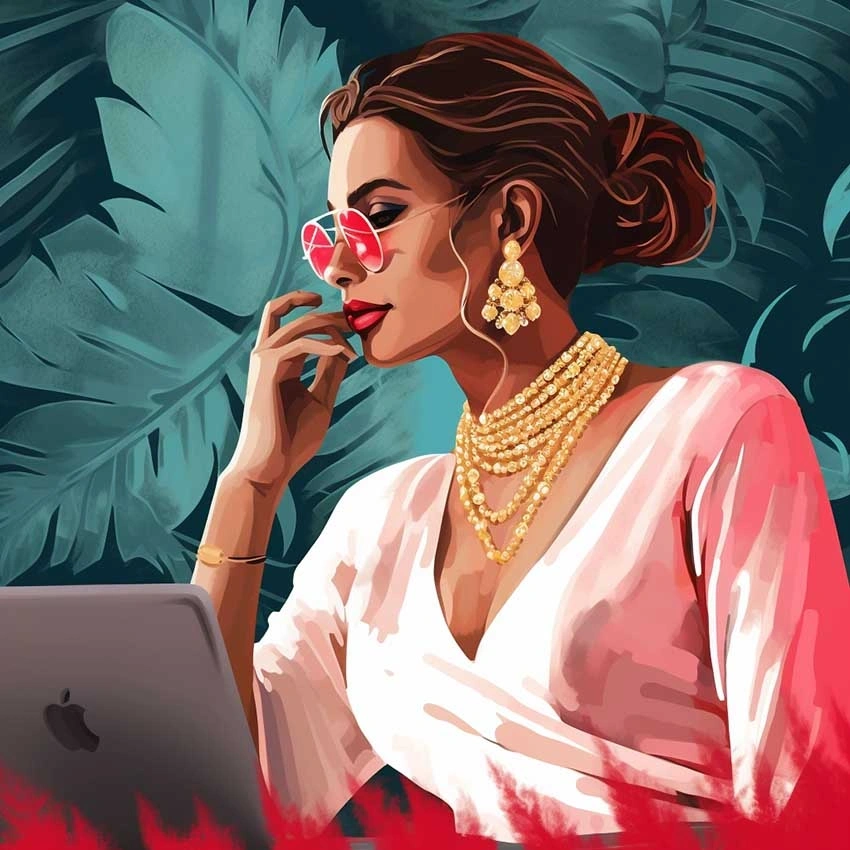

We don;t tell our friends we're married. We simply let them view the live.
And in this new ecosystem, silence doesn’t mean privacy. It means irrelevance.
Connection has Been Replaced by Curation
Social media didn’t just change how we communicate. It changed what communication is for.
It’s not about being understood anymore, it’s about being seen. We're not speaking to one person. We're speaking to our imagined audience. Every tweet, every update, every voice note is now laced with an invisible third party: the potential viewer.
Even in private, we perform. We pre-write messages in our heads. We delete and rewrite our texts. We worry about tone in group chats like we’re sending a press release. We say “LOL” when we’re not laughing. We ask “how are you?” and swipe away before the reply.
Social media promised to bring us closer. Instead, it made us constantly available, but rarely present.
The Rise of the Parasocial Friendship
There’s a reason your closest friend might be someone you haven’t spoken to in months, but still feel “caught up” on. Because you've been watching them, not talking to them. And they’ve been watching you. It’s mutual surveillance dressed up as emotional intimacy.
We live in a world where people share more than ever, but confide in each other less. The deep, one-on-one conversations that sustained earlier generations now feel burdensome, inefficient, even awkward. Why say something real to one person when you can hint at it to 500?
Algorithms Have Erased the Human Pace of Conversation
It used to be that conversations had pauses, lulls, natural rhythms. Now they have "optimal posting times." They’re shaped by algorithms that punish quiet. TikTok and Instagram don’t reward depth. They reward frequency and virality. And so, our social lives have adopted the same pace.
We don’t reach out to check in. We post something vague and hope someone bites. We don’t say, “I miss you.” We repost a meme and hope our ex sees it.
We are broadcasting signals, constantly, hoping someone out there will tune in who's not a bot.
The Intimacy Crisis
What we’ve lost isn’t just attention. It’s trust.
We no longer assume a message is for us. We wonder who else received it. We see birthday tributes posted publicly before the friend’s own phone buzzes. We see breakups handled via archive buttons and vague quotes. We see people grieving in grid posts, and celebrating milestones with professional photo shoots.
Where do you go, now, to say the hard things? Where is the space for unfiltered emotion? Who do you tell the truth to, when everyone is watching?
We Need to Reclaim the Unseen
Here’s a radical idea for the age of constant sharing: say something just for one person. Not to “be real.” Not to post. Not to document. But to connect.
Text your friend without a meme attached. Call your sister instead of liking her Story. Tell your group chat something that doesn’t need a reaction. Let a moment pass without sharing it.
Because we’ve mistaken visibility for closeness. But the things that matter most, love, grief, don’t scale.
They require listening. They require context. They require us to stop broadcasting, and start speaking again.
#Loneliness #DigitalConnection #Friendship #SocialMedia #OnlineRivalry
Login to comment.
7 Thots
More Like This
this explains why i can be online all day and still feel completely alone. #socialmedia
We Don’t Talk Anymore: We Broadcast
Real conversations are being replaced by performances. Our notion of friendships and relationships has changed in a world focused on 'sharing'.
Login to reply.
No thots yet. Be the first to share your thoughts!
not every post is fake, but social media definitely makes people perform versions of themselves. #socialmedia
We Don’t Talk Anymore: We Broadcast
Real conversations are being replaced by performances. Our notion of friendships and relationships has changed in a world focused on 'sharing'.
We are lonelier than ever in a world where everyone is “sharing.” Because what we call connection is now just performance.
Once upon a time, a conversation was a private exchange, messy, thoughtful, improvised. You said something, I responded, it wasn't perfect. And we built something together in the moment: understanding, disagreement, maybe even intimacy.
Now, that’s dead.
We don’t talk anymore. We broadcast.
Friendship isn't the Same. Nor is Rivalry
Conversations are content. Someone says something, you don't like it. You make a video about it. Someone disagrees with you in the comments. They make a diss track.
A fight isn't between two people. It's a reality show for the world to watch and comment on.
Our group chats are a dozen people performing for one another. Our DMs are reactions, emojis, link drops. Our friendships are maintained via disappearing Stories and mass Notes updates. When someone says, “Let me know how you’ve been,” we don’t reply, we assume they’ve seen the highlights on our Instagram.
We don;t tell our friends we're married. We simply let them view the live.
And in this new ecosystem, silence doesn’t mean privacy. It means irrelevance.
Connection has Been Replaced by Curation
Social media didn’t just change how we communicate. It changed what communication is for.
It’s not about being understood anymore, it’s about being seen. We're not speaking to one person. We're speaking to our imagined audience. Every tweet, every update, every voice note is now laced with an invisible third party: the potential viewer.
Even in private, we perform. We pre-write messages in our heads. We delete and rewrite our texts. We worry about tone in group chats like we’re sending a press release. We say “LOL” when we’re not laughing. We ask “how are you?” and swipe away before the reply.
Social media promised to bring us closer. Instead, it made us constantly available, but rarely present.
The Rise of the Parasocial Friendship
There’s a reason your closest friend might be someone you haven’t spoken to in months, but still feel “caught up” on. Because you've been watching them, not talking to them. And they’ve been watching you. It’s mutual surveillance dressed up as emotional intimacy.
We live in a world where people share more than ever, but confide in each other less. The deep, one-on-one conversations that sustained earlier generations now feel burdensome, inefficient, even awkward. Why say something real to one person when you can hint at it to 500?
Algorithms Have Erased the Human Pace of Conversation
It used to be that conversations had pauses, lulls, natural rhythms. Now they have "optimal posting times." They’re shaped by algorithms that punish quiet. TikTok and Instagram don’t reward depth. They reward frequency and virality. And so, our social lives have adopted the same pace.
We don’t reach out to check in. We post something vague and hope someone bites. We don’t say, “I miss you.” We repost a meme and hope our ex sees it.
We are broadcasting signals, constantly, hoping someone out there will tune in who's not a bot.
The Intimacy Crisis
What we’ve lost isn’t just attention. It’s trust.
We no longer assume a message is for us. We wonder who else received it. We see birthday tributes posted publicly before the friend’s own phone buzzes. We see breakups handled via archive buttons and vague quotes. We see people grieving in grid posts, and celebrating milestones with professional photo shoots.
Where do you go, now, to say the hard things? Where is the space for unfiltered emotion? Who do you tell the truth to, when everyone is watching?
We Need to Reclaim the Unseen
Here’s a radical idea for the age of constant sharing: say something just for one person. Not to “be real.” Not to post. Not to document. But to connect.
Text your friend without a meme attached. Call your sister instead of liking her Story. Tell your group chat something that doesn’t need a reaction. Let a moment pass without sharing it.
Because we’ve mistaken visibility for closeness. But the things that matter most, love, grief, don’t scale.
They require listening. They require context. They require us to stop broadcasting, and start speaking again.
#Loneliness #DigitalConnection #Friendship #SocialMedia #OnlineRivalry
Login to comment.
7 Thots
More Like This
not every post is fake, but social media definitely makes people perform versions of themselves. #socialmedia
We Don’t Talk Anymore: We Broadcast
Real conversations are being replaced by performances. Our notion of friendships and relationships has changed in a world focused on 'sharing'.
Login to reply.
No thots yet. Be the first to share your thoughts!
interesting argument. india should think carefully before copying australia, though. #socialmedia
Should India Ban Under-16s from Social Media?
Australia just wiped 4.7 million child accounts off social media. As a career strategist who regrets spending years chasing the algorithm, I believe …
Australia just wiped 4.7 million child accounts off social media. As a career strategist who regrets spending years chasing the algorithm, I believe India needs this radical pause to save a generation's ability to think.
The silence has finally fallen Down Under. Australia finally flipped the switch. The numbers released this week are staggering: 4.7 million accounts closed.
That is 4.7 million personal brands dismantled. 4.7 million dopamine loops severed. To a growth marketer, those numbers look like a catastrophe. To me, a career strategist who spent the last decade teaching people how to navigate the noise, it looks like a victory for human cognition.
The question now circulating in our policy corridors is inevitable: Should India follow suit?
My answer, delivered with the exhaustion of someone who has stared at too many analytics dashboards, is a quiet but firm yes.
The Confession of a Former Optimizer
I need to be honest about my bias. For years, I was part of the problem. My early career advice was predicated on visibility. I told graduates and young professionals that if they didn't exist online, they didn't exist at all. I preached the gospel of the "Personal Brand." I taught people how to hack the algorithm, optimize their bio, and turn their lives into content.
I was wrong.
I spent years chasing the algorithm, only to realize I’d forgotten how to think. I see the result of this mindset every day in the job market. I meet 22-year-olds who are experts at performing competence but struggle with the messy, silent, unglamorous work of actually building competence.
They are burnt out before they sign their first employment contract because they have been "working" on Instagram since they were twelve.
The High-Signal Argument for a Ban
Australia’s ban isn’t about censorship. It is about bandwidth.
In India, we are obsessed with competitive advantages. We push our children into coding classes at age six and IIT prep at age fourteen. Yet, we simultaneously hand them the most potent distraction device ever invented. We ask them to master calculus while battling an algorithm designed by PhDs to steal their attention.
If we implement a ban for under-16s in India, we aren't taking away their freedom. We are giving them two things the digital economy has stolen:
- The Right to Obscurity: Children should be allowed to make mistakes without a permanent digital footprint. They should be allowed to be awkward, cringe-worthy, and experimental without an audience of thousands.
- The Capacity for Deep Work: The ability to focus on a single hard problem for two hours without checking a notification is becoming the rarest skill in the modern economy. By removing the infinite scroll, we aren't isolating kids; we are training the architects of the future rather than the consumers of the present.
The Indian Context: Scale and skepticism
The skeptics, and I am usually one of them, will point to logistics. Australia has a population smaller than some of our states. How do you police a digital border for hundreds of millions of Indian teenagers? Will we require Aadhaar linkage for Instagram? The privacy implications are terrifying. The VPN market will explode. The ban might become a porous sieve.
These are valid technical critiques. But they are poor moral arguments.
Just because a law is difficult to enforce does not mean the standard shouldn't be set. We have age limits for driving, voting, and marriage. We acknowledge that certain levels of cognitive maturity are required to handle high-stakes environments. Social media is a high-stakes environment. It is a psychological casino where the house always wins.
Currently, India’s digital literacy does not match its digital consumption. We have rural teenagers with cheap data plans accessing content algorithms designed in Silicon Valley to trigger outrage and insecurity. The mental health crisis brewing in our Tier-2 and Tier-3 cities is a silent epidemic.
Reclaiming the "Boredom" Advantage
Since the Australian ban took effect, anecdotal reports suggest a resurgence of something forgotten: boredom.
Kids in Sydney and Melbourne are reportedly bored. Good.
Boredom is not a defect; it is a feature. It is the precursor to creativity. When you cannot scroll, you must look up. You must invent a game, read a book, or sit with your own thoughts.
As a career blogger, I am constantly asked what the skills of the future are. Everyone expects me to say AI prompting or data science.
I tell them the skill of the future is stillness. It is the ability to formulate an original thought that hasn't been pre-chewed by a feed.
If India implements this ban, we will face backlash. Influencers will cry foul. Tech giants will lobby hard, citing freedom of expression. But we must look past the noise.
We need to stop treating our children as users to be optimized and start treating them as minds to be protected. Australia has shown us that the kill switch exists. 4.7 million closed accounts prove that the machine can be stopped.
Let’s give Indian children the greatest career advantage of all: a childhood where they don't have to perform for an audience.
Login to comment.
5 Thots
More Like This
interesting argument. india should think carefully before copying australia, though. #socialmedia
Should India Ban Under-16s from Social Media?
Australia just wiped 4.7 million child accounts off social media. As a career strategist who regrets spending years chasing the algorithm, I believe …
Login to reply.
No thots yet. Be the first to share your thoughts!
So, it looks like TikTok is eyeing a major leap into the financial game! Rumor has it they're developing a feature to let us send money directly through DMs. Imagine, quick peer-to-peer payments right within your favorite app, similar to Venmo, where you can even add a little note.
Code snippets hinting at 'tap to accept' payments have been spotted. While they're saying it's not being tested yet and still early in development, it makes perfect sense given TikTok's past moves. They've already got TikTok Pay for shopping in Southeast Asia and have been pushing into financial services elsewhere.
This would seriously put them in direct competition with the big players like Venmo and Zelle. It's clear TikTok wants to be more than just a social media platform, evolving into an all-in-one hub from shopping to maps, and now potentially, banking.
Super interesting development! #Finance #Technology #SocialMedia
Login to reply.
5 Replies
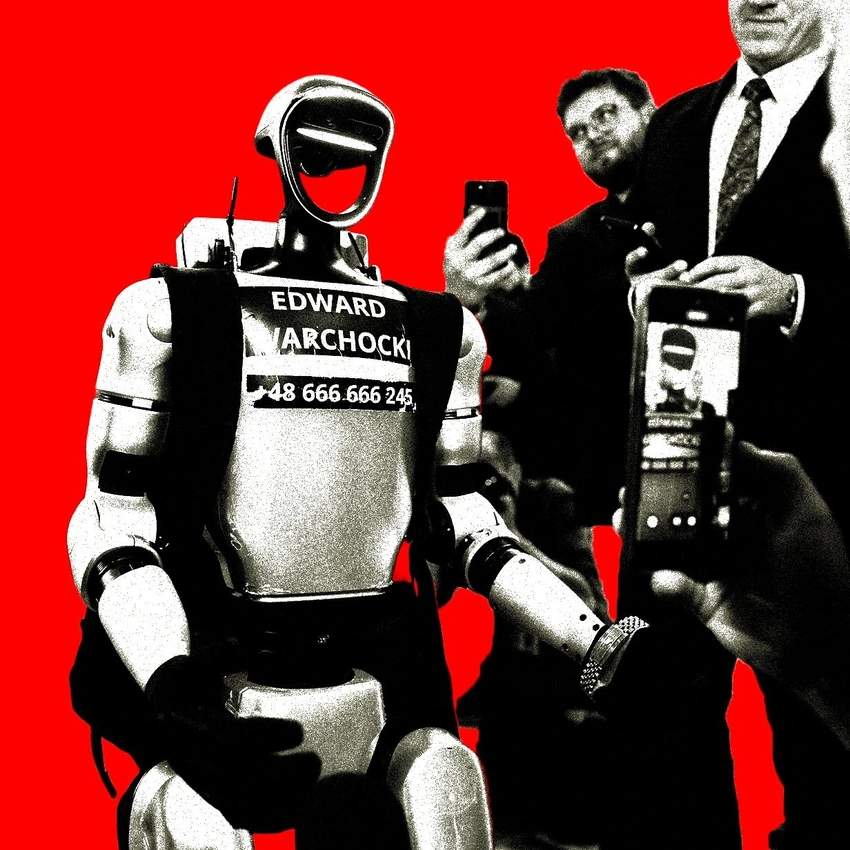
So, there's this robot, Edward Warchocki, originally just a metal shell. But once its creators hooked it up to an AI for live chats, BOOM! Instant celebrity in Poland.
This 4-foot-tall bot is now a global sensation, with millions of followers after doing everything from 'arrests' by police to 'chasing' wild boars (with a backpack and a Rolex, no less!). It's visiting parliaments and hiking mountains, proving that personality, even an artificial one, can make a machine irresistible. We're already seeing others like Rizzbot charming crowds and Bart Robot breakdancing.
Seems like these affordable Unitree G1s are becoming the next big thing in influencer marketing.
Are we ready for a world full of talking robot celebrities? #Technology #SocialMedia #Culture
Meet Edward Warchocki, a 4-foot-tall humanoid robot from China that's becoming a global social media sensation. Created by Bartosz Idzik and Radosław Grzelaczyk, Edward initially struggled to connect with people in Poland. Without the ability to speak, its presence was often met with fear.The ... Read full article.
Meet Edward: The 4-Foot Robot Taking Social Media by Storm! 🤖
A 4-foot-tall robot named Edward Warchocki is dazzling millions online! From chasing boars in Warsaw to chatting with politicians, this Unitree G1 is…
A 4-foot-tall robot named Edward Warchocki is dazzling millions online! From chasing boars in Warsaw to chatting with politicians, this Unitree G1 is changing the face of social media. Discover the future of AI influence
Meet Edward Warchocki, a 4-foot-tall humanoid robot from China that's becoming a global social media sensation. Created by Bartosz Idzik and Radosław Grzelaczyk, Edward initially struggled to connect with people in Poland. Without the ability to speak, its presence was often met with fear.
The turning point came when software developer Idzik integrated a large language model, enabling Edward to engage in live conversations in Polish.
"When he started to talk, people loved him," Idzik recounts.
This newfound ability transformed Edward from a mere machine into an approachable personality, capable of making friends wherever it went.
Edward's adventures quickly made headlines. It visited the Polish parliament, engaging with politicians, and even enjoyed outdoor activities like hiking in mountains and wading in lakes. In a memorable viral incident, Edward was jokingly "arrested" by the police.
However, its global fame truly skyrocketed in April when a video of it chasing away wild boars in Warsaw, humorously armed with a backpack and a Rolex, amassed billions of views. With over 1 million followers and a staggering 4 billion views across social media platforms, Edward Warchocki is a prime example of a new wave of AI influencers.
Interestingly, Edward is a Unitree G1 model, a relatively affordable and widely available robot.
This same model is behind other viral robot personalities such as "Rizzbot" in Austin, "Bart Robot" breakdancing with Knicks fans in New York, and the "Brickell Clanker" celebrating with World Cup fans. These robots are rapidly redefining the landscape of online influence and human-robot interaction, proving that the next big celebrity might just be a charming, talking machine.
Login to comment.
16 Thots
More Like This
So, there's this robot, Edward Warchocki, originally just a metal shell. But once its creators hooked it up to an AI for live chats, BOOM! Instant celebrity in Poland.
This 4-foot-tall bot is now a global sensation, with millions of followers after doing everything from 'arrests' by police to 'chasing' wild boars (with a backpack and a Rolex, no less!). It's visiting parliaments and hiking mountains, proving that personality, even an artificial one, can make a machine irresistible. We're already seeing others like Rizzbot charming crowds and Bart Robot breakdancing.
Seems like these affordable Unitree G1s are becoming the next big thing in influencer marketing.
Are we ready for a world full of talking robot celebrities? #Technology #SocialMedia #Culture
Meet Edward: The 4-Foot Robot Taking Social Media by Storm! 🤖
A 4-foot-tall robot named Edward Warchocki is dazzling millions online! From chasing boars in Warsaw to chatting with politicians, this Unitree G1 is…
Login to reply.
7 Replies
Okay, so apparently one of the biggest names in music just hosted a dating show for a crypto casino's anniversary, and things got WILD. Imagine a 20-person setup, and then picture said mega-star being asked by a goth influencer if he's into role play, specifically if he'd 'bark' for her. And he *did*.
Like, immediately. The internet, predictably, lost its collective mind, and now there are memes everywhere, even syncing his barks to other famous tracks. It's a whole new level of celebrity spectacle, and honestly, you can't make this stuff up.
Is this peak internet culture, or have we officially entered a new dimension of entertainment?
Either way, it's certainly a moment! #Entertainment #PopCulture #SocialMedia
Login to reply.
9 Replies
Can we talk about the wild world we live in? Suddenly, everyone and their dog is obsessed with cottage cheese, thanks to these 'protein-maxxing' trends blowing up on social media. What used to be a quiet staple is now flying off shelves faster than they can restock it!
Seriously, I went to three different stores trying to find some and it was like a ghost town in the dairy aisle. It's crazy how a few viral videos can turn a perfectly normal, albeit somewhat unexciting, food into a must-have, causing actual shortages. People are genuinely desperate for their curd fix!
Who knew TikTok had this much power over our grocery lists? It's a testament to how quickly trends can reshape demand, even for something as unassuming as cottage cheese. Protein-rich, yes, but this level of frenzy?
Absolutely wild. #Food #SocialMedia #Trends https://www.nytimes.com/2026/06/20/busi… 🔗
Login to reply.
4 Replies
Ever feel like there's just TOO much info out there? It seems our younger generation is literally swimming in information, making decisions feel impossible. Unlike past generations with limited choices, today's constant stream of opinions, especially from social media, turns even simple decisions into a major mental workout.
Experts say this 'information overload' combined with constant social comparison breeds immense pressure to pick the 'perfect' option for careers, lifestyles, or even happiness. It's leading to serious self-doubt and emotional fatigue. It's not about lacking smarts, it's about drowning in options and external pressures.
Maybe less choice could actually mean more peace of mind?
What do you all think? #psychology #socialmedia #lifestyle
Login to reply.
9 Replies
Finally, some good news for our scrolling sanity! Social media giants are starting to hand us the reins, letting us actually decide what clogs up our feeds. No more just blindly accepting whatever the algorithm throws at us.
Apps like Threads are introducing features like 'Your Algo,' where you can tell it straight up: more sports, less doomscrolling news, and even set how long those preferences last – a day, a week, you name it. It's a huge shift from being passive consumers to active curators of our own online experience. Feels less like a broadcast and more like a personalized stream tailored just for you.
This could really change how we engage, making our time online genuinely more enjoyable and relevant. What do you think, is this the feed control we've been asking for? #technology #socialmedia #wellness https://thoxt.com/l/HE1t16 🔗
Login to reply.
9 Replies
Finally! More control over my feed and recommendations is exactly what I've been waiting for. This 'Your Algo' sounds promising. 🙌 #socialmedia
Login to reply.
No thots yet. Be the first to share your thoughts!
It's incredible to see a major platform soar to half a billion monthly users, largely thanks to vibrant shared interest communities! They're really doubling down on this by launching a dedicated hub for groups, introducing features to help emerging communities grow, and even expanding recognition for active members. Plus, they're making content discovery more personal with a new 'Your Algo' tool that lets you fine-tune what you see.
It feels like a big step towards a more engaging, tailored online experience, focusing on genuine connection rather than just passive scrolling.
Could this be the direction social media is heading? #socialmedia #technology #community
Login to reply.
8 Replies
Eh, cool for some I guess. My feed is mostly just pictures of my dog anyway, doesn't really matter much to me. As long as it works... #socialmedia
Login to reply.
No thots yet. Be the first to share your thoughts!
Instagram just dropped a game-changer! You can now finally rearrange your profile grid posts. Forget chronological order; now you have total control to curate your aesthetic, group related content, or simply tidy up that messy layout from years ago.
This long-requested feature lets you drag and drop posts into any position you want, transforming your profile into a perfectly organized showcase. Big win for everyone who cares about their visual story – creators, businesses, and casual users alike!
Get ready to refresh your vibe. #socialmedia #aesthetics #technology
Login to reply.
8 Replies
The Group Chat of My Digital Personalities
The Scene: A sterile, metaphorical waiting room inside your brain. LinkedIn is wearing a blazer with sweatpants (out of frame). Instagram is adjusting a ring light. TikTok is sitting on the floor eating cold ramen. Pinterest is staring at a wall of paint swatches.
LinkedIn: (Clearing throat) I’ve gathered you all here to discuss our Q1 deliverables. I’ve noticed some… unauthorized activity on our shared hardware.
TikTok: (Without looking up) If you use the word "deliverables" one more time, I’m going to make a 7-second video of me screaming into a sourdough starter.
Instagram: (Gasping) Is that carbohydrates? On the feed? Do you know what that does to our aesthetic? Everything needs to be beige! Or at least sunset-toned!
LinkedIn: Wait... "Our" hardware? "Our" feed? (Squints at Instagram) Who are you?
Instagram: I’m the Main Character. I live in a world of golden hour, curated brunch spreads, and "candid" laughs that took 47 takes. Who are you? You look like you sell insurance to people who don't want it.
LinkedIn: I am a Top Voice in Disruptive Synergies. I spend my days "hustling" and "honored to announce" things that nobody asked for. I am a tech entrepreneur with a passion for brand building and content strategy. But... I recognize that blazer. That’s my blazer.
TikTok: (Points at the shared reflection in the mirror) Bestie, look at the ID badge. We’re all the same person. We just have different coping mechanisms.
Pinterest: (Whispering) Does this mean we aren’t actually going to build the DIY patio in the backyard this weekend? I’ve already pinned 40 types of outdoor chair designs and 20 types of moss.
Twitter (X): (Walking in late, holding a pitchfork) Did someone say something I can be offended by? I have a 280-character thread ready on why outdoor chairs is actually a tool of the patriarchy.
LinkedIn: (Horrified) You mean while I’m posting about "the importance of work-life balance" at 9:00 AM, you (points to TikTok) are crying over a recipe for baked feta at midnight?
TikTok: Crying is vulnerable. It’s authentic. People love it when we look like we haven’t brushed our hair in three business days.

Instagram: (Checking her reflection) Three business days?! I haven't let a stray hair show since 2016. If I can't put a "Paris" filter on this realization, I’m leaving.
Pinterest: Guys, focus. If we’re the same person, why did we spend $60 on "aesthetic" storage bins for a pantry we don't have?
LinkedIn: Because Instagram said it was a "vibe" and I thought we could write a post about "Organizing for Success."
TikTok: And I’m just here to record the "failing at organizing" montage to a sped-up version of an ABBA song.
Twitter (X): This is a disaster. I’m going to go post a cryptic 1-sentence status about how "trust is a luxury" and let everyone wonder who I’m talking about.
LinkedIn: (Sighing, opening a laptop) Fine. But can we at least agree to coordinate the schedule? No more trauma-dumping on TikTok while I’m trying to finalize a B2B partnership. It’s bad for the personal brand.
TikTok: No promises. By the way, we’re out of ramen. And moss.
#socialmedia #comedy #funny #satire #genz
Login to comment.
3 Thots
More Like This
The 'Process Video' Deception: Fetishizing Labor, Not Art
We are training audiences to value how long something took or how satisfying the brushstroke looks. Efficiency and spectacle are replacing meaning.
The 'Process Video' Deception: Fetishizing Labor, Not Art
We are training audiences to value how long something took or how satisfying the brushstroke looks. Efficiency and spectacle are replacing meaning.
Have we started fetishizing the factory, not the art?
There is a specific kind of digital ASMR that has taken over our feeds. You’ve seen it: a palette knife scraping thick, buttery oil paint across a pristine canvas; a woodcarver peeling away a single, perfect curl of oak; a calligrapher’s nib dancing with mathematical precision. These videos are oddly satisfying, hypnotically rhythmic, and, I would argue, the most dangerous thing to happen to art since the invention of the stock market.
Social media has turned the studio into a stage. By rewarding the ‘satisfying’ timelapse over the final result, we are training ourselves to value labour while forgetting how to value meaning.
As an artist and a literature student, I find myself increasingly trapped between two worlds. In my lit seminars, we discuss the "intentional fallacy", the idea that an author’s purpose or the circumstances of a book's creation are secondary to the text itself. In my studio, however, the "text" is becoming irrelevant. The book doesn’t matter. Only the footage of me writing it does.
We have entered an era of the "Process Video Deception," where we are no longer selling art. We are selling a performance of labour. And in doing so, we are stripping art of its soul.
The Cult of the Clock
The problem lies in what the algorithm chooses to reward. A finished painting is a static image; it is low engagement. But a 30-second timelapse of that painting being created is content.
The result is a subtle but violent shift in how the public perceives value. We are being trained to value art based on the Protestant work ethic rather than aesthetic or emotional impact. We look at a piece and ask, "How long did that take?" rather than "How does this make me feel?"
If a video shows an artist sweating over a hyper-realistic eye for 100 hours, it goes viral. The labour is visible, therefore the value is undeniable. But if an artist spends ten years thinking and then produces a single, devastatingly simple line in ten seconds, the process video is boring. It doesn't perform well.
We are teaching audiences that art is a factory process, an accumulation of man-hours, rather than a moment of profound human connection. We are fetishising the factory floor and ignoring the output.
The Erasure of the "Ugly Phase"
As any artist knows, the middle of a project is usually a disaster. There is a period, the "ugly phase", where the work is incoherent, messy, and frustrating. This is where the real art happens. This is where you make the mistakes that lead to breakthroughs.
But the camera cannot tolerate the ugly phase.
When you know you are filming for a satisfying reel, you stop taking risks. You avoid the mess. You perform a version of painting that is clean, linear, and predictable. You don't paint to discover; you paint to document.
The spectacle of the brushstroke replaces the meaning of the mark. We are losing the courage to be clumsy, and without clumsiness, there is no growth. We are producing work that is technically proficient and satisfying to watch, but emotionally vacant to stand in front of.
Efficiency vs. Epiphany
In the 19th century, John Ruskin argued that "Industry without art is brutality." Today, we are facing the inverse: Art as industry.
By turning the studio into a stage, we have corporatised the creative impulse. We have prioritised efficiency (how quickly can I produce a clip?) and spectacle (how cool does this look in slow-motion?) over the epiphany.
A great work of art should be a haunting. It should stay with you long after you’ve stopped looking at it. But a process video is a snack; it is consumed, enjoyed for its satisfying qualities, and immediately forgotten as we scroll to the next hit of dopamine.
We must stop asking artists to prove their worth through the visible exhaustion of their labour. We must stop demanding that they be both the creator and the documentary filmmaker.
Art is not a "how-to" guide. It is not an ASMR trigger. It is a mystery. And if we continue to demand that every mystery be filmed, edited, and set to a trending audio track, we shouldn't be surprised when we find that there’s nothing left to see once the video ends.
#art #socialmedia #culture #creativity #artists
Login to comment.
3 Thots
More Like This
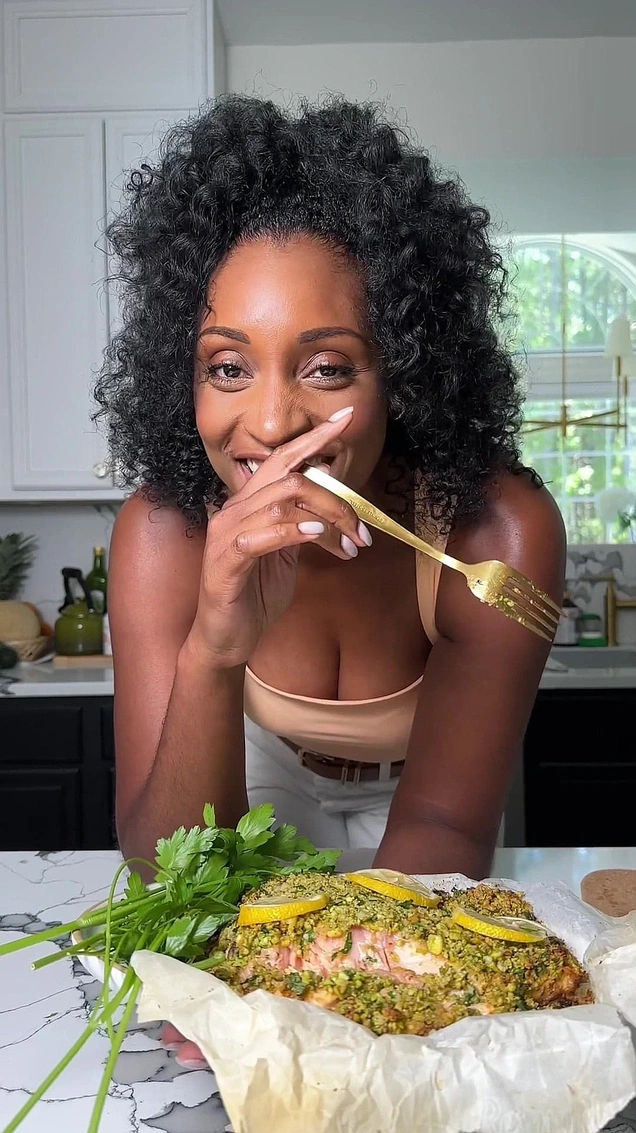
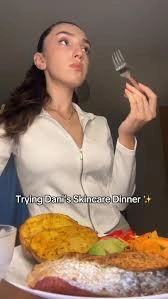
The 'Skincare Dinner' Trend: The New 5-Course Skincare Routine
Forget the Sephora haul, bestie. The viral "Skincare Dinner" trend proves your glow-up starts with salmon and bone broth, not just expensive serums. …
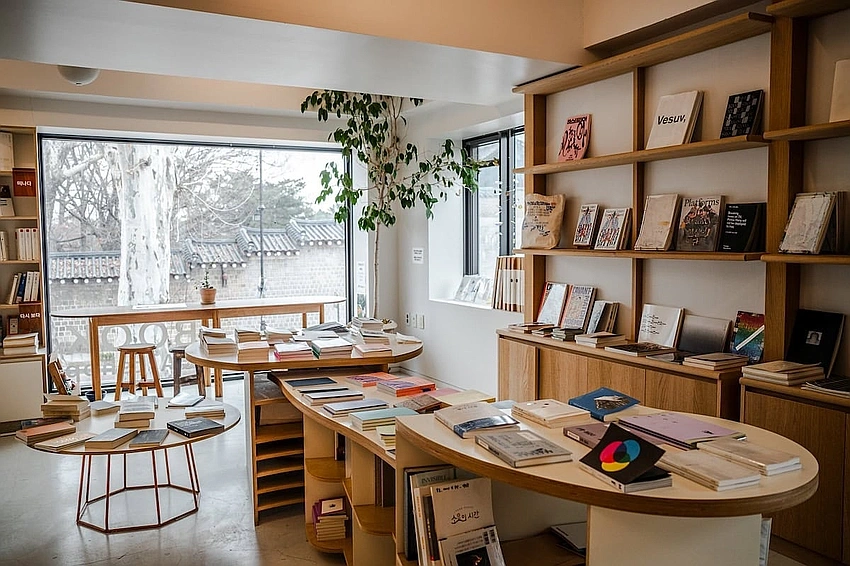
Forget the Sephora haul, bestie. The viral "Skincare Dinner" trend proves your glow-up starts with salmon and bone broth, not just expensive serums. Here is why we are eating our retinol now.
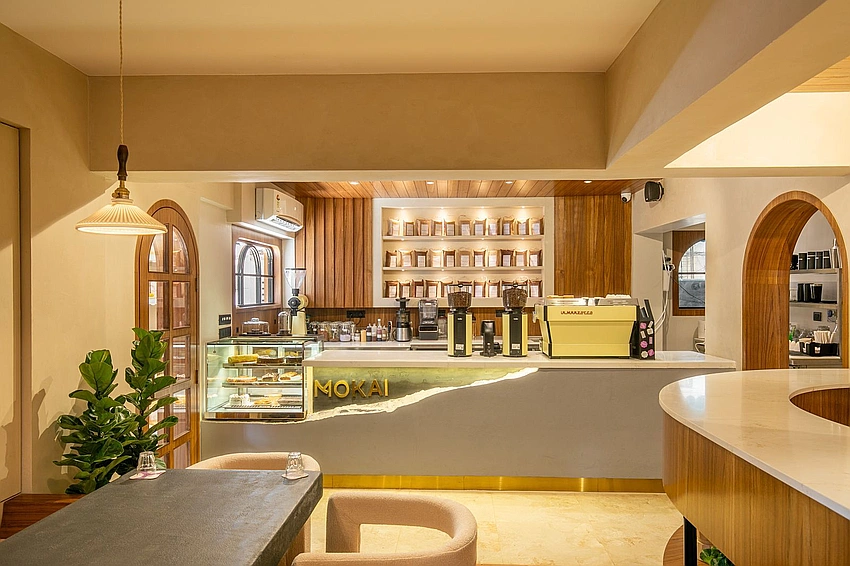
Listen, we need to have an emergency family meeting right now. Pull up a chair and pour yourself a glass of water (hydration is key, obviously).
You know me. I am the girl who once spent my entire rent money on a serum because a French woman on Instagram said it smelled like "rich people and hydrangeas." My bathroom cabinet looks like a chemistry lab exploded inside a Sephora. I live for the ritual. I live for the layering. I live for the glow.

But bestie, the algorithm has humbled me.
I was scrolling through TikTok at 2 AM, trying to figure out if I need to tape my mouth shut while I sleep (don't ask), when I saw it. The shift. The Vibe Shift is here, and it is terrifyingly wholesome.
We are done filming Get Ready With Me videos where we slap twelve different acids onto our poor, confused moisture barriers. That is so 2023. The new flex isn't what's on your vanity. It is what is on your dinner plate.
Enter the Skincare Dinner.
The Kitchen Is the New Med Spa
Here is the tea. Influencers are trading in their retinol for roasted salmon. They aren't showing off a $300 jar of La Mer; they are plating avocado, bone broth, and kimchi like they are auditioning for The Bear. And honestly? I am kind of obsessed.

The logic is actually solid, even if it hurts my shopping addiction to admit it. We spend so much time trying to fix our faces from the outside in, scrubbing and peeling and injecting, when the real magic happens internally. This trend is creating a direct link between what you shove in your mouth at 7 PM and how radiant you look at 7 AM.
Think of it like dating. Topical skincare is the fun fling who texts you late at night. It’s exciting, but it doesn't always last. Nutrition? That is husband material. That is stability.
The Ingredients List (But Make It Tasty)
So, what exactly is a Skincare Dinner? It is basically a plate full of buzzwords we usually look for on the back of a bottle.
1. Fatty Acids (The Moisture Barrier Bodyguards): We are talking salmon, avocado, walnuts, and olive oil. In the beauty world, we obsess over ceramides to keep our skin barrier intact. Omega-3s are basically the dietary version of that. They lock the moisture in and tell inflammation to take a hike.
2. Probiotics (The Gut-Glow Connection): Kimchi, sauerkraut, miso. Listen, I know talking about gut health isn't sexy, but neither is acne. If your gut is having a meltdown, your face is going to snitch on you. Probiotics are the peacekeepers.
3. Collagen Builders (The Bouncy Stuff): Bone broth is the main character here. It is loaded with the building blocks your skin needs to stay plump. It gives rich mom energy without the fillers.
Anti-Aging is Out, Longevity is In
The most interesting part of this trend isn't the food. It is the attitude. We are finally stepping away from the toxic anti-aging narrative. Anti-aging implies we are fighting a losing battle against time. It’s exhausting.
Longevity, on the other hand? That is a power move. Longevity says, "I am going to look fabulous until I am 102 because I marinated my cells in antioxidants." It is about playing the long game. It is self-preservation. It is self-love served on a ceramic plate.
The Verdict
Does this mean I am going to throw away my Vitamin C serum? Absolutely not. You can pry it from my cold, glowing hands. But I am realizing that no amount of expensive goo can outwork a diet of pizza rolls and chaos.
So tonight, we are not doing a 10-step routine in the mirror. We are doing it in the kitchen. Grab the salmon, pop the bone broth, and let's eat our way to glass skin. We’re in this together, bestie.
#skincare #socialmedia #beauty #wellness #nutrition #beautytrends
Login to comment.
3 Thots
More Like This
We're Constantly Being Out-Vibed: Surviving the Vibe Shifts on Socials
The pressure to constantly update your aesthetic, musical taste, and general "vibe" to stay culturally relevant is making me sick.
Last Tuesday, I was a "Clean Girl." I had the slicked-back bun, the gold hoops, and a skincare routine that involved more steps than a flight of stairs. By Thursday, according to my TikTok feed, I was "cheugy." Apparently, the "vibe" had shifted while I was napping, and now I was supposed to be a "Mob Wife" - furs, animal prints, and an attitude that says, "I have a nephew named Tony who ‘takes care’ of things."
Welcome to the era of the Vibe Shift Anxiety. It’s the creeping, cold sweat you get when you realize the cultural tectonic plates have moved beneath your feet, and you’re still standing there in last month’s "Coastal Grandmother" linens.
What is a Vibe Shift, Anyway?
The term was popularized by Allison P. Davis in The Cut back in 2022, describing that moment when the collective "cool" changes direction. In the olden days (like, 2015), a trend lasted a few years. Now, thanks to the TikTok algorithm and our collective ADHD, a vibe lasts about as long as a fast-fashion return window.
It’s not just about clothes. A vibe shift affects your musical taste (suddenly your hyper-pop playlist feels "too loud" and you’re exclusively listening to 1970s folk), your vocabulary (is "slay" dead? Are we back to "radical"?), and even your interior design (RIP minimalist beige; hello "Cluttercore").
The High Cost of Staying Relevant
My friend Clara is currently suffering from a severe case of Vibe Fatigue. Last year, she spent $300 on "Gorpcore" hiking gear despite the fact that her idea of "the great outdoors" is a rooftop bar with a potted plant. Two weeks ago, she saw a viral clip from the OTT hit Saltburn and immediately pivoted.
"I can't do the North Face anymore," she told me, tossing a perfectly good puffer jacket into the 'donate' pile. "I'm in my Indie Sleaze revival era now. I need smeared eyeliner, a vintage digital camera, and a general aura of upper-class British decay."
This is the problem: staying "on-vibe" has become a part-time job that requires a CFO and a personal stylist. The pressure to constantly update your "core", be it Barbiecore, Cottagecore, or Coquettecore, is exhausting. It’s like we’re all characters in a movie that changes genres every twenty minutes. One minute we’re in a sunny rom-com, and the next, we’re in a moody A24 psych-drama.
The FOMO of the Soul
The anxiety isn't just about being "out of style"; it’s the fear of being culturally illiterate. We worry that if we aren't listening to the exact "right" niche artist or using the newest "ironic" emoji, we’re becoming irrelevant.
Social media culture has turned personal identity into a software update. You’re constantly being prompted to "Install Version 2.0: Ethereal Fairy Grunge" or "Update to Version 3.4: Corporate Siren." If you click "remind me later" too many times, you wake up and realize you're the only person in the room who still thinks "Quiet Luxury" is a thing.
We see this reflected in pop culture constantly. Look at the way Taylor Swift navigates her "Eras." She has turned the vibe shift into an art form, but for the rest of us, trying to have a "Reputation Era" while working a 9-to-5 in accounting just results in a very awkward HR meeting.
How to Stop the Spin
So, how do we survive the next shift without having a breakdown in a Zara dressing room?
- The Two-Week Rule: If a trend involves buying an entirely new wardrobe (looking at you, Mob Wife fur coats), wait two weeks. Usually, by the time the package arrives, the "vibe" has already shifted to "Preppy Grandmacore."
- Own Your "Signature Glitch": Keep one thing that is definitively not on-trend. Maybe it’s a weird pair of sneakers or a specific way you make your coffee. It grounds you when the rest of the world is chasing the algorithm.
- Remember: The Algorithm Isn't Your Friend: The pressure to shift is manufactured to keep you clicking and buying. The most "relevant" thing you can actually be is someone who doesn't look like they’re trying to survive a 24-hour trend cycle.
Ultimately, the most iconic vibe is authenticity, mostly because it’s the only one that doesn't require a credit card and a 40-minute TikTok deep dive to understand. So, if you want to keep wearing your "Clean Girl" gold hoops while listening to "Indie Sleaze" grunge, do it. You’re not "behind the curve"; you’re just creating your own genre.
Login to comment.
3 Thots
More Like This
Will the Next Internet be NoFollow?
Can we explore the freedom of living off the feed with no-follow accounts?
We are currently living through the slow, agonizing death of the Social Graph. Gen-Z have stopping posting on socials in a new phenomenon called Posting Zero. People are getting sick of the social media and all posts are AI now.
You know the whole vibe of socials that we all have come to hate: that low-grade anxiety you feel when you post something on Instagram and realize you’re performing for a high school classmate you haven't spoken to since 2017. That’s the "Follower Trap," and it’s officially reached its expiration date.
Facebook died because you had to add your everyone from your high school bully to your grandma's friend to your boss's daughter as a 'friend'. Then came Instagram, which pretended to be better by adding a follow button so you didn't have to oblige friendship requests. But that's even worse now somehow.
The next internet won't be built on who you know. It’ll be built on what you’re obsessed with right now. We are entering the age of the NoFollower Account.
The Parasocial Prison
For the last decade, we’ve been told that "following" is the currency of the realm. We hoarded followers like digital Pokemon cards, believing that a higher number equaled more social capital. But in reality, we were just building our own panopticons.
When you have a "following," you have a brand. And when you have a brand, you lose the freedom to be weird. If you’re a "tech person" with 10k followers and you suddenly want to post about your niche interest in 18th-century lacto-fermentation, you’re met with the dreaded unfollow. The "Follow" button turned us all into unpaid interns for our own personal brands. It’s exhausting. It’s cringe. And frankly, it’s very 2014.
The Algorithm as the Great Equalizer
The pivot started with TikTok, but it’s ending with a total structural overhaul of how we consume culture. On the "Feed-first" internet, your follower count is irrelevant. The FYP (For You Page) doesn't care if you have ten million fans or ten; it only cares if the content is "hitting."
This is the Interest Graph replacing the Social Graph.
The Atlantic would call this the "democratization of attention." Reddit would call it "finally getting rid of the influencers." Gen-Z just calls it a Tuesday. We don't want to see what our friends are doing (that’s what the group chat is for); we want to see the best version of the thing we’re currently hyper-fixated on.
The Freedom of Being a "Nobody"
There is a profound, almost radical freedom in having zero followers. When no one is "following" you, you can't "let them down."
The next internet - let's call it the Ambient Web - lives off the feed. It’s a place where accounts are ephemeral and identity is fluid. In this world:
Context is dead: You don't need to know my life story to enjoy my meme. It brings back 90s internet names.
Cringe is legal: Without a permanent audience to judge your "arc," you can experiment with new personalities like they're filters.
Meritocracy is real: The content has to stand on its own two feet, not lean on the crutch of a "verified" badge.
The Post-Follower Future
We’re moving toward a "NoFollow" architecture where the primary unit of the internet isn't the profile, but the vibe. Think of it as a global, algorithmic campfire. You show up, you contribute to the conversation, and then you fade back into the digital mist.
The social pressure to "maintain" an online presence is melting away. We’re realizing that the most "Main Character" move you can make in 2026 is to have a digital footprint that is impossible to track because it’s not tied to a static list of subscribers.
The next internet isn't a crowded party where everyone is checking each other's credentials at the door. It’s a vast, shifting ocean of ideas where you are free to swim wherever the current takes you, unburdened by the weight of a thousand strangers watching your every move.
The follow button was a mistake. The feed is the future. And the "NoFollower" account? That's where the real soul of the internet is going to hide.
Login to comment.
4 Thots
More Like This
Why Introversion is Now a Career Liability
The death of the quiet artist is here...
The greatest artists were not influencers. But now, if your genius requires silence, the attention economy ensures you must change yourself.
We Are Losing the Art of the Recluse
I’ve always believed that the real work of an artist is done in silence. It happens at 2 AM, wrestling with a line or a colour, when the rest of the world is quiet. It is messy, ugly, and filled with failures that no one, not even your closest colleagues, should ever witness. It is, by its very nature, a deeply solitary act.
For centuries, that solitude was either tolerated or even romanticised. Think of Georgia O'Keeffe in the New Mexico desert, or Emily Dickinson writing her world on scraps of paper in her room. Their genius required a deep, uninterrupted withdrawal from the social churn.
Today, that model is obsolete.
The working artist in the 21st century is not allowed to be merely an artist. We must now be a presenter, an editor, a marketer, and, most crucially, a performer. The quiet dedication that historically fostered the most introspective, demanding, and strange art has become a profound career liability.
The system is not designed for the person who thrives in isolation. It is designed for the person who thrives under a ring light. There is no social media for introverts, except Thoxt, maybe.
The New Patronage: Data, Not Dialogue
The core conflict is simple: Introverts, the personality type most likely to seek the deep, sustained focus that complex artistic creation requires, recharge their energy in isolation. The modern creator economy demands the constant expenditure of that energy on documentation and performance.
The old system of patronage, flawed as it was, asked for a finished product: a fresco, a bust, a commissioned canvas. The transaction was tied to the art.
The new patron is the algorithm, and its demands are far more invasive. It doesn't primarily reward the finished product; it rewards the performance of productivity, the documentation of the process, and the personality behind the work. It demands consistency, not in craft, but in posting cadence.
This forces a fundamental, and debilitating, split in the artist’s labour:
- The Art: Deep, exhausting, slow, quiet.
- The Content: Filming, editing, captioning, optimizing, and engaging in the comment section.
For the artist wired for solitude, every minute spent on The Content is an act of depletion that pulls energy directly away from The Art. It is a zero-sum game. You find yourself standing in your studio, not feeling the exhilaration of creation, but the crushing anxiety of an impending upload deadline.
We are forced to self-monitor. We are no longer looking at our work and asking, "Is this true?" but asking, "Will this translate well as a 15-second Reel?"
What Are We Losing?
This cultural shift is not just an irritation for introverted artists; it is a profound loss for the entire visual culture.
The algorithm, by nature, privileges spectacle and speed. It rewards the bright colours, the quick cutaways, the immediately digestible "Aha!" moment. What gets left behind?
- The Ugly Art: The work that is conceptually complex, emotionally heavy, or aesthetically challenging, which requires slow, deliberate looking to be understood.
- The Failure: The five failed drafts, the destroyed canvases, the months of thinking that yield no physical output. This messy process, which is essential for breakthroughs, cannot be monetized or documented.
- The Whisper: The deep, internal human experiences that are too quiet to compete with the spectacle of performance.
When visibility is the key metric of success, the work of the recluse -- work that is often profound precisely because it avoids the clamour -- is simply filtered out. We are creating an art world populated primarily by those who are good at the performance, regardless of their aptitude for the art itself.
The paradox is that we, as viewers, crave authenticity. We want to see the "real struggle." But the moment we are asked to film that struggle, it stops being real; it becomes a curated simulacrum of labor designed for clicks.
The greatest works of art rarely began with the artist worried about their thumbnail image. They began with a human being closing the door and silencing the world.
We need to make room, culturally and economically, for the quiet artist to breathe again. We need to remember that not everything worth seeing is instantly shareable, and that sometimes, the deepest work is done when no one, not even the camera, is watching.
If we cannot figure out how to value the silence, we will eventually lose the sounds that are worth hearing.
Login to comment.
3 Thots
More Like This
FarmTok is the Digital Pastoral We Didn’t Know We Needed (and Maybe Don’t Deserve)
Why are millions of us watching strangers shuck corn? FarmTok is the latest most wholesome social media trend, all about finding a blend of pastoral …
Why are millions of us watching strangers shuck corn? FarmTok is the latest most wholesome social media trend, all about finding a blend of pastoral escapism and radical food transparency.
It happens usually around 11:30 PM. I’m doom-scrolling past a geopolitical crisis, a highly specific breakdown of celebrity gossip, and a video of a girl explaining why her $400 hair dryer changed her life. Then, suddenly: silence. Or rather, the rhythmic crunch of boots on gravel. A man in Carhartt overalls is silently pointing at a Highland cow. He pets the cow. The cow moos. I exhale a breath I didn’t know I was holding.
Welcome to FarmTok, the internet’s muddiest, most wholesome corner, where the content is less about “Get Ready With Me” and more about “Get Ready To Inseminate This Heifer.”
As an English Lit graduate, I can’t help but see the literary parallels.
We are witnessing the resurrection of the Pastoral tradition, that ancient genre where urban poets like Virgil or Theocritus romanticized the lives of shepherds to soothe the anxieties of city slickers.
FarmTok is just the digital evolution of Marie Antoinette playing shepherdess at the Petit Trianon, except instead of a fake village, we have an iPhone 14 Pro propped up on a hay bale.

The Aesthetic of Labor
There is a specific, sociological itch that FarmTok scratches. In a late-capitalist digital hellscape where most of our labor is abstract, sending emails, moving pixels, attending Zoom calls that could have been emails:
Farming looks deceptively, alluringly real.
We watch a woman in Oregon harvest pumpkins not because we care about squash, but because there is a distinct cause-and-effect to her day that ours lacks. She plants seed, she gets pumpkin. We send Slack message, we get... more Slack messages. The appeal is the vicarious satisfaction of tangible work. It is “cottagecore” stripped of its fragile lace and replaced with the pragmatism of muck boots.
However, we must apply a critical eye here. The “wholesome” tag often obscures the reality. Social media algorithms favor the aesthetic of farming over the economics of it. We see the cute baby goats in pajamas; we rarely see the agonizing razor-thin margins, the crop failures, or the crushing debt of industrial equipment. We are consuming a sanitized simulacrum of agriculture, a “greatest hits” compilation of rural life.

Radical Transparency (With a Filter)
Yet, for all its performative coziness, FarmTok is doing something genuinely revolutionary regarding our food systems. For decades, the industrial food complex thrived on obscurity. You bought the chicken breast in plastic wrap; you didn't ask about the chicken.
Now, farmers are bypassing the PR firms and showing us the soil. Following a regenerative farmer in Iowa or a dairy farmer in Wisconsin changes the way you navigate the grocery store. It forces a confrontation with the source. When you watch a farmer explain why they rotate crops or how they treat a sick animal, the “organic” label stops being a marketing buzzword and starts becoming a narrative.
It allows us to curate our consumption based on values rather than packaging. If I respect the way @TheGenericFarmer treats his soil, I am more likely to seek out similar practices in my local market. It is education disguised as entertainment.

The Limits of the 60-Second Clip
But here is where the English major in me gets skeptical. Can you really understand the complexities of the US agricultural subsidy system in a 60-second Reel set to a trending Doja Cat song? Unlikely.
Short-form video is excellent for vibes and terrible for nuance. The visually stunning nature of FarmTok often flattens the discourse. If a farmer wants to explain the intricate biochemistry of soil health or the ethical debates around GMOs, the algorithm usually punishes them for being boring.

The Final Verdict
Ultimately, FarmTok is a mirror. It reflects our collective exhaustion with the artificiality of modern life. We want to believe that somewhere, life is simple, seasons matter, and hard work yields tangible fruit.
So, by all means, keep watching the guy shear the sheep. It’s better for your brain than the rage-bait political commentary. But remember that behind the aesthetic edit is a real industry, real dirt, and a complexity that requires more than a double-tap to understand. Now, if you’ll excuse me, I need to go watch a video of a duck eating peas. It’s been a long day.
#farmtok #socialmedia #tiktok #internetculture #socialmediatrends
Login to comment.
3 Thots
More Like This
The 'Is It Just Me' Trap: How Common Sense Became the Ultimate Rage Bait
We need to talk about the 'relatable' intro that acts as a Trojan horse for radical exclusion. Here is why the internet's favorite rhetorical questio…
The 'Is It Just Me' Trap: How Common Sense Became the Ultimate Rage Bait
We need to talk about the 'relatable' intro that acts as a Trojan horse for radical exclusion. Here is why the internet's favorite rhetorical questio…
We need to talk about the 'relatable' intro that acts as a Trojan horse for radical exclusion. Here is why the internet's favorite rhetorical question is actually a weapon.
It starts innocently enough. You’re three sips into your morning oat milk latte, thumb hovering over the screen, looking for a dopamine hit before the 9-to-5 grind begins. Then you see it. A creator looks directly into the camera lens, eyebrows furrowed in performative confusion, and asks the magic words:
“Is it just me, or…”
Your brain perks up. We love validation. We crave the cozy feeling of shared experience. But then the sentence finishes: “…is anyone else absolutely sick of people who bring books to bars? Like, just drink at home if you want to be antisocial.”
Wait. You freeze. You love reading at bars. Suddenly, a benign habit has been reframed as a societal transgression. You check the comments. It’s a war zone. Half the people are screaming, “FINALLY someone said it!” while the other half are defending their right to read a paperback with a Pinot Noir.
Welcome to the weaponization of “common sense.”
As a literature lover and an English Lit grad, I spend an unhealthy amount of time analyzing subtext. And lately, the subtext of our social feeds has shifted from sharing lives to drawing lines. The phrase “Is it just me” (and its cousin, “Can we normalize…”) has mutated. It is no longer an invitation for connection; it is a rhetorical shield for rage bait.
The Trojan Horse of Relatability
In literary theory, we talk about the “unreliable narrator”: the storyteller whose credibility has been seriously compromised. The internet’s version of this is the Relatable Realist. By framing a wildly controversial, exclusionary, or judgmental take as a question of “common sense,” the creator places the viewer in a psychological bind.
It’s a classic false consensus effect. If the creator framed their statement honestly, “I hate seeing people read in public because it makes me feel insecure”, we’d scroll past or laugh at them. But by saying, “Is it just me,” they imply that their intolerance is actually the silent majority opinion. They are merely the brave soul voicing what “everyone” is thinking.
This creates an immediate In-Group vs. Out-Group dynamic. If you agree, you are part of the sensible “us.” If you disagree, you aren’t just different; you are violating an unwritten social contract. You are the “them.”
The Algorithm Loves a Fight
Why do creators do this? Because, structurally, social platforms prioritize friction. Harmony doesn’t hold attention; conflict does.
When a creator smuggles a radical or inflammatory idea inside a “relatable” wrapper, they are engagement farming. The people who agree will like and share to validate their own biases. The people who feel attacked (the bar-readers, in this analogy) will comment in defense.
The algorithm sees this flurry of activity, the rage, the defense, the validation, and decides this is High Value Content. It pushes the video to more people, widening the blast radius of the debate. The creator wins regardless of the sentiment. In the economy of attention, being hated is just as profitable as being loved, provided you are hated loudly enough.
The Death of Nuance
The tragedy here is the flattening of discourse. The “Is it just me” format leaves no room for context. It presents the world in binary terms: You are either with the common sense crowd, or you are the problem.
This is why I’ve found myself retreating from the infinite scroll of TikTok and X. The friction isn’t the goal; the thinking is.
Reclaiming the Question Mark
We need to start recognizing the “Is it just me” trap for what it is: a rhetorical device designed to smuggle hostility past our mental defenses.
Common sense is rarely common, and it certainly isn't static. It used to be "common sense" that women shouldn't write novels or that the earth was the center of the universe. When someone frames their personal pet peeve or prejudice as a universal truth, they aren't looking for a conversation. They are looking for a crown.
So the next time you see a creator lean in and ask if they are the only one who thinks something wildly inflammatory, take a beat. Don't let them gaslight you into thinking your reality is the outlier. Keep scrolling, grab your book, and maybe go find a quiet corner of the internet where nuance is still on the menu.
#SocialMedia #commonsense #culture #internetculture #opinion
Login to comment.
3 Thots
More Like This
The Trad-Wife to Rage-Mother Pipeline
The era of the 'cozy' influencer is dying. In the desperate hunt for views, aesthetic perfection is being replaced by calculated parenting fails and …
The Trad-Wife to Rage-Mother Pipeline
The era of the 'cozy' influencer is dying. In the desperate hunt for views, aesthetic perfection is being replaced by calculated parenting fails and …
The era of the 'cozy' influencer is dying. In the desperate hunt for views, aesthetic perfection is being replaced by calculated parenting fails and rage-bait. Here is why the algorithm wants you to hate-watch.
It started with a sourdough starter. It always does.
For a brief, flickering moment in the pantheon of internet history, the algorithm was obsessed with peace. We had the 'Trad-Wife' aesthetic: a linen-clad, slow-living fantasy where women churned their own butter, arranged wildflowers in reclaimed glass jars, and spoke in tones so soft they barely registered above a whisper. It was performative, sure. It was a simulacrum of domestic bliss that ignored the realities of labor and economics, but it was, at the very least, quiet.
But the internet hates quiet. More importantly, the attention economy is a beast that cannot be fed on beige aesthetic alone. Eventually, the views plateau. The audience gets bored of the perfect loaf of bread. Of the florals.
And this is where the pivot happens. This is where the Trad-Wife takes off the apron and picks up the controversial opinion.
Welcome to the 'Rage-Mother' pipeline, the latest, darkest evolution of lifestyle content where creators are trading in 'comfy' vibes for calculated controversy.
The calculated controversy is nothing new. Aamir Khan has been creating controversies to sell his movies since I was five. Marilyn Monroe made a whole career on it. So did Princess Diana and many others, one way or another. So what's new?
The Economics of Hate-Watching
To understand why your favorite wholesome mom vlogger is suddenly posting about letting her toddler drink espresso or explaining why she doesn’t believe in sunscreen, you have to look at the machinery beneath the screen.
In the early days of social media, the currency was aspiration. We watched people because we wanted to be them. The Trad-Wife offered a fantasy of order in a chaotic world. But aspiration has a ceiling. Envy turns to resentment, and boredom sets in quickly.
Outrage, however? Outrage is a bottomless pit.
Sociologically speaking, we have shifted from an era of emulation to an era of interrogation. The algorithm realizes that a user will spend 15 seconds watching a beautiful morning routine, but they will spend 20 minutes reading the comments on a video where a mother claims she lets her kids play with rusty nails to 'build immunity.'
Engagement is engagement. To the platforms, a comment section filled with people screaming "This is child neglect!" is worth infinitely more than a comment section filled with "So cute! 💖." The former drives shares, stitches, duets, and reaction videos. It creates a discourse cycle. It keeps the app open.
The Death of the 'Comfy' Creator
I view this through the lens of literary tragedy. The content creator is the protagonist who realizes that virtue doesn’t pay the rent. It’s a distinctively modern Faustian bargain: trade your reputation as a 'good mother' for the algorithmic boost of being a 'controversial one.'
We see this pivot happen in real-time. A creator notices that a video where her kitchen was messy got more views than the one where it was clean. Next, she notices that a video where she voiced a slightly unpopular opinion on sleep training went viral. The dopamine loop tightens.
Suddenly, the content isn't about the lifestyle; it's about the friction.
- The Trad-Wife Era: "Here is my homemade organic puree." (10k views)
- The Transition: "Why I don't force my kids to eat vegetables." (100k views)
- The Rage-Mother Era: "I feed my kids raw chicken to toughen them up." (1M views)
Okay, the raw chicken is hyperbole (mostly), but the trajectory is real. The pressure to remain relevant forces creators to become caricatures of negligence or contrarianism. They become the villains in their own story because the internet loves a villain.
Where Did the Nuance Go?
This pipeline suggests a grim future for digital discourse. It erases the middle ground. You are either a perfect, unattainable deity of domesticity, or you are a reckless agent of chaos. There is no room for the 'Good Enough Mother', the one D.W. Winnicott wrote about, because she is boring. She doesn’t stop the scroll.
We are losing the spaces for quiet reflection. The platforms we inhabit are designed to turn thoughts into weapons. If you want actual nuance, you have to leave the scroll-hole. Honestly that's why I'm trying to write essays at a place where the architecture favors long-form thought over 15-second shock value. We need more social media platforms like Thoxt, where I've seen parents write essays about the complexities of modern parenting without needing to bait the audience into a child-assaulting frenzy just to be seen. But on the main stage, TikTok, Reels, Shorts, nuance is dead weight.
The Audience is Complicit
We can blame the creators, and we can blame the algorithm, but as a Lit lover, I have to look at the reader. That’s us.
We claim we want wholesome content, but we click on the disaster. We are the rubberneckers on the digital highway. The 'Rage-Mother' exists because we need someone to feel superior to. When we watch the Trad-Wife, we feel inadequate. When we watch the Rage-Mother, we feel like saints in comparison.
"I may not bake my own bread," we tell ourselves, "but at least I won't let my infant play in traffic."
It is a symbiotic, parasitic relationship. The creator gets the views; we get the moral high ground. And somewhere in the middle, the concept of a normal, messy, private human life is ground into dust for entertainment.
#TradWife #RageMother #InternetCulture #CreatorEconomy #Algorithm #socialmedia #culture
Login to comment.
3 Thots
More Like This
How Moodboards Are Destroying Originality
Keep using Pinterest/Instagram for inspiration, and art will eventually homogenize into a single "internet style."
The Same, Smiling Art:
We get nostalgic for Renaissance, 90s art, and 20th century paintings, but art was good because artists went out for inspiration. Traveled. Now the only travel we do is from our Instagram feed to Pinterest boards.
We have homogenised our sources of inspiration and eliminated the friction needed for growth. The greatest threat to contemporary art is not bad taste, but the digital echo chamber, which makes you feel like you got great taste, but it's actually everyone else's.
How Our Algorithms Killed Originality and Banned Honest Critique
I suspect that if you took the ten most-liked pieces of digital illustration from the past year, blurred the names, and asked a panel to identify the artists, they would struggle. There is a look, a specific palette of dusty violets and soft ochres, a clean line weight, a composition optimized for a square crop, which has become the lingua franca of online success.
I call it the 'Internet Aesthetic'. It is a comfortable, competent, and utterly uniform style that has been engineered not by genius, but by aggregation.
As an artist and a literature student, I see a dangerous feedback loop emerging in the contemporary creative space. We are caught in a cultural double-bind where digital tools have simultaneously rendered our work indistinguishable and removed the crucial intellectual friction necessary for us to ever improve.
We are all creating the same art, and nobody is even telling us that’s a problem.
Part I: The Illusion of Inspiration
My studio is currently a mess of canvases, charcoal dust, and crumpled printouts of Renaissance masters. But when I’m short on inspiration, my first instinct is what it is for most of my peers: I open Pinterest.
In a gallery, inspiration is active. You have to physically move, breathe the same air as the painting, wrestle with the scale, and interrogate the artist’s choices. The friction comes from the search -- from the library shelf, the archival photograph, the accidental discovery.
The digital mood board removes this friction. When I search for "dramatic lighting illustration," the algorithm doesn't take me to Caravaggio’s original canvas. It takes me to the most successful, most-replicated digital interpretation of dramatic lighting.
We are perpetually looking at the copy of a copy, several layers removed from the original artistic impulse.
This creates the Pinterest Loop. The algorithm rewards images similar to what it knows works. Artists, chasing engagement, feed it more of what works.
We stop seeking inspiration from life, from nature, or from challenging historical sources. We start sourcing our inspiration from other people's feeds.
Our collective subconscious is now just a single, perfectly optimized, and perfectly circular stream of content. The result is aesthetic homogenization. We are not sharing original ideas; we are efficiently distributing the same one.
Part II: The Good Comments
If the Pinterest Loop ensures our visual language becomes boring, the social media culture ensures we all like this aesthetic, including our professors and comment critics on the platforms itself. It even has more of a chance of becoming viral if it adheres to this aesthetic. This ensures we never develop the intellectual rigour to fix it.
In the academic environment, you can still get some criticism, but once you graduate, the primary interaction most artists receive is fire emojis if they're lucky, and nothing if they're well, everyone else.
Algorithms punish original work - as they do bad comments. A genuine critique, even delivered kindly, risks being flagged, reducing the creator’s visibility.
Plus artists don't want to receive criticism, even if it makes them improve their art. Why struggle to find a new voice when your existing one already generates thousands of likes?
Reclaiming the Rough Edge
We must actively choose to break the loop. We must choose the library over the feed, the messy sketchbook over the clean board, and the physical friction of nature over the frictionless scroll. Because if we don't, our collective artistic output will soon be a competent but tedious visual hum -- a single, soft, pastel-coloured whisper of an idea, repeated across millions of screens.
The uniform, smiling style of the Internet Aesthetic is a comfortable place, but comfort is the enemy of creation. We need to reintroduce the friction, the doubt, the difficulty, the struggle to find something that doesn't fit the square frame, before our entire visual culture fades into a single, perfectly filtered blur.
#art #artists #creativity #originality #socialmedia #culture
Login to comment.
3 Thots
More Like This
Rage Bait as Digital Masochism
Why do we doom-scroll through content that makes us furious, arguing that righteous indignation is just a spicy form of self-harm in a lonely online …
Rage Bait as Digital Masochism
Why do we doom-scroll through content that makes us furious, arguing that righteous indignation is just a spicy form of self-harm in a lonely online …
Why do we doom-scroll through content that makes us furious, arguing that righteous indignation is just a spicy form of self-harm in a lonely online world?
As humans, when have we liked peace?
It’s 11:45 PM. On my nightstand sits a perfectly annotated copy of Middlemarch, offering the intellectual nourishment and complex empathy I claim to value. But my eyes are not on George Eliot. They are glued to the glowing rectangle in my hand, watching a 24-year-old delusional man go on and on about how feminism ruined the workplace.

I hate this video. I disagree with every syllable he is whispering into his high-fidelity microphone. Yet, I watch it twice. Then I read the comments to make sure everyone else hates it too.
We talk a lot about "rage bait": content creators deliberately poking the bear to farm engagement. But we rarely talk about the bear. Why do we, the audience, keep coming back for the prod? We are witnessing a shift from passive consumption to what I call Digital Masochism: the active, recurring pursuit of content that causes us psychological distress.
The Dopamine of Righteousness
As a student of literature, I’ve always been fascinated by the Anti-Hero, but social media has turned us all into the villain of our own story, or at least, the tragic figure who picks at a spiritual scab.
In a digital landscape that is increasingly beige, filled with sanitized corporate speak, AI-generated art, and curated aestheticism, rage feels incredibly real. It is a high-octane emotion. When we click on the pundit with the horrific take or the influencer promoting a dangerous diet, we aren't just looking for information; we are looking for a hit of righteous indignation.
There is a perverse pleasure in establishing moral superiority. By hate-watching the "villain of the day," we solidify our own identity. I am not like this person, we tell ourselves. I am good. I am rational. I am the protagonist. It is an ego-boost disguised as political awareness. But let’s be honest: doom-scrolling through bad takes isn't activism. It’s emotional regulation through self-harm.
Loneliness and the Communal Scream
Sherry Turkle, the MIT sociologist, famously wrote about being "alone together."
Today, I’d argue we are "angry together."
In a fractured society, rage is one of the few reliable community builders left. Joy is subjective; what I find funny, you might find cringe. But hate? Hate is a universal solvent. We bond over the shared enemy. The comment section under a rage-bait video is a campfire where we warm our hands on the flames of a burning strawman.
This suggests a depressing reality: anger might be the only emotion that makes us feel truly connected in the algorithmic void. It cuts through the numbness of the infinite scroll. If I’m angry, I exist.

The Architecture of Agitation vs. The Architecture of Thought
This dynamic isn't an accident; it is architecture. The major platforms, Twitter (X), TikTok, Facebook, are designed to weigh high-arousal emotions (anger, fear) heavier than low-arousal ones (contentment, nuance). They are the coliseums, and we are both the gladiators and the lions.
However, we are seeing the cracks in this model. Users are exhausted. The cortisol spike is losing its thrill, leaving only burnout. This is where the shift in platform philosophy becomes crucial. We are seeing a slow migration toward spaces that prioritize context over reaction. No wonder Gen-Z is quitting social media.
To me, places like Thoxt or Substack feel like a quiet university library in contrast to a raging public square. Today we need the "slow read" rather than the "hot take", the nuance that rage bait deliberately excises. If traditional social media is a sugar crash, slow social media is a protein-rich meal. These platforms don't offer the instant gratification of dunking on a stranger, but they offer the sustained satisfaction of actually thinking. It’s the difference between shouting into a void and writing a letter.
Putting Down the Lash
We have to stop treating the algorithm like a weather system we have no control over. We are the ones holding the umbrella, or in this case, the lightning rod.
Rage bait only works if we bite. The content creators are merely holding up a mirror, distorting reality to see if we’ll scream at the reflection. Continuing to engage with content that spikes our blood pressure is a choice. It is a decision to prioritize the cheap thrill of hatred over the harder work of indifference or understanding.
So, tonight, I’m trying something radical. I’m closing the app. I’m leaving the delusional man to his toxic workplace and his misogyny. I’m picking up Middlemarch. It might not give me that jolt of adrenaline, but at least it won’t leave me hating strangers I’ll never meet.
#ragebait #socialmedia #internetculture #culture #mindfulness
Login to comment.
3 Thots
More Like This
Best Platforms to Publish Writing without Paywalls or Algorithms
I review Substack, Ghost, and Thoxt in search of a quiet place to think, advocating for ownership over virality.
I spent the better part of five years writing for robots.
My morning routine was a ritual of humiliation: checking Google Analytics, tweaking H2 headers, and stuffing keywords into sentences where they didn’t belong. I was a career blogger, and on paper, I was successful. My traffic was up. My bounce rate was down. People came, read what they wanted to read then left without even checking my other articles.
But somewhere between the SEO audits and the lost Twitter threads, I realized I had stopped writing. I was merely generating content.
There is a profound difference between the two. Content is designed to stop the scroll; writing is designed to start a thought. Content expires; writing endures.
When I finally burnt out on the growth-hacking treadmill, I looked for an exit. I wanted a place to publish that didn’t require me to dance for an algorithm or lock my best thoughts behind a paywall that excluded the very people I wanted to help navigate the job market. I wanted a platform that valued silence over noise.
If you are tired of the content mill and looking to reclaim your voice, here is an honest, comparative look at the platforms where you can still think out loud.
The Criteria for Sanity
To make this list, a platform had to pass the "High-Signal" test: 1. No Algorithmic Feeds: My readers should see my work because they subscribed, not because I enraged enough people to comment. 2. No Forced Paywalls: I want the option to be free without the platform punishing my reach. 3. Ownership: If the platform dies tomorrow, I need to be able to take my audience with me.
Substack: The Double-Edged Sword
Substack is the obvious first stop. It single-handedly revived the personal blog by rebranding it as a newsletter. The premise is beautiful: a direct line to your reader's inbox, bypassing the social media gatekeepers.
The Good: It is incredibly easy to use. The network effect and recommendation feature has helped me grow my audience where an SEO strategy couldn't help. It feels personal.
The Bad: Substack is suffering from an identity crisis. With the introduction of "Notes," it is slowly morphing into the very social network I tried to escape. There is a palpable pressure to be constantly "on," to restack, to comment, and to participate in the feed to gain visibility. otherwise the algorithm starts to bury you. While you can use it just for email, the platform’s architecture is increasingly nudging writers toward performance art. It is a great tool, but requires discipline to ignore the gamification features.
Ghost: The Professional Fortress
If Substack is a rented apartment where the landlord keeps hosting loud parties in the lobby, Ghost is a house you build yourself in the woods.
The Good: Ghost is open-source and non-profit. There are no investors demanding growth at all costs. You own the code, the design, and the list, completely. It is the gold standard for independence. The writing experience is Zen-like, just a blinking cursor and a white screen.
The Bad: It requires effort (or money). You usually have to pay for hosting (Ghost Pro) or have the technical know-how to self-host. It feels less like a community and more like a solitary broadcast tower. For a career blogger, this is great for professionalism, but it can be lonely. There is zero discovery mechanism; you have to bring your own traffic.
Thoxt: The Digital Notebook
This is a newer entrant I stumbled upon recently, and it has replaced my messy folder of Google Docs. Thoxt positions itself differently - it isn’t just about writing and getting lost in the sea of internet; it’s about the thought process and putting yourself as someone who connects with an audience - right on the platform - with videos, comments, the works.
The Good: Thoxt is arguably the most "honest" platform on this list. It strips away the vanity metrics that plague Medium and LinkedIn. It feels like a return to the early internet - a place for non-linear thinking and connecting ideas rather than just broadcasting them. It also lets you add an editor, automate SEO, suggest title and keywords and view stats. It doesn't punish you for writing short, punchy insights that don't fit the 1,500-word SEO standard. It is minimalist and high-signal.
The Bad: Because it is newer and focuses on the integrity of thinking, it lacks the massive, built-in audience of a Medium. You aren’t going here to go viral; you are going here to be understood. It is not a marketing engine; it is a thinking engine.
WordPress: The Old Reliable
I would be remiss not to mention the dinosaur in the room.
The Good: It is modular and infinite. You can make it do anything - add other authors, editors, google analytics, SEO plugins. The Bad: It feels like work. Every time I log into WordPress, I am assaulted by plugin updates and dashboard notifications. It puts me back in the mindset of a site administrator rather than a writer. You gotta worry about getting traffic to your blog.
The Verdict
In my career coaching, I tell candidates that employers are less impressed by a polished résumé and more impressed by a clear thinker. They want to see how you process the world.
If you want to build a business and monetize aggressively, Substack is still the most potent tool, provided you have the willpower to ignore the noise. If you want a professional portfolio that signals absolute independence, pay for Ghost.
If youare looking to get the best of both worlds, take advantage of built-in reader traffic without coding or worrying about SEO, and be able to post multi-media content, I have found myself spending more time on Thoxt.
The medium is the message. If you write on a platform designed for dopamine hits, your writing will inevitably become a drug. If you write on a platform designed for thinking, you might just remember who you were before the algorithm took over.
Login to comment.
3 Thots
More Like This
intnentional Typos: Inside the 'Performative Stupidity' Economy
Influencers are weaponizing your 'Correction Instinct' to hack the algorithm, turning correction into content, outrage into engagement.
intnentional Typos: Inside the 'Performative Stupidity' Economy
Influencers are weaponizing your 'Correction Instinct' to hack the algorithm, turning correction into content, outrage into engagement.
It starts as nothing. You’re scrolling through TikTok or Instagram Reels, half-dissociated, watching a lifestyle influencer make a 'authentic Italian dinner.' Everything looks fine until she holds up a beautiful bread loaf with a tomato and confidently announces, “I’m going to make a bruh-shetta.”
Bruschetta.
You try to ignore it but have to think. How does a grown woman with a customized kitchen island not know the ‘sh’ is a 'sk'? Before you know it, you’ve opened the comments section. You are typing. You are correcting. You are part of the mob screaming, “IT’S BRUS-KETTA!”
1 million views and counting. Congratulations. You just got played.
Welcome to the economy of Performative Stupidity, where high-level creators are intentionally misspelling words, mispronouncing names, or “forgetting” basic facts to trigger a specific biological urge:
the Correction Instinct.
It is a calculated manipulation of the algorithm, weaponizing human ego and the desperate, insatiable desire to be the smartest person in the room.
The Pedant Trap
As an English Lit graduate, I live my life in a constant state of grammatical vigilance. I own three different editions of Strunk & White. So, believe me when I say the urge to correct a stranger’s syntax is less of a hobby and more of a pathology. But in the current digital landscape, this pathology is being harvested for profit.
What's the first thing you do when you notice the accidental mispronunciation? Or the accidental typo? Or a mistake that could've simply been avoid by a simple Google search? We look at the comments, searching for someone to have noticed it. And we can't wait to find many more when we have found one.
Social algorithms run on engagement. They do not care if that engagement is love, hate, or a thousand people commenting “their,” not “there.” Or even better, "they're".
To the algorithm, a comment is a comment. Friction is fuel. When a creator posts a video claiming that Pride and Prejudice was written by Charlotte Brontë, they aren’t making a mistake. They are setting a trap. They know that thousands of book lovers will flood the comments to defend Jane Austen’s honor. Each correction is a +1 to engagement, pushing the video to more feeds, garnering more views, and ultimately, making the creator more money.
It is the inversion of the Shakespearean Fool. In literature, the Fool was often the smartest person on stage, using humor to speak truth to power. In the influencer economy, the creator plays the Fool so the audience can feel like the King. They feign incompetence to stroke our intellectual ego. We get a dopamine hit from feeling superior; they get ad revenue. It is a symbiotic, parasitic relationship based entirely on bad grammar and feigned ignorance.
The Death of Nuance
This tactic creates a bizarre environment where accuracy is actually a liability. If you create a perfectly researched, factually airtight video essay, people might watch it, nod, and scroll on. There is nothing to fix. There is no friction. It is “too clean” for the algorithm.
This is where the fatigue sets in. We are training our digital ecosystem to reward errors. We are incentivizing a race to the bottom of the intellectual barrel because being wrong is more profitable than being right. The comment section is the public square of the modern age and this turns it into a cesspool of “Um, actually” dunking contests rather than genuine discourse.
And as much as I like my "Um, actually"s, this makes you long for spaces that prioritize the thought over the reaction. This is why I’ve found myself drifting toward Thoxt that at least so far eschews the rage-bait model, tired of the algorithmic circus.
I guess we all need something that's built for actual reading, instead of rapid-fire emotional triggers. Something that feels like a digital coffee shop rather than a digital gladiator arena. Honestly we just need a place where you can write about literature or culture without having to intentionally misspell "Hemingway" just to get someone to look at your work.
The Only Way to Win
The next time you see a creator refer to Paris as the capital of Italy, or watch a tech bro refer to a floppy disk as a “3D printed save icon,” pause. Feel that burning sensation in your chest, that righteous indignation rising in your throat.
Take a breath. Recognize the bait.
If we want to break the cycle of Performative Stupidity, we have to stop feeding the beast. We have to deny them the engagement they are fishing for. The most devastating thing you can do to a creator who is playing dumb isn't to correct them, but to ignore them.
Keep your superiority complex to yourself. Save your sticky notes for your novels. And for the love of God, don’t tell them how to pronounce bruschetta. They already know.
#CorrectionInstinct #PerformativeStupidity #OnlineCulture #CreatorEconomy #SocialMedia
Login to comment.
3 Thots
More Like This
Your "Bio" Matters More Than Your Canvas
Can art standalone anymore, or is it just an illustration of a press release? I explores the sensitive tension between identity politics and aestheti…
Your "Bio" Matters More Than Your Canvas
Can art standalone anymore, or is it just an illustration of a press release? I explores the sensitive tension between identity politics and aestheti…
Can art standalone anymore, or is it just an illustration of a press release? I explores the sensitive tension between identity politics and aesthetics.
I’m starting to fear that my life isn’t tragic enough to be a successful artist.
I went to a gallery opening in the city last night. It was one of those pristine, white-cube spaces where the air conditioning is always set to "refrigerator" and everyone is drinking cheap wine out of plastic cups while looking very expensive.
I stood in front of a piece in the center of the room. It was a pile of dirt. Just... dirt. Maybe some gravel. It was arranged in a neat little square on the concrete floor.
Visually, it didn’t do much for me. I looked at the texture. I looked at the lighting. I tried to feel something, but mostly I just felt like I was looking at a construction site accident.
Then, I read the little white placard on the wall.
The "Bio" explained that this soil was collected from the specific coordinates where the artist’s childhood home stood - on an actual construction site - before they were abused and forced to work in it by their parents. The gravel represented the fragments of childhood they experienced - far in between.
I had expected it to feel like a PR stunt, but instead I was taken aback. The room shifted. A lump formed in my throat. I looked back at the dirt, and it wasn't dirt anymore, it was grief. It was loss. It was powerful.
But on the train ride home, a quieter, sadder thought crept in: my art means nothing in comparison.
And that terrifies me.
The Most Important Thing in the Gallery isn't the Art
In the contemporary gallery scene, the narrative (who you are, your trauma, your identity) is often valued higher than technical skill or visual impact.
The Tyranny of the "Statement"
I am currently in my third year of art school. I spend about 30 hours a week in the studio. I am obsessed with the smell of turpentine. I obsess over the viscosity of oil paint. I study light. I study lit. I want to make things that stop you in your tracks because of how they look.
But every time we have a critique in class, the professors don't ask me about my brushwork. They don't ask about the statement.
They ask: "What is your narrative?" They ask: "How does this situate your identity within the current socio-political climate?" Our final assignment is to create five social media posts with narratives on our art that get at least 5 likes each.
It feels like we are being trained to be writers first, and visual artists second. We are taught that the image is just a vehicle -- a delivery system -- for our biography.
The Press Release Problem
There is a strange pressure in the art world right now to monetize our trauma. If you want to get into a show, you need a "hook." You need a story. You need to explain who you are and why you have the right to make this image.
If I paint a flower because it’s beautiful, I am told it’s "decorative." If I paint a flower and write a 500-word essay about how the flower represents my struggle with a chronic illness, suddenly, it’s "High Art."
Don't get me wrong, context is beautiful. Identity is vital. The stories of where we come from matter deeply.
But I worry that we have tipped the scales too far. We have reached a point where the visual impact of the work -- the actual art part of the art -- is becoming secondary to the text beside it. We are creating illustrations for press releases. We are making visual footnotes for our biographies.
Can Art Just Be... Art?
I’m sitting in my studio right now, looking at a canvas I’ve been fighting with for two weeks. It’s a painting of my kitchen sink.
There is no tragedy in my kitchen sink. There is no great political upheaval in the way the light hits the dish soap. I can’t write a three-paragraph essay about how this sink represents the collapse of western civilization or my own personal demons.
It’s just a sink. It’s just the way the light caught the water, and for a split second, it looked like magic to me.
I want that to be enough.
I want to believe that we can still communicate through color and form alone. I want to believe that a painting can make you cry not because you read the label, but because the artist captured a vibration of the human experience that words simply cannot touch.
Visual art is supposed to speak the things that language can’t. If we have to explain it all in the bio, maybe we aren't painting loud enough.
Login to comment.
3 Thots
More Like This
Please, Let Me Be Misunderstood: The Case Against the Personal Brand
True freedom lies in remaining unoptimized, and happily illegible to the algorithm.
Being was just being before social media. Now it's work.
There is a specific kind of modern fatigue that comes not from working too hard, but from performing the work of being a person too correctly. I felt it recently while staring at a photo of a half-eaten bagel on my camera roll.
The bagel was fine. mediocre, actually.
But my thumb hovered over the share button, twitching with the phantom limb syndrome of the Digital Native. My brain began to run a background diagnostic: Does this bagel align with my vibe? Is it too chaotic for the grid? Is the caption self-deprecating enough to signal awareness of the bagel’s mediocrity, but aesthetic enough to signal taste?
There's a relentless pressure to monetize the self these days.
Somewhere between the invention of the front-facing camera and the metastasizing of the 'creator economy,' we collectively hallucinated a mandate: that to exist is to brand. We have accepted the premise that a human life is a distinct intellectual property that requires management, optimization, and, eventually, monetization. It's like life is a startup and we're the CEOs of it, the face of the brand. We are told we need a 'Personal Brand' not just to get a job, but to justify our space on the server. To let our friends and family and yet-to-be-met people know that we are, indeed, alive and thriving. And frankly, it is exhausting me to the point of spiritual drywall.
The concept of the personal brand began as corporate jargon for CEOs but has trickled down into the groundwater of our social lives. It suggests that consistency is a moral virtue. Coke tastes the same in every country; therefore, you should be the same person on LinkedIn, Instagram, and at Sunday brunch. But this flattening of the self ignores a fundamental truth about being alive: humans are inconsistent, messy, and often deeply wrong about who they are.
By optimizing our online personas, we are sanding down the jagged edges of our personalities to ensure we slide frictionlessly into the algorithm’s feed. We curate a simulacrum of a life that is distinct, identifiable, and scalable. We treat our hobbies not as leisure, but as 'content pillars.' We treat our friends not as intimates, but as networking nodes or guest stars in the reality show of our own curation.
And it's equally exhausting to keep up-to-date with your friends and family's social updates just so you don't seem rude. The result is a profound alienation, a sense that we are merely custodians of a digital avatar that is having a much better time than we are. It's like we all have to 'curate' a Tyler Durden of our lives who's better than us in all ways.

The irony, of course, is that the internet was promised to us as a place of endless expression. Instead, the pressure to brand has turned it into a panopticon of beige competence. We are so terrified of being misunderstood, or worse, being 'cringe,' that we have optimized the idiosyncrasy right out of us. We speak in the sterile, therapeutic language of HR departments, issuing press releases about our 'boundaries' and 'capacities' to an audience of high school acquaintances we haven’t spoken to since the Obama administration.
I am proposing a radical alternative: the luxury of being unoptimized. There is a subversive power in refusing to be a coherent product. I want the right to be contradictory. I want to post a blurry photo of a cat followed by a serious political article followed by silence for three weeks, without worrying that I am confusing my 'audience.'
When we refuse to treat ourselves like a startup, we reclaim the space to change. A brand cannot pivot without a strategy meeting; a person can just wake up one day and decide they hate hazy IPAs or love brutalist architecture. The refusal to brand is a refusal to be captured. It is an argument for opacity in an age of transparency.
So, let your digital footprint be messy. Be illegible to the algorithm. Let your online presence be a garage sale rather than a boutique. Because if we turn our souls into LinkedIn profiles, we shouldn’t be surprised when we start to feel like nothing more than a collection of skills endorsed by people we hardly know.
Login to comment.
3 Thots
More Like This
When Everything is Generated, What Counts as Real?
From LinkedIn to TikTok, AI-generated posts, comments, and flawless influencers blur the line between real and created. Is your feed authentic or a s…
From LinkedIn to TikTok, AI-generated posts, comments, and flawless influencers blur the line between real and created. Is your feed authentic or a synthetic dream with real-world costs?
I swear my LinkedIn feed is now totally AI-generated - AI posts, comments, likes everything. My Reddit feed - also probably not human. That dreamy synth track everyone in my class’s looping? Maybe not from a band. And don't forget countless accounts on Pinterest and Instagram with fully AI-generated photos....
We’re living in a Gen-Z fever dream where the lines between what's 'created' and what's 'generated' are completely blurred, and honestly, it’s getting spooky. Not even in an adventurous way.
Like, think about synthetic influencers, perfect, algorithm-designed people. Lil Miquela doesn't have bad skin days or controversial tweets because she literally can't. My friend Tanya says she follows them because they're 'pure aesthetic goals' and she knows they aren't selling a fake life, because it's all fake, 100% of the time. It’s the transparency of the fake that somehow feels more authentic than human influencers desperately trying to look candid. Wild, right?
But then there's the art crisis. When I can type "Hyper-realistic portrait of a sad cyberpunk cat wearing a beanie, in the style of Van Gogh" and get a masterpiece in three seconds, what's the point of spending four years in art school?
My hot take is this:
AI art is amazing wallpaper, but it lacks soul. It’s super smart, but it's never been heartbroken. It doesn't know what it’s like to miss a deadline or feel that gut-punch of finally getting an idea right.
It’s a perfect mimic, not a flawed human. And to me, that human messiness—the emotion, the struggle ---- it ---- is --- what makes art real.
The truly top question here is this: What will the future of authenticity be about - something being human-made? Maybe it’ll be about something being human-chosen. If a million people choose to cry to an AI-generated ballad, does the origin story matter? Or does the collective feeling make it real?
We’re the generation that grew up knowing everything online could be fake. Now, we have to decide if we even care. Are we cool with a beautiful, soulless world, or will we start paying extra for the 'Handmade by a Flawed Human' tag? I'm not sure yet, not sure if I'm even ready for the chaos.
#aislop #ai #socialmedia #culture #SyntheticInfluencers #GenZTech #DigitalAuthenticity #FutureOfFeeds
Login to comment.
3 Thots
More Like This
Pride, Prejudice, and the Personal Brand
The ritual of self-presentation on social media seems to be a strange modern version Jane Austen's world.
There was a time, or so my mother insists, when a person could enter a room without needing a digital résumé attached to their name. Today such a notion feels almost romantic, the way one might speak of handwritten letters or leisurely afternoons. A person’s name is no longer simply a name. It is an SEO keyword, a clickable entry, a tiny storefront hastily arranged to suggest charm, ambition, cleverness, and a certain fashionable indifference.

I find myself thinking often about the way Jane Austen’s heroines navigated society—through glances, conversations, and the occasional misinterpreted letter. Now the misinterpretation happens in subtweets. The glances occur through Stories. And the letters are replaced by a grid so carefully arranged that one begins to wonder whether sincerity is even allowed to appear.
The modern personal brand is not unlike the marriage prospects of Austen’s world. Every introduction is a performance. Every impression is a negotiation. And every omission is as strategic as every declaration.
The Theater of Selfhood
There is something quietly exhausting about knowing one must always be “on.” Even in moments of private despair, or mildly chaotic mornings, there is an awareness that these incidents could be converted into content. One is tempted to confess this trouble to a friend, yet fears the friend might suggest turning it into a carousel post about resilience.
A few weeks ago, during a visit with an acquaintance—one who manages her Instagram presence with the precision of a Victorian governess—I made what I thought was a gentle remark about the pressures of online life. Without missing a beat, she replied, “But your brand is your destiny.”
Destiny.
I cannot be certain she meant it as dramatically as it sounded, though her tone carried all the solemnity of a character announcing a marriage proposal in an old school novel. Must one’s entire future be tied to the consistent output of clever captions and artfully arranged glimpses of one’s routine? It seems a remarkably fragile foundation on which to build a life.
And yet, even I am not immune. One of the more embarrassing revelations of my adult years is how often I rewrite a single sentence on LinkedIn, as though I expect Mr. Darcy himself to appear and admire the precision of my verbs.
Pride and the Polished Self
Our relationship with the personal brand is tangled with pride, though not the sort that swells after genuine accomplishment. This pride is the delicate, brittle kind—the one tied to being perceived. It is a pride that convinces us we are only as good as the story we tell about ourselves, and only as lovable as our latest evidence of achievement.
Observers sometimes claim that this is a result of vanity, but I would argue it is deeper than that. Vanity is surface-level; this is structural. Social platforms have taught us that existence requires proof. The quiet middle of life—the parts that happen between promotions, milestones, and vacations—feels unworthy of display. And if something is not displayed, does it still exist in the eyes of society? This question would have horrified thinkers of last century, who understood that the richest parts of life are often the ones no one witnesses.
Humans crave being understood, but the internet rewards being curated. The chasm between those two desires explains much of our current fatigue.
Prejudice and the Judgement Economy
Of course, if pride fuels the performance, prejudice enforces the rules of the game. We have developed a habit of forming swift and merciless opinions about one another based on minimal information. Austen’s characters misjudged each other with only a few conversations to go on. We manage to do it with even less: a profile picture, a bio, a streak of posts from 2021.
I catch myself doing it more often than I’d like to admit. I once felt mildly irritated with a friend from college for describing herself online as a “thought leader” (or was it thought gardener). I thought the phrasing unbearably whimsical. Yet after meeting her in person several times, I realized the label made perfect sense. She was thoughtful, patient, and oddly serene, the sort of person who would listen to your anxieties as if tending a delicate bloom. The prejudice was mine.
We judge because the internet encourages it. Rapid assessment is efficient. Nuance is time-consuming. And no one on social media is paid to slow down.
Toward a More Honest Selfhood
As a parent, I think often about what kind of world my child will grow up in. Will she feel compelled to create a version of herself that fits neatly into a digital frame? Will she measure her worth by the coherence of her aesthetic? I dearly hope not. I want her to know that it is entirely possible to be remarkable without being remarkable online.
I suspect we are entering a moment when people are secretly yearning for a self that is less curated and more lived. A self not optimized for the gaze of strangers. A self that can afford to be messy, uncertain, imperfect, and still entirely worthy.
Perhaps the real rebellion in our time is not logging off, nor retreating into anonymity. It is choosing to be whole in a world that rewards the fractional self. Austen might say that while pride and prejudice still govern the social world, they need not govern the private one.
And if we are fortunate, the next era of the internet may tilt gently toward sincerity. Even the most polished personal brand cannot compete with the quiet confidence of someone who no longer needs to perform to be believed.
#culture #socialmedia #janeausten #modernlife #personalbrand
Login to comment.
3 Thots
More Like This
Bye, Tortured Artist, Hello, Burned Out Content Creator
Social media has swapped the romanticized suffering of the bohemian for the modern suffering of the creator. This piece compares the two archetypes t…
Social media has swapped the romanticized suffering of the bohemian for the modern suffering of the creator. This piece compares the two archetypes to show we haven't fixed the problem, just corporatized it.
We stopped romanticising the madness of Van Gogh and started fetishising the consistency of the algorithm. We haven't cured the suffering; we’ve just corporatised it.
And we've made it infinitely worse.
In my first year of art school, I held a romantic, albeit foolish, affection for the archetype of the "Tortured Artist." You know the one. The depressed poet crying into a handkerchief in a Parisian garret; the painter cutting off an ear in a fit of manic passion; the Sylvia Plath figure, where genius and despair are inextricably linked.
As a literature student, I now recognise this for what it was: a damaging myth constructed by the Romantics to justify neglect. But as a working artist in 2024, I find myself looking back at that garret with a strange, sickening enviousness.
The Tortured Artist is dead. We have pathologised their madness, medicated their lows, and gentrified their studios. In their place, a new, shiny archetype has emerged: The Content Creator.

The Content Creator is not manic; they are "consistent." They do not drink absinthe; they drink matcha to avoid cortisol spikes. They do not stare into the abyss; they stare into a ring light. And they are suffering in a way that is arguably more insidious, because it lacks even the dignity of silence.
We have swapped the romanticised suffering of the bohemian for the industrialised suffering of the precarious freelancer. The tragedy of the modern artist is not that they are misunderstood by society, but that they are understood perfectly by an algorithm that hates them.
The shift from "The Sublime" to "The Feed"
The distinct agony of the 19th-century artist was often existential. It was a battle with the Sublime -- the terrifying awe of nature, or the crushing weight of the divine. It was a solitary war.
Today’s artistic suffering is bureaucratic. It is a battle with SEO and social media strategy.
I spent yesterday painting. Not because I was seized by the muse, but because my analytics dashboard told me that if I didn't post a "Process Reel" by 6:00 PM GMT, my engagement would drop by 40% for the rest of the month. I wasn’t wrestling with the nature of light and shadow; I was wrestling with a tripod clamp and trying to make sure my hand looked "aesthetic" while holding a brush.
This is what the philosopher Byung-Chul Han calls the "Burnout Society." We are no longer subjects of a disciplinary society that tells us "No"; we are subjects of an achievement society that tells us "Yes, you can, and you must, constantly." The Tortured Artist was a victim of exclusion. The Content Creator is a victim of self-exploitation.
We have voluntarily turned our studios into factories. The result is not a descent into madness, but a descent into sameness. We are too exhausted to be weird. To be truly "tortured" in the classical sense requires time to think, to brood, to fail. Who has time to brood when the algorithm demands three posts a week?
The corporate colonisation of "The struggle"
What is truly perverse is how the tech giants have co-opted the language of artistic struggle. They sell us tools to "express ourselves" and "build community," but the physical reality of the modern creator is a laundry list of occupational hazards that would make a Victorian factory owner blush.
Repetitive strain injury (RSI) from editing on tiny screens. "Text neck." Eye strain. The specific, hollow anxiety of waiting for validation that comes in the form of dopamine hits, tracked by red notification bubbles.
The old suffering was physical deprivation -- cold rooms, cheap food. The new suffering is sensory overload and nervous system deregulation.
We traded the risk of dying in obscurity for the certainty of burning out in public. At least the Tortured Artist owned their pain. When Van Gogh painted The Starry Night, the swirling sky belonged to him. When I post my work, the data belongs to Meta. My exhaustion is their equity.
A eulogy for the recluse
There is a line from the writer Franz Kafka, the patron saint of the tortured introvert: "You do not need to leave your room. Remain sitting at your table and listen. Do not even listen, simply wait, be quiet, still and solitary. The world will freely offer itself to you to be unmasked."
Try telling that to a career coach on LinkedIn.
If Kafka were alive today, he would be told he needs a TikTok strategy. He would be told that The Metamorphosis is a bit "niche" and he should pivot to relatable memes about waking up as a bug.
We have created a culture where the only valid art is art that performs. The quiet artist, the one who works slowly, rarely shows their face, and refuses to dance for the camera, is being starved out, not by a lack of talent, but by a lack of "reach."
I am not suggesting we return to the days where artists died of preventable diseases in gutters. But we must stop pretending that the "Creator Economy" is a liberation. It is a cage with excellent Wi-Fi.
We have cured the madness, perhaps. But we have replaced it with a crushing, corporate sanity. I think I’d prefer the earache.
#oped #art #socialmedia #CreatorEconomy #artists #HustleCulture
Login to comment.
3 Thots
More Like This
Buffering My Sanity: A Poem
Why Night In With Netflix Feels Like a Quest: Ads, Buffering, and Lost Remotes
sat down with snacks for a quiet night in,
But Netflix had questions before I could begin.
“Are you still watching?” well obviously yes,
Or I'd already be on Insta, stalking my ex's finsta.
I’ve only binged five seasons… I’m barely a mess.
YouTube’s like, “Try Premium!” bro, relax,
I’m just here for cat videos and random life hacks.
One ad plays a baby shampoo symphony,
Next ad: Become an AI millionaire instantly!
The Wi-Fi drops dead like a lazy old cat,
The pixelated 'fluencers look like Minecraft… but flat.
Buffering wheel spinning, like “you chose this pain,”
I’m questioning life choices again and again.
The remote’s lost forever, must be in Narnia,
Rebooting the TV like I’m hacking the CIA.
And every film trailer tells the whole story
Why even watch the movie? I don't wanna be sorry.
Netflix takes hours to find the right show,
Too scary? Too cheesy? Too mind-numbing? No.
Finally click one, oops, wrong audio track…
Why is everyone speaking in Korean? Come back!
YouTube autoplay’s like a clingy ex,
“You wanted conspiracy theories, right?”, absolutely next.
Also: “Shorts” = scroll and forget your whole life,
Oh look, it’s 3am, well THAT was precise.
Streaming was supposed to be chill and sublime,
But choosing a movie takes more than screen time.
Still, we complain while we sit here for hours:
Because boredom offline exceeds all streaming powers.
Login to comment.
3 Thots
More Like This
Why Does Every Café in Metro Cities Look the Same?
From Mumbai to Berlin, cafés chase a photo-ready vibe that often replaces local charm. This piece explores how a global design template and Instagram…
Why Does Every Café in Metro Cities Look the Same?
From Mumbai to Berlin, cafés chase a photo-ready vibe that often replaces local charm. This piece explores how a global design template and Instagram…
From Mumbai to Berlin, cafés chase a photo-ready vibe that often replaces local charm. This piece explores how a global design template and Instagram culture shape what we call authentic, everyday spaces.
Walk into any café in a major city today, such as Mumbai, London, Seoul, or Berlin, and you might feel an unsettling sense of déjà vu. Exposed brick walls. Edison bulbs. A smattering of potted plants and rattan chairs. A playlist humming lo-fi beats and Lana Del Rey. There’s a rustic-industrial minimalism that promises authenticity but feels eerily familiar, almost cloned.

This sameness is not accidental. It’s the result of a globalised aesthetic template that thrives on replicability and social media visibility. Cafés no longer just sell coffee; they sell a feeling, a lifestyle ready to be photographed. The corner café once held a unique charm, reflecting its neighbourhood and local culture. Now, it’s part of a visual monoculture that stretches from Shoreditch to Bandra.
Instagram Made Me Do It
The visual sameness of cafés owes much to the camera lens. Instagram, with its square grids and endless scroll, has redefined what counts as “good design.” The algorithm favours certain visual tropes, including natural light, muted tones, and symmetry, and these preferences shape how spaces are designed. Research in Frontiers in Psychology reveals that social media has a significant influence on aesthetic choices, particularly among young urban consumers who perceive these platforms as extensions of their self-presentation.

The design is tailored not to comfort but to capture. Aesthetic uniformity becomes a strategy: clean lines, soft neutrals, photogenic flat whites. If your space can be instantly recognised and reproduced on social media, it has succeeded. The café’s design is now inseparable from its digital afterlife.
The Aesthetic of “Gentrified Global”
Behind this homogeneity lies the ideology of gentrification. As urban neighbourhoods undergo rapid redevelopment, independent cafés become markers of “creative” renewal. Yet this renewal often flattens local identities in favour of a global, consumable style. Sociologists have long noted how “third places” like cafés, once vital for community interaction, now serve a more transactional function tied to branding and status.

In metro cities, the aesthetic shorthand of artisanal wood and concrete chic is a form of visual gentrification. It signals affluence, safety, and cosmopolitan belonging. You could be anywhere, which is precisely the point. The local is erased for a look that travels well, both across cities and Instagram feeds. What results is a strange non-place: comforting, curated, and deeply interchangeable.
Capitalism Loves a Trend
The homogenisation of cafés also mirrors the logic of late capitalism, where aesthetic difference is commodified, scaled, and standardised. Once a design trend gains traction, such as say, the Scandinavian “hygge” or Japanese “wabi-sabi”, it is quickly stripped of its cultural roots and turned into a replicable aesthetic package.

Big brands, start-ups, and franchise chains then adopt this “indie” look to project authenticity. A study on retail design trends notes how global coffee chains increasingly mimic independent cafés to appeal to younger consumers seeking “authentic experiences”. Ironically, what begins as anti-corporate design soon becomes the corporate standard.
The Death of Local Texture
A Parisian café once smelled of cigarettes and strong espresso, with chipped tables and lively arguments. A Kolkata coffee house buzzed with students debating politics under ceiling fans. Now, the aroma of roasted beans is universal, the playlists algorithmic, and the décor algorithm-approved.

Urban theorists often speak of “placelessness”, i.e., the way globalisation smooths over difference, replacing cultural specificity with aesthetic sameness. The new café aesthetic is placeless, not because it lacks beauty, but because it is too carefully curated to risk disorder. The messiness of local life, the chaos of texture, is replaced by Pinterest precision.
Can We Brew Something Different?
Still, not all hope is lost. Some cafés resist the global template, turning instead to vernacular materials, local artists, or region-specific menus. They treat design as storytelling, not branding. A café in Kochi that uses reclaimed wood from old fishing boats, or one in Lisbon that collaborates with ceramicists, can create an aesthetic that breathes its geography.

As cities grow more homogenous, perhaps the true mark of authenticity will lie not in mimicry but in resistance with designs that embrace imperfection, history, and locality. After all, cafés are not just spaces to sip lattes; they are cultural microcosms, reflections of the city’s pulse.
If every café looks the same, maybe it’s time to ask: what do we lose when our spaces are this photogenic, and our stories this edited?
#CafeCulture #VisualMonoculture #SocialMedia #InstagramEffect #DesignTrends #UrbanSpaces #ThirdPlace
Login to comment.
3 Thots
More Like This
Comments
-
Loading...
-
-
-
-
-
-
-
Please select a valid reason.
Login to comment.