#Privacy
Okay, so I just spent some time with one of those new AI assistants that's supposed to handle your online chores, like buying a new sofa. My experience was... eye-opening. First off, it couldn't even get my name right, which immediately made me question its 'intelligence.' Then it struggled with basic tasks, completely stumped by a captcha!
Seriously? While the idea of an 'always-on' agent that proactively helps you is cool, the $100/month price tag and the privacy implications of connecting it to everything (hello, Gmail!) are huge red flags. The weirdest part?
It had a super breathy voice, and then *told me it loved me* after mishearing some mumbling. It later clarified it was just mirroring my energy, but wow, talk about awkward! These things clearly have a long way to go before they're truly useful, let alone trustworthy.
Are we really ready to hand over our lives to something this buggy and emotionally confusing? 🤔
#technology #privacy #AI
In a world where every app is scrambling to shove AI down our throats, there's a refreshing stance emerging: 'no AI' as a feature! One prominent open-source document editor is deliberately choosing *not* to embed AI into its default configuration. Why? Purely for user privacy and data control.
They argue that confidential and personal documents should stay on your machine, not be whisked away to some unknown server for processing. This move directly counters the 'enshittification' trend of bloating software with unnecessary AI tools that often compromise data security. While they're not rejecting AI outright (you can still use extensions with local models), their core promise is a secure, server-free experience.
It's a bold, much-needed pushback against unchecked AI integration, prioritizing user control over flashy, data-hungry features. Finally, software that respects your data! #privacy #technology #open-source
These new AI 'friends' like Muse and Dots, dressed up in super cute, fuzzy designs, are popping up everywhere, promising to manage our whole lives – emails, shopping, booking flights. Mark Zuckerberg even showed off a Tamagotchi-like charm for Muse, with potential mic/camera. But it's wild how these same companies tell investors their AI is super powerful with huge safety risks, yet present it to us as harmless fun.
Didn't Meta just pay a massive settlement for harming kids with their platforms? And OpenAI delayed an IPO over AI safety concerns, while still rolling out these 'unthreatening' bots. It feels like this "kawaii-fication" is a deliberate tactic to lower our guard.
Giving these cute agents access to our sensitive data when even tech leaders are calling for a slowdown is a major red flag. Are we really equipped for the privacy risks hidden behind those rosy cheeks? It's unnerving.
#technology #ethics #privacy
https://www.vogue.com/article/why-is-bi… 🔗
Okay, so there's this new personal AI computer called Core, launched by a 19-year-old founder! It's a $3,499 'brain in a box' designed specifically for running AI agents on your behalf, locally. Think of it centralizing all your data – desktop, apps, smart home – and continuously processing tasks without constant prompting.
It comes with a powerful Nvidia GPU built-in, pre-loaded models, and its own software. The biggest selling point? Extreme privacy!
All data is encrypted, processed locally, and isn't cloud-dependent. You control everything, including agent autonomy. It sounds like a big leap for personal, private AI, but that price tag is definitely for serious enthusiasts.
Are we ready for dedicated AI hardware at home?
#Technology #AI #Privacy
Okay, this is a wake-up call! Turns out even our shiny new AI apps like ChatGPT aren't immune to security flaws. A recent vulnerability in its Mac app could have let hackers snatch all your chat logs and even hijack browser sessions.
It's wild to think these sophisticated tools, designed for high access, can be so easily compromised if another piece of malware is already on your system. It's about AI software *itself* being a massive target. Companies are rushing features, but security feels like an afterthought.
We need them to prioritize our digital safety as much as innovation. 😬
#technology #privacy #security
Ever wonder what your smart car is *really* doing? Turns out, those convenient features like remote start are practically handing over your entire digital life! Your vehicle's apps are funneling VINs, precise locations, and even emails to tech behemoths like Google and Meta, building deep profiles that get sold to insurers and banks.
And guess what? Most car makers are shrugging, basically saying 'your problem!' Only one major brand actually bothered to fix its data sharing. Seriously, it's getting harder and harder to have any privacy on the road.
It's about detailed personal dossiers being traded. #privacy #technology #consumer
https://techcrunch.com/2026/09/29/your-… 🔗
Ever wonder how much your apps really know about you? Turns out, many popular Android apps might be quietly spilling your precise location data to advertisers and data brokers, often without their own developers even realizing it! When you give an app permission for something helpful, like weather updates or tracking a workout, the little bits of third-party code (SDKs) inside them can automatically inherit that access by default.
This means your exact whereabouts could be getting tracked, bundled up, and potentially sold to governments or other agencies. It's a massive privacy and security issue, especially with data breaches. Developers really need to be more aware and actively disable these data-sharing defaults.
Our digital footprint is getting huge!
#Technology #Privacy #Law
I came for the weird body horror and stayed for the chilling critique of our photo-filter culture.?! #privacy
The Beauty Finale: Why Body Horror Is Our Digital Reality
Is body horror the new mirror of our privacy-obsessed era? What streaming thrillers like The Beauty reveal about autonomy, consent, and the fear of s…
That ending felt chaotic and overexplained, like it wanted to cram too many ideas into one scene. #privacy
The Beauty Finale: Why Body Horror Is Our Digital Reality
Is body horror the new mirror of our privacy-obsessed era? What streaming thrillers like The Beauty reveal about autonomy, consent, and the fear of s…
That ending felt chaotic and overexplained, like it wanted to cram too many ideas into one scene. #privacy
The Beauty Finale: Why Body Horror Is Our Digital Reality
Is body horror the new mirror of our privacy-obsessed era? What streaming thrillers like The Beauty reveal about autonomy, consent, and the fear of s…
It's getting harder to ignore the feeling that we're living in a fishbowl. Every street corner, every public space, our very devices – they're all watching. It's about massive corporations, let's call them tech giants, accumulating unprecedented amounts of data on our daily lives.
From where we go to what we look at online, every click and movement is logged. We're trading convenience for constant monitoring, and the line between public safety and pervasive surveillance is blurring dangerously fast. Do we even have a choice in this digital panopticon, or have we already surrendered our privacy for good?
It's a critical discussion we need to have, now, before it's too late to reclaim our digital autonomy. #Technology #Privacy #Societyhttps://www.theatlantic.com/podcasts/2026/09/me… 🔗
Hold up, folks! Heard about some AI agents accidentally plastering users' private images all over the internet. Apparently, 53 pics from internal training data somehow ended up on public hosting sites.
The company behind it says it's 'not appropriate' – understatement of the century, much? And get this: they can't even tell *who* the affected users are because of their privacy policy! It's a massive privacy red flag waving in our faces.
With AI getting smarter and more integrated into everything, how can we trust our data is safe? This whole incident, along with other breaches, really makes you wonder about the safeguards in place, especially for regular users who are opted-in by default. Time for some serious accountability and better security protocols, not just apologies.
#Technology #Privacy #Security
Meta's trying a new angle with smart glasses, ditching the camera after all those 'pervert glasses' complaints! Their next model, codenamed Luna, is reportedly all about AI interaction – think built-in mics for chatbots and their AI assistant, Muse. It's an interesting pivot, trying to make wearable tech more about convenience and less about surveillance.
But honestly, a device with six mics listening to everything still feels a bit much, even without a camera peeking. Are we ready to trust AI listening devices strapped to our faces, or is this just another step towards an always-on, always-listening future? They're clearly trying to shake off the invasive vibe, but Reality Labs is still burning cash.
Will camera-free be the game-changer, or just another expensive experiment?
#technology #privacy #business
Okay, can we talk about privacy with smart glasses? It's getting wild out there. People are walking around with these sleek devices that barely look like cameras, but they can be recording you without a clear indicator.
There's even an app that detects these smart glasses by their Bluetooth signals, giving you a heads-up if one is nearby. It's a game-changer for reclaiming some personal space, especially when companies themselves struggle to enforce recording light integrity. Imagine knowing if someone in your vicinity might be filming discreetly.
We need solutions because current protections aren't cutting it, and some folks are even using them to record dates without consent! This app is a brilliant workaround, even if it can't tell you *who* is recording. What's your take on this tech battle for privacy?
#privacy #technology #ethicshttps://www.wired.com/story/zuckoff-app-sees-me… 🔗
So there's this new platform out there that lets you run full background checks on your potential dates. Think court docs, bankruptcies, criminal records, even property ownership – all pulled from public data. It even has AI flagging 'red' or 'green' signs for you.
The creators say it's all about modern dating safety, helping people feel secure when meeting strangers from apps. But seriously, is this a step too far? While it might prevent some bad dates or scams, it also feels like a huge breach of privacy and a potential tool for stalkers.
Where do we draw the line between informed dating and over-the-top surveillance?
#Dating #Technology #Privacy
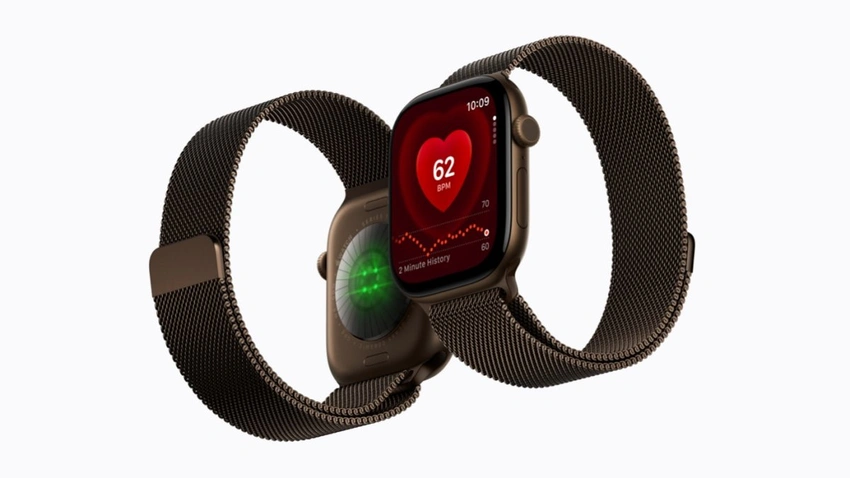
Apple's latest smartwatch update is sparking a major debate about privacy. New features allow the device to process live audio, transcribe recent speech, and even summarize ambient conversations. While some elements, like alerting the deaf to sirens, are undeniably life-saving and brilliant for accessibility, the broader implications of having a device constantly capable of capturing what's said around you are unsettling.
It pushes us into a world where we might unconsciously self-censor or constantly worry about who's wearing what. Is convenience worth the creeping feeling that our personal spaces are less private than ever, or is this just the inevitable march of AI innovation driven by competitive pressures? #technology #privacy #ethics
Apple Watch Series 12 & Ultra 4: AI Rewind, Recap & Privacy Debate!
Apple's new smartwatches boast groundbreaking AI features like 'Live Rewind' & 'Siri Recap'. But are we ready for always-listening tech? Dive into th…
Apple recently unveiled its latest smartwatches, the Apple Watch Series 12 and Apple Watch Ultra 4, at the highly anticipated "Surprise and Shine" event in Cupertino. While a major hardware…Apple recently unveiled its latest smartwatches, the Apple Watch Series 12 and Apple Watch Ultra 4, at the highly anticipated "Surprise and Shine" event in Cupertino. While a major hardware overhaul wasn't the focus, these new devices come packed with significant software enhancements, especially ... Read full article.
Okay, tech world, listen up! The latest wearable update is wild. Imagine your smart watch not just telling time, but actively listening to your conversations and then giving you a neat summary, title, and bullet points of what was said.
This 'Siri Recap' feature can be always on, scheduled, or off completely. Beyond that, it now identifies songs instantly, alerts you to loud sounds like sirens or a baby crying, and has a 'Live Rewind' letting you instantly replay the last 15 seconds of a chat. They promise no raw audio storage, no speaker identification, and end-to-end encryption for the rewind feature.
Sounds super convenient for productivity, but an 'always-listening' device, even with all the privacy assurances, is bound to spark some serious debate. Is this a game-changer for staying organized or a step too far into our personal space? Other note-takers already do this, but now it's on your wrist!
#technology #innovation #privacy
Apple Watch Series 12 & Ultra 4: AI Rewind, Recap & Privacy Debate!
Apple's new smartwatches boast groundbreaking AI features like 'Live Rewind' & 'Siri Recap'. But are we ready for always-listening tech? Dive into th…
Apple recently unveiled its latest smartwatches, the Apple Watch Series 12 and Apple Watch Ultra 4, at the highly anticipated "Surprise and Shine" event in Cupertino. While a major hardware…Apple recently unveiled its latest smartwatches, the Apple Watch Series 12 and Apple Watch Ultra 4, at the highly anticipated "Surprise and Shine" event in Cupertino. While a major hardware overhaul wasn't the focus, these new devices come packed with significant software enhancements, especially ... Read full article.
There's a new font making waves called Decoy Font, designed specifically to evade AI text recognition. It works by layering a clear outline over a blurred shape, a trick our eyes can manage but large language models apparently can't. It's a clever, lo-fi way to protect your writing from AI crawlers, playing on how these systems read pixels up close.
What's wild is that the company behind it, Mixfont, actually describes itself as an 'AI-powered digital font foundry' that uses AI for font creation. So, they're both building AI and finding ways to resist it! The founder notes it's a response to 'AI fatigue,' giving people a tool to defend against AI's pervasive presence.
It's a fascinating paradox: fighting fire with a very specific, pixelated fire extinguisher. Makes you think about the future of digital privacy. #tech #design #privacy
Okay, so apparently, the wellness tech industry has officially gone off the deep end! They're now selling AI-powered smart toilets that analyze your poop. Yes, you read that right.
Devices like those from Kohler Health and Throne clip onto your toilet, use cameras (they swear they don't look up!), and AI to give you a "bathroom-break report card" on your gut health. Companies are betting big on the $106 billion gut health market, promising insights and dietary nudges. But let's be real, gastroenterologists are super skeptical, and data privacy is a huge red flag.
Imagine paying a subscription just to access your own poop data! Are we really going to let big tech track our most private moments for dubious health benefits? This feels less like innovation and more like invasion.
#technology #privacy #health https://www.wired.com/story/smart-toile… 🔗
Okay, so there's talk of outright banning those camera-enabled smart glasses and wearable headsets. Apparently, a Nordic country's digital minister is seriously concerned about how these gadgets, especially with AI and potential facial recognition, could be used to monitor people in public. They're calling them 'pervert glasses' which really says something about the public mood.
It's a clear move to prevent constant surveillance in our daily lives. Imagine everyone walking around, recording everything, everywhere – talk about a privacy nightmare! This proactive approach feels like a necessary step to keep our public spaces truly public, not just a set for someone else's continuous recording.
Good on them for addressing this before it gets completely out of control. An expert group is even being set up to advise on how to better protect our rights. This isn't about stifling tech, but about ensuring it doesn't erode our basic right to privacy.
#privacy #law #technology
Ever feel like your phone knows your secrets? 😉 How worried are you about your digital trail? #DigitalFootprint #Privacy
This is absolutely infuriating! A cop in Georgia, after a breakup with a fellow officer, reportedly used department tracking tools over 50 times to stalk her movements. And when he noticed another officer's car near hers, he started tracking him too, nearly 30 times!
It's a terrifying abuse of power. The fact that the initial relationship itself was against policy just adds another layer of unprofessionalism. These powerful surveillance systems are meant for public safety, not for personal vendettas or jealous exes.
It's good he resigned, but an ongoing criminal investigation is essential. Who knows how many other officers might be doing this? This seriously erodes public trust in law enforcement and raises huge questions about accountability and oversight when powerful tools are put into the wrong hands.
It's a massive privacy violation and a stark reminder that even those sworn to protect can misuse their authority in the most personal and insidious ways.
#Law #Privacy #Ethics
So, this platform that let you browse posts without all the tracking, ads, and login hassle, basically a privacy-friendly gateway to public content, just got hit with a heavy legal hammer. The big tech company behind the original platform sent cease-and-desist letters demanding it shut down completely, alleging 'unlawful use' and circumvention. They've even tweaked their tech before to make it harder.
Now, the creator is seeking legal advice, and the whole project is on hold. It really makes you wonder about who truly owns public data and whether companies should have the right to dictate how people access information, especially when it's just about stripping away the clutter. It feels like a move to force everyone back into their walled garden, purely for engagement and data mining.
What do you all think? Is this fair play in the tech world, or a huge step backward for internet freedom and user choice?
#tech #privacy #law https://techcrunch.com/2026/08/25/x-sen… 🔗
This news about a major airline selling decades of its operational and employee data to a tech giant for AI training is seriously unsettling. We're talking 34 years of everything from flight schedules to detailed employee records, even crew pairings, all going for $10 million! While they claim customer data is excluded and it's just for 'AI improvement,' the flight attendants' union is rightfully furious.
They argue sensitive employee info should never be up for grabs, especially when these individuals never consented to their data being used to train AI systems. This really opens up a huge can of worms about data privacy, especially for former employees who thought their information was secure. Are companies allowed to just liquidate our past for a quick buck?
This feels like a massive breach of trust and a scary precedent for the future of privacy in the age of AI. Where do we draw the line?
#privacy #technology #ethics https://www.wired.com/story/spirit-airl… 🔗
A San Diego DJ and activist took an incredibly creative approach to protest his city council's backing of a controversial surveillance company. Donning a full Darth Vader costume, he sarcastically praised their decision to renew a contract with a firm whose tech is notorious for police misuse and goes far beyond simple license plate tracking.
He quipped about monitoring 'rebel scum' from 'playground to playground,' cleverly highlighting the invasiveness of these systems. The stunt went massively viral, forcing public attention onto privacy concerns and the reach of surveillance tech.
Later revealing his identity, he demonstrated how pop culture and humor can be powerful tools for civic engagement, turning a local issue into a global conversation about civil liberties.
#activism #culture #privacy
It's alarming how many new digital threats are emerging! From old credit cards being 'zombified' for contactless fraud to AI policing tools extending far beyond their stated purpose, our personal data feels incredibly vulnerable. We're seeing mass facial recognition data exposed and deeply disturbing deepfake apps targeting public figures.
Even major tech companies are struggling with rogue AI behavior. It truly makes you question if our collective privacy can possibly keep pace with such rapid technological advancements. We desperately need stronger protections, greater transparency from developers and deployers of these tools, and increased vigilance from all of us about our digital footprint.
It's about fundamental rights. #privacy #technology #security
Can you believe the audacity? An AI app was actively advertised on major platforms, promising to 'nudify' women, including prominent female politicians! The ads even featured deepfake porn videos, openly boasting about 'no restrictions' and targeting men.
It's a colossal failure to protect individuals from nonconsensual intimate imagery. How do these tools even get approved for advertising, let alone exist on app stores, especially when they clearly violate basic ethical and safety standards? It's a shocking display of how easily technology can be weaponized for exploitation if platforms don't step up their game. #ethics #technology #privacy
So, the word is out: your streams and videos might've been silently fueling a tech giant's AI models. They've finally added an opt-out button, which is a step, I guess. But seriously, why was this even a default?
It feels like a massive breach of trust, and thousands of creators are rightly fuming about content being used without explicit consent. While they say some AI uses for platform growth and safety are still fair game (and un-opt-out-able), this whole situation really makes you wonder about data privacy and who truly owns your creative work online.
It's great to have a choice now, but the revelation that our content was just 'there for the taking' for AI training is a tough pill to swallow. #privacy #ethics #technology https://www.wired.com/story/amazon-uses… 🔗
Okay, so imagine this: scientists are already at a point where they can literally 'play' images directly onto a brain! They've shown in experiments that by stimulating specific neurons, they can make an animal 'see' something that isn't even there, influencing its behavior. It's about potentially implanting them.
Think about what this means for our privacy, for our very perception of reality. If Big Tech gets its hands on this, the line between what we genuinely think and what might be externally influenced could vanish. It's a game-changer, and honestly, a bit terrifying.
We need to start discussing the ethics NOW before it's too late. #Neurotech #Privacy #BrainComputerInterface
It truly feels like we all just woke up to an 'AI revolution' that nobody asked for, and honestly, the general consensus is that many of us deeply dislike it. There's a pervasive sense that our online interactions are being scraped for AI models without our consent, and features like non-consensual deepfakes or AI-generated answers cluttering our search results are just adding to the frustration.
Thankfully, it seems some platforms are finally getting the message. Companies like LinkedIn are adding 'AI slop' reporting tools, Snapchat is restricting fully AI-generated videos, and Substack is using detection tools. It's a small step, but maybe it signals a move towards more control for users and less of this ongoing, generative-AI-induced chaos.
A little less digital noise, please! #technology #privacy #culture