The Beauty Finale: Why Body Horror Is Our Digital Reality

The Beauty Finale: Why Body Horror Is Our Digital Reality
Is body horror the new mirror of our privacy-obsessed era? What streaming thrillers like The Beauty reveal about autonomy, consent, and the fear of surveillance in a social-media world.
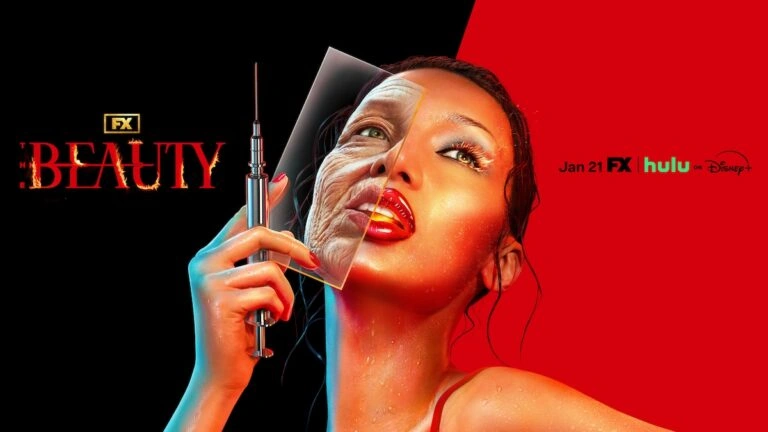
The Ryan Murphy-produced FX series The Beauty reached its gruesome conclusion tonight, March 4, 2026, leaving audiences with a visceral question: In an era where we have curated every pixel of our external existence, is our own skin the final frontier of the surveillance state?
The finale, titled “Beautiful Betrayal,” didn't just deliver the promised "spontaneous combustion" of its genetically-perfected cast; it literalized the psychological rot of our social-media-first culture. Based on the Image Comics series, The Beauty imagines a world where a sexually transmitted virus makes you conventionally "perfect", slim, clear-skinned, symmetrical, until, roughly two years later, you explode. It is the ultimate "filter" made flesh, and as we watched Evan Peters’ Cooper Madsen and Rebecca Hall’s Jordan Bennett navigate a Venice rotting under the weight of its own vanity, it became clear that body horror has become the definitive genre for our privacy-obsessed age.
The Body as Public Property
In the 1980s, Cronenberg’s body horror was about the fear of cancer or the "new flesh" of television. In 2026, the horror is about consent, or the lack thereof. In The Beauty, characters like supermodel Ruby Rossdale (a haunting Bella Hadid) are hunted not for what they know, but for what they are. The show reveals that the "beauty" wasn't a natural mutation, but a product engineered by "The Corporation" (a chillingly corporate Ashton Kutcher).
This mirrors our current digital reality: we have spent a decade treating our bodies as assets to be optimized for the feed. But as the show suggests, once you turn your physical form into a brand, you lose the right to privacy. The "Beauty" virus is a tracking device you can't uninstall. The models in the show were notable for having no social media presence, a detail that the FBI agents used to track them. In Murphy’s world, the only way to be private is to be invisible, and in a world obsessed with being seen, invisibility is a death sentence.
The Terror of the "Goo"
There is something deeply resonant about the "mucus cocoons" and "skin sack expulsions" that define the show’s transformations. They represent the messy, uncontrollable biological reality that our digital avatars try to suppress. Social media demands a static, polished "self," but body horror reminds us that we are leaking, changing, and ultimately decaying organisms.
The finale’s pivot, where Agent Madsen chooses to help an infected Jordan Bennett go "off the grid" to avoid quarantine, is the most Atlantic-ready take on modern autonomy. It suggests that in 2026, the only way to reclaim your body is to hide it from the authorities who want to regulate its "purity."
Why Body Horror? Why Now?
We are living through a "Body Horror Renaissance." From the cinematic excess of The Substance to the biological anxiety of The Beauty, we are obsessed with the idea of the body being "hacked." This is the natural endpoint of an era defined by data breaches and AI deepfakes. If our faces can be stolen by an algorithm, and our movements tracked by a satellite, the only thing left that is truly "ours" is our internal viscera.
The Beauty serves as a grim mirror. It tells us that the more we strive for the "perfect" public image, the more we invite the surveillance of the Corporation into our very cells. As the credits rolled on tonight’s finale, the message was clear: Privacy isn't just about your passwords. It’s about who owns the rights to your skin.
