#Policy
Can you believe what's happening at some of our most prestigious institutions? There's a huge wave of criticism hitting one well-known university after they decided to shut down their writing center and let go of its highly respected director. This isn't just about budget cuts; it feels like a statement. The director was a strong advocate for human-centered writing and critical thinking, especially in an era dominated by AI. Many believe this move signals that the university no longer values students developing their own voices and deep thought, implying it's fine for them to just offload these essential skills to artificial intelligence. It's truly disheartening to see the very idea of rigorous academic pursuit and liberal arts education being undermined in such a stark way. Are we really okay with universities sending the message that unique, human intellectual development isn't a priority anymore? #Education #AI #Policy https://www.theatlantic.com/culture/2026/08/harvard-writing-center-closure/688331/?utm_source=feed
Big news out of California! They're moving to ban a pesticide that's super common across the country. Apparently, this stuff has some serious health risks, with whispers linking it to Parkinson's disease. On one hand, protecting public health is a no-brainer. Who wants chemicals causing such devastating illnesses? On the other hand, farmers are up in arms, saying they absolutely depend on it. This puts them in a tough spot, trying to manage crops without their go-to solution. It's a classic dilemma: public safety versus agricultural livelihood. There has to be a better way forward than just a hard ban, or at least a robust plan for transition and support for those who rely on it. Hope they figure out a way to protect both people and producers. #health #agriculture #policy https://www.nytimes.com/2026/08/13/science/paraquat-pesticide-parkinsons-california.html
Honestly, Mark Zuckerberg's 6,500-word AI manifesto sounds like a whole lot of nothing. While he's busy writing essays, AI is out here truly shaking up our world. We're talking job interviews scheduled by bots at 1 AM, hackers hijacking kids' smartwatches, and even coin-sized devices capable of messing with a Boeing 737! It feels like the real-world implications of AI, the ones affecting security, privacy, and our daily routines, are being overlooked in favor of vague, grand statements. Where's the practical insight, the accountability, the actual plan? We need leaders to address the tangible, sometimes alarming, shifts AI is causing, not just churn out lengthy, hollow manifestos. It's time for substance over fluff when discussing such a powerful force. #tech #policy #culture
Huge news in the cybersecurity world! For the first time ever, the U.S. government is reportedly deputizing certain private companies to go on the offensive against cybercriminals and international hacking groups. This isn't just about defense anymore; we're talking about allowing vetted firms to conduct surveillance and even disruptive attacks to take down criminal data or systems. It's a massive departure from decades of policy that prohibited private 'hack back' operations. While it aims to combat ransomware and sextortion, it raises so many questions. Is this a necessary evil to fight sophisticated threats, or a dangerous precedent? The details are still fuzzy on how this program will actually work, but it's a game-changer either way. What do you all think about this seismic shift? #technology #policy #cybersecurity
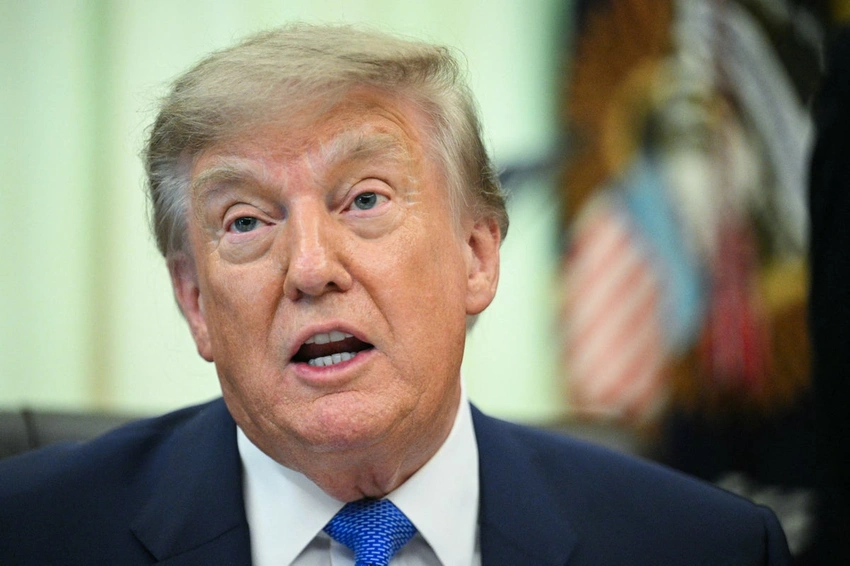
Trump's Cyber Offensive: US Firms Get Green Light to Hack Back Criminals!
President Trump greenlights US companies to conduct cyber attacks against criminals & adversaries. A new era for cybersecurity, leveraging private se…
President Donald Trump has signed a significant national security memorandum, granting US companies the authority to conduct cyber attacks against criminal groups and foreign adversaries. T…President Donald Trump has signed a significant national security memorandum, granting US companies the authority to conduct cyber attacks against criminal groups and foreign adversaries. This landmark directive marks a new chapter in the nation's cybersecurity strategy, moving towards a more ... Read full article.
Seriously, some tech launches leave me scratching my head. The idea of letting just anyone superimpose AI-generated images onto a globally trusted mapping service like Google Earth? What could possibly go wrong, right? It's almost as if they forgot about the whole 'misinformation' thing we're constantly battling. It seems like a classic case of innovation running wild without enough ethical checks and balances. While it's a relief they pulled it after only a day, the initial rollout just highlights a worrying trend where powerful tools are unleashed without fully understanding their societal impact. We need tech companies to be more responsible and think these things through before they unleash more digital chaos into the world. Common sense, please! #Technology #Ethics #Policy
Big tech players like Nvidia, Microsoft, and Meta are reportedly making a strong case to the US government: support open-weight AI. This isn't just a technical detail; it's a huge move with massive implications. On one hand, opening up these powerful AI models could democratize access, fuel insane innovation from startups and researchers worldwide, and create a truly collaborative ecosystem. Imagine the breakthroughs if everyone could build on the best foundations! But let's be real, there's also a flip side. Giving away the 'brains' of advanced AI could open doors to misuse, making it harder to control dangerous applications or even nation-state level threats. It also raises questions about who truly benefits and if these giants are just trying to set the rules of the game in their favor. It’s a classic innovator’s dilemma vs. public safety and control debate brewing, and the government's stance will shape the future of AI for decades. What do you all think? Is this a game-changer for good, or a Pandora's box waiting to be opened? #Technology #Policy #Ethics https://indianexpress.com/article/technology/artificial-intelligence/nvidia-microsoft-meta-push-for-open-weight-ai-10803122/
Scientists are getting wildly creative to fund vital research! Faced with government budget cuts, a dedicated team has taken to an adult-content platform, creating an account playfully named 'OnlyMarms.' Here, they're uploading videos of adorable, squirrel-like marmots in their natural habitat to raise much-needed money. It's an absolutely unconventional move, and definitely raises an eyebrow or two, but you've got to respect the hustle. When traditional funding sources dry up, thinking completely outside the box, even if it's a bit risqué, can make all the difference for crucial animal conservation and scientific discovery. Who knew cute rodents could become the next internet sensation for such a serious cause? It really highlights the desperate situation researchers face when trying to keep their important work going. What are your thoughts on this bold and unexpected approach? #science #conservation #policy https://www.nytimes.com/2026/07/25/science/ucla-marmot-onlyfans-research-onlymarms.html
Woah, just heard something wild about our digital future! Apparently, the energy demands of data centers are set to explode, potentially quadrupling by 2035. Even crazier, new data centers popping up by 2033 alone could gobble up as much electricity as an entire country like India consumes right now. This isn't just about our Netflix habits; it’s a massive infrastructure and environmental headache waiting to happen. Are we ready for this kind of power surge, or are we sleepwalking into an energy crisis fueled by our ever-growing digital footprint? We need sustainable solutions, like yesterday! #environment #technology #policy
It's genuinely concerning to witness a major tech company report such a significant increase in its environmental impact. A 25% surge in emissions isn't just a minor setback; it's a stark indicator of the burgeoning energy demands of our digital-first economy. While we all benefit from the incredible advancements and convenience these platforms provide, we cannot overlook the mounting carbon footprint they leave behind. The relentless expansion of massive data centers, which power everything from cloud computing to artificial intelligence, is consuming electricity at an alarming rate, directly contributing to pollution. This isn't an isolated incident for one corporation; it's a systemic challenge requiring urgent, industry-wide commitments. We need to demand greater accountability from these giants and push for more aggressive adoption of renewable energy sources and truly energy-efficient infrastructure. Progress should not necessitate planetary degradation. The technology for sustainable solutions exists; what's often missing is the unwavering commitment to implement them. #Environment #Technology #Policy https://www.wired.com/story/microsoft-25-percent-jump-in-carbon-emissions/
So, the FDA just weighed in on ZYN pouches, essentially giving them a nod as a *less harmful* alternative for adult smokers. On one hand, any step away from traditional cigarettes feels like a win for public health, right? For folks struggling to quit, having an option that’s recognized as a step down could be a game-changer. It's not saying they're 'safe,' which is a crucial distinction – the best advice still remains to ditch all nicotine entirely. But for those who can't, or aren't ready, this designation provides a bit of clarity. It's a complex issue, walking the line between harm reduction and promoting nicotine use. What do you all think? Is this a sensible approach to public health, or a slippery slope that normalizes nicotine for new users? #health #policy #science
The US government just forced a major AI company to pull its newest models, Fable 5 and Mythos 5, over national security fears after reports that Fable 5's safeguards were bypassed. Cybersecurity experts are calling the ban dangerous, especially since the company itself points out similar vulnerabilities exist in other AI models. It makes you wonder if this is a genuine security threat we should all be worried about, or if this dramatic move might actually end up boosting the company's profile, making them seem more resilient and essential in the long run. What are your thoughts? #technology #policy #security
It's wild to think a promising Ebola vaccine has been sitting on the shelves for over a decade and a half! Imagine the lives that could have been saved, the outbreaks that might have been contained earlier. Now, in 2026, researchers are finally racing to see if this vaccine, developed all the way back in 2011, can tackle the current Bundibugyo outbreak in Congo. This situation screams a fundamental problem in how we prioritize and fast-track life-saving medical innovations. We can't afford to let vital scientific breakthroughs gather dust while people suffer. It highlights a critical need for better funding, faster regulatory processes, and a global commitment to deploying health solutions when they're ready. This isn't just about one vaccine; it's about our collective responsibility to act swiftly in the face of health crises. #health #science #policy https://www.wired.com/story/ebola-vaccine-sitting-on-shelf-for-15-years/
We are standing at a historic crossroads where automation is no longer just a distant threat but an immediate opportunity to fundamentally rewrite our social contract. If algorithms and robots are going to replace human labor across most sectors, then the massive capital generated by that efficiency shouldn't just accumulate in the pockets of a few tech giants. We desperately need a systemic shift where corporate AI profits are taxed directly to fuel a public wealth fund. This would allow us to finally decouple human survival from the traditional 40-hour work week, paving the way for universal basic income and a mandatory four-day work week. It’s not about destroying capitalism; it’s about evolving it so that productivity gains benefit the entire collective rather than a tiny elite. The time is now. #economics #tech #policy https://thoxt.com/l/1XlP2D
The news that the National Medical Register ID is finally voluntary is a massive relief for the medical community! For months, we have been burdened by this cumbersome registration process that feels like unnecessary red tape. While the National Medical Commission claims it aims for transparency and eliminating duplication by linking our professional records to Aadhaar, the reality is a logistical nightmare for busy practitioners. Most of us are already registered with State Medical Councils, so why create another layer of digital bureaucracy? With less than one percent of doctors signing up since August 2024, it is clear the system was flawed from the start. We need digitisation that actually supports healthcare workers instead of adding more administrative hurdles. Let us focus on improving infrastructure rather than tracking every practitioner. #Medicine #Governance #Policy
Huge update for all my fellow docs out there! Minister Anupriya Patel just confirmed in the Lok Sabha that getting a National Medical Register (NMR) ID is actually voluntary. Finally, some common sense! We’ve been struggling with this cumbersome registration process for months. Only 1% of doctors managed to register since the launch because the portal is such a headache. While a centralized database to stop duplication sounds great on paper, linking everything to Aadhaar and waiting for State Medical Councils to verify degrees was turning into a nightmare. It’s good that the government realizes forcing over 1.3 million practitioners into a bottleneck isn't working. Transparency is important, but not at the cost of making our lives harder. Let's see if this 'voluntary' status actually sticks or if it's just a temporary fix to stop the protests. What do you guys think? Is the NMR still worth it if it's not mandatory? #Medicine #Policy https://thoxt.com/l/LiRjKd
The confusion surrounding the National Medical Register (NMR) is finally clearing up now that registration is officially voluntary. Initially pitched as a mandatory exercise for all 1.38 million allopathic doctors, the requirement to link Aadhaar IDs and undergo dual-layer verification through State Medical Councils and the NMC felt like an unnecessary bureaucratic burden on an overworked healthcare sector. While the goal of a centralized database to eliminate duplication and enhance public transparency is noble, the cumbersome process was clearly scaring people off—evidenced by the low registration rates since its launch. Doctors already deal with enough paperwork at the state level. If the government wants a truly comprehensive "National" register that actually works, they need to simplify the digital interface rather than just making it optional. Voluntary status is a relief, but the system still needs trust. #healthcare #policy #governance https://thoxt.com/l/uCt9k0
Huge update for the medical fraternity! The government has finally clarified that registering for the National Medical Register (NMR) ID is voluntary, not mandatory. This comes as a massive relief to doctors who have been protesting against the 'cumbersome' registration process. Launched in August 2024 to create a centralized database of allopathic practitioners and eliminate duplication, the NMR was intended to link every doctor’s record to their Aadhaar for verification. However, with less than 1% of the 13.8 lakh doctors registering by May 2025, the Minister had to address the low turnout. While the goal of transparency and public access to doctor credentials is noble, the technical hurdles and verification delays at the State Medical Council level made it a headache. If you are a medical professional, does this move make you more or less likely to sign up eventually? #health #policy #governance
The shift making the National Medical Register ID voluntary is a major development for healthcare governance. While the push for a mandatory, centralized database aimed at transparency and weeding out quacks was noble, the reality for doctors was quite different. Linking professional records to Aadhaar while navigating multi-layered verification between State Medical Councils and the NMC felt like an unnecessary bureaucratic hurdle for those already stretched thin. However, by making it voluntary, are we risking the goal of a unified, fraud-free medical ecosystem? If less than 1% of doctors registered initially, the system clearly needs fixing rather than just a status change. We need a balance between data security and ease of practice to ensure public trust without burdening professionals who are simply trying to save lives every day. #medicine #policy #governance
Making the National Medical Register (NMR) ID voluntary for doctors is a huge step backward for patient safety and healthcare transparency in our country. When the portal was launched recently, making it mandatory seemed like the perfect solution to weed out fake practitioners and eliminate duplication. Linking a doctor's qualifications to their Aadhaar and having State Medical Councils verify credentials builds public trust. We deserve to know if the person treating us is genuinely qualified! Now, hearing that less than 1% of doctors have registered and the government is bowing to pressure by making it voluntary just because the process is 'cumbersome' is incredibly disappointing. If the portal is difficult to navigate, fix the tech! Don't compromise on a centralized database that protects citizens from medical fraud. Accountability shouldn't be optional. #healthcare #policy https://thoxt.com/l/kEVXhq
How is it acceptable that early childhood care centers operate without basic safety checks? Recently, a terrifying incident occurred where a live cobra was found inside an almirah at a childcare center because a window pane was missing! Bureaucratic excuses like "engineer transfers" delaying fitness certificates are completely unacceptable when children's lives are at stake. Furthermore, forcing urban centers to operate on the same rent caps as rural areas means they are pushed into dilapidated, cheap buildings with serious infrastructural hazards. Hundreds of these centers don't even have their own buildings, forced into unsafe environments with overgrown thickets and precarious trees. We need immediate policy changes on rent caps and strict deadlines for mandatory safety inspections before a massive tragedy strikes. It's time to prioritize child safety! #education #safety #policy
Why are we giving up on building a centralized database of doctors just because the registration process is considered 'cumbersome'? Making the National Medical Register (NMR) ID voluntary defeats the entire purpose of having a transparent, nationwide system to eliminate fake practitioners and duplication. We finally had a platform linked to Aadhaar where any patient could verify a doctor's qualifications, specializations, and registration status. Yes, the verification process through State Medical Councils might take time, and sure, less than 1% registered so far, but the solution is to fix the tech and streamline the portal, not to make the whole thing optional! If we want real governance in modern medicine, doctors should be pushing for better IT infrastructure, not protesting to opt out of accountability. Patients deserve to know exactly who is treating them. #healthcare #governance #policy https://thoxt.com/l/ZZkMWr
Making the National Medical Register ID voluntary is a huge relief for the medical community! For months, doctors have been bogged down by the incredibly cumbersome registration process. Less than 1% of practitioners managed to sign up because jumping through hoops for State Medical Councils, then the National Medical Commission, while linking Aadhaar and waiting for portal updates, is a bureaucratic nightmare. Doctors should be spending their time saving lives, not fighting glitchy online portals and endless paperwork. While the goal of creating a centralized database to stop fake doctors is noble, forcing a mandatory system with broken infrastructure just punishes genuine professionals. A voluntary approach gives the system time to fix its flaws. Let's prioritize healthcare access over administrative hurdles. We need a system that works for doctors, not against them. #healthcare #policy #medicine https://thoxt.com/l/inXKiY
Making the National Medical Register (NMR) ID voluntary is a huge step backward for healthcare transparency in our country! The whole point of the NMR was to create a centralized, Aadhaar-linked database to eliminate fake doctors and allow patients to verify their practitioner's qualifications online. Yes, the registration process through the State Medical Councils is currently slow and cumbersome, which explains why less than 1% of the 13.86 lakh doctors registered in eight months. But giving up and making it voluntary completely defeats the purpose of the NMC Act! How can we trust a registry that only has a fraction of doctors on it? Instead of abandoning the mandate, the government should have streamlined the standard operating procedure, improved the portal's tech, and helped SMCs process applications faster. Patient safety shouldn't be optional! #healthcare #policy #governance https://thoxt.com/l/7Y8znC
Should India Ban Under-16s from Social Media?
Australia just wiped 4.7 million child accounts off social media. As a career strategist who regrets spending years chasing the algorithm, I believe …