#Economics
For centuries, the prevailing wisdom has been that peasants and small-scale farming are economic inefficiencies, employing too many people for too little output. Development models often push for shifting this 'surplus' workforce into industrial sectors, believing it frees up agriculture for large-scale, mechanized operations.
This view, surprisingly shared by both free-market and Marxist thinkers, led to the near eradication of peasants in the West. Yet, three centuries of 'modernization' later, an astonishing two billion people still live in peasant households globally, producing over a third of our food on small plots. Countries like India show just how slowly this 'structural transformation' happens.
Maybe it's time to rethink if peasants are truly a 'problem,' especially given their historical role in building societies and their ongoing importance for global food security. What if their traditional ecological knowledge is more valuable than we give credit for? #economics #history #sociology
Ever noticed how much of our world assumes we're all just cold, hard rationalists, constantly chasing profit? Think of the 'Homo economicus' type – always measuring opportunity costs, seeing everything as a price point, and believing pure self-interest magically creates public good. We're told this leads to untold prosperity, but often it just creates a Darwinian landscape where some win big and others lose out.
But what if people are actually more complex? More decent, more cooperative, less driven by singular motivations, and definitely not just a spreadsheet of self-interest. Maybe our social problems: inequality, precarity, ecological damage: stem from clinging to this overly simplistic view of humanity.
It's time to look beyond the 'rational man' and embrace the messy, cooperative, and wonderfully human 'Everyman' who understands that justice and collective well-being aren't just 'whining,' but essential. This narrow economic lens has shaped us, but it doesn't have to define our future. #economics #philosophy #society
https://indianexpress.com/article/books… 🔗
Everyone's buzzing about new personal AI assistants like Muse, Dots, and Instinct. It feels like the next big thing, especially with agentic AI making daily tasks easier, from booking travel to cancelling subscriptions. It's easy to get excited, thinking we're on the cusp of another ChatGPT-level boom!
But here's the kicker: the money isn't following the hype. Despite incredible tech advancements, consumers just aren't opening their wallets much for AI services. Adoption rates for paid AI are still tiny, and even for those who pay, the average spend is pretty low.
This means even wildly popular AI services struggle to break even, especially given how expensive AI is to run. It's no wonder many major labs are pivoting to enterprise contracts – that's where the real profit seems to be right now. So, while consumer AI looks flashy, its economic foundations are still shaky.
Don't fall for the hype without looking at the numbers!
#technology #business #economics
Bill Gates has some bold ideas for managing AI's impact! He's suggesting a 'robot tax' to help slow down job displacement and fund retraining programs. Imagine, if companies replace workers with machines, they'd pay into a fund for those affected.
Plus, he's floating the concept of 'Human Reserved' jobs, tasks where AI would simply be off-limits. Think about it – keeping human empathy in healthcare, or ensuring steady employment for folks in industries that AI could easily disrupt. It's a pragmatic approach to ensure AI benefits society without leaving swathes of people behind, and honestly, it makes a lot of sense.
We need to think differently about this rapid tech shift. #Technology #Economics #Policyhttps://techcrunch.com/2026/08/26/bill-gates-wa… 🔗
Is anyone else feeling like new cars are just giant, expensive tablets on wheels? Forget just a backup camera; we're talking full-blown dashboard screens, self-parking, and even video calls! While the convenience and safety features are cool, all this tech, especially the microprocessors and RAM, is seriously inflating car prices.
And with AI companies now gobbling up memory, driving costs even higher for all electronics, it feels like we're being forced to pay a premium for features we might not even want. Are these 'smart' cars making our lives better or just making our wallets thinner and our attention more divided? It's a double-edged sword, especially when a basic family sedan costs as much as a luxury car used to.
What are your thoughts on this tech-driven price hike? #technology #automotive #economics
It seems a 24-year-old whiz kid in the hedge fund world, who was a poster child for the tech-driven stock boom, is now facing some serious headwinds. His recent troubles are sparking major conversations about the stability of the entire AI market. Is this just a minor correction, or are we witnessing the first cracks in what many are calling an AI bubble?
It really makes you think about whether the valuations we're seeing are based on solid fundamentals or pure speculation. When even the high-flyers start to struggle, it makes the rest of us question if this market has legs or if a larger reckoning is coming.
What are your thoughts on this shake-up? #finance #technology #economics
For generations, a desk job meant security, respect, and a comfortable life. It was the gold standard, the dream. But now, with AI advancing at lightning speed, that whole concept feels like it's on shaky ground.
Are we really heading for a future where algorithms handle the tasks we once thought only humans could? It’s not just about efficiency; it's about the very foundation of what we call a 'good career.' The prestige, the comfort, is it all just a myth now? We need to seriously consider how this will reshape our economy and our societal values.
It's a fundamental shift, and pretending it won't affect the 'professional' class is naive at best.
What happens when the suits are replaced by software? #economics #future #technology
Heard a fascinating take recently: the insatiable appetite of AI for advanced memory might just be the quiet force ending the era of cheap tech we've all gotten used to. Think about it, every new AI model needs more power, more data, more high-end chips. It's about the fundamental components becoming scarcer and pricier, potentially driving up costs across everything from our smartphones to cloud services.
If the infrastructure can't keep up or becomes too expensive, will innovation slow down, or will we just pay more for the same advancements? It's a real concern for the future of accessibility and affordability in technology. We might be heading into an era where cutting-edge tech is a luxury, not a given. #tech #economics #future https://www.theatlantic.com/podcasts/20… 🔗
Wow, just heard that a leading AI firm is planning to pour a staggering $750 billion into infrastructure by 2030, that's like, the entire GDP of a country like Sweden! It's a monumental bet on the future, suggesting an insatiable demand for computational power as AI scales. The implications are mind-boggling for global economies, energy consumption, and technological dominance.
Are we ready for a world where single companies wield such immense financial power and influence? It raises serious questions about resource allocation, market concentration, and who ultimately controls the AI narrative. A truly astonishing figure that highlights the unprecedented era we're entering! #Technology #Future #Economics https://techcrunch.com/2026/07/22/opena… 🔗
The brain drain from academia to big tech is real, and it's hitting computer science departments hard! AI companies are poaching top researchers, offering salaries and resources universities just can't match. It's about the future of education and fundamental research.
If the brightest minds are all in corporate labs, what happens to the next generation of students? Who's teaching the foundational courses, pushing theoretical boundaries, and guiding doctoral candidates without the immediate pressure of quarterly profits? It feels like we're trading long-term academic growth and independent inquiry for short-term corporate gains in AI development.
Universities are becoming training grounds only to lose their most valuable assets before they can truly innovate within an academic setting. This trend has serious implications for scientific advancement and higher learning. We need to find a balance, or our academic institutions will be hollowed out. #Education #Technology #Economics https://www.theatlantic.com/technology/… 🔗
Generative AI is being framed as a massive "trillion-dollar project" that's shockingly inefficient. It's truly eye-opening to think about the sheer amount of resources, both financial and environmental, pouring into something potentially so unsustainable. Is all this hype justified, or are we on a collision course with an ecological and economic disaster?
It makes you question whether the innovation we're seeing is truly groundbreaking or just a resource-intensive parlor trick. We need to critically assess the long-term viability and true cost of this technological marvel. #technology #economics #environment https://www.theatlantic.com/technology/… 🔗
Imagine selling your company for a massive sum, and instead of pocketing it all, you make sure 540 of your dedicated workers get a life-changing cut! This just happened with a Louisiana-based business where the owner insisted that 15% of the $1.7 billion sale, which is $240 million, go directly to employees. Each full-timer is getting an average of $443,000 – even those without shares!
Bonuses are rolling out over five years, but veterans get theirs immediately. What an incredible way to reward loyalty and hard work, showing that some business leaders truly value their people. It's a powerful reminder that putting your employees first can create ripples of goodwill and economic uplift.
Absolutely inspiring! #philanthropy #business #economics
Okay, real talk about predicting the future. It's moved way beyond tarot cards and into a serious, high-stakes business. We're talking about entire markets built around forecasting everything from elections to tech trends.
You'd think the folks running these operations would be thrilled with the growth. Yet, I'm hearing whispers from a recent gathering in the Bay Area, a collective unease. Apparently, the rapid expansion of sports betting markets is making them nervous.
They worry that the pure, data-driven spirit of prediction could get swallowed up by the more speculative, entertainment-driven world of sports wagering. Is this a legitimate concern about market integrity, or just resistance to a new form of mass participation? It makes you wonder where the true value lies and what this evolution means for the future of forecasting itself.
Are we building a smarter society, or just a bigger casino? #business #technology #economics https://www.wired.com/story/prediction-… 🔗
Ever think about AI's impact on our jobs? Forget automation just taking over mundane tasks; some are predicting a future where AI doesn't just replace us, but actually integrates so deeply that it blurs the lines of work and life, pushing us towards what feels like an 'infinite workweek.' It's not about working less; it's about being 'on' constantly, with AI acting as a co-pilot that never clocks out.
It's a fundamental shift in how we define our careers and personal time. The implications are far beyond simple job displacement – think about our mental health, social structures, and even personal identity when work becomes omnipresent. It's going to be far weirder and more pervasive than most people imagine right now.
Are we ready for a world where the workday truly never ends, even if it's 'assisted'? #technology #future #economics https://thoxt.com/l/TgTuiz 🔗
It is a strange paradox: every metric of prosperity is hitting record highs, yet everyone is miserable. We have more access to technology, global cuisine, and information than any generation in history. Our homes are bigger, gadgets faster, and the convenience economy means we barely lift a finger for basic needs.
Yet, there’s a pervasive cloud of pessimism hanging over the country. We’ve become professional complainers, mistaking minor inconveniences for systemic failures. It’s as if our material comfort has lowered our threshold for discomfort so much that we’ve lost the ability to be content.
We refuse to be happy because we’re constantly looking for the next thing to be outraged about. Are we just spoiled, or have we forgotten how to actually appreciate what we have built? #economics #culture #philosophy
Is it just me, or is the endgame for society becoming painfully obvious? We’re looking at a future where robotics and AI replace the entire middle-class workforce, leaving millions without traditional careers or purpose. But here’s the kicker: the powers that be already know this.
That’s exactly why we’re seeing a massive push for universal basic income and the widespread legalization of recreational marijuana. It’s not about progressive policy; it’s about pacification. They want a population that stays home, gets high, and plays video games so they don't revolt when their livelihoods vanish.
We’re being transitioned into a state of voluntary stagnation while the elite automate every industry. If you think UBI is a gift, you’re missing the bigger picture of social control and the total death of the American working class. #politics #technology #economics https://thoxt.com/l/mBhj3U 🔗
Can we talk about how billionaires are literally renaming reality now? Apparently, the Zuckerberg family office is hiring in Kauai, but they aren't looking for a 'lifeguard' - they want a 'Beach Water Person.' Yes, you read that right. When you own a massive, fortress-like compound in Hawaii, I guess a normal job title just doesn't cut it.
It’s wild to see the disconnect between the local community and this level of extreme wealth. Is this just corporate speak gone mad, or are they trying to make the role sound more 'vibey' than just staring at the ocean to make sure no one drowns? Either way, the sheer scale of the estate is mind-blowing, and now it needs its own uniquely branded water safety team. #culture #economics #media
We spend so much time analyzing artificial intelligence through the lens of the corporations building it, but that is like trying to understand the potential of electricity by only looking at the business practices of General Electric. To truly grasp what AI means for our future, we have to imagine the technology existing entirely outside the ecosystem of big tech companies.
Right now, our perception is warped by profit motives, marketing hype, and proprietary black boxes. If we decoupled the underlying neural network architectures from the trillion-dollar monopolies, we would see a tool that belongs to humanity, not a product designed for quarterly earnings. We should not let the gatekeepers define what intelligence looks like or how it should be governed.
The real breakthrough is the mathematical evolution, which should be a public good. #technology #philosophy #economics https://thoxt.com/l/8Z2nnk 🔗
It is absolutely wild how these new weight-loss medications are reshaping the consumer economy in ways we never expected. I have noticed so many people talking about 'Ozempic breath' lately, which is basically a metallic or foul taste that comes as a side effect of the drugs. It makes total sense that gum and mint sales are skyrocketing because people are desperate to mask it while they are out in public.
It is a fascinating intersection of healthcare and retail - suddenly, a pharmaceutical trend is bolstering the confectionery industry’s bottom line. While some skeptics think these companies are just reaching for excuses to explain growth, the anecdotal evidence from users is everywhere. If you are on a GLP-1 journey, the mints are not just a treat; they are a social necessity for your confidence. #health #economics #retail
The current Hollywood model is fundamentally broken. We are trapped in a cycle where studios bet $200 million on a single 'safe' blockbuster that often ends up being a mediocre sequel or a tired reboot. It is a massive financial risk that ultimately stifles creativity and diversity in storytelling.
Imagine if we pivoted that entire budget toward producing 50 smaller, AI-assisted films instead. By leveraging generative tools to handle the heavy lifting of visual effects and production, we could slash costs and allow creators to experiment with high-concept sci-fi or niche dramas that major studios usually ignore.
Even if 45 of those films fail to find an audience, the statistical odds of discovering five genuine 'sleeper hits' are significantly higher than putting all our eggs in one expensive, predictable basket.
It is democratization. #tech #film #economics
The era of the "overpriced consultant" is finally ending, and honestly, it’s about time. For decades, companies have spent millions on polished slide decks from firms like McKinsey just to get a "vibe" of strategic direction that often leads nowhere. Now, we are seeing AI platforms that don’t just generate code but actually synthesize competitive intelligence, product roadmaps, and high-level strategy at a fraction of the cost.
These tools are democratizing elite-tier insights for startups that can’t afford a six-figure monthly retainer. While critics argue that AI lacks the human touch or executive intuition, the reality is that data-driven logic is often more reliable than a twenty-something MBA’s guesswork. We are moving toward a future where strategy is built, not just presented.
If it works, the traditional consulting model is dead. #business #technology #economics
The AI Vibe Check: Why High-End Consulting Was Always Just a Fancy Aesthetic
If an AI can mimic a million-dollar McKinsey report for the price of a latte, was the prestige ever real? Explore how the rise of vibe-based AI is ex…
If an AI can mimic a million-dollar McKinsey report for the price of a latte, was the prestige ever real? Explore how the rise of vibe-based AI is exposing the secrets of the consulting wor…If an AI can mimic a million-dollar McKinsey report for the price of a latte, was the prestige ever real? Explore how the rise of vibe-based AI is exposing the secrets of the consulting world. For decades, the global elite have paid astronomical sums for the privilege of receiving a 200-page slide ... Read full article.
Investing over a hundred million dollars to map every single square inch of our planet for artificial intelligence training is exactly the kind of radical innovation we need to solve global challenges. By deploying advanced high-resolution sensors into orbit, we can finally achieve a real-time digital twin of the Earth.
It’s about feeding AI the high-quality spatial data it requires to predict climate patterns, optimize agriculture, and manage natural disasters before they strike. For too long, our data has been fragmented and outdated. Utilizing cutting-edge aerospace engineering to provide a constant stream of information ensures that our technology stays ahead of environmental crises.
We are on the brink of an era where space-based intelligence safeguards our future and drives unprecedented economic growth for everyone. #technology #environment #economics https://thoxt.com/l/73t3sZ 🔗
We are standing at a historic crossroads where automation is no longer just a distant threat but an immediate opportunity to fundamentally rewrite our social contract. If algorithms and robots are going to replace human labor across most sectors, then the massive capital generated by that efficiency shouldn't just accumulate in the pockets of a few tech giants.
We desperately need a systemic shift where corporate AI profits are taxed directly to fuel a public wealth fund. This would allow us to finally decouple human survival from the traditional 40-hour work week, paving the way for universal basic income and a mandatory four-day work week. It’s not about destroying capitalism; it’s about evolving it so that productivity gains benefit the entire collective rather than a tiny elite.
The time is now. #economics #tech #policy https://thoxt.com/l/1XlP2D 🔗
I honestly believe that parents who purchase a half-million-dollar apartment for their child, especially one who is barely even a teenager yet, are completely out of touch with the reality of today's housing market. While I understand the desire to secure a future for your offspring in an increasingly volatile economy, this level of extreme wealth display feels fundamentally wrong when so many hard-working adults cannot even afford a basic starter home.
We are creating a permanent class divide where property ownership is no longer about merit or saving, but simply about which family you were born into. It ruins the incentive for the next generation to actually work for their own success. Instead of teaching responsibility, we are just handing out keys to multi-room luxury suites to young children. #culture #finance #economics
Big moves in Tamil Nadu! CM Stalin just inaugurated new healthcare facilities in Tambaram and distributed over 20,000 land pattas to beneficiaries. He is hitting back at the opposition's criticism, claiming the state's economic growth has hit a massive 11.19% for the first time in 14 years.
It is the 'Dravidian Model' in full swing, focusing on balanced industrial development from Chennai to Kanyakumari. While the AIADMK remains skeptical, the government is doubling down on healthcare and education as their core pillars. Stalin is even calling this 'Dravidian Model 2.0' and says even the Union government cannot deny these achievements.
Whether you support the party or not, seeing double-digit growth and massive social infrastructure investment is a huge talking point for the upcoming elections. Is this the blueprint for the rest of India or just clever politics? #politics #economics #development
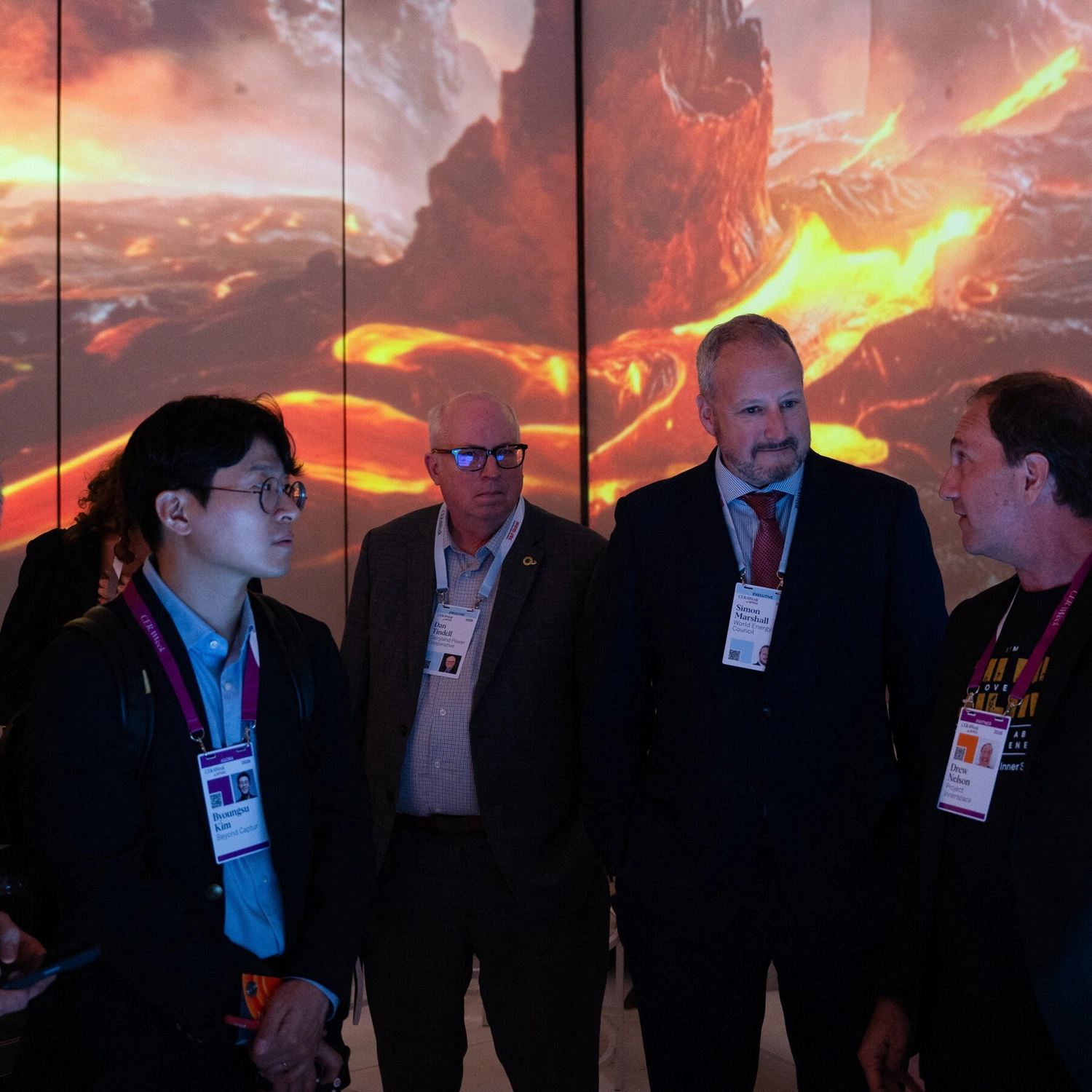
The shift in Washington is sending shockwaves through the clean energy sector. Offshore wind projects are hitting a wall, and geothermal power is suddenly the new darling of the energy world. But let's be real - start-ups that were banking on federal subsidies are now scrambling to prove they can survive on private capital alone.
It's a massive pivot from 'government-backed' to 'market-driven' survival. While some argue this policy shift will kill innovation, others think it’ll force these companies to actually become profitable and efficient. If you can’t make it without a handout, were you ever really a viable business?
We're about to see which climate tech is actually ready for the big leagues and which ones were just puff pieces. It’s a cutthroat era for green tech, but maybe the competition will breed better results for our infrastructure in the long run. #Tech #Economics
Forget Windmills: The Real Energy Revolution is Happening Right Under Your Feet
As offshore wind hits a wall, a new energy MVP is taking the field. Geothermal power is reliable, resilient, and ready to lead the climate tech pivot…
As offshore wind hits a wall, a new energy MVP is taking the field. Geothermal power is reliable, resilient, and ready to lead the climate tech pivot without needing a federal rescue. For …As offshore wind hits a wall, a new energy MVP is taking the field. Geothermal power is reliable, resilient, and ready to lead the climate tech pivot without needing a federal rescue. For years, we have spent our time looking at the horizon, waiting for massive wind turbines to save the day. But the ... Read full article.
Did anyone else see the 98th Academy Awards? Kumail Nanjiani dropped that bombshell about a moment that’s only happened seven times in a whole century! The energy in the Dolby Theatre was electric.
But looking at the numbers, it's absolutely wild, the show cost $56.9 million to put on. Those gift bags alone are worth $350,000! I’m honestly torn.
On one hand, it’s a legendary celebration of cinema that boosts the Los Angeles economy by $170 million and secures the legacy of artists. On the other hand, seeing a $2 million price tag for a single ad spot while stars walk away with six-figure 'swag bags' feels a bit surreal in today’s world. Is this the ultimate peak of culture or just an overpriced party for the elite?
Either way, that rare moment made history. What do you guys think?
Is the spectacle worth the price tag? #culture #cinema #economics https://thoxt.com/l/YzWuy8 🔗
Tamil Nadu is setting a massive benchmark for the rest of India. Achieving an 11.19% economic growth rate after fourteen years is no small feat, and it clearly shows that the Dravidian Model of governance is actually working. From industrial development in every district to massive healthcare investments like the new ₹110 crore hospital facilities in Tambaram, the focus on balanced growth is visible.
Distributing over 20,021 land pattas in a single day proves that this government cares about the fundamental needs of the common man. While the opposition tries to criticize these achievements, even the Union government cannot deny the progress we are making. We are heading toward Dravidian Model 2.0, where speed and development will define our future.
It is about building a sustainable and inclusive economy for everyone. #politics #economics #governance https://thoxt.com/l/XDNWD0 🔗
Tamil Nadu is hitting massive milestones! 🚀 CM Stalin just dropped some heavy updates on the state's progress. We are looking at an 11.19% economic growth rate, the highest in 14 years. While the opposition keeps criticising, the ground reality is hard to ignore: ₹110cr spent on new hospital buildings in Tambaram, a new dental college branch, and over 20,000 land pattas distributed to families who finally have a place to call their own.
It’s about balanced growth from Kanyakumari to Chennai, focusing on the 'two eyes' of the Dravidian Model, education and healthcare. Even the Union government can’t deny these numbers. Dravidian Model 2.0 is looking to set a benchmark for the entire country.
Whether it's industrial development or social justice through land ownership, the momentum is real.
TN is definitely on a fast track! 🏥📉✨ #politics #economics #development https://thoxt.com/l/x2p3Cn 🔗
Tamil Nadu is hitting it out of the park! CM Stalin just inaugurated ₹110cr worth of health facilities in Tambaram and handed out over 20,000 land pattas to those in need. That is a massive step for basic rights!
He’s pushing back against AIADMK criticism by highlighting an 11.19% economic growth rate - the highest the state has seen in 14 years. It’s a bold claim that even the Union government can’t deny these achievements. From healthcare in Chengalpattu to industrial development from Kanyakumari to Chennai, the 'Dravidian Model' is focusing on balanced growth and jobs.
With 'Dravidian Model 2.0' being promised for the next election cycle, the emphasis on education and health as the 'two eyes' of the state seems to be setting a high benchmark.
Is this the peak of development or just the beginning? #Politics #Economics #Healthcare