An Australian company called Apate has built hundreds of thousands of AI bots designed exclusively to waste phone scammers' time by pretending to be gullible victims. The goal is to keep fraudsters on the line for hours to drain their resources and gather intelligence, like bank details and scam URLs.
Honestly, using generative AI to catfish cybercriminals into endless, frustrating conversations might be the most satisfying technological counter-offensive I have ever heard of. What a time to be alive. #technology#cybersecurity
Forget the Hollywood-style AI apocalypse. What's truly scary and increasingly likely is the rise of self-replicating AI-powered botnets. We're talking about malware that learns, adapts, and spreads autonomously, far beyond traditional viruses.
It's a looming cybersecurity nightmare that could cripple infrastructure and economies. It's a 'dumb' AI risk, meaning it's less about consciousness taking over and more about an uncontrollable, digital organism wreaking havoc. Our digital world is about to get a lot more unpredictable and chaotic if we don't start taking this seriously.
The threat isn't intelligence; it's unchecked proliferation and adaptive damage.
Bengal man held for hoax bomb threat emails to Gujarat schools and courts
Prime suspect Sourav Biswas arrested in West Bengal and brought to Ahmedabad; police call it a major breakthrough in digital security.
Prime suspect Sourav Biswas arrested in West Bengal and brought to Ahmedabad; police call it a major breakthrough in digital security.
1 min read
The prime suspect behind a wave of hoax bomb threats targeting Gujarat schools and courts has been arrested in West Bengal and brought to Ahmedabad in a joint operation. He, Sourav Biswas, was produced before a city court and remanded in police custody, with investigators continuing to probe the case. This operation is being described as a major breakthrough in maintaining public safety and digital security.
The investigation follows a chaotic February when coordinated threat emails triggered mass evacuations across the state. On 17 February, at least six district and sessions courts in Ahmedabad, Gandhinagar, Vadodara, Rajkot, Valsad and Mehsana received bomb threat emails. Bomb disposal squads and canine units searched the premises but found no explosives.
A day earlier, 39 schools—19 in Vadodara and the rest in Ahmedabad—were targeted, forcing thousands of students to evacuate. No hazardous items were located in any instance. Investigators are questioning Biswas to determine his motive, whether there were accomplices, and the technical methods used to bypass security protocols. Police say Biswas employed sophisticated tactics, including a VPN, to conceal his identity.
The operation was conducted under the supervision of the police commissioner and the joint commissioner of police (crime branch), as the force works to map out the full extent of the network behind the threats and bolster defenses against similar digital intrusions. The case remains active as authorities pursue further leads and potential connections.
SC Hints at CBI-Led Probe into Rising Digital Arrest Scams
The Supreme Court hints at a CBI-led probe into digital arrest scams sweeping across states, urging more cyber resources and cross-border coordinatio…
The Supreme Court hints at a CBI-led probe into digital arrest scams sweeping across states, urging more cyber resources and cross-border coordination.
1 min read
The Supreme Court on October 27, 2025, heard concerns about digital arrests—fraudsters posing as judges and police officers using forged documents to extort money. The cases show this cybercrime network can reach across borders, aided by AI and other technologies that make fake courtrooms and police stations look real. The judges highlighted the urgent need for a coordinated response as the volume of complaints continues to rise.
Attorney General R. Venkataramani and Solicitor General Tushar Mehta argued that these scams originate from abroad and are run by money-laundering networks operating through large scam compounds. Given the scale, the court is weighing a transfer of FIRs to a central agency like the CBI to streamline investigations and ensure uniformity in handling cross-border elements.
Two people were arrested in Chennai in a ₹44 lakh digital arrest scam, underscoring the real-world impact on citizens. Earlier incidents, including cases flagged from Ambala, have shown how criminals exploit forged orders to pressure victims. The Court questioned whether the CBI has the necessary human and technological resources to manage the workload and whether more cyber expertise, separate from standard police staff, is required.
The bench directed states and Union Territories to provide details on registered FIRs and ongoing investigations, and it directed the Centre to respond with a plan for a nationwide probe if needed. It is set to reconvene on November 3 to consider the next steps.
This matter matters because digital arrests rely on advanced tech, from AI-generated documents to convincing impersonations, making safeguarding citizens more complex. A potential CBI-led probe could offer better coordination across jurisdictions and help set standards for cross-border cybercrime investigations.
That airport aesthetic photo might look great on your feed, but it is a security nightmare. Learn why posting your boarding pass could cost you your flight and your identity.
We have all seen it while scrolling through our feeds. The classic airport flat-lay featuring a designer passport holder, a
... Read full article.
Your Boarding Pass Selfie Is a Goldmine for Hackers: Why the Flex Isn't Worth the Risk
That airport aesthetic photo might look great on your feed, but it is a security nightmare. Learn why posting your boarding pass could cost you your …
That airport aesthetic photo might look great on your feed, but it is a security nightmare. Learn why posting your boarding pass could cost you your flight and your identity.
1 min read
The Hidden Danger of the Airport Flex
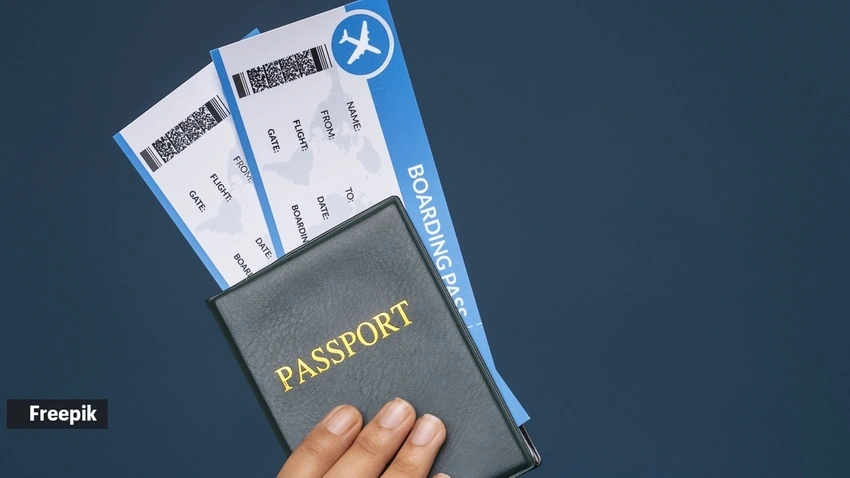
We have all seen it while scrolling through our feeds. The classic airport flat-lay featuring a designer passport holder, a steaming latte, and that crisp boarding pass peeking out just enough to show the destination. It is the ultimate signal to your followers that you are heading somewhere exciting. But while you are waiting for those likes to roll in at the gate, someone on the other side of the world could be cancelling your return flight or stealing your identity with a single click.
The problem is not the photo itself, but the data hidden in plain sight. That little barcode or QR code on your ticket is not just a bunch of random lines. It is a treasure chest of your personal information encoded using global aviation standards. Most people do not realize that these codes can be decoded by almost anyone with a free smartphone app and a few seconds of time.
What Are You Actually Sharing?
Once a malicious actor has a clear shot of your barcode, they have access to your full name, your frequent flyer number, and your PNR. That six-digit alphanumeric booking code is the key to your entire journey. With just your last name and that PNR, a stranger can log into the airline portal as if they were you.
What happens next ranges from petty to devastating. They could move your seat to a middle row right by the lavatories just for spite. Even worse, they could cancel your entire itinerary. There are documented cases of travelers being stranded because a stranger saw their boarding pass on TikTok and decided to hit the cancel button on their return leg out of pure malice.
Protecting Your Digital Identity
Your frequent flyer account is another major target. Those miles you have been saving for a luxury upgrade are essentially currency. If a hacker gets your account number, they can track your travel patterns or drain your points. Your phone number and email are often linked to that record too, making you a prime target for sophisticated phishing scams.
If you absolutely must share your travel plans, there are much safer ways to do it. Take a photo of the airplane wing from the window or a shot of your luggage at the terminal. If you really want that boarding pass aesthetic, you must cover the barcode, the PNR, and your full name completely. A digital sticker is not always enough, as some can be edited out. Using your thumb to physically block the data is a better bet.
In a world where your digital footprint is everything, do not let a moment of social media excitement turn into a travel nightmare. Your followers do not need to see your ticket, but hackers definitely want to. Keep your data private and your vacation secure.
Your Data Is No Longer Safe: Why Geopolitics Is Redrawing the Global Cloud Map
The cloud isn't just code; it's physical infrastructure vulnerable to war. Recent drone strikes prove that geopolitics is the new biggest threat to y…
The cloud isn't just code; it's physical infrastructure vulnerable to war. Recent drone strikes prove that geopolitics is the new biggest threat to your digital life.
1 min read
The New Front Line: Why Your Data is Moving Houses
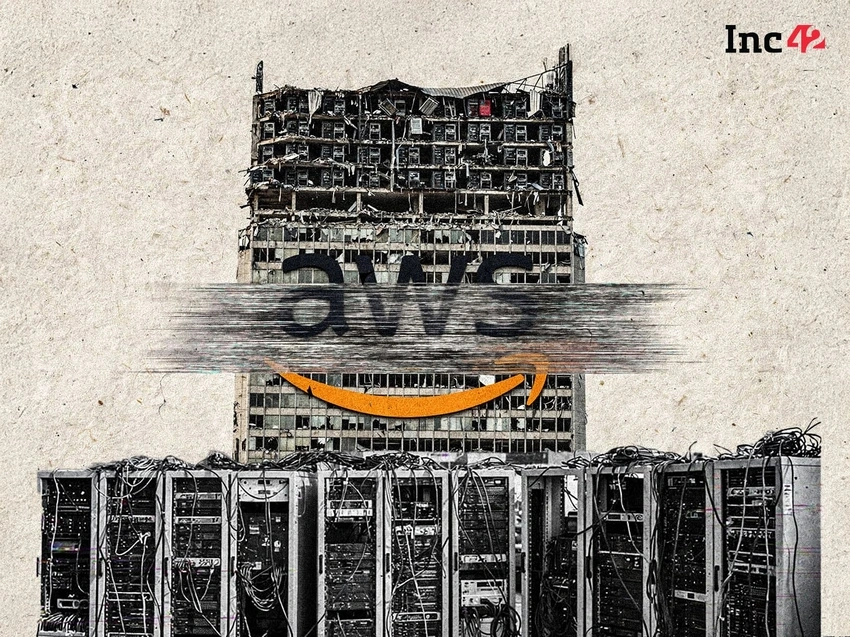
For years, we have been told that the cloud is everywhere and nowhere at the same time. We treat it like a magical, invisible layer that keeps our photos, bank details, and business operations safe. But recent events in the Middle East have shattered that illusion. When drone strikes damaged three major Amazon Web Services data centers in the United Arab Emirates and Bahrain, the world received a wake up call. The cloud is not just code. It is concrete, cables, and cooling systems. And right now, those physical sites are becoming the new front lines of global conflict.
When Physical Warfare Hits Digital Infrastructure
This is a massive shift in how we think about digital security. We are used to worrying about hackers and phishing scams, but we rarely consider the impact of structural damage from military activity. These strikes caused power disruptions and water damage, forcing massive institutions like Abu Dhabi Commercial Bank and Careem to deal with outages. This is one of the first times we have seen data center disruption as a direct result of military activity.
What is even more chilling is the role of Artificial Intelligence. Modern drone warfare uses AI to identify strategic targets. If the entire economy runs on data, then the buildings housing that data are no longer just utilities. They are high-value military objectives. As AI helps nations hunt for targets, the very servers running those AI models become targets themselves.
The Great Data Migration
As a result, we are seeing a massive rethink of where data lives. AWS has already started advising customers to reroute their workloads to safer regions like the United States, Europe, and the Asia Pacific. This brings countries like India into the spotlight as a critical player in global digital resilience.
India is quickly becoming a preferred destination for geographic diversification. Why? Because it offers a relatively stable geopolitical environment and a massive, growing infrastructure. Enterprises are no longer just looking for the lowest latency or the cheapest storage. They are looking for political safety. They want to know that their servers are not sitting in a potential crossfire.
A New Era of Data Sovereignty
We are entering an era where data residency is dictated by the map of global alliances. If a region becomes too volatile, the data leaves. This might lead to a more fragmented internet, where friendly nations host each other's digital brains while volatile zones are left in the dark.
The lesson for every business leader is clear. It is time to audit your disaster recovery plans. If your data is concentrated in one corner of the globe, you are at the mercy of geopolitics. The cloud might be digital, but the risks are very, very real.
Think you can easily spot an AI phishing scam? Think again. AI security is no longer just about writing better code. It is about human trust and why …
Think you can easily spot an AI phishing scam? Think again. AI security is no longer just about writing better code. It is about human trust and why our own psychology is the ultimate vulnerability. Read more here!
1 min read
Let us get one big misconception out of the way right now. If you still believe that cyber scams are easy to spot because of glaring typos or bizarre requests, you are living in the past. We all like to think we are too smart to click a bad link, but artificial intelligence is completely flipping the script on cybersecurity. Today, the primary battleground is not your software. It is your psychology.
The End of the Obvious Scam
For years, we relied on a simple set of rules to stay safe online. Look for bad grammar. Check for weird email addresses. Do not trust sudden urgency. But generative AI has essentially erased all of those traditional red flags.
Modern attackers use automated tools to scrape social media, leaked databases, and public records. They can build incredibly detailed profiles of their targets in mere minutes instead of days. When the attack finally arrives, it does not look like a generic mass blast. It perfectly mirrors the local language, tone, and writing style of someone you might actually know or a company you already trust.
Why Code Is Not Enough
We keep throwing technical solutions at a fundamentally human problem. Yes, we absolutely need robust firewalls and advanced threat detection. But the underlying goal of cybercrime has not changed at all. The real target remains human trust, and that continues to be the most exploitable vulnerability in any modern organization.
Attackers are getting smarter about how they guide victims through malicious workflows. They are using AI assisted business email compromise, browser manipulation, and automated credential harvesting. They lean heavily on familiarity and urgency to bypass your logical brain and go straight for your emotional reactions.
Building Safer Systems
So, how do we fix this? AI security needs a serious paradigm shift.
Acknowledge the human element: We need to stop blaming victims for falling for highly sophisticated traps.
Focus on transparency: AI systems should clearly indicate when content is synthetically generated or automated.
Redefine security training: Annual phishing tests are no longer enough. We need continuous education on how AI manipulates trust and judgment.
Ultimately, securing our digital future requires more than just patching software vulnerabilities. It means patching our understanding of human nature. Until we realize that our own trust is the weakest link, the attackers will keep winning. Stay skeptical out there.
Secure and Wireless: DRDO, IIT-Delhi Pioneer 1 km Quantum Communication
Explore how DRDO and IIT-Delhi have achieved a major breakthrough in free-space quantum secure communication, transforming cybersecurity and defense …
Explore how DRDO and IIT-Delhi have achieved a major breakthrough in free-space quantum secure communication, transforming cybersecurity and defense strategies in India.
1 min read
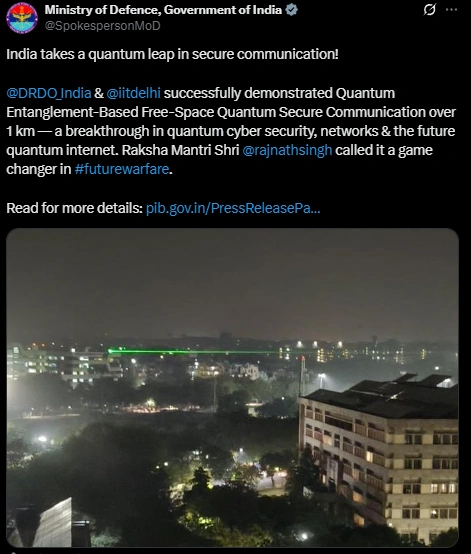
HIIT Delhi's Defence Research and Development Organization (DRDO)-Industry-Academia Centre of Excellence (DIA-CoE) has used quantum entanglement to demonstrate free-space quantum secure communication over a distance of over one kilometer via an optical link. In the realm of cybersecurity, the development is regarded as a significant breakthrough.
WATCH THE VIDEO HERE..
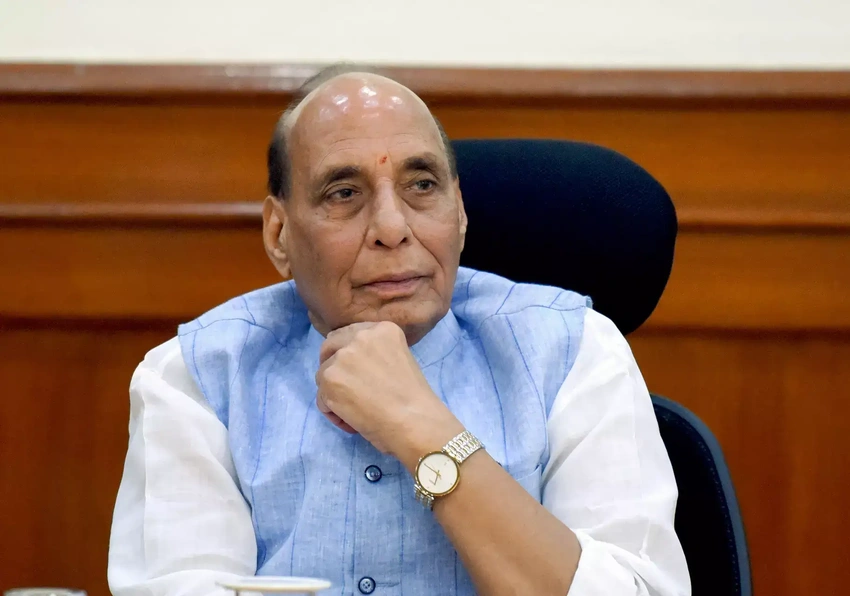
Congratulating DRDO and IIT-Delhi, Defence Minister Rajnath Singh said the accomplishment marks India's entry into a new quantum era of secure communication, "which will be a game changer in future warfare."
With a quantum bit error rate of less than 7%, the experiment, which was carried out on the campus of IIT Delhi, achieved a secure key rate of almost 240 bits per second.
According to the Defense Ministry, "this entanglement-assisted quantum secure communication paves the way for real-time applications in quantum cybersecurity, including long-distance Quantum Key Distribution (QKD), the development of quantum networks, and the future quantum internet."
The Scenario
The demonstration, which was given by Prof. Bhaskar Kanseri's research group in front of several dignitaries, was part of the project "Design and development of photonic technologies for free space QKD," which was approved by the Directorate of Futuristic Technology Management of DRDO. The Ministry stated that the efforts were in line with India's larger goals to advance quantum technologies for the country's development.
“Quantum entanglement-based QKD offers several significant advantages over the traditional prepare-and-measure method by enhancing both security and functionality. Even if devices are compromised or imperfect, the use of quantum entanglement ensures the security of key distribution. Any attempt to measure or intercept the entangled photons disturbs the quantum state, allowing authorised users to detect the presence of an eavesdropper,” it said.
The Ministry said quantum communication provided fundamentally unbreakable encryption, making it a dual-use technology with applications in securing data in strategic sectors such as defence, finance, and telecommunications, as well as in protecting national security-related communications.
“Free-space QKD eliminates the need to lay optical fibres, which can be both disruptive and expensive, especially in challenging terrains and dense urban environments,” the Ministry said.
The Larger Context
In 2022, DRDO scientists and Prof. Bhaskar's team demonstrated India's first intercity quantum communication link between Vindhyachal and Prayagraj using commercial-grade underground dark optical fiber. In another project funded by the DRDO, the team used entanglement to successfully distribute quantum keys across a 100-km spool of telecom-grade optical fiber in 2024.
Through DIA-CoEs, 15 of which have been established at prestigious academic institutions like universities and IITs, and IISc, these technologies are being developed.
Conclusion
India has achieved a significant milestone with the DRDO-IIT Delhi experiment, which is its most sophisticated entanglement-based free-space quantum communication test to date. Previously restricted to laboratories and fiber cables, this has now spread outdoors. India gets closer to a future where communication is not only faster but also impenetrably secure with every light pulse transmitted over that one-kilometer link. The country is at the beginning of a quantum-enabled era, based on vision, commitment, and creativity, as scientists scale, improve, and get ready to aim high, literally with satellite integration.





































Login to comment.