The 'Process Video' Deception: Fetishizing Labor, Not Art

The 'Process Video' Deception: Fetishizing Labor, Not Art
The 'Process Video' Deception: Fetishizing Labor, Not Art
We are training audiences to value how long something took or how satisfying the brushstroke looks. Efficiency and spectacle are replacing meaning.
Have we started fetishizing the factory, not the art?
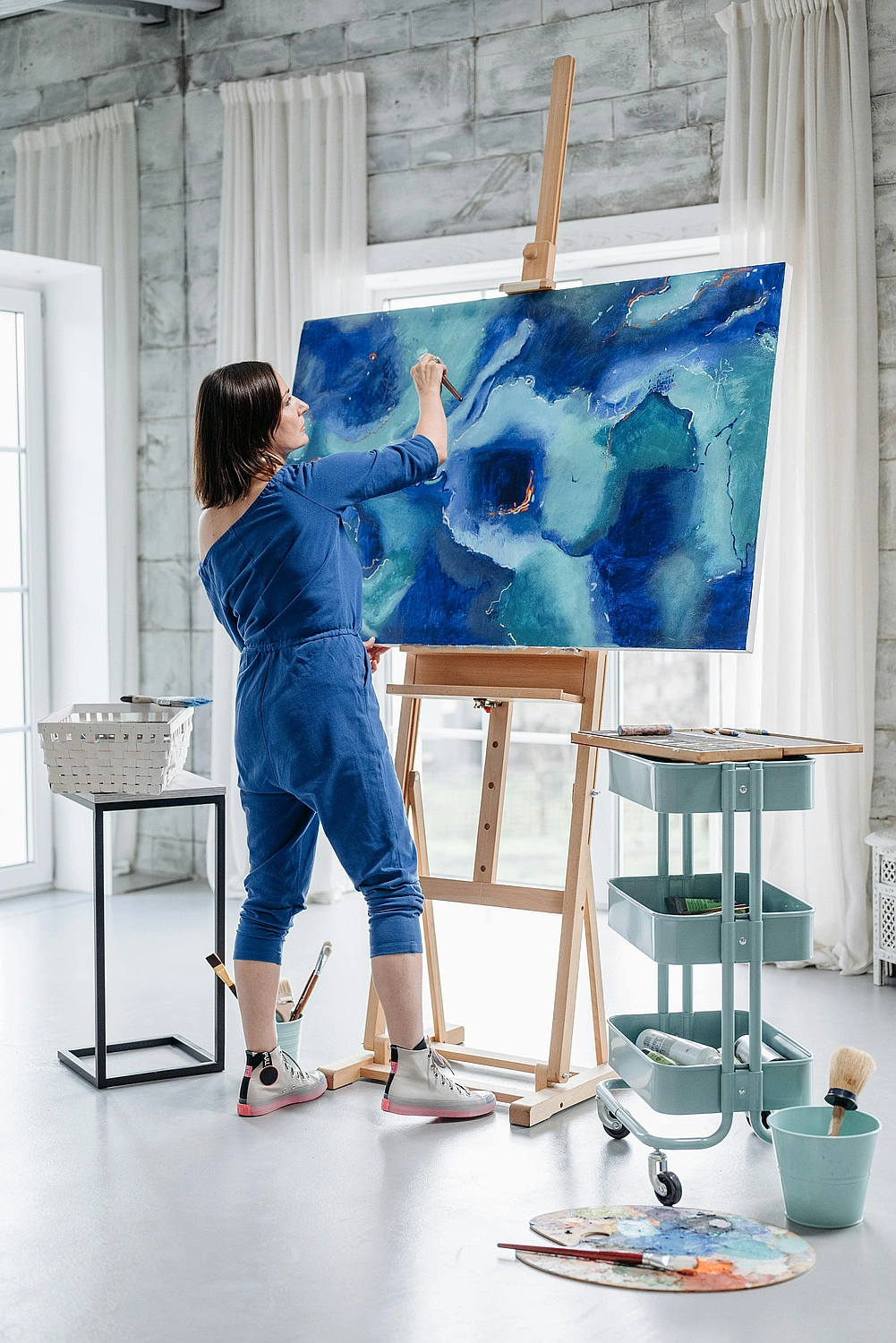
There is a specific kind of digital ASMR that has taken over our feeds. You’ve seen it: a palette knife scraping thick, buttery oil paint across a pristine canvas; a woodcarver peeling away a single, perfect curl of oak; a calligrapher’s nib dancing with mathematical precision. These videos are oddly satisfying, hypnotically rhythmic, and, I would argue, the most dangerous thing to happen to art since the invention of the stock market.
Social media has turned the studio into a stage. By rewarding the ‘satisfying’ timelapse over the final result, we are training ourselves to value labour while forgetting how to value meaning.
As an artist and a literature student, I find myself increasingly trapped between two worlds. In my lit seminars, we discuss the "intentional fallacy", the idea that an author’s purpose or the circumstances of a book's creation are secondary to the text itself. In my studio, however, the "text" is becoming irrelevant. The book doesn’t matter. Only the footage of me writing it does.
We have entered an era of the "Process Video Deception," where we are no longer selling art. We are selling a performance of labour. And in doing so, we are stripping art of its soul.
The Cult of the Clock
The problem lies in what the algorithm chooses to reward. A finished painting is a static image; it is low engagement. But a 30-second timelapse of that painting being created is content.
The result is a subtle but violent shift in how the public perceives value. We are being trained to value art based on the Protestant work ethic rather than aesthetic or emotional impact. We look at a piece and ask, "How long did that take?" rather than "How does this make me feel?"
If a video shows an artist sweating over a hyper-realistic eye for 100 hours, it goes viral. The labour is visible, therefore the value is undeniable. But if an artist spends ten years thinking and then produces a single, devastatingly simple line in ten seconds, the process video is boring. It doesn't perform well.
We are teaching audiences that art is a factory process, an accumulation of man-hours, rather than a moment of profound human connection. We are fetishising the factory floor and ignoring the output.
The Erasure of the "Ugly Phase"
As any artist knows, the middle of a project is usually a disaster. There is a period, the "ugly phase", where the work is incoherent, messy, and frustrating. This is where the real art happens. This is where you make the mistakes that lead to breakthroughs.
But the camera cannot tolerate the ugly phase.
When you know you are filming for a satisfying reel, you stop taking risks. You avoid the mess. You perform a version of painting that is clean, linear, and predictable. You don't paint to discover; you paint to document.
The spectacle of the brushstroke replaces the meaning of the mark. We are losing the courage to be clumsy, and without clumsiness, there is no growth. We are producing work that is technically proficient and satisfying to watch, but emotionally vacant to stand in front of.
Efficiency vs. Epiphany
In the 19th century, John Ruskin argued that "Industry without art is brutality." Today, we are facing the inverse: Art as industry.
By turning the studio into a stage, we have corporatised the creative impulse. We have prioritised efficiency (how quickly can I produce a clip?) and spectacle (how cool does this look in slow-motion?) over the epiphany.
A great work of art should be a haunting. It should stay with you long after you’ve stopped looking at it. But a process video is a snack; it is consumed, enjoyed for its satisfying qualities, and immediately forgotten as we scroll to the next hit of dopamine.
We must stop asking artists to prove their worth through the visible exhaustion of their labour. We must stop demanding that they be both the creator and the documentary filmmaker.
Art is not a "how-to" guide. It is not an ASMR trigger. It is a mystery. And if we continue to demand that every mystery be filmed, edited, and set to a trending audio track, we shouldn't be surprised when we find that there’s nothing left to see once the video ends.
#art #socialmedia #culture #creativity #artists
