FarmTok is the Digital Pastoral We Didn’t Know We Needed (and Maybe Don’t Deserve)

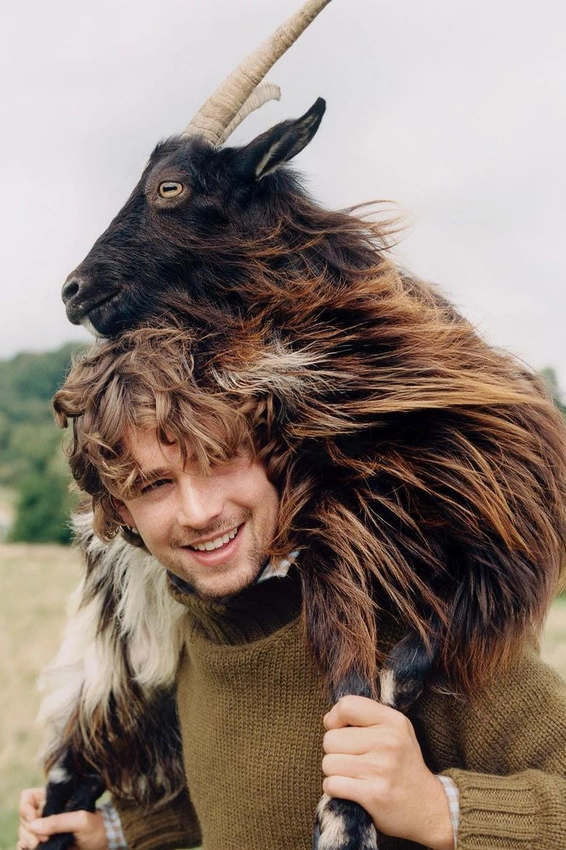
FarmTok is the Digital Pastoral We Didn’t Know We Needed (and Maybe Don’t Deserve)
Why are millions of us watching strangers shuck corn? FarmTok is the latest most wholesome social media trend, all about finding a blend of pastoral escapism and radical food transparency.
It happens usually around 11:30 PM. I’m doom-scrolling past a geopolitical crisis, a highly specific breakdown of celebrity gossip, and a video of a girl explaining why her $400 hair dryer changed her life. Then, suddenly: silence. Or rather, the rhythmic crunch of boots on gravel. A man in Carhartt overalls is silently pointing at a Highland cow. He pets the cow. The cow moos. I exhale a breath I didn’t know I was holding.
Welcome to FarmTok, the internet’s muddiest, most wholesome corner, where the content is less about “Get Ready With Me” and more about “Get Ready To Inseminate This Heifer.”
As an English Lit graduate, I can’t help but see the literary parallels.
We are witnessing the resurrection of the Pastoral tradition, that ancient genre where urban poets like Virgil or Theocritus romanticized the lives of shepherds to soothe the anxieties of city slickers.
FarmTok is just the digital evolution of Marie Antoinette playing shepherdess at the Petit Trianon, except instead of a fake village, we have an iPhone 14 Pro propped up on a hay bale.
The Aesthetic of Labor
There is a specific, sociological itch that FarmTok scratches. In a late-capitalist digital hellscape where most of our labor is abstract, sending emails, moving pixels, attending Zoom calls that could have been emails:
Farming looks deceptively, alluringly real.
We watch a woman in Oregon harvest pumpkins not because we care about squash, but because there is a distinct cause-and-effect to her day that ours lacks. She plants seed, she gets pumpkin. We send Slack message, we get... more Slack messages. The appeal is the vicarious satisfaction of tangible work. It is “cottagecore” stripped of its fragile lace and replaced with the pragmatism of muck boots.
However, we must apply a critical eye here. The “wholesome” tag often obscures the reality. Social media algorithms favor the aesthetic of farming over the economics of it. We see the cute baby goats in pajamas; we rarely see the agonizing razor-thin margins, the crop failures, or the crushing debt of industrial equipment. We are consuming a sanitized simulacrum of agriculture, a “greatest hits” compilation of rural life.
Radical Transparency (With a Filter)
Yet, for all its performative coziness, FarmTok is doing something genuinely revolutionary regarding our food systems. For decades, the industrial food complex thrived on obscurity. You bought the chicken breast in plastic wrap; you didn't ask about the chicken.
Now, farmers are bypassing the PR firms and showing us the soil. Following a regenerative farmer in Iowa or a dairy farmer in Wisconsin changes the way you navigate the grocery store. It forces a confrontation with the source. When you watch a farmer explain why they rotate crops or how they treat a sick animal, the “organic” label stops being a marketing buzzword and starts becoming a narrative.
It allows us to curate our consumption based on values rather than packaging. If I respect the way @TheGenericFarmer treats his soil, I am more likely to seek out similar practices in my local market. It is education disguised as entertainment.
The Limits of the 60-Second Clip
But here is where the English major in me gets skeptical. Can you really understand the complexities of the US agricultural subsidy system in a 60-second Reel set to a trending Doja Cat song? Unlikely.
Short-form video is excellent for vibes and terrible for nuance. The visually stunning nature of FarmTok often flattens the discourse. If a farmer wants to explain the intricate biochemistry of soil health or the ethical debates around GMOs, the algorithm usually punishes them for being boring.
The Final Verdict
Ultimately, FarmTok is a mirror. It reflects our collective exhaustion with the artificiality of modern life. We want to believe that somewhere, life is simple, seasons matter, and hard work yields tangible fruit.
So, by all means, keep watching the guy shear the sheep. It’s better for your brain than the rage-bait political commentary. But remember that behind the aesthetic edit is a real industry, real dirt, and a complexity that requires more than a double-tap to understand. Now, if you’ll excuse me, I need to go watch a video of a duck eating peas. It’s been a long day.
#farmtok #socialmedia #tiktok #internetculture #socialmediatrends
