TikTok's ten-second hook: how clips now shape music's fate

TikTok's ten-second hook: how clips now shape music's fate
TikTok's ten-second hook: how clips now shape music's fate
An analysis of TikTok's short-form landscape shows how ten-second hooks and the For You Page algorithm push music to virality, guiding artists to craft songs as memes before full albums.
TikTok is, quite literally, built on the premise that a fragment is enough. Short vertical videos flick past in endless succession; each clip has a tiny window to convince you to stop scrolling. Unsurprisingly, most creators reach for the loudest weapon in pop’s arsenal: the hook.
A 2024 data report found that around 85% of TikTok videos contain music, a higher share than even YouTube or Instagram. The platform’s recommendation design then pushes the most engaging clips to the “For You Page,” regardless of whether you’re a bedroom producer or a major label artist.
This is where the ten-second hook becomes not just a creative choice but a survival strategy. Berklee songwriters have already described how emerging artists now design tracks so that the most captivating melodic or lyrical moment lands instantly, optimised for short-form virality. The song is auditioning for a role as a sound for a meme, a dance challenge, or an edit template, before it is ever treated as a full composition.
Hooks First, Songs Later
Traditional pop structures eased you in: intro, verse, pre-chorus, then the payoff. TikTok has flattened that arc. The idealised track for the platform is basically “chorus-core”: the hook appears almost immediately, often in a truncated or re-arranged form, so that the bit you’d usually wait 45 seconds for now hits at second three.
Recent commentary on “shorter songs, faster hooks” notes how mainstream tracks are becoming more compact, with arrangements that put the catchiest section front and centre to suit the logic of short-form video. Songs are increasingly written around their viral moment rather than building towards it.
Industry analysis suggests that when a short TikTok clip of a song takes off, there’s a strong correlation with later popularity on streaming platforms. But the causality runs backwards too: instead of TikTok reacting to the song, the song is pre-emptively sculpted to please TikTok.
As a humanities student, I can’t help hearing this as a shift in narrative logic. Pop songs were once mini-stories; now they’re more like catchphrases. The plot is optional as long as the quotable line is strong.
Sped Up, Sliced, and Loopable
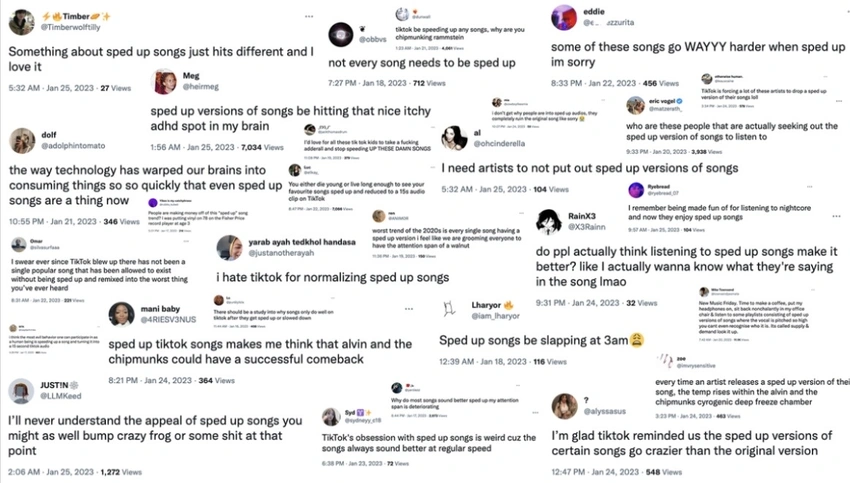
The TikTok hook isn’t just placed differently; it’s also sonically modified to work better in ten seconds. One major trend has been the rise of sped-up versions of songs so that more of the hook fits neatly into the short-video window and feels more “exciting” in the scroll.
Labels have noticed. Reports describe how official “sped-up” edits of tracks by artists like SZA and The Weeknd are now baked into release strategies, deliberately crafted for TikTok rather than emerging as purely fan-made remixes.
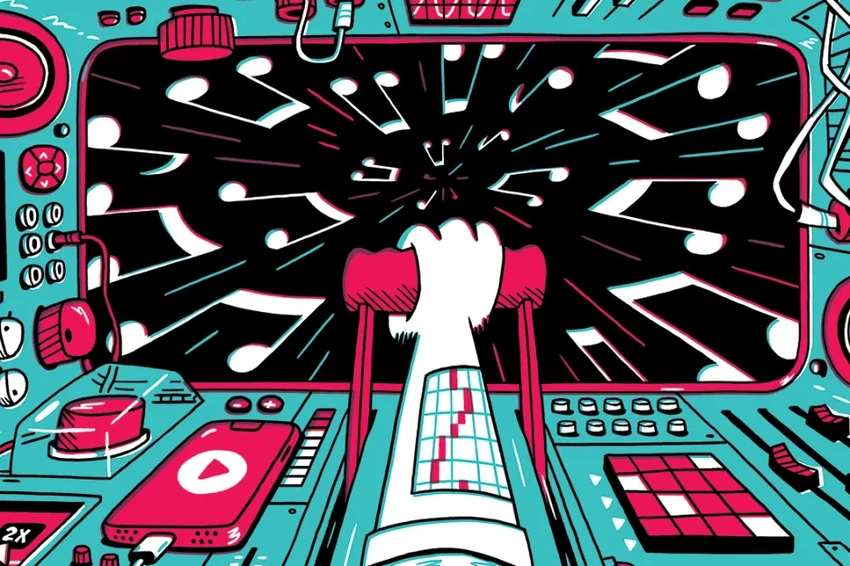
Musicology is only just catching up to this. Scholars studying TikTok’s “aural turn” argue that the platform has re-centred sound in digital culture by making songs malleable: sliced into loops, remixed, accelerated, and endlessly repurposed.
Culturally, that’s fascinating: the “meaning” of a hook no longer lives solely in the lyrics or the original context, but in the thousands of tiny videos it scores. The same ten-second clip might be used for heartbreak edits, gym montages, and joke skits. The sound becomes a mood ring for the platform’s collective psyche.
Fragmented Listening, Fragmented Fandom
Of course, there’s a catch or maybe a cost. Market research on TikTok audiences suggests that while users are exceptionally good at discovering new songs, they don’t always translate that into deeper engagement. One recent report claims TikTok users are significantly more likely than average social media users to share new music and even stream albums the day they drop.
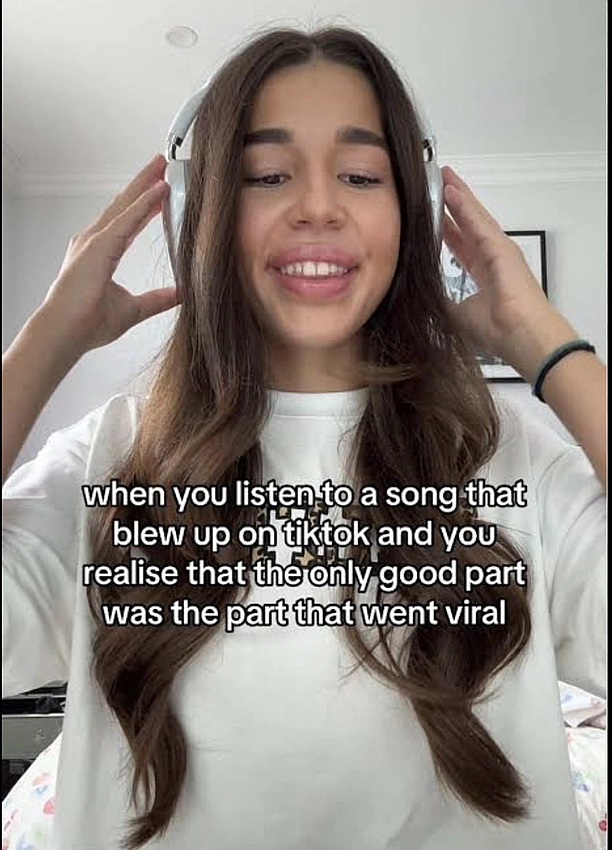
Critics have started to talk about this as a threat to “long-form” music culture: the idea of being a fan of an artist rather than a collector of viral snippets. Where older models of fandom involved albums, liner notes, even interviews, TikTok-era music loyalty can feel more like a series of crushes on hooks that vanish as quickly as they appear on the feed.
Is the Hook Ruining Songs?
It’s tempting to frame all this as decline: TikTok ruined music, attention spans are dead, bring back five-minute bridges, etc. But I’m not convinced it’s that simple. Every new medium has reshaped how songs are written from radio-friendly single edits to MTV-driven choruses to streaming-era “don’t-skip” intros. TikTok is just the latest environment forcing pop to evolve.
Yes, some tracks now feel like they only exist to deliver ten memeable seconds. But others use the constraint in interesting ways: multiple hooks threaded through the same track, or songs where the TikTok section functions almost like a portal into a richer album world. Some artists seem to be playing a double game, one version of the song to feed the algorithm, another to reward listeners who stay.
The TikTok hook is a symptom of a broader cultural condition: our lives are increasingly mediated through tiny, optimised fragments. The question isn’t just “Is the music worse?” but “What kind of listening subject is being produced?”
