Robyn's Sexistential: Desire, Daring, Dancefloor


Robyn's Sexistential: Desire, Daring, Dancefloor
Robyn's Sexistential: Desire, Daring, Dancefloor
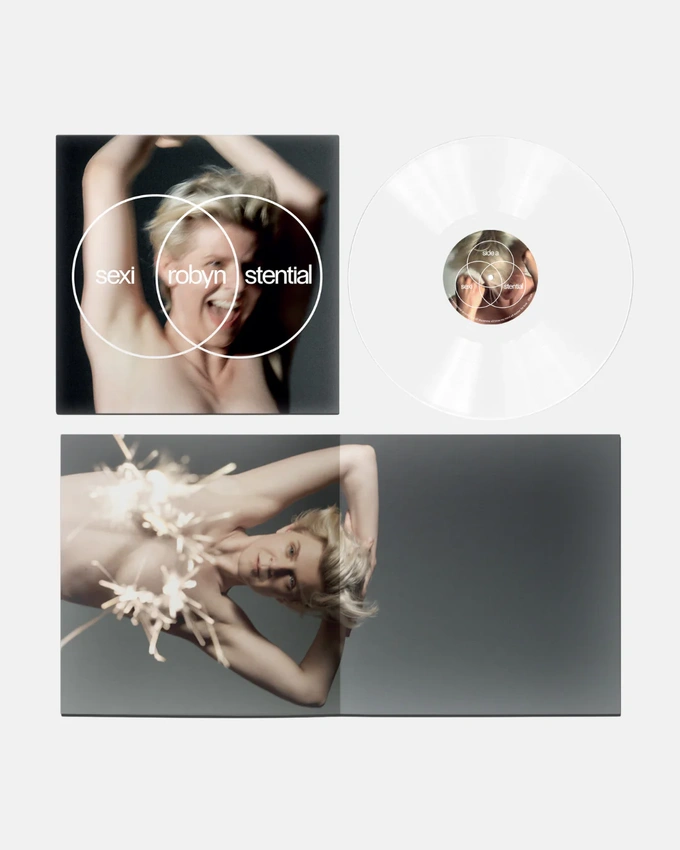
Robyn returns after eight years with Sexistential, a synth-pop masterclass that dares the dancefloor to think. It blends euphoria with a clinical take on love, motherhood, and desire, reshaping what pop can hold.
There is something almost perverse about how Robyn returns. Not with nostalgia, not with the easy circuitry of Body Talk, but with a record that insists on making the dancefloor think. Sexistential, released after an eight-year gap is not simply a comeback album; it is a recalibration of what pop is allowed to hold: sex, motherhood, biology, boredom, desire, and the strange, clinical language we now use to describe all of them.
The chemistry of feeling
The album opens by dismantling one of pop’s oldest illusions: that love is ineffable. Instead, Sexistential keeps circling a quieter, more unsettling question; what if love is just chemistry? Tracks like “Dopamine” do not reject emotion but reframe it, holding intimacy at the uneasy intersection of the hormonal and the existential.
What emerges is not cynicism but a peculiar doubleness. The music pulses with the familiar euphoria of Robyn’s synth-pop, yet the lyrics seem to hover above it, observing rather than surrendering. This tension between embodied feeling and analytical distance becomes the album’s central aesthetic.
The body is not merely a site of pleasure; it is a problem to be examined, a system to be decoded. And yet, the music refuses to collapse into abstraction. The beat persists. You still dance.

Sex, motherhood, and the refusal of modesty
Pop has historically struggled with women ageing in public. The options are familiar: reinvention through restraint, or disappearance. Sexistential refuses both.
Instead, it foregrounds experiences that are usually edited out of pop’s glossy surface od IVF, single motherhood, breastfeeding, the awkward logistics of sex beyond youth.
This is not confessional in the conventional sense. The album does not seek empathy through vulnerability alone; it insists on visibility. Desire here is not softened or aestheticised—it is awkward, funny, sometimes abrasive. Even the title track leans into this discomfort, collapsing the existential with the sexual in a way that feels both tongue-in-cheek and philosophically pointed.
If earlier Robyn records transformed heartbreak into communal catharsis, Sexistential turns inward, asking what remains when romance is no longer the organising principle of life. The answer is not absence, but multiplicity: maternal love, bodily autonomy, self-directed pleasure.

Rewriting the dancefloor
Sonically, the album gestures backwards even as it moves forward. Collaborations with Klas Åhlund and Max Martin anchor it in a lineage that recalls Robyn’s earlier work, but the textures feel sharper, more stripped, occasionally even abrasive.
There are moments that deliberately echo past selves “Blow My Mind” returns, but altered, redirected towards familial rather than romantic love. The gesture is telling. Nostalgia is permitted, but only if it can be repurposed.
At its best, the production achieves a peculiar balance: icy, almost clinical synths that nevertheless carry an undercurrent of warmth. The emotional register is not immediate; it accumulates. You do not feel everything at once. You realise, halfway through a track, that something has shifted.

Midlife as pop’s new frontier
There is a broader cultural shift quietly underwriting Sexistential. The album participates in an emerging landscape where women in their forties and beyond are not only present in pop but central to it.
What makes Robyn’s intervention distinct is its refusal to frame this as either empowerment or crisis. There is no manifesto here, at least not in any straightforward sense. Instead, the record normalises what has previously been marginal: that sexuality does not expire, that motherhood does not erase desire, that selfhood continues to evolve long after pop traditionally loses interest. It expands the temporal horizon of pop music, allowing it to accommodate lives that are not defined by youth alone.
The risk of distance
If there is a limitation to Sexistential, it lies in the very quality that makes it compelling. The album’s analytical stance can create a sense of distance.

Some tracks feel more like conceptual sketches than fully realised emotional experiences, their ideas clearer than their hooks. The final stretch, in particular, leans heavily into abstraction, occasionally sacrificing immediacy for thematic coherence.
But even this unevenness feels deliberate. The album is less interested in perfection than in exploration. It risks awkwardness, even failure, in order to articulate something that pop rarely attempts: a theory of feeling.
A philosophy you can dance to
What lingers after Sexistential ends is not a single melody or lyric, but a mode of thinking. The album suggests that the binary between mind and body, between analysis and sensation is no longer sustainable.
To dance, here, is also to think. To desire is also to question.
And perhaps that is Robyn’s most enduring gesture: not simply making pop that feels, but making pop that insists on asking why we feel at all.
#Robyn #Sexistential #Dopamine #SynthPop #PopMusic #AlbumReview
