Gretchen Felker-Martin Is Making Horror Too Ugly to Look Away From
Gretchen Felker-Martin Is Making Horror Too Ugly to Look Away From
Gretchen Felker-Martin Is Making Horror Too Ugly to Look Away From
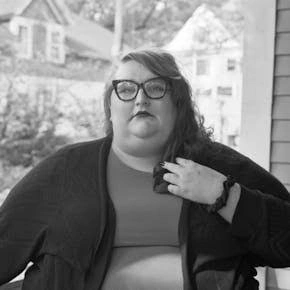
Gretchen Felker-Martin has made a career out of turning disgust, desire and fear into horror. What's more, the woman behind the monsters may be just as fascinating as the fiction itself.
The Black Fame author has stated one too many times that she is interested in something beyond a traditional scare. She wants to make you examine why you were frightened, disgusted or aroused in the first place. The portrait that emerges of Felker-Martin is almost suspiciously appropriate for a writer of transgressive horror. Her Massachusetts apartment is reportedly crowded with books, Magic: The Gathering cards, Warhammer miniatures and a 3D-printed triceratops. There is also a nearly black cat. Yet the most consequential thing in her home is not an object at all. It is a memory.
As a child, Felker-Martin was close to Halina Mantell, a Polish resistance photographer and Holocaust survivor whom her family adopted as an honorary grandmother. Mantell had been imprisoned in Auschwitz after documenting Nazi atrocities. When Felker-Martin was five, she asked about the tattoo on Mantell's arm. Mantell did not lie to her. The answer terrified her.
She began to have grotesque nightmares. Mantell died the following year. But the encounter left Felker-Martin with an early understanding that something genuinely nightmarish had happened in the world, and that knowledge eventually became part of the imaginative machinery behind her fiction.

Horror Begins Where Good Taste Ends
Felker-Martin has become one of the most distinctive figures in contemporary queer horror because she refuses the comforting distance that often separates a reader from the grotesque.
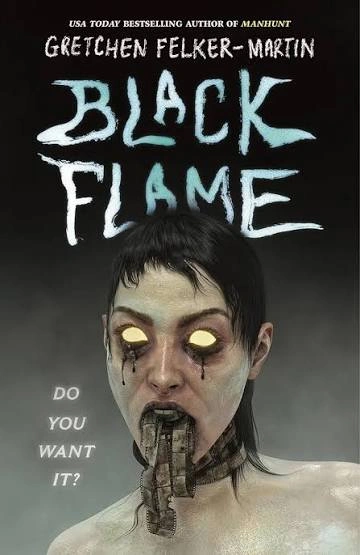
Her 2022 novel Manhunt made her an “it girl” within queer horror, but Black Flame, her more recent novel, takes a different route. It follows Ellen Kramer, a deeply closeted Jewish film restorationist living in New York in 1985. Ellen becomes entangled with The Baroness, an occult film made by a gay Jewish filmmaker during the twilight of the Weimar Republic and later recovered from the secret collection of a dead Nazi. The horror gradually becomes inseparable from Ellen's own repression.
Felker-Martin describes Ellen as emotionally cauterised, which feels like an unusually precise phrase for the character's predicament. Her desires have been suppressed through conversion therapy and family judgement, but they do not disappear simply because she has been trained to hate them. Instead, desire returns through horror, through disgust and through an increasingly impossible refusal to remain hidden.
Even a pastrami sandwich can become erotic in Felker-Martin's world. Her work does not maintain the boundaries between what is appetising and what is repellent. She is interested in what disgust actually tells us about our bodies and what they are feeling.
Being Unapologetic
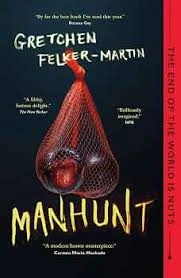
That artistic philosophy becomes especially interesting when placed beside Felker-Martin's public life. In 2025, she was announced as the writer of DC Comics' Red Hood, a mature-readers series that would have followed Jason Todd and Huntress. It seemed like a strange but exciting collision: a writer known for Manhunt's unapologetic extremity entering one of the largest superhero universes in popular culture.
The collision did not last. After controversy surrounding her social-media posts following the killing of far-right political agitator Charlie Kirk, DC cancelled the series immediately after its first issue was released. Unsold copies were recalled, later issues were cancelled and the company removed references to the series from its website.
The Cuckoo author has been outspoken about the experience and about what she sees as the suffocating culture of online surveillance surrounding public figures. Yet Red Hood #1 still reached number 15 among the month's top-selling comics despite being available for only a calendar day.
The Woman Behind the Monsters
What makes Felker-Martin compelling, however, is that the profile does not leave her trapped inside the mythology of the provocateur. There is another life beyond the argument. She talks about community. She talks about cutting down her social-media presence. Her newborn nephew brings her more pleasure than the endless cycle of posting and punishment online. She has begun thinking about what is worth protecting from people who spend their lives waiting for somebody else to make a mistake.
Felker-Martin's horror is often described through blood, sex and disgust. But underneath those things is an insistence that pain must be looked at directly rather than sanitised into something respectable. Black Flame explores historical trauma alongside queer desire because bodies do not experience the world in neatly separated categories.
She is a writer who has built a career out of making the unbearable impossible to ignore, whether that means fascism, repression or the humiliating business of wanting something your world has taught you to fear. Gretchen Felker-Martin’s horror does not ask why her work makes us uncomfortable; it asks us to look more closely at where that discomfort was living all along.

Login to comment.
No thots yet. Be the first to share your thoughts!