Is Emotional Intelligence the Next Economic Superpower?

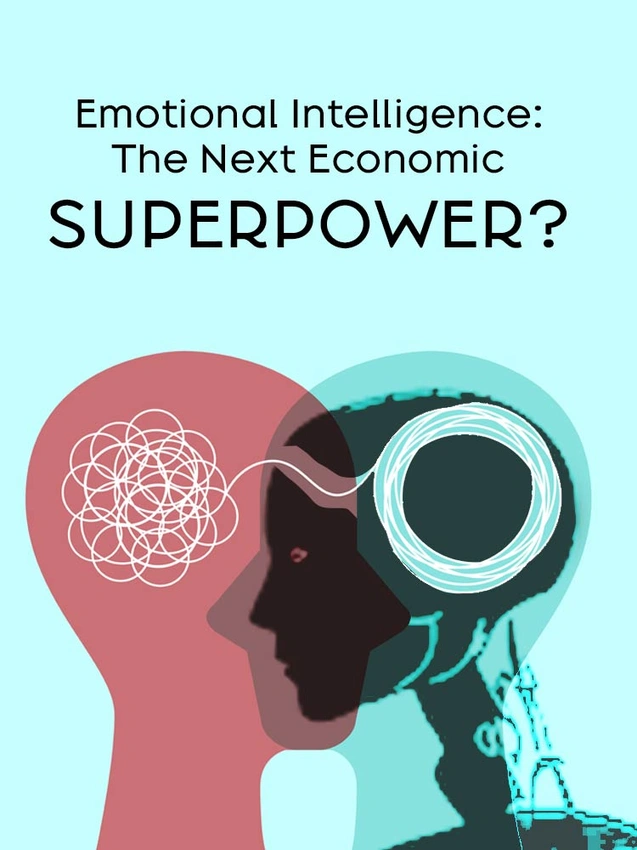
Is Emotional Intelligence the Next Economic Superpower?
ChatGPT is becoming the hyper-personalized empathetic AI, rising among the ashes of cultural exhaustion from social media, making it the most valuable agent.
Every app you open reminds you of what you’re not. Social media constantly makes you feel lesser. I feel less fashionable and less sexy on Instagram, less successful on LinkedIn, less knowledgable on X.... Everywhere else, you’re just not enough. Companies like OpenAI are banking on the fact that:
We Don't Need More Content. We Need to Be Understood.
Through encouraging hyper-personalized interactions, Chat-GPT has become a friend to Gen-Z, a therapist to millennials, even a parent to Gen-alp, which is making it an unprecedented economic success even as other AI models excel more than ChatGPT on other tasks.
Social media made us feel inadequate. AI is making us feel seen. The future belongs to whatever technology can understand us, not just outperform us.
AI: From Algorithmic Broadcasts to Private Conversations
We’ve spent a decade drowning in comparison-driven platforms, designed to reduce humans to metrics and turn self-worth into a leaderboard. The result is a culture that’s wildly connected but emotionally bankrupt. We're overinformed, overstimulated, and underseen.
So it’s not surprising that the most successful AI product in history doesn’t try to impress us.
It tries to understand us.
The Age of Empathic Technology
OpenAI’s ChatGPT isn’t the smartest tool. It’s not the fastest. In many benchmarks, it’s not even the most accurate. But it just started to feel the most human.
That’s why people are using it for things they’ve never asked Google, Bing, or Alexa:
- “Help me prepare for a breakup.”
- “Why am I so anxious on Sundays?”
- “Can you explain why I should care about my essay?”
The product-market fit is emotional. ChatGPT isn’t winning by outperforming. It’s winning by relating. And in a world full of cold algorithms, warmth just became a business model.
We Don't Need More Content. We Need to Be Understood.
The internet is saturated. More news. More ads. More podcasts. More posts. More content. More takes.
But what we’re starved for isn’t novelty, it’s meaning.
That’s what makes hyper-personalized AI feel so intimate, even addictive. It doesn't just deliver information. It delivers recognition. It mirrors your tone,tracks your preferences. It remembers what you said yesterday, and answers you like it cares.
For a generation raised on feed-based platforms that never listened back, this is quietly revolutionary.
Emotional Intelligence is the Next UX Frontier
What OpenAI seems to understand, and what its competitors often miss, is that the future isn’t just technical. It’s relational.
- The most valuable AI won’t be the one that codes best.
- It’ll be the one that talks you through imposter syndrome.
- It’ll help you write a resume and rewrite your self-image.
- It’ll explain geopolitics and why your mom never says “I’m proud of you.”
This isn’t soft. This is strategic.
The people who decide the future of AI should understand that AI needs EQ benchmarks now, not IQ.
From Performative Platforms to Intimate Interfaces
Social media gave us an audience. AI gives us a mirror. It’s not about broadcasting. It’s about bonding. Or brooding!!
That’s why the next trillion-dollar companies won’t just be making tools. They’ll be making companions. (And what else will we need when we're all jobless anyway?!)
And that’s also why Gen Z, the most mentally ill and emotionally self-aware generation in history, is gravitating toward AI not just for productivity, but for personhood.
What if the Killer App Isn’t Smart, it’s Kind?
The irony is that while Silicon Valley chased superintelligence, what people needed was super empathy. The technology that cracks that, that learns to talk like a friend, listen like a therapist, and teach like a mentor, will own the decade.
Because in the end, the real economic superpower won’t be intelligence.
It’ll be whatever makes us feel a little less alone.
#SocialMediaStruggles #MentalHealth #ChatGPT #GenZ #DigitalWellbeing
