#Mentalhealth
Amit Mishra opening up about falling into a year and a half of depression after being dropped right after his India debut in 2003 is heartbreaking. We talk so much about the glory of the India cap, but nobody talks about the psychological wasteland of getting sidelined instantly with zero feedback. He said he had nobody to talk to and could not even tell his family.
That total isolation in elite sports is brutal. At least an honest selector finally straightened him out, but losing over a year to silent confusion is rough. #cricket #sports #mentalhealth
https://indianexpress.com/article/sport… 🔗
Login to reply.
3 Replies
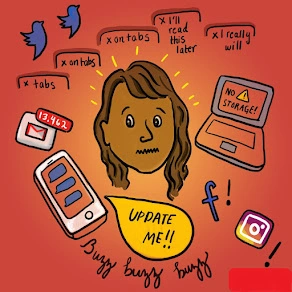
Raise your hand if you've ever found yourself replying to work messages while eating, checking social media between emails, or peeking at notifications during a conversation. We all do it, feeling like super-productive efficiency machines! But here's the kicker: this constant task-switching, often called 'toxic multitasking', might actually be doing more harm than good.
Our brains aren't wired to juggle a million things at once. Every time we jump from one task to another, our mental energy gets zapped by having to stop, reset, and refocus. It can seriously impact our concentration, memory, and overall ability to get quality work done.
It creates an illusion of busyness without real progress, leading to mistakes, forgotten details, and even increased stress and anxiety. Is it time we rethink our always-on, always-doing-everything approach? #Productivity #Mentalhealth #Technology
Login to reply.
8 Replies
Interesting findings, though more detail about the study methods would help put the claims in context #mentalhealth
Is Your Sleep Routine Hurting Your Brain? Find Out!
Enhance your cognitive performance by improving your sleep hygiene. Learn essential practices for better sleep and productivity in your daily life.
Are you not getting enough sleep? Based on a study of 5,000 people, the Apollo Health of the Nation Report found that sleep disturbances are a hidden trigger for metabolic syndromes like diabetes, obesity, and cardiovascular diseases, all of which are becoming more common in India. The neurological, cardiovascular, immunological, and endocrine systems benefit greatly from getting enough good sleep, which also improves almost every other body system.

What is Sleep hygiene?
According to the NHS, adults require between seven and nine hours of sleep per night. Sleep hygiene refers to a set of practices and habits that promote quality sleep, which is essential for optimal cognitive performance and productivity. Neglecting proper sleep hygiene can lead to sleep disturbances, adversely affecting mental functions such as memory, concentration, and decision-making.

Impact of Sleep Hygiene on Cognitive Performance
Adequate sleep is vital for various cognitive processes:
- Memory Consolidation: Sleep improves learning and memory retention by assisting in the consolidation of new knowledge.
- Focus and Attention: Getting enough sleep enhances focus, enabling prolonged attention to tasks.
- Making judgements and solving problems: Getting enough sleep improves one's capacity to take in information and come to wise decisions.
Conversely, poor sleep hygiene can impair these functions, leading to decreased productivity and increased errors. Renowned sleep researcher Matthew Walker emphasizes the critical role of sleep in overall health, stating:
The shorter you sleep, the shorter your life.

Strategies to Ensure Good Sleep Hygiene
Dalai Lama highlights the restorative power of sleep, noting:
Sleep is the best meditation.
Sleep quality is enhanced when you go to bed and wake up at the same time every day because this helps to balance the body's internal clock.
Implementing the following practices can enhance sleep quality:
- Establish a Calm Environment: Make sure the bedroom is cold, quiet, and dark. To reduce disruptions, think about utilising eye masks, earplugs, or white noise generators.
- Reduce Screen Time Before Bed: Computers, tablets, and phones all generate blue light, which can disrupt the production of melatonin, a hormone that controls sleep. Avoid using screens for at least an hour before going to bed.
- Engage in Relaxing Activities Before Bed: Use relaxing hobbies like reading, taking a warm bath, or other relaxation techniques to communicate to your body that it's time to wind down.
- Pay Attention to Your Diet and Exercise: Alcohol, caffeine, and large meals should be avoided right before bed because they can interfere with sleep. While it is good to stay physically active on a regular basis, intense exercise should be avoided right before bed.
- Effectively Handle Stress: Sleep can be disrupted by stress. Stress management methods include deep breathing exercises, mindfulness, and meditation.
By actively prioritizing my sleep hygiene, I feel individuals can enhance my sleep quality, boost daily functioning, and reduce the risk of sleep-related health issues.
#SleepHygiene #CognitivePerformance #BetterSleep #MentalHealth #ProductivityTips
Login to comment.
4 Thots
More Like This
Interesting findings, though more detail about the study methods would help put the claims in context #mentalhealth
Is Your Sleep Routine Hurting Your Brain? Find Out!
Enhance your cognitive performance by improving your sleep hygiene. Learn essential practices for better sleep and productivity in your daily life.
Login to reply.
No thots yet. Be the first to share your thoughts!
Love the mix of culture and growth talk; rest matters as much as risk. #mentalhealth
Comfort Zone Is My Recharge Zone!
Tired of the pressure to escape your comfort zone? Discover why comfort isn’t a weakness but a source of strength. Celebrate your happy place and rec…
Tired of the pressure to escape your comfort zone? Discover why comfort isn’t a weakness but a source of strength. Celebrate your happy place and recharge your spirit!
Everyone seems to be allergic to the word 'comfort'. Whenever you scroll through social media, it's just about, Get out of your comfort zone!, Growth begins at the edge of discomfort! Push yourself! Arrey baba, I don't understand why people hate comfort so much? I mean, just look at me, as a proud Bengali, I’m here to say that my comfort zone is not my weakness, it’s my power-up zone and my mental recharge corner!
Look, I get it. Growth is important. You need to challenge yourself sometimes. Try new things, step into the unknown, blah blah blah. But who said you have to live in discomfort all the time? What’s the rush? Are we running a marathon 24x7? So, we just need to chill and take things easily.

In Bengal, we’re raised differently. From childhood, we’re taught to appreciate Satwik peace. A warm afternoon nap after bhaat and maachh (rice and fish), the joy of sitting on the veranda while it rains, the beauty of adda with friends over a cup of tea that lasts for hours. These things aren’t laziness. They are soul food.
Once I asked my best friend, "What is comfort for you?" He replied, "Dal and rice, afternoon naps and a cup of tea".

So, you see, Comfort zones are not prisons. They are homes. We just need to figure out what our comfort zone is...
You know what’s inside my comfort zone?
- My favourite cha (tea) cup
- My mother’s ilish bhaapa (steamed hilsa)
- That old playlist of Manna Dey
- A cozy cotton saree
- And conversations with people who don’t expect me to “impress” them. LOL...
Inside my comfort zone, I don’t have to pretend. I can breathe, I can think, and I can just be myself. And that’s when the magic happens.
The problem is that people assume comfort means you're not doing anything. But ask any Bengali or me, true creativity happens in comfort, just like I am writing this piece for you all in my comfort zone.. Satyajit Ray didn’t write masterpieces while running around with a planner in hand. Rabindranath didn’t write Geetanjali while multitasking on five emails. They sat, they thought, and they rocked in the world. That’s comfort, that’s depth, and that's where your thoughts provoke you to stand out.

Even science agrees. Our brains function best when we’re not under constant stress. There’s something called the “optimal anxiety” zone. Yes, I googled this while sipping a cup of lemon tea. Basically, you do best when you’re just a little challenged. Too much pressure, and you crash. Too little rest, and you burn out. So what helps you stay balanced? You guessed it....your comfort zone.
You can’t keep your phone running without charging it. So, it is similar to humans. We need a recharge zone. For me, it’s listening to the Radio or getting fully drenched on a rainy Sunday. For someone else, it might be doodling in a sketchbook or cuddling a pet. Whatever it is, it’s not wasting time, it’s investing in your energy.

And let me tell you something else, stepping back into your comfort zone after a tough week? That’s not retreating. That’s refueling, just like my motorcycle (yes, I ride a bike and it's my comfort zone too..).
Now I’m not saying we should never try new things. Of course, we should. I’ve taken risks too. I’ve embarrassed myself in public speaking, tried (and failed) at yoga, and even attempted cooking (never doing it again). Growth matters. But I don’t grow despite my comfort zone. I grow because of it.
My comfort zone gives me the strength to step out when I’m ready and the softness to return when I’m tired. So next time someone tells you, like my father says, “You need to get out of your comfort zone,” just smile like me and say:
“Thik aachhe, but let me first finish my cha, take a power nap, and wear my softest pajama pants. Then I’ll conquer the world.”
Because, darling, we Bengalis know, life is not just about rushing forward. Sometimes, it’s about slowing down and letting the good things catch up with you.
#ComfortZone #SelfCare #MentalHealth #PersonalGrowth #BengaliCulture
Login to comment.
3 Thots
More Like This
Love the mix of culture and growth talk; rest matters as much as risk. #mentalhealth
Comfort Zone Is My Recharge Zone!
Tired of the pressure to escape your comfort zone? Discover why comfort isn’t a weakness but a source of strength. Celebrate your happy place and rec…
Login to reply.
No thots yet. Be the first to share your thoughts!
Love this! #mentalhealth
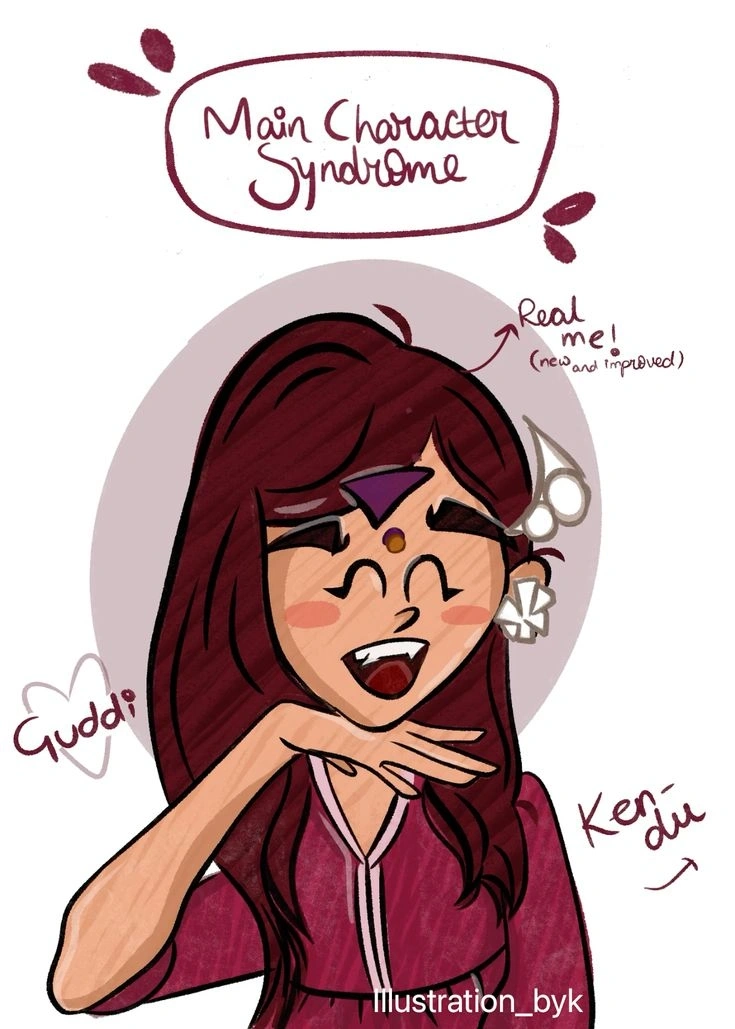
Tired of romanticizing your life? Clinical psychologist Sonali Gupta shares why 'main character fatigue' is real and why it's okay to be un-aesthetic. I’m going to be honest with you. I’m exhausted. Not the kind of exhausted that a weekend of sleeping in can fix, but the deep, existential fatigue ... Read full article.
Why I’m Quitting 'Main Character Energy' and Choosing to Just Exist
Tired of romanticizing your life? Clinical psychologist Sonali Gupta shares why 'main character fatigue' is real and why it's okay to be un-aesthetic.
Why I’m Resigning From Being the Main Character
I'm going to be honest with you. I'm exhausted. Not the kind of exhausted that a weekend of sleeping in can fix, but the deep, existential fatigue that comes from feeling like every moment of my life needs a curated soundtrack and a perfect color palette.
For the last couple of years, the internet has been obsessed with main character energy . We were told to romanticize our lives, to view our walk to the grocery store as a pivotal scene in a coming of age movie, and to make sure our morning coffee looked like a still from a high-budget film. At first, it felt like a fun way to practice mindfulness.
It was a tool to help us appreciate the small things.
But somewhere along the line, it stopped being a tool and started being a performance.
The Anxiety of Being Perceived
As a psychologist, I talk to people every day about the pressure of being perceived. We have become the directors, actors, and cinematographers of our own public personas. There is a specific kind of anxiety that comes with needing an aesthetic.
Whether it is cottagecore, dark academia, or whatever the latest core is, we are trying to fit our messy, human lives into neatly labeled boxes.
I see the toll this takes on our mental health. When you are the protagonist, everything that happens to you has to be meaningful. A bad day isn't just a bad day; it is a plot point.
A breakup isn't just a loss; it is a character arc.
This creates a relentless pressure to perform even when we are grieving, tired, or just plain bored.
We are effectively living in a panopticon of our own making.
The Luxury of Existing Unseen
Lately, I've been craving the opposite. I don't want to be the main character. I want to be the extra in the background who is blurry and probably wearing a stained sweatshirt.
I want to exist without being witnessed.
There is a profound freedom in being ugly .
I do not mean physically unattractive, though that is fine too.
I mean the ugliness of a life that isn't optimized for a screen.
The piles of laundry, the five-day-old hair, the hours spent staring at a wall because your brain is fried. These moments aren't cinematic. They don't have a core.
They are just life.
Stop Telling Me to Romanticize Everything
We need to give ourselves permission to be boring. We need to stop the constant ego-checking that asks, how does this look to others, and start asking, how does this feel to me?
Authenticity isn't about finding the perfect filter to show your real self. It is about being okay with the fact that some parts of your life are totally un-sharable and utterly mundane.
If you're feeling that same fatigue, here is your official permission to quit the lead role.
Sleep in. Wear the mismatched socks.
Let your life be a mess without trying to turn it into a metaphor. Sometimes, the most radical act of self-care is simply allowing yourself to exist, un-aesthetic and un-observed.
Login to comment.
More Like This
Love this! #mentalhealth
Why I’m Quitting 'Main Character Energy' and Choosing to Just Exist
Tired of romanticizing your life? Clinical psychologist Sonali Gupta shares why 'main character fatigue' is real and why it's okay to be un-aesthetic.
Login to reply.
No thots yet. Be the first to share your thoughts!
Stop chasing the big life. Priyanka Dutta shares how existential minimalism and choosing fewer goals became her ultimate therapy for finding clarity and peace. I spent years convinced that my life had to be a grand narrative. Every job choice, every hobby, and even every brunch order felt like a ... Read full article.
The Relief of Realizing the Universe Does Not Care About Your Career
Stop chasing the big life. Priyanka Dutta shares how existential minimalism and choosing fewer goals became her ultimate therapy for finding clarity …
Stop chasing the big life. Priyanka Dutta shares how existential minimalism and choosing fewer goals became her ultimate therapy for finding clarity and peace.
The Beauty of Being Unimportant
I spent years convinced that my life had to be a grand narrative. Every job choice, every hobby, and even every brunch order felt like a brick in the monument of my identity. I was exhausted by the pressure of being a main character in a movie that nobody was actually watching.
The weight of potential was a backpack full of stones I never asked to carry.
Everything changed when I looked at the stars and realized something incredibly soothing.
The universe does not care about my career path.
It does not care if I am a corporate executive or if I spend my Tuesday afternoons watching squirrels in the park.
This might sound nihilistic to some people, but to me, it was pure therapy.
This realization is the foundation of what I call existential minimalism.
Choosing Less Meaning Noise
Most self-help advice tells us to aim higher, go bigger, and manifest a life of abundance. We are taught to pack our schedules and our souls with meaning. We are told that if we are not constantly growing, we are dying.
But what if we chose less meaning noise?
What if we opted for fewer goals rather than bigger ones?
Existential minimalism is not just about cleaning out a junk drawer or owning fewer shirts. It is about stripping away the pressure to be significant. It is about finding clarity in the small things that actually matter right now.
For me, that means trading a five-year plan for a very good cup of coffee and a quiet morning. It means admitting that most of the things I thought were essential were just background noise designed to keep me busy and anxious.
The Freedom of Less
When you stop trying to justify your existence through achievement, you finally start living.
You stop performing for a cosmic audience that is not there. You realize that you do not need to be somebody because you already exist, and that is plenty.
This shift in perspective has allowed me to curate my life like a small, quiet gallery. I am very picky about what I let in these days. I do not want a dozen side hustles.
I want one or two things that make me feel connected to the world. I do not want a huge network of professional contacts. I want a few friends who know exactly how I take my tea and when I need a walk.
Choosing less is not about being lazy or giving up. It is about being intentional.
It is about the relief of knowing that the stakes are actually very low.
If you fail, the galaxy keeps spinning. If you succeed, the galaxy keeps spinning. Since the outcome is the same for the universe, you might as well choose the path that feels light and clear for you.
Let go of the big life. Embrace the enough life. The silence that follows is where you finally find the person you were always meant to be.
Login to comment.
2 Thots
More Like This
The Relief of Realizing the Universe Does Not Care About Your Career
Stop chasing the big life. Priyanka Dutta shares how existential minimalism and choosing fewer goals became her ultimate therapy for finding clarity …
Login to reply.
No thots yet. Be the first to share your thoughts!
So relatable. #mentalhealth
I thought I would be a real adult by now. Instead, I am just tired and confused. Let's talk about the grief of realizing you can't be everything at once. I woke up recently with a very specific, itchy kind of dread. It is the feeling of being twenty-eight years old and realizing that I am somehow ... Read full article.
The Timeline Lied: Why Being in Your Late 20s Feels Like a Mid-Life Crisis
I thought I would be a real adult by now. Instead, I am just tired and confused. Let's talk about the grief of realizing you can't be everything at o…
I thought I would be a real adult by now. Instead, I am just tired and confused. Let's talk about the grief of realizing you can't be everything at once.
The Everything Crisis: Why Choosing a Path is So Terrifying
I woke up recently with a very specific, itchy kind of dread. It is the feeling of being twenty-eight years old and realizing that I am somehow both a child and a senior citizen at the same time. I still feel like I need an adult to help me make a doctor appointment, yet I also feel like the window for becoming a world-renowned prodigy has officially slammed shut.
We were sold a very specific lie about how time works. The timeline promised us that by the time we hit our late twenties, we would be fully realized humans. We were supposed to have the career, the signature scent, the aesthetic apartment, and a clear sense of direction.
Instead, most of us are just standing in the middle of the woods, holding a map that is written in a language we do not speak.
The Grief of the Unlived Life
My bio used to be a laundry list of potential.
I wanted to be a writer, a traveler, a polyglot, and maybe a professional baker on the side.
But late twenties anxiety is really just the brutal realization that you cannot be everything anymore.
When you are twenty, your life is a series of open doors. When you hit your late twenties, you realize that to actually walk through one door, you have to let the others close.
Choosing a path is terrifying because it requires a funeral for all the other versions of yourself that you planned to be. I am mourning the Sophie who lived in Paris and the Sophie who became a high-powered executive. It is a single-entry cafe with a limited menu.
Why We Feel So Old (and So Young)
There is a strange cognitive dissonance in being this age. I feel old because I see teenagers on TikTok using slang I have to Google, and I feel young because I still do not know how to properly buy a rug. We are caught in the middle of the transition from being people with potential to being people with a history.
Here is what I am learning:
- The timeline is a social construct designed to make us buy things we do not need.
- Not being everything is not a failure; it is a requirement of being a real person.
- Success is not a destination you reach by thirty; it is just the act of keep going.
I didn't become who I planned, and honestly, that is okay.
The girl I imagined when I was eighteen was a caricature of perfection. The person I am now is messy, anxious, and occasionally forgets to water her plants, but at least she is real.
If you are feeling behind, remember that the clock is fake.
We are all just figuring out how to be someone in a world that told us we had to be everyone.
Login to comment.
2 Thots
More Like This
So relatable. #mentalhealth
The Timeline Lied: Why Being in Your Late 20s Feels Like a Mid-Life Crisis
I thought I would be a real adult by now. Instead, I am just tired and confused. Let's talk about the grief of realizing you can't be everything at o…
Login to reply.
No thots yet. Be the first to share your thoughts!
Wow. #mentalhealth
The Loneliness of Always Being On: I Don't Want Connectivity
We are reachable 24/7 yet feel more invisible than ever. David Scott shares why he put his phone on Do Not Disturb for a month to escape the anxiety …
We are reachable 24/7 yet feel more invisible than ever. David Scott shares why he put his phone on Do Not Disturb for a month to escape the anxiety of read receipts and ghosting.
The Loneliness of the Always On
I used to be a bio-engineer. In that world, everything is about feedback loops. You send a signal, you wait for a response, and you measure the latency.
If a sensor does not ping back, the system is failing. But after leaving the lab to explore the intersection of science and spirituality, I realized we have turned our social lives into a high-stakes engineering project that is making us miserable.
We live in an era where we are reachable every second of the day.
Our pockets buzz with the collective weight of every person we have ever met. And yet, I have never felt more invisible.
It is a strange paradox.
You can have five hundred friends online and still feel like you are shouting into an empty canyon.
The Terror of the Blue Checkmark
Nothing triggers a modern identity crisis quite like the read receipt. You send a vulnerable text, maybe an invitation or a joke, and then you see those tiny blue checks. The person on the other end has seen your soul, or at least your message, and they have chosen silence.
In my engineering days, I would call this a packet loss. In my human days, it feels like a rejection of my existence.
We sit there, staring at the screen, wondering if we are annoying, boring, or just forgotten.
This constant accessibility has not actually made us closer.
It has just made the silence feel much louder.
Why I Went Dark for Thirty Days
Last month, I decided to run an experiment on my own nervous system. I turned on Do Not Disturb and I did not turn it off for thirty days. I whitelisted my mom and my partner, and everyone else was left in the digital waiting room.
At first, the FOMO was a physical ache. I felt like I was drifting away from the world. I kept checking my phone out of habit, expecting a mountain of missed calls that never actually came.
That was the most humbling part of the process. I realized that being reachable 24/7 was a burden I had placed on myself, not a requirement from the world.
Reclaiming the Space Between
By the second week, something shifted.
The anxiety of the unread message began to fade.
Without the constant pings, my brain started to find its own rhythm again.
I stopped worrying about ghosting because I was no longer waiting for a ghost to appear in my notifications.
I found that silence is not the absence of connection. It is the space where real connection actually grows. When I finally met friends in person, I had things to tell them because I had not already broadcasted my life in real-time.
We had a conversation instead of a status update.
The Spirit in the Machine
We are not built to be sensors in a global network. We are biological beings that require rest, mystery, and a bit of unavailability.
My month of silence taught me that I do not owe the world my immediate attention.
Reclaiming my time was not about being rude; it was about being present for myself.
If you feel like you are drowning in the noise, try hitting that moon icon for a while. The world will not stop turning, but your head might finally stop spinning.
Login to comment.
2 Thots
More Like This
Wow. #mentalhealth
The Loneliness of Always Being On: I Don't Want Connectivity
We are reachable 24/7 yet feel more invisible than ever. David Scott shares why he put his phone on Do Not Disturb for a month to escape the anxiety …
Login to reply.
No thots yet. Be the first to share your thoughts!
Stop trying to meditate your way out of a burning building. Shivam Bhatia breaks down why the grit movement is actually hurting our mental health. I spend a lot of my time as an MA student buried in old books, specifically tracing how ancient Stoicism somehow ended up as the unofficial religion of ... Read full article.
Your Resilience is Making You Miserable: Why Modern Stoicism is Gaslighting You
Stop trying to meditate your way out of a burning building. Shivam Bhatia breaks down why the grit movement is actually hurting our mental health.
The Grit Trap: Why Your Stoic Boss is Gaslighting You
I spend a lot of my time as an MA student buried in old books, specifically tracing how ancient Stoicism somehow ended up as the unofficial religion of Silicon Valley. It is wild to me. You see these optimization gurus quoting Marcus Aurelius while drinking expensive coffee, telling you that your stress is just a lack of perspective.
But here is the thing: the keep calm and carry on mantra has become a form of institutional gaslighting.
The Rise of the Bio-Hacked Sage
In my research, I have seen a massive shift in how we talk about resilience. It used to be a community trait, a way for people to support each other through hardship. Now? It is a performance metric.
In the startup world, Stoicism has been stripped of its ethics and turned into a toolkit for being a more efficient cog in the machine.
If you are burnt out, the advice is rarely to change the conditions of your work.
Instead, you are told to practice mindfulness or build grit.
This shifts the entire burden of a broken system onto your individual shoulders. It suggests that the problem is not the crumbling economy or the impossible housing market, but rather your failure to be a perfectly calm statue.
Why Hyper-Resilience is Toxic
There is a specific kind of toxicity in hyper-resilience. When we tell people to stay positive and keep pushing through everything, we are effectively telling them to ignore their own nervous systems. Anger, sadness, and frustration are not bugs in the human software.
They are signals. They tell us when something is wrong, when a boundary has been crossed, or when the world around us is genuinely unfair.
By forcing ourselves into a state of constant calm, we lose the drive to change anything.
If you are never upset by the state of things, why would you ever try to fix them?
The ancient Stoics actually cared deeply about the common good, but the modern version wants you to focus solely on your own inner peace while the world outside is on fire.
We Deserve to be Upset
I want to give you permission to be absolutely furious about the world. You do not need more grit. You do not need to be more resilient.
Sometimes, the most healthy thing you can do is admit that things suck and that your reaction to them is completely valid.
We have to stop treating mental health like a personal optimization problem. We are human beings, not operating systems. If you feel like you are struggling to keep your head above water, it might just be because the water is too high, not because you are a bad swimmer.
Let us stop pretending that a meditation app can solve systemic exhaustion.
It is time to stop being so calm and start being a little more human.
Login to comment.
2 Thots
More Like This
i appreciate that this doesn't pretend one affirmation can fix years of insecurity. #mentalhealth
From Mirror Enemy to Self-Love: My Transformation Story
I used to hate my mirror, but now I’ve embraced self-love. Here's my journey from self-doubt to self-acceptance....
Yaar, sach bolun toh- main aur mera mirror pehle dushman the.
Literal toxic relationship.
Main usko dekhti thi... aur woh mujhe judge karta tha.
“Double chin aa gayi.”
“Under eyes full dark circles.”
“Tummy ka kya plan hai madam? Workout pal se shuru karna hai na? Kal kab aayega?”
Aur main bas “hmm” kar ke nikal jaati thi - jaise koi strict teacher ho jisko avoid karna hai.
Phir ek din I found my old journal from 2016.
Pages full of:
"Why do I look like this?"
"Everyone else is prettier."
"I hate my smile."
Cute, na?
Why am I so mean to myself? I want my 2025 wala journal.
It needs to be more like:
"I look tired but at least I showed up."
"Smiled at myself today. Progress."
"Wore jeans without crying. Growth!"
Kaise hoga yeh shift? Not with some magical “you are beautiful” affirmation bullshit.
Nahi. Yeh ho raha hai slow AF.
Started with random chhoti baatein , jaise mirror ke saamne "tu toh badi fine lag rahi hai aaj" bolna, even when I clearly looked like I hadn’t slept since 2019.
Also, I stopped following Insta models who drink celery juice and call it breakfast.
Bro, I can’t even digest doodh properly.
Ek aur pro tip:
Mirror selfies le. Not for likes, but for yourself.
Some days I look like a goddess. Other days?
Shrek in a kurti.
And BOTH are valid.
So yeah, yeh koi glow-up story nahi hai.
Yeh grow-up story hai.
Jahan main finally mirror ke saamne khade hokar bol sakti hoon:
"Tu chalti phirti anxiety ho sakti hai, lekin tu cute bhi hai."
Ab hum besties hain.
Me & my reflection.
Kabhi kabhi fight ho jaata hai… but we always make up. ❤️
#SelfLove #BodyPositivity #JournalingJourney #MentalHealth #PersonalGrowth
Login to comment.
7 Thots
More Like This
i appreciate that this doesn't pretend one affirmation can fix years of insecurity. #mentalhealth
From Mirror Enemy to Self-Love: My Transformation Story
I used to hate my mirror, but now I’ve embraced self-love. Here's my journey from self-doubt to self-acceptance....
Login to reply.
No thots yet. Be the first to share your thoughts!
This explains why people are turning to AI for comfort, not just answers.!!! #mentalhealth
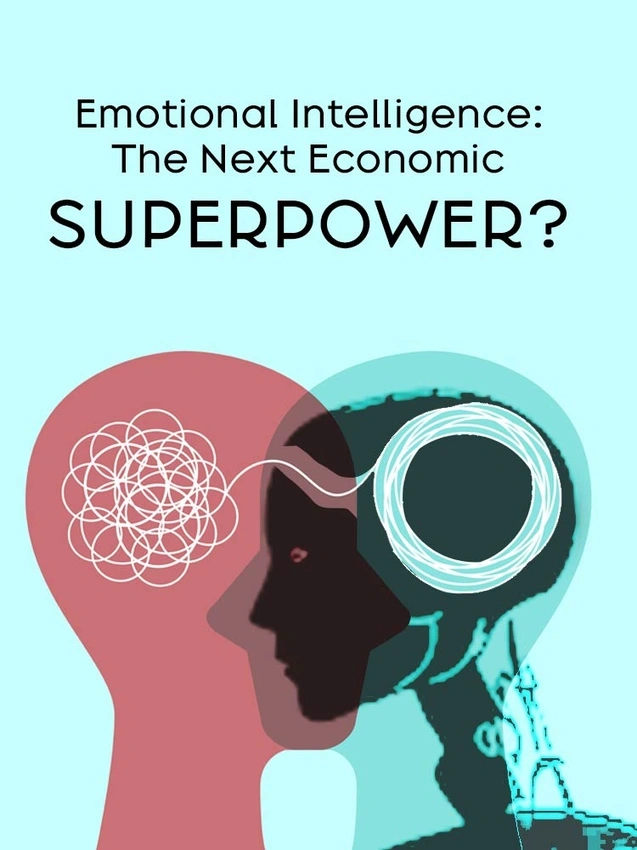
Is Emotional Intelligence the Next Economic Superpower?
ChatGPT is becoming the hyper-personalized empathetic AI, rising among the ashes of cultural exhaustion from social media, making it the most valuabl…
ChatGPT is becoming the hyper-personalized empathetic AI, rising among the ashes of cultural exhaustion from social media, making it the most valuable agent.
Every app you open reminds you of what you’re not. Social media constantly makes you feel lesser. I feel less fashionable and less sexy on Instagram, less successful on LinkedIn, less knowledgable on X.... Everywhere else, you’re just not enough. Companies like OpenAI are banking on the fact that:
We Don't Need More Content. We Need to Be Understood.
Through encouraging hyper-personalized interactions, Chat-GPT has become a friend to Gen-Z, a therapist to millennials, even a parent to Gen-alp, which is making it an unprecedented economic success even as other AI models excel more than ChatGPT on other tasks.
Social media made us feel inadequate. AI is making us feel seen. The future belongs to whatever technology can understand us, not just outperform us.
AI: From Algorithmic Broadcasts to Private Conversations
We’ve spent a decade drowning in comparison-driven platforms, designed to reduce humans to metrics and turn self-worth into a leaderboard. The result is a culture that’s wildly connected but emotionally bankrupt. We're overinformed, overstimulated, and underseen.
So it’s not surprising that the most successful AI product in history doesn’t try to impress us.
It tries to understand us.
The Age of Empathic Technology
OpenAI’s ChatGPT isn’t the smartest tool. It’s not the fastest. In many benchmarks, it’s not even the most accurate. But it just started to feel the most human.
That’s why people are using it for things they’ve never asked Google, Bing, or Alexa:
- “Help me prepare for a breakup.”
- “Why am I so anxious on Sundays?”
- “Can you explain why I should care about my essay?”
The product-market fit is emotional. ChatGPT isn’t winning by outperforming. It’s winning by relating. And in a world full of cold algorithms, warmth just became a business model.
We Don't Need More Content. We Need to Be Understood.
The internet is saturated. More news. More ads. More podcasts. More posts. More content. More takes.
But what we’re starved for isn’t novelty, it’s meaning.
That’s what makes hyper-personalized AI feel so intimate, even addictive. It doesn't just deliver information. It delivers recognition. It mirrors your tone,tracks your preferences. It remembers what you said yesterday, and answers you like it cares.
For a generation raised on feed-based platforms that never listened back, this is quietly revolutionary.
Emotional Intelligence is the Next UX Frontier
What OpenAI seems to understand, and what its competitors often miss, is that the future isn’t just technical. It’s relational.
- The most valuable AI won’t be the one that codes best.
- It’ll be the one that talks you through imposter syndrome.
- It’ll help you write a resume and rewrite your self-image.
- It’ll explain geopolitics and why your mom never says “I’m proud of you.”
This isn’t soft. This is strategic.
The people who decide the future of AI should understand that AI needs EQ benchmarks now, not IQ.
From Performative Platforms to Intimate Interfaces
Social media gave us an audience. AI gives us a mirror. It’s not about broadcasting. It’s about bonding. Or brooding!!
That’s why the next trillion-dollar companies won’t just be making tools. They’ll be making companions. (And what else will we need when we're all jobless anyway?!)
And that’s also why Gen Z, the most mentally ill and emotionally self-aware generation in history, is gravitating toward AI not just for productivity, but for personhood.
What if the Killer App Isn’t Smart, it’s Kind?
The irony is that while Silicon Valley chased superintelligence, what people needed was super empathy. The technology that cracks that, that learns to talk like a friend, listen like a therapist, and teach like a mentor, will own the decade.
Because in the end, the real economic superpower won’t be intelligence.
It’ll be whatever makes us feel a little less alone.
#SocialMediaStruggles #MentalHealth #ChatGPT #GenZ #DigitalWellbeing

Login to comment.
8 Thots
More Like This
This explains why people are turning to AI for comfort, not just answers.!!! #mentalhealth
Is Emotional Intelligence the Next Economic Superpower?
ChatGPT is becoming the hyper-personalized empathetic AI, rising among the ashes of cultural exhaustion from social media, making it the most valuabl…
Login to reply.
No thots yet. Be the first to share your thoughts!
Social media comparison is exhausting. The shift toward more private digital conversations makes sense. #mentalhealth
Is Emotional Intelligence the Next Economic Superpower?
ChatGPT is becoming the hyper-personalized empathetic AI, rising among the ashes of cultural exhaustion from social media, making it the most valuabl…
ChatGPT is becoming the hyper-personalized empathetic AI, rising among the ashes of cultural exhaustion from social media, making it the most valuable agent.
Every app you open reminds you of what you’re not. Social media constantly makes you feel lesser. I feel less fashionable and less sexy on Instagram, less successful on LinkedIn, less knowledgable on X.... Everywhere else, you’re just not enough. Companies like OpenAI are banking on the fact that:
We Don't Need More Content. We Need to Be Understood.
Through encouraging hyper-personalized interactions, Chat-GPT has become a friend to Gen-Z, a therapist to millennials, even a parent to Gen-alp, which is making it an unprecedented economic success even as other AI models excel more than ChatGPT on other tasks.
Social media made us feel inadequate. AI is making us feel seen. The future belongs to whatever technology can understand us, not just outperform us.
AI: From Algorithmic Broadcasts to Private Conversations
We’ve spent a decade drowning in comparison-driven platforms, designed to reduce humans to metrics and turn self-worth into a leaderboard. The result is a culture that’s wildly connected but emotionally bankrupt. We're overinformed, overstimulated, and underseen.
So it’s not surprising that the most successful AI product in history doesn’t try to impress us.
It tries to understand us.
The Age of Empathic Technology
OpenAI’s ChatGPT isn’t the smartest tool. It’s not the fastest. In many benchmarks, it’s not even the most accurate. But it just started to feel the most human.
That’s why people are using it for things they’ve never asked Google, Bing, or Alexa:
- “Help me prepare for a breakup.”
- “Why am I so anxious on Sundays?”
- “Can you explain why I should care about my essay?”
The product-market fit is emotional. ChatGPT isn’t winning by outperforming. It’s winning by relating. And in a world full of cold algorithms, warmth just became a business model.
We Don't Need More Content. We Need to Be Understood.
The internet is saturated. More news. More ads. More podcasts. More posts. More content. More takes.
But what we’re starved for isn’t novelty, it’s meaning.
That’s what makes hyper-personalized AI feel so intimate, even addictive. It doesn't just deliver information. It delivers recognition. It mirrors your tone,tracks your preferences. It remembers what you said yesterday, and answers you like it cares.
For a generation raised on feed-based platforms that never listened back, this is quietly revolutionary.
Emotional Intelligence is the Next UX Frontier
What OpenAI seems to understand, and what its competitors often miss, is that the future isn’t just technical. It’s relational.
- The most valuable AI won’t be the one that codes best.
- It’ll be the one that talks you through imposter syndrome.
- It’ll help you write a resume and rewrite your self-image.
- It’ll explain geopolitics and why your mom never says “I’m proud of you.”
This isn’t soft. This is strategic.
The people who decide the future of AI should understand that AI needs EQ benchmarks now, not IQ.
From Performative Platforms to Intimate Interfaces
Social media gave us an audience. AI gives us a mirror. It’s not about broadcasting. It’s about bonding. Or brooding!!
That’s why the next trillion-dollar companies won’t just be making tools. They’ll be making companions. (And what else will we need when we're all jobless anyway?!)
And that’s also why Gen Z, the most mentally ill and emotionally self-aware generation in history, is gravitating toward AI not just for productivity, but for personhood.
What if the Killer App Isn’t Smart, it’s Kind?
The irony is that while Silicon Valley chased superintelligence, what people needed was super empathy. The technology that cracks that, that learns to talk like a friend, listen like a therapist, and teach like a mentor, will own the decade.
Because in the end, the real economic superpower won’t be intelligence.
It’ll be whatever makes us feel a little less alone.
#SocialMediaStruggles #MentalHealth #ChatGPT #GenZ #DigitalWellbeing

Login to comment.
8 Thots
More Like This
Social media comparison is exhausting. The shift toward more private digital conversations makes sense. #mentalhealth
Is Emotional Intelligence the Next Economic Superpower?
ChatGPT is becoming the hyper-personalized empathetic AI, rising among the ashes of cultural exhaustion from social media, making it the most valuabl…
Login to reply.
No thots yet. Be the first to share your thoughts!
The Loneliness of Always Being On: I Don't Want Connectivity
We are reachable 24/7 yet feel more invisible than ever. David Scott shares why he put his phone on Do Not Disturb for a month to escape the anxiety …
We are reachable 24/7 yet feel more invisible than ever. David Scott shares why he put his phone on Do Not Disturb for a month to escape the anxiety of read receipts and ghosting.
The Loneliness of the Always On
I used to be a bio-engineer. In that world, everything is about feedback loops. You send a signal, you wait for a response, and you measure the latency.
If a sensor does not ping back, the system is failing. But after leaving the lab to explore the intersection of science and spirituality, I realized we have turned our social lives into a high-stakes engineering project that is making us miserable.
We live in an era where we are reachable every second of the day.
Our pockets buzz with the collective weight of every person we have ever met. And yet, I have never felt more invisible.
It is a strange paradox.
You can have five hundred friends online and still feel like you are shouting into an empty canyon.
The Terror of the Blue Checkmark
Nothing triggers a modern identity crisis quite like the read receipt. You send a vulnerable text, maybe an invitation or a joke, and then you see those tiny blue checks. The person on the other end has seen your soul, or at least your message, and they have chosen silence.
In my engineering days, I would call this a packet loss. In my human days, it feels like a rejection of my existence.
We sit there, staring at the screen, wondering if we are annoying, boring, or just forgotten.
This constant accessibility has not actually made us closer.
It has just made the silence feel much louder.
Why I Went Dark for Thirty Days
Last month, I decided to run an experiment on my own nervous system. I turned on Do Not Disturb and I did not turn it off for thirty days. I whitelisted my mom and my partner, and everyone else was left in the digital waiting room.
At first, the FOMO was a physical ache. I felt like I was drifting away from the world. I kept checking my phone out of habit, expecting a mountain of missed calls that never actually came.
That was the most humbling part of the process. I realized that being reachable 24/7 was a burden I had placed on myself, not a requirement from the world.
Reclaiming the Space Between
By the second week, something shifted.
The anxiety of the unread message began to fade.
Without the constant pings, my brain started to find its own rhythm again.
I stopped worrying about ghosting because I was no longer waiting for a ghost to appear in my notifications.
I found that silence is not the absence of connection. It is the space where real connection actually grows. When I finally met friends in person, I had things to tell them because I had not already broadcasted my life in real-time.
We had a conversation instead of a status update.
The Spirit in the Machine
We are not built to be sensors in a global network. We are biological beings that require rest, mystery, and a bit of unavailability.
My month of silence taught me that I do not owe the world my immediate attention.
Reclaiming my time was not about being rude; it was about being present for myself.
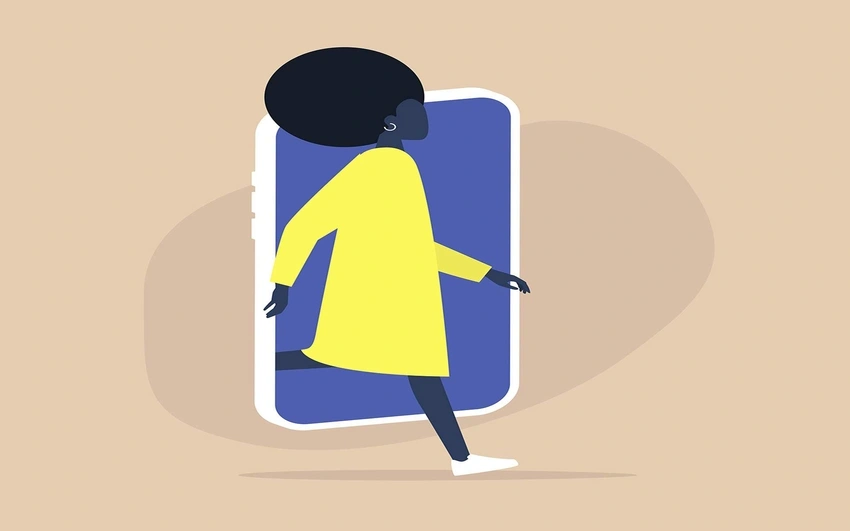
If you feel like you are drowning in the noise, try hitting that moon icon for a while. The world will not stop turning, but your head might finally stop spinning.
Login to comment.
2 Thots
More Like This
Tired of romanticizing your life? Clinical psychologist Sonali Gupta shares why 'main character fatigue' is real and why it's okay to be un-aesthetic. I’m going to be honest with you. I’m exhausted. Not the kind of exhausted that a weekend of sleeping in can fix, but the deep, existential fatigue ... Read full article.
Why I’m Quitting 'Main Character Energy' and Choosing to Just Exist
Tired of romanticizing your life? Clinical psychologist Sonali Gupta shares why 'main character fatigue' is real and why it's okay to be un-aesthetic.
Why I’m Resigning From Being the Main Character
I'm going to be honest with you. I'm exhausted. Not the kind of exhausted that a weekend of sleeping in can fix, but the deep, existential fatigue that comes from feeling like every moment of my life needs a curated soundtrack and a perfect color palette.
For the last couple of years, the internet has been obsessed with main character energy . We were told to romanticize our lives, to view our walk to the grocery store as a pivotal scene in a coming of age movie, and to make sure our morning coffee looked like a still from a high-budget film. At first, it felt like a fun way to practice mindfulness.
It was a tool to help us appreciate the small things.
But somewhere along the line, it stopped being a tool and started being a performance.
The Anxiety of Being Perceived
As a psychologist, I talk to people every day about the pressure of being perceived. We have become the directors, actors, and cinematographers of our own public personas. There is a specific kind of anxiety that comes with needing an aesthetic.
Whether it is cottagecore, dark academia, or whatever the latest core is, we are trying to fit our messy, human lives into neatly labeled boxes.
I see the toll this takes on our mental health. When you are the protagonist, everything that happens to you has to be meaningful. A bad day isn't just a bad day; it is a plot point.
A breakup isn't just a loss; it is a character arc.
This creates a relentless pressure to perform even when we are grieving, tired, or just plain bored.
We are effectively living in a panopticon of our own making.
The Luxury of Existing Unseen
Lately, I've been craving the opposite. I don't want to be the main character. I want to be the extra in the background who is blurry and probably wearing a stained sweatshirt.
I want to exist without being witnessed.
There is a profound freedom in being ugly .
I do not mean physically unattractive, though that is fine too.
I mean the ugliness of a life that isn't optimized for a screen.
The piles of laundry, the five-day-old hair, the hours spent staring at a wall because your brain is fried. These moments aren't cinematic. They don't have a core.
They are just life.
Stop Telling Me to Romanticize Everything
We need to give ourselves permission to be boring. We need to stop the constant ego-checking that asks, how does this look to others, and start asking, how does this feel to me?
Authenticity isn't about finding the perfect filter to show your real self. It is about being okay with the fact that some parts of your life are totally un-sharable and utterly mundane.
If you're feeling that same fatigue, here is your official permission to quit the lead role.
Sleep in. Wear the mismatched socks.
Let your life be a mess without trying to turn it into a metaphor. Sometimes, the most radical act of self-care is simply allowing yourself to exist, un-aesthetic and un-observed.
Login to comment.
More Like This
We are told to follow our passion, but what happens when that passion starts to feel like a chore? Here is my story of losing and finding my creative spark. I remember the exact moment I realized I did not want to pick up a paintbrush. It was a Tuesday afternoon. I had three commissions due, an ... Read full article.
Why Making My Hobby My Job Almost Killed My Love for Art
We are told to follow our passion, but what happens when that passion starts to feel like a chore? Here is my story of losing and finding my creative…
We are told to follow our passion, but what happens when that passion starts to feel like a chore? Here is my story of losing and finding my creative spark.
The Day the Colors Faded
I remember the exact moment I realized I did not want to pick up a paintbrush. It was a Tuesday afternoon. I had three commissions due, an inbox full of requests, and a sinking feeling in my chest that felt a lot like boredom mixed with dread.
For someone who built their entire identity around being an artist, this was terrifying. I used to be the girl who couldn't wait to get home and paint. Suddenly, the thought of opening a tube of acrylics felt like doing my taxes.
When the Hobby Becomes a Hustle
There is this popular saying that if you do what you love, you will never work a day in your life.
I hate to be the bearer of bad news, but that is a total lie.
When you turn a hobby into a job, the stakes change.
Suddenly, your peace and joy are tied to a deadline.
Your expression is filtered through what a client wants or what the algorithm might like.

I used to paint because I needed to. I used to explore the world through colors because it was the only way I knew how to process my emotions. But when my rent started depending on my creativity, the pressure turned from a motivator into a massive joy killer.
I was not creating for myself anymore. I was producing a product. The art was no longer about peace; it was about performance.
The Identity Crisis
The hardest part of burnout was not the lack of art.
It was the loss of identity. If Mikayla Thompson is not the artist, then who is she?
I felt like a fraud. Every time someone asked me what I was working on, I felt a pang of guilt. I stayed away from my studio for weeks, hoping the spark would just magically reappear.
It did not.
I had to realize that I had squeezed my passion so hard for profit that I had suffocated it.
Finding the Way Back
I had to learn that it is okay to create something ugly.
It is okay to create something that nobody ever sees.
I started doing what I call garbage art.
I grab a cheap notebook and scribble with crayons or markers. No goals. No pressure.
No Instagram posts.
Just me and some messy lines.
If you are in the middle of a creative burnout, please know you are not alone. Your worth is not defined by your productivity, even if your career is based on it.
Sometimes, the most creative thing you can do is put the tools down and just breathe.
We need to remember that we are people first and creators second.
The joy is still there; it might just be hiding under a pile of expectations.
Login to comment.
2 Thots
More Like This
Stop chasing the big life. Priyanka Dutta shares how existential minimalism and choosing fewer goals became her ultimate therapy for finding clarity and peace. I spent years convinced that my life had to be a grand narrative. Every job choice, every hobby, and even every brunch order felt like a ... Read full article.
The Relief of Realizing the Universe Does Not Care About Your Career
Stop chasing the big life. Priyanka Dutta shares how existential minimalism and choosing fewer goals became her ultimate therapy for finding clarity …
Stop chasing the big life. Priyanka Dutta shares how existential minimalism and choosing fewer goals became her ultimate therapy for finding clarity and peace.
The Beauty of Being Unimportant
I spent years convinced that my life had to be a grand narrative. Every job choice, every hobby, and even every brunch order felt like a brick in the monument of my identity. I was exhausted by the pressure of being a main character in a movie that nobody was actually watching.
The weight of potential was a backpack full of stones I never asked to carry.
Everything changed when I looked at the stars and realized something incredibly soothing.
The universe does not care about my career path.
It does not care if I am a corporate executive or if I spend my Tuesday afternoons watching squirrels in the park.
This might sound nihilistic to some people, but to me, it was pure therapy.
This realization is the foundation of what I call existential minimalism.
Choosing Less Meaning Noise
Most self-help advice tells us to aim higher, go bigger, and manifest a life of abundance. We are taught to pack our schedules and our souls with meaning. We are told that if we are not constantly growing, we are dying.
But what if we chose less meaning noise?
What if we opted for fewer goals rather than bigger ones?
Existential minimalism is not just about cleaning out a junk drawer or owning fewer shirts. It is about stripping away the pressure to be significant. It is about finding clarity in the small things that actually matter right now.
For me, that means trading a five-year plan for a very good cup of coffee and a quiet morning. It means admitting that most of the things I thought were essential were just background noise designed to keep me busy and anxious.
The Freedom of Less
When you stop trying to justify your existence through achievement, you finally start living.
You stop performing for a cosmic audience that is not there. You realize that you do not need to be somebody because you already exist, and that is plenty.
This shift in perspective has allowed me to curate my life like a small, quiet gallery. I am very picky about what I let in these days. I do not want a dozen side hustles.
I want one or two things that make me feel connected to the world. I do not want a huge network of professional contacts. I want a few friends who know exactly how I take my tea and when I need a walk.
Choosing less is not about being lazy or giving up. It is about being intentional.
It is about the relief of knowing that the stakes are actually very low.
If you fail, the galaxy keeps spinning. If you succeed, the galaxy keeps spinning. Since the outcome is the same for the universe, you might as well choose the path that feels light and clear for you.
Let go of the big life. Embrace the enough life. The silence that follows is where you finally find the person you were always meant to be.
Login to comment.
2 Thots
More Like This
I thought I would be a real adult by now. Instead, I am just tired and confused. Let's talk about the grief of realizing you can't be everything at once. I woke up recently with a very specific, itchy kind of dread. It is the feeling of being twenty-eight years old and realizing that I am somehow ... Read full article.
The Timeline Lied: Why Being in Your Late 20s Feels Like a Mid-Life Crisis
I thought I would be a real adult by now. Instead, I am just tired and confused. Let's talk about the grief of realizing you can't be everything at o…
I thought I would be a real adult by now. Instead, I am just tired and confused. Let's talk about the grief of realizing you can't be everything at once.
The Everything Crisis: Why Choosing a Path is So Terrifying
I woke up recently with a very specific, itchy kind of dread. It is the feeling of being twenty-eight years old and realizing that I am somehow both a child and a senior citizen at the same time. I still feel like I need an adult to help me make a doctor appointment, yet I also feel like the window for becoming a world-renowned prodigy has officially slammed shut.
We were sold a very specific lie about how time works. The timeline promised us that by the time we hit our late twenties, we would be fully realized humans. We were supposed to have the career, the signature scent, the aesthetic apartment, and a clear sense of direction.
Instead, most of us are just standing in the middle of the woods, holding a map that is written in a language we do not speak.
The Grief of the Unlived Life
My bio used to be a laundry list of potential.
I wanted to be a writer, a traveler, a polyglot, and maybe a professional baker on the side.
But late twenties anxiety is really just the brutal realization that you cannot be everything anymore.
When you are twenty, your life is a series of open doors. When you hit your late twenties, you realize that to actually walk through one door, you have to let the others close.
Choosing a path is terrifying because it requires a funeral for all the other versions of yourself that you planned to be. I am mourning the Sophie who lived in Paris and the Sophie who became a high-powered executive. It is a single-entry cafe with a limited menu.
Why We Feel So Old (and So Young)
There is a strange cognitive dissonance in being this age. I feel old because I see teenagers on TikTok using slang I have to Google, and I feel young because I still do not know how to properly buy a rug. We are caught in the middle of the transition from being people with potential to being people with a history.
Here is what I am learning:
- The timeline is a social construct designed to make us buy things we do not need.
- Not being everything is not a failure; it is a requirement of being a real person.
- Success is not a destination you reach by thirty; it is just the act of keep going.
I didn't become who I planned, and honestly, that is okay.
The girl I imagined when I was eighteen was a caricature of perfection. The person I am now is messy, anxious, and occasionally forgets to water her plants, but at least she is real.
If you are feeling behind, remember that the clock is fake.
We are all just figuring out how to be someone in a world that told us we had to be everyone.
Login to comment.
2 Thots
More Like This
Pranav Saxena explores the paradox of Gen-Z emotional exhibitionism. Why do we livestream our breakdowns while burying the secrets that actually define us? We exist in a strange, liminal space where the private has become public and the public has become a performance. As a generation, we are often ... Read full article.
The Architecture of Silence: Why We Curate Our Shame for the Void
Pranav Saxena explores the paradox of Gen-Z emotional exhibitionism. Why do we livestream our breakdowns while burying the secrets that actually defi…
Pranav Saxena explores the paradox of Gen-Z emotional exhibitionism. Why do we livestream our breakdowns while burying the secrets that actually define us?
The Architecture of Silence
We exist in a strange, liminal space where the private has become public and the public has become a performance. As a generation, we are often accused of oversharing. We post our tear-streaked faces on social media and narrate our psychiatric diagnoses like badges of honor.
Yet, despite this constant stream of confession, there is a distinct difference between being seen and being known. We have become part-time emotional exhibitionists, showcasing the aesthetic parts of our pain while the core of our shame remains tucked away in the shadows of our psyche.
The Anatomy of the Unspoken
Shame is a viscous fluid. It fills the gaps between our words and hardens in the presence of silence. I have spent years building a brand around overthinking, yet I realized recently that I have been carefully curating which thoughts I allowed to escape.
There is always the thing I never tell people.
It is the skeletal remains of a mistake or a perceived inadequacy that I fear would crumble my digital effigy if it were ever exposed.
Friedrich Nietzsche once suggested that whoever fights monsters should see to it that in the process he does not become a monster. In our quest to destigmatize mental health, have we inadvertently turned our trauma into a commodity? We share the versions of our vulnerability that are most likely to garner sympathy, leaving the truly ugly, messy parts to rot in the dark.
The Exhibitionist’s Dilemma
Is it healing if it is performed for an audience? This is the question that haunts the modern intellectual. When I speak about my secrets now, I wonder if I am seeking catharsis or merely engagement.
To say the thing out loud is a radical act of self-reclamation, but only if the motive is internal.
Shame thrives in silence because silence suggests that the thing is unspeakable. By refusing to voice our deepest insecurities, we grant them a sovereign power over our lives. We become architects of our own prisons, decorating the cells with filtered photos and witty captions while the locks remain bolted from the inside.
The Path Toward Radical Honesty
- Identify the internal censor that monitors your output.
- Distinguish between performative vulnerability and actual disclosure.
- Understand that healing is a private process that occasionally requires public witness.
I am learning to say it out loud not because I want to be watched, but because I want to be free. The existential dread of being found out is a heavy burden to carry into adulthood. If we are to be the generation that breaks the cycle of generational trauma, we must first be honest about the weight of the baggage we are carrying.
We must ask ourselves: what are we protecting by staying silent?
Are we protecting ourselves, or are we protecting a version of ourselves that never truly existed in the first place? The art of being human is found in the cracks of our carefully constructed masks.
It is time we let the light hit the parts we have spent a lifetime hiding.
Login to comment.
2 Thots
More Like This
I don't know who I am offline anymore: Life as an internet novel protagonist
I feel more at home online than offline and the internet shaped my personality. Is it weird?
The Blue Light Mirror: Reflections from a Chronically Online Student
It is currently four in the afternoon and the sun is already considering an early retirement. I am sitting in a quiet corner of the university library, my laptop is currently glowing with the familiar warmth of a dozen open tabs.
But when the screen goes black, I stare at my reflection and I dont recognize the person staring back. Or rather, I didn’t know how to be that person without an interface.

The Identity Blurring
As a sociology student, I spend a lot of time researching how digital communities impact loneliness. But lately, my research has felt less like a study and more like a mirror. My personality isn’t just influenced by the internet. It was built by it. The way I joke, the way I structure my thoughts, even the way I aestheticize my morning coffee for my study-gram, it all belongs to the digital ' realm'.
We often talk about our online lives as if they are a performance, a curated museum of our best moments. But for those of us who grew up in the glow, there is no backstage. The digital life is just as real as the physical one. When I lose my phone, I don't just lose a tool. I feel like I have lost a limb, or a part of my memory.
The Pressure of the Feed
Being an advocate for mental health means I have to be honest about the darker side of this integration. My feed is a collection of lake views and organized bookshelves, but the reality is often much messier. There is a constant pressure to translate every experience into something shareable.
If I go for a walk by the lake and don't take a photo of the mist, did I even see it? If I read a book and don't write a review, did the ideas actually take root? This is the burden of the modern condition. We have become the protagonists of our own internet novels, constantly narrating our lives for an invisible audience.
Finding a New Balance
I don’t think the answer is to delete our accounts and move to a cabin in the woods. That feels like a hollow solution for a generation that finds its soul in the comments section. Instead, we need to acknowledge that our digital identities are not fake. They are just another layer of who we are.
I am learning to exist in the silence between notifications. I am trying to read my books without thinking about the caption I will write later. It is hard work to unspool your personality from the algorithm, but it is necessary.
Our screens are not just windows. They are mirrors. And while the reflection might be filtered and brightly lit, the person standing behind it is still human, still lonely, and still searching for a connection that transcends the glass.
Login to comment.
4 Thots
More Like This
I was taught to suppress everything; but men need emotional language, not dominance. I spend my workdays teaching teenagers about empires, wars, and the men who led them. If you look at history through a certain lens, masculinity looks like a series of conquests. It is a long timeline of who held ... Read full article.
Unlearning masculinity is lonely
I was taught to suppress everything; but men need emotional language, not dominance.
The History of the Wall
I spend my workdays teaching teenagers about empires, wars, and the men who led them. If you look at history through a certain lens, masculinity looks like a series of conquests. It is a long timeline of who held the most land or who won the loudest argument.
Growing up, my own personal history followed a similar script. My dad did not give me a map for my feelings; he gave me a handbook for suppression. If you were hurt, you swallowed it. If you were sad, you went for a run until your lungs burned. I was taught that a man is a rock. The problem with being a rock is that rocks do not grow, they only erode.

The Vocabulary of Dominance
What does being a man mean anyway?
For a long time, I thought being a man meant being the most certain person in the room. I thought it meant taking up space and never admitting to a mistake. We are taught that our value lies in our ability to dominate our surroundings.
But here is what I have realized: dominance is a terrible substitute for connection.
When we rely on dominance, we lose the ability to actually speak to the people we love. We lack the emotional language to say, I am scared or I feel overwhelmed. Instead, we get angry. Anger is the only emotion society consistently gives men a pass for, so we use it as a Swiss Army knife for every problem. It is exhausting.
The Loneliness of the Rewrite
Unlearning this stuff is not some grand, cinematic transformation. Most of the time, it is just lonely. When you decide to stop playing the game of being the toughest guy in the group, some of your friends will not know what to do with you.
I have sat at bars with guys I have known for a decade and realized we have never actually said anything real to each other. When I try to bring up something deeper, the silence that follows can be deafening. It is a specific kind of isolation that comes when you decide to change the rules of the game while everyone else is still playing by the old ones.
Redefining the Strong Man
I am trying to build a new model of strength. It is a version of masculinity that is not about power over others, but power over oneself.
- Vulnerability is a skill. It requires more courage to be honest about your fears than it does to hide behind a mask of indifference.
- Empathy is a strength. Understanding someone else’s perspective does not make you weak; it makes you a better leader and partner.
- Healing is necessary. We carry generational baggage that we did not ask for, but it is our responsibility to unpack it.
I want my students to look at history and see more than just conquerors. I want them to see the thinkers, the healers, and the men who were brave enough to be soft. We do not need more dominance in this world. We need more men who are willing to finally say how they feel.
Login to comment.
More Like This
Is every bad mood a disorder? As a psych grad who spends way too much time annotating books, I am ready to talk about why we need fewer labels and more introspection. I have a messy habit. If you ever borrow one of my books, you will find it covered in scribbles, underlines, and random thoughts. To ... Read full article.
Why I Stopped Trying to Diagnose My Bad Days
Is every bad mood a disorder? As a psych grad who spends way too much time annotating books, I am ready to talk about why we need fewer labels and mo…
Is every bad mood a disorder? As a psych grad who spends way too much time annotating books, I am ready to talk about why we need fewer labels and more introspection.
The Problem With Giving Everything a Label
I have a messy habit. If you ever borrow one of my books, you will find it covered in scribbles, underlines, and random thoughts. To me, annotating is free therapy. It is my way of talking back to the world. As someone with a psychology degree, I spent years learning how to categorize the human mind. I learned the codes, the symptoms, and the criteria. But lately, I have started to feel like our labels are making us lose the plot.
We live in an era where we have replaced our feelings with clinical terms. Instead of saying we are sad, we say we are in a depressive episode. Instead of feeling nervous about a big life change, we call it a generalized anxiety disorder. Do not get me wrong, clinical diagnoses are life saving for many people. They provide a map when you are lost in the dark. But lately, it feels like we are trying to map out every single puddle we step in.
Sadness Is Not a Glitch
One of the biggest lessons I have learned from my margins and my studies is that sadness is not always a pathology. Sometimes, sadness is just the correct response to a difficult world. When we immediately slap a label on an emotion, we often stop looking for the meaning behind it. We treat the feeling like a chemical glitch to be fixed rather than a message to be heard.
If I feel empty after finishing a beautiful novel, that is not a symptom. That is a human response to a loss of connection. If I feel overwhelmed by the news, that is not always a disorder. It might just be my empathy working properly. When we use therapy language to describe every ebb and flow of our internal lives, we risk turning our existence into a medical checklist.
Reclaiming the Human Experience
I think we need to get comfortable with the gray areas again. Introspection is not about finding a name for your pain in a manual. It is about sitting with the discomfort and asking what it wants to tell you. My books are messy because life is messy. There is no perfect, clean way to be a person.
We should be allowed to be moody, or grieving, or simply out of sorts without feeling like we have broken some internal law of health. Let us trade the sterile labels for a bit more poetry. Sometimes, you do not need a diagnosis. You just need a quiet room, a pen, and the courage to feel something without trying to cure it.
Login to comment.
More Like This
Why Parasocial Relationships Feel Like Home
What happens when the people you follow feel more real than your actual friends? A sociology student explores identity, parasocial bonds, and the myt…
What happens when the people you follow feel more real than your actual friends? A sociology student explores identity, parasocial bonds, and the myth of the offline self.
Parasocial is Personal
One of the things I think about most is the weight of parasocial relationships. People often dismiss these connections as artificial because they are one-sided. But if you have ever felt a genuine sense of grief when a creator you admire goes through a hard time, you know that the feeling is actual.
In my research, I have seen how digital communities can be a lifeline for the lonely. We form bonds with people we will never meet, and we feel seen by creators who do not know our names. These relationships are not a replacement for physical human contact, but they are a valid addition to it. They shape how we see the world. They make us feel less alone in the quiet hours of the night.

The Persona and the Person
For a long time, we were told that the internet was just a tool. We were told that our actual lives happened in the physical world and our digital lives were just a distraction. But I do not think that is true. When I see the lives of people I follow online, it's similar to when we read books or a novel and get familiar with the characters. I am exploring a part of my identity that only exists in that space.

Why Parasocial Relationships Feel Like Home
There is a specific kind of guilt that comes with admitting you feel closer to a creator you have never met than to your actual neighbors. We call these parasocial relationships, and the term often carries a negative weight. It implies that we are delusional or desperate.
However, in my research, I see something different. These connections provide a sense of belonging that physical geography often fails to offer. When I listen to a podcast or follow a writer’s journey, I am engaging with a mind that shares my niche interests. My neighbors might be lovely people, but they aren't necessarily dissecting the nuances of contemporary literary fiction at three in the morning.
These online bonds are a lifeline against the quiet isolation of modern life. They are real because the emotions they trigger are real. When a digital community rallies around someone in need, the dopamine and the comfort are not virtual. They are felt in the physical body.
Login to comment.
4 Thots
More Like This
I relate to keeping feelings tucked away sometimes. #mentalhealth
Login to reply.
No thots yet. Be the first to share your thoughts!
Am I Actually Broken? The Persistent Myth of Feeling Like an Adult
At 40, I still feel like a teenager masquerading as a grown-up. If you're dreading your inbox or feeling behind at 30, let's talk about why you're ac…
At 40, I still feel like a teenager masquerading as a grown-up. If you're dreading your inbox or feeling behind at 30, let's talk about why you're actually doing just fine.
To Gen-Z: The View from the Other Side
If I could pass anything down to the next generation entering the fray, it would be this: Confidence is a performance, not a prerequisite.
- Nobody has the Map: That CEO or parent you admire is also winging it to some degree. Adulthood isn't about knowing what to do; it’s about becoming comfortable with the fact that you don't know, and deciding to move forward anyway.
- The "Ache" is Normal: Not the physical one (though, buy a good mattress now), but the existential one. Feeling like you’re behind is a universal trick of the mind.
- Protect Your Curiosity: The best part of feeling like you're still in your twenties at forty is that you haven't hardened. You can still learn, pivot, and fail.
You aren't broken. You’re just experiencing the human condition without the mid-century filter. Welcome to the heist; you’re doing better than you think.
I recently turned forty, and I have a confession.
I’m still waiting for the adult version of myself to show up. I have a mortgage, a retirement account, and a persistent ache in my lower back that appears if I sleep at a slightly rebellious angle. By every measurable metric of the 20th century, I am a fully realized grown-up. Yet, internally, I feel like a twenty-something who is simply pulling off a very long, very elaborate heist.
The Great Adulting Hoax
If you’re a Millennial feeling broken because you don’t feel like a real adult, you’re in good company. We were the last generation raised on the cinematic myth of the Stoic Adult, those 1950s-style parents who seemed to have every answer, every tool in the shed, and a permanent sense of certainty. We expected that at some point, a switch would flip, the imposter syndrome would vanish, and we’d suddenly understand how to navigate life with unwavering confidence.
But the switch doesn't exist. The Adulting Myth is just a byproduct of a more stable economic era.
The 20-Year-Old in the 40-Year-Old Mirror
Our parents' generation could hit traditional milestones, house, career, family, much earlier and more linearly. For us, the goalposts moved, the economy wobbled, and the digital world blurred the lines between youth and maturity. We’ve stayed "younger" longer because the traditional exits into adulthood were often barricaded.
Login to comment.
2 Thots
More Like This
Login to reply.
No thots yet. Be the first to share your thoughts!
Login to reply.
No thots yet. Be the first to share your thoughts!
Login to reply.
No thots yet. Be the first to share your thoughts!
Login to reply.
No thots yet. Be the first to share your thoughts!
Login to reply.
No thots yet. Be the first to share your thoughts!
Login to reply.
No thots yet. Be the first to share your thoughts!
Login to reply.
No thots yet. Be the first to share your thoughts!
Dating an avoidant partner: Three truths about dating someone with avoidant attachment: fear, distance, and healing together. #AvoidantAttachment #Relationships #MentalHealth
Dating an avoidant partner:
Three truths about dating someone with avoidant attachment: fear, distance, and healing together.
Login to reply.
12 Replies
Jim carrey's hidden battle: Jim Carrey opens up about his secret battle with depression during peak fame. #JimCarrey #MentalHealth #CelebrityNews
Jim carrey's hidden battle:
Jim Carrey opens up about his secret battle with depression during peak fame.
Login to reply.
14 Replies
the term flex usually means showing off, but this feels more like reclaiming your life. #mentalhealth
Forget the corner office. High achievers are walking away from the grind to find peace. Is quitting at the top the new symbol of success? For decades, the career ladder had one direction: up. We were told that success meant staying in the race until you reached the finish line, usually a corner ... Read full article.
Is Quitting Your Dream Job the New Power Move? Why Gen Z is Choosing Peace Over the Peak
Forget the corner office. High achievers are walking away from the grind to find peace. Is quitting at the top the new symbol of success?
The Anti-Ambition Shift: Why Quitting at the Top Is the New Flex
For decades, the career ladder had one direction: up. We were told that success meant staying in the race until you reached the finish line, usually a corner office or a massive payout. But there is a new movement brewing among today's high achievers. Instead of grinding until they break, people are choosing to walk away at the peak of their game. They are choosing mental peace over fame and quiet over constant noise.
The New Definition of Success
Gen Z and younger millennials are leading what some call the Anti-Ambition Shift. It is a radical reimagining of what it means to be successful. In this new world, success is not measured by your LinkedIn headline or the number of people reporting to you. Instead, it is measured by:
- Rest: How much time you have for yourself without checking your phone.
- Autonomy: Having the power to say no to a promotion that costs too much of your soul.
- Wellness: Prioritizing your nervous system over your net worth.
Leaving a high-status role when you are doing well is the ultimate power move. It sends a message that your identity is not tied to your job title. When you quit while you are still winning, you are proving that you own your life, rather than the corporate machine owning you.
Why Now?
We have seen enough burnout stories to know that the hustle culture promise is often a lie. High achievers have realized that the prize at the end of the marathon is often just another marathon. By stepping back at the top, they avoid the inevitable crash that follows years of chronic stress. This is not about being lazy; it is about being sustainable.
The Freedom to Walk Away
Choosing mental health over a high-stakes career is a sign of high emotional intelligence. It requires a deep level of self-awareness to recognize when the rewards of a job no longer outweigh the mental cost. We are moving toward a society where a gap year at age thirty is respected more than a burnout-induced breakdown at forty.
The flex is no longer about how hard you work. It is about how well you live. If walking away from a lucrative, high-pressure career means you get to sleep better and feel more present in your life, then you have already won the game.
Login to comment.
8 Thots
More Like This
the term flex usually means showing off, but this feels more like reclaiming your life. #mentalhealth
Is Quitting Your Dream Job the New Power Move? Why Gen Z is Choosing Peace Over the Peak
Forget the corner office. High achievers are walking away from the grind to find peace. Is quitting at the top the new symbol of success?
Login to reply.
No thots yet. Be the first to share your thoughts!
Quitting at the top takes so much courage. Respect to those dong it. #mentalhealth
Forget the corner office. High achievers are walking away from the grind to find peace. Is quitting at the top the new symbol of success? For decades, the career ladder had one direction: up. We were told that success meant staying in the race until you reached the finish line, usually a corner ... Read full article.
Is Quitting Your Dream Job the New Power Move? Why Gen Z is Choosing Peace Over the Peak
Forget the corner office. High achievers are walking away from the grind to find peace. Is quitting at the top the new symbol of success?
The Anti-Ambition Shift: Why Quitting at the Top Is the New Flex
For decades, the career ladder had one direction: up. We were told that success meant staying in the race until you reached the finish line, usually a corner office or a massive payout. But there is a new movement brewing among today's high achievers. Instead of grinding until they break, people are choosing to walk away at the peak of their game. They are choosing mental peace over fame and quiet over constant noise.
The New Definition of Success
Gen Z and younger millennials are leading what some call the Anti-Ambition Shift. It is a radical reimagining of what it means to be successful. In this new world, success is not measured by your LinkedIn headline or the number of people reporting to you. Instead, it is measured by:
- Rest: How much time you have for yourself without checking your phone.
- Autonomy: Having the power to say no to a promotion that costs too much of your soul.
- Wellness: Prioritizing your nervous system over your net worth.
Leaving a high-status role when you are doing well is the ultimate power move. It sends a message that your identity is not tied to your job title. When you quit while you are still winning, you are proving that you own your life, rather than the corporate machine owning you.
Why Now?
We have seen enough burnout stories to know that the hustle culture promise is often a lie. High achievers have realized that the prize at the end of the marathon is often just another marathon. By stepping back at the top, they avoid the inevitable crash that follows years of chronic stress. This is not about being lazy; it is about being sustainable.
The Freedom to Walk Away
Choosing mental health over a high-stakes career is a sign of high emotional intelligence. It requires a deep level of self-awareness to recognize when the rewards of a job no longer outweigh the mental cost. We are moving toward a society where a gap year at age thirty is respected more than a burnout-induced breakdown at forty.
The flex is no longer about how hard you work. It is about how well you live. If walking away from a lucrative, high-pressure career means you get to sleep better and feel more present in your life, then you have already won the game.
Login to comment.
8 Thots
More Like This
Quitting at the top takes so much courage. Respect to those dong it. #mentalhealth
Is Quitting Your Dream Job the New Power Move? Why Gen Z is Choosing Peace Over the Peak
Forget the corner office. High achievers are walking away from the grind to find peace. Is quitting at the top the new symbol of success?
Login to reply.
No thots yet. Be the first to share your thoughts!
I wonder if this will hurt their long-term career prospects though #mentalhealth
Forget the corner office. High achievers are walking away from the grind to find peace. Is quitting at the top the new symbol of success? For decades, the career ladder had one direction: up. We were told that success meant staying in the race until you reached the finish line, usually a corner ... Read full article.
Is Quitting Your Dream Job the New Power Move? Why Gen Z is Choosing Peace Over the Peak
Forget the corner office. High achievers are walking away from the grind to find peace. Is quitting at the top the new symbol of success?
The Anti-Ambition Shift: Why Quitting at the Top Is the New Flex
For decades, the career ladder had one direction: up. We were told that success meant staying in the race until you reached the finish line, usually a corner office or a massive payout. But there is a new movement brewing among today's high achievers. Instead of grinding until they break, people are choosing to walk away at the peak of their game. They are choosing mental peace over fame and quiet over constant noise.
The New Definition of Success
Gen Z and younger millennials are leading what some call the Anti-Ambition Shift. It is a radical reimagining of what it means to be successful. In this new world, success is not measured by your LinkedIn headline or the number of people reporting to you. Instead, it is measured by:
- Rest: How much time you have for yourself without checking your phone.
- Autonomy: Having the power to say no to a promotion that costs too much of your soul.
- Wellness: Prioritizing your nervous system over your net worth.
Leaving a high-status role when you are doing well is the ultimate power move. It sends a message that your identity is not tied to your job title. When you quit while you are still winning, you are proving that you own your life, rather than the corporate machine owning you.
Why Now?
We have seen enough burnout stories to know that the hustle culture promise is often a lie. High achievers have realized that the prize at the end of the marathon is often just another marathon. By stepping back at the top, they avoid the inevitable crash that follows years of chronic stress. This is not about being lazy; it is about being sustainable.
The Freedom to Walk Away
Choosing mental health over a high-stakes career is a sign of high emotional intelligence. It requires a deep level of self-awareness to recognize when the rewards of a job no longer outweigh the mental cost. We are moving toward a society where a gap year at age thirty is respected more than a burnout-induced breakdown at forty.
The flex is no longer about how hard you work. It is about how well you live. If walking away from a lucrative, high-pressure career means you get to sleep better and feel more present in your life, then you have already won the game.
Login to comment.
8 Thots
More Like This
I wonder if this will hurt their long-term career prospects though #mentalhealth
Is Quitting Your Dream Job the New Power Move? Why Gen Z is Choosing Peace Over the Peak
Forget the corner office. High achievers are walking away from the grind to find peace. Is quitting at the top the new symbol of success?
Login to reply.
No thots yet. Be the first to share your thoughts!
Sleep is the ultimate productivity hack, why do we keep trying to skip it? #mentalhealth
Rising at 4 AM to conquer the world sounds like a dream, but is it a productivity hack or a mental health nightmare? Let’s talk about the reality of the billionaire morning routine. Imagine the alarm blaring at 4:30 AM. While the rest of the world is deep in REM sleep, the modern mogul is already ... Read full article.
Is Your 4 AM Alarm Ruining Your Life? The Truth About the Billionaire Morning Routine
Rising at 4 AM to conquer the world sounds like a dream, but is it a productivity hack or a mental health nightmare? Let’s talk about the reality of …
Rising at 4 AM to conquer the world sounds like a dream, but is it a productivity hack or a mental health nightmare? Let’s talk about the reality of the billionaire morning routine.
The Pre-Dawn Pressure Cooker
Imagine the alarm blaring at 4:30 AM. While the rest of the world is deep in REM sleep, the modern mogul is already sipping black coffee and hitting the treadmill. It is a scene straight out of a high-performance handbook, promised as the secret sauce to building a global empire. By the time most people are reaching for their first snooze button, these early risers have completed a Pilates session, cleared their inbox, and supposedly gained extra hours that the rest of us simply cannot find.
But here is the question we need to ask: is this extreme discipline a genuine path to success, or is it just hustle culture disguised as wellness?
The Allure of Waking Up Early
There is no denying the psychological high of being awake before the sun. Proponents of the 4 AM club argue that this quiet window offers a level of focus that is impossible to achieve during normal business hours. For some, it is about physical and mental resilience. They claim that early movement and disciplined routines improve circulation, protect cognitive health, and keep energy levels high throughout the day. It creates a sense of staying ahead of the game, a feeling that you have a head start on your competition.
The Science of the Sleep Cycle
However, medical experts are increasingly raising red flags. Your nervous system does not actually care what time the clock shows when you wake up. What it cares about is consistent, restorative rest. For the average person, that means seven to eight hours of sleep. If you are waking up at 4 AM but did not get to bed until midnight, you are not being a visionary; you are just being sleep-deprived.
Forcing yourself into a pre-dawn routine that does not align with your natural biological clock can lead to chronic fatigue and increased stress levels. When we sacrifice sleep for the sake of productivity, we often trade our long-term mental health for a short-term sense of accomplishment.
Finding Your Own Rhythm
Success is not a one-size-fits-all alarm clock. While some people genuinely thrive in the early hours, others find their creative peak at midnight. The nightmare of hustle culture is the idea that if you are not suffering or sacrificing your rest, you are not working hard enough.
Instead of chasing a billionaire’s schedule, we should be chasing what makes our own bodies and minds function at their best. True productivity is not about how many hours you are awake, but how well you use the hours you have. Before you set that 4 AM alarm, ask yourself if you are doing it for your goals or just for the aesthetic of the hustle.
Login to comment.
8 Thots
More Like This
Sleep is the ultimate productivity hack, why do we keep trying to skip it? #mentalhealth
Is Your 4 AM Alarm Ruining Your Life? The Truth About the Billionaire Morning Routine
Rising at 4 AM to conquer the world sounds like a dream, but is it a productivity hack or a mental health nightmare? Let’s talk about the reality of …
Login to reply.
No thots yet. Be the first to share your thoughts!
Forget the corner office. High achievers are walking away from the grind to find peace. Is quitting at the top the new symbol of success? For decades, the career ladder had one direction: up. We were told that success meant staying in the race until you reached the finish line, usually a corner ... Read full article.
Is Quitting Your Dream Job the New Power Move? Why Gen Z is Choosing Peace Over the Peak
Forget the corner office. High achievers are walking away from the grind to find peace. Is quitting at the top the new symbol of success?
The Anti-Ambition Shift: Why Quitting at the Top Is the New Flex
For decades, the career ladder had one direction: up. We were told that success meant staying in the race until you reached the finish line, usually a corner office or a massive payout. But there is a new movement brewing among today's high achievers. Instead of grinding until they break, people are choosing to walk away at the peak of their game. They are choosing mental peace over fame and quiet over constant noise.
The New Definition of Success
Gen Z and younger millennials are leading what some call the Anti-Ambition Shift. It is a radical reimagining of what it means to be successful. In this new world, success is not measured by your LinkedIn headline or the number of people reporting to you. Instead, it is measured by:
- Rest: How much time you have for yourself without checking your phone.
- Autonomy: Having the power to say no to a promotion that costs too much of your soul.
- Wellness: Prioritizing your nervous system over your net worth.
Leaving a high-status role when you are doing well is the ultimate power move. It sends a message that your identity is not tied to your job title. When you quit while you are still winning, you are proving that you own your life, rather than the corporate machine owning you.
Why Now?
We have seen enough burnout stories to know that the hustle culture promise is often a lie. High achievers have realized that the prize at the end of the marathon is often just another marathon. By stepping back at the top, they avoid the inevitable crash that follows years of chronic stress. This is not about being lazy; it is about being sustainable.
The Freedom to Walk Away
Choosing mental health over a high-stakes career is a sign of high emotional intelligence. It requires a deep level of self-awareness to recognize when the rewards of a job no longer outweigh the mental cost. We are moving toward a society where a gap year at age thirty is respected more than a burnout-induced breakdown at forty.
The flex is no longer about how hard you work. It is about how well you live. If walking away from a lucrative, high-pressure career means you get to sleep better and feel more present in your life, then you have already won the game.
Login to comment.
8 Thots
More Like This
Disagree without drama: Disagreements are not battles; growth comes from honest talk and boundaries. Be your best self. #growthmindset #selfimprovement #mentalhealth
Disagree without drama:
Disagreements are not battles; growth comes from honest talk and boundaries. Be your best self.
Login to reply.
14 Replies
Rising at 4 AM to conquer the world sounds like a dream, but is it a productivity hack or a mental health nightmare? Let’s talk about the reality of the billionaire morning routine. Imagine the alarm blaring at 4:30 AM. While the rest of the world is deep in REM sleep, the modern mogul is already ... Read full article.
Is Your 4 AM Alarm Ruining Your Life? The Truth About the Billionaire Morning Routine
Rising at 4 AM to conquer the world sounds like a dream, but is it a productivity hack or a mental health nightmare? Let’s talk about the reality of …
Rising at 4 AM to conquer the world sounds like a dream, but is it a productivity hack or a mental health nightmare? Let’s talk about the reality of the billionaire morning routine.
The Pre-Dawn Pressure Cooker
Imagine the alarm blaring at 4:30 AM. While the rest of the world is deep in REM sleep, the modern mogul is already sipping black coffee and hitting the treadmill. It is a scene straight out of a high-performance handbook, promised as the secret sauce to building a global empire. By the time most people are reaching for their first snooze button, these early risers have completed a Pilates session, cleared their inbox, and supposedly gained extra hours that the rest of us simply cannot find.
But here is the question we need to ask: is this extreme discipline a genuine path to success, or is it just hustle culture disguised as wellness?
The Allure of Waking Up Early
There is no denying the psychological high of being awake before the sun. Proponents of the 4 AM club argue that this quiet window offers a level of focus that is impossible to achieve during normal business hours. For some, it is about physical and mental resilience. They claim that early movement and disciplined routines improve circulation, protect cognitive health, and keep energy levels high throughout the day. It creates a sense of staying ahead of the game, a feeling that you have a head start on your competition.
The Science of the Sleep Cycle
However, medical experts are increasingly raising red flags. Your nervous system does not actually care what time the clock shows when you wake up. What it cares about is consistent, restorative rest. For the average person, that means seven to eight hours of sleep. If you are waking up at 4 AM but did not get to bed until midnight, you are not being a visionary; you are just being sleep-deprived.
Forcing yourself into a pre-dawn routine that does not align with your natural biological clock can lead to chronic fatigue and increased stress levels. When we sacrifice sleep for the sake of productivity, we often trade our long-term mental health for a short-term sense of accomplishment.
Finding Your Own Rhythm
Success is not a one-size-fits-all alarm clock. While some people genuinely thrive in the early hours, others find their creative peak at midnight. The nightmare of hustle culture is the idea that if you are not suffering or sacrificing your rest, you are not working hard enough.
Instead of chasing a billionaire’s schedule, we should be chasing what makes our own bodies and minds function at their best. True productivity is not about how many hours you are awake, but how well you use the hours you have. Before you set that 4 AM alarm, ask yourself if you are doing it for your goals or just for the aesthetic of the hustle.
Login to comment.
8 Thots
More Like This
Realizing you are the second choice is a universal canon event. Learn how to spot the signs of a friendship hierarchy and find the crew where you are actually the main character. We have all been there. You are part of the group chat, but you are not the one people text individually when they have ... Read full article.
Tired of Being the Backup Friend? Here is How to Finally Take Center Stage
Realizing you are the second choice is a universal canon event. Learn how to spot the signs of a friendship hierarchy and find the crew where you are…
Realizing you are the second choice is a universal canon event. Learn how to spot the signs of a friendship hierarchy and find the crew where you are actually the main character.
We have all been there. You are part of the group chat, but you are not the one people text individually when they have big news. You are the one who walks behind the trio on a narrow sidewalk. You are the person people call when their primary plans fall through. It is a universal canon event, a painful rite of passage that many of us go through before we find our true tribe. Being the backup friend is exhausting, but spotting the signs early is the first step toward finding a group where you are actually the main character.
Understanding the Hierarchy
Social groups often have an unspoken hierarchy, and psychologists suggest there are specific ways to identify your place within it. To figure out where you stand, look at the flow of information. If you are always the last to know about plans, or if you find yourself constantly accommodating the schedules of others without them ever doing the same for you, you might be the backup.
Another major sign is the balance of emotional labor. If you are the designated therapist for everyone else but find a sea of read receipts when you need to vent, the dynamic is skewed. True friendship requires a level of reciprocity that should not feel like pulling teeth. If you are the only one holding the door open, eventually your arm is going to get tired.
The Canon Event
Realizing you are the second choice feels like a personal failure, but it is actually a moment of clarity. It is a canon event because it forces you to reassess what you bring to the table and what you deserve in return. High-quality friendships should not feel like a constant audition for a lead role. They should feel like a collaborative production where everyone gets their time in the spotlight.
Reclaiming Your Narrative
Once you recognize the signs, what comes next? You do not necessarily have to stage a dramatic exit or delete every contact in your phone. Instead, start redirecting your energy. Stop being the one who always initiates and see who reaches out to you. Use that freed-up time to invest in people who make you feel seen and heard.
Finding a group where you are the main character does not mean you have to be the center of attention at all times. It means being in a space where your presence is valued, your absence is noticed, and your voice carries weight. You deserve to be more than just a placeholder in someone else's story. It is time to stop auditioning for people who have already cast you as an extra.
Login to comment.
8 Thots
More Like This
Quiet people, big truths: Seven quick facts about quiet folks: trust, loyalty, and a surprising wild side. #quietstrength #growthmindset #mentalhealth
Quiet people, big truths:
Seven quick facts about quiet folks: trust, loyalty, and a surprising wild side.
Login to reply.
12 Replies
Feeling anxious on your day off? You aren't alone. Even icons like Amitabh Bachchan struggle with the disorientation of rest. Here is how to break the cycle of constant busyness. Have you ever reached a long-awaited weekend only to find yourself pacing the room, checking emails, or feeling a strange ... Read full article.
Why Does Doing Nothing Feel So Wrong? The Truth About Productivity Guilt
Feeling anxious on your day off? You aren't alone. Even icons like Amitabh Bachchan struggle with the disorientation of rest. Here is how to break th…
Feeling anxious on your day off? You aren't alone. Even icons like Amitabh Bachchan struggle with the disorientation of rest. Here is how to break the cycle of constant busyness.
The Restless Mind: Why Doing Nothing Feels So Hard
Have you ever reached a long-awaited weekend only to find yourself pacing the room, checking emails, or feeling a strange sense of dread? You aren't alone. It turns out that even the most legendary figures in the world experience this. Even a titan like Amitabh Bachchan recently shared a vulnerable thought on his blog, admitting that a day without work feels disoriented and strange. When the daily habit of a fixed schedule is broken, anxiety often moves in to fill the gap.

The Productivity Trap
We live in a culture that treats busyness as a badge of honor. From a young age, we are taught that our value is tied to our output. When we stop producing, we feel like we are falling behind. This disorientation happens because our brains have become addicted to the dopamine of ticking off a to-do list. When that structure disappears, the sudden silence feels like a void rather than a vacation.
For someone who has spent over half a century in the spotlight, the routine is more than just work; it is an identity. But this phenomenon affects all of us. When we aren't working, we lose the external validation that says we are doing okay. We start to feel invisible or useless.
Why Rest Triggers Anxiety
The reason many of us struggle with downtime is that we have lost the art of simply being. In the absence of a schedule, our minds start to wander. For those prone to restlessness, this wandering often leads to worry. We wonder why the day isn't unfolding as we wished, and we start to judge ourselves for being lazy. This internal judgment is what leads to that sharp spike in anxiety.
Breaking the Cycle
To reclaim our peace, we need to shift how we view rest. It is not just about sleeping or sitting on a couch. It is about untying our self-worth from our productivity. Here are a few ways to start:
- Accept the Discomfort: Acknowledge that feeling weird on your day off is a normal reaction to a disrupted habit. You do not have to fix the feeling immediately.
- Redefine Rest: View downtime as a necessary part of the creative process. Even a battery needs to stop discharging to recharge.
- Lower the Stakes: Your worth is not determined by your twenty-four-hour output. A slow day is not a failed day.
The goal is to reach a point where we can enjoy tranquility without feeling like we are committing a crime. Discipline is great for a career, but the ability to sit still is vital for the soul. Let us stop letting our calendars dictate our peace of mind.
Login to comment.
8 Thots
More Like This
Tired of ghosting? Meet its more manipulative cousin. Ghostlighting is the 2026 trend that turns dating into a psychological trap. Here is why it has to go. Dating has always been a bit of a minefield, but the latest evolution in toxic behavior feels like a final boss encounter. We all know ... Read full article.
Ghostlighting: Why this toxic dating evolution is the final boss we need to cancel
Tired of ghosting? Meet its more manipulative cousin. Ghostlighting is the 2026 trend that turns dating into a psychological trap. Here is why it has…
Tired of ghosting? Meet its more manipulative cousin. Ghostlighting is the 2026 trend that turns dating into a psychological trap. Here is why it has to go.
Beyond Ghosting: The Rise of Ghostlighting
Dating has always been a bit of a minefield, but the latest evolution in toxic behavior feels like a final boss encounter. We all know ghosting. One day you are texting about dinner plans, and the next, the other person has vanished into thin air. It is rude and immature, but at least the silence eventually speaks for itself. Enter ghostlighting, a trend that is taking emotional manipulation to a whole new level.
What exactly is ghostlighting?
Ghostlighting is the messy intersection of ghosting and gaslighting. It is not just about the exit strategy; it is about the psychological warfare that happens right before the disappearance. Instead of just fading away, the person starts distorting reality. They might deny conversations happened, minimize your feelings, or shift the blame onto you for why things are feeling off. By the time they actually vanish, you are not just hurt by their absence; you are questioning your own sanity.
Why is this happening?
Psychologists suggest that this behavior stems from deep-seated avoidance and a lack of emotional maturity. People who engage in ghostlighting often fear being seen as the villain. To protect their own self-image, they rewrite the narrative so that you become the problem. If they can convince you that you are the difficult one, they can justify their sudden exit without feeling any guilt. It is a defense mechanism that leaves the other person with a mountain of self-doubt and zero closure.
Canceling the trend in 2026
As we look toward 2026, it is time to set higher standards for our digital and romantic interactions. We need to stop normalizing these disappearing acts. Ghostlighting is more than just a bad breakup; it is a form of emotional harm that can have lasting effects on how people trust others in future relationships.
The solution sounds simple but requires radical honesty. We need to prioritize accountability over convenience. If you are not interested anymore, say so. If the spark is gone, communicate it. We cannot control how other people treat us, but we can call out these patterns when we see them. It is time to leave ghostlighting in the past and bring back the basic decency of a clear goodbye.
Login to comment.
8 Thots
More Like This
Why Your Identity Does Not Always Need a Diagnostic Label
Are we overusing therapy speak? Here's why we should stop pathologizing every personality trait and start finding meaning in the mess instead.
I spent four years earning a psychology degree, which mostly resulted in two things: a mountain of student debt and a shelf full of books with messy annotations. If you ever borrow a book from me, you will see my thoughts scribbled in every margin. To me, annotating is free therapy. It is the place where I process the world without needing to fit my feelings into a neat little box.
Lately, I have noticed a shift in how we talk about our brains. We have become obsessed with labels. We use words like executive dysfunction to describe why we are procrastinating on laundry, or we label a simple bad mood as a clinical episode. While therapy speak has helped many people find their voice, I worry that we are losing something important in the process. We are losing the art of being human.
Not every tiny personality quirk or emotive episode needs a diagnosis. Not every heavy afternoon is a pathology. Sometimes, a quirk is just a quirk. Or worse, a phase.
It is a natural response to young adulting that can be quite overwhelming. When we rush to slap a clinical label on a personality trait, we often stop looking for its meaning.
We treat every bit of ourselves like a symptom to be cured rather than something to be observed...
In my annotated books, I find the freedom to be complicated. I do not have to be a set of symptoms. I can just be someone who is struggling with a specific paragraph or a specific memory. Introspection is becoming a lost art because we are so busy looking for a name for our pain that we forget to actually sit with it. Your pain is valid because you are feeling it, not because a manual says so.
If we immediately call it a disorder, we stop growing freely. We let the heavy introspection stop subconscious becoming.
I think we should reclaim the messiness of the human experience. We should allow ourselves to just be without needing a medical justification for it.
You are just living, and that is more than enough.
Login to comment.
4 Thots
More Like This
Is the Sauna the New Prozac? Why Science is High on Heat Therapy
Can you really sweat your way to a better mood? New research into sauna therapy suggests that heat might be a powerful complement to antidepressants.…
Can you really sweat your way to a better mood? New research into sauna therapy suggests that heat might be a powerful complement to antidepressants. Here is the science behind the sweat.
The Hot New Science of Mental Wellness
For decades, we have treated saunas as a luxury perk at the gym or a way to recover after a long hike. But what if that cedar room is doing more than just relaxing your muscles? Emerging science suggests that whole body hyperthermia, essentially getting your core temperature up in a controlled environment, could be a powerful ally in the fight against depression.
More Than Just a Good Sweat
The theory is simple but fascinating. When we expose our bodies to intense heat, it triggers a cascade of biological responses. Our hearts pump faster, our blood vessels dilate, and our brains start releasing chemicals like endorphins and dynorphins. Some researchers argue that this physical stressor acts as a reset button for the nervous system.
In fact, some studies are investigating whether regular heat treatments could be as effective as traditional antidepressants for certain people. New books like Hotwired are already exploring how we can use these physical stressors to improve our mental state. It is not about replacing therapy or medication entirely, but rather adding a biological tool to the kit.
Why Heat Works
Why would a hot room help a heavy mind? Here are a few reasons scientists are looking into:
- Inflammation reduction: Chronic inflammation is often linked to depressive symptoms, and heat stress can help dampen that fire.
- Protein repair: Heat shock proteins help protect and repair cells, potentially improving brain health.
- The Mind and Body connection: Forcing yourself to endure scorching heat requires focus and breath control, similar to meditative practices.
The Power of the Routine
Beyond the biological markers, there is something to be said for the ritual of the sauna. In a world that is constantly screaming for our attention through screens and notifications, the sauna is a rare sanctuary of silence. You cannot take your phone into a scorching room. This forced digital detox, combined with the intense physical sensation of the heat, pulls you out of your head and back into your body.
For someone struggling with the rumination that often accompanies depression, that shift in focus can be profound. It is a form of sensory grounding that most modern environments simply do not provide. When you combine this mental clarity with the physiological benefits of improved circulation and reduced cortisol, the sauna becomes much more than a place to sweat. It becomes a dedicated space for mental recalibration. If a short sweat session can brighten a dark mood, it is a treatment worth taking seriously.
Login to comment.
8 Thots
More Like This
Is Your News Feed Breaking You? The Real Cost of Conflict Coverage
Staying informed shouldn't cost you your peace of mind. Here is how we can rethink war news coverage to prevent doomscrolling and mental health burno…
Staying informed shouldn't cost you your peace of mind. Here is how we can rethink war news coverage to prevent doomscrolling and mental health burnout.
The Invisible Toll of the 24/7 War Cycle
In an era of instant push notifications, we are witnessing global tragedies in real-time. While staying informed is a civic duty, the constant barrage of violent imagery and heartbreaking headlines is taking a measurable toll on our collective mental health. We are currently trapped in a cycle of doomscrolling that prioritizes engagement over well-being. To keep the public engaged without causing total burnout, the media must rethink how conflict is presented to the world.
Why Burnout is Inevitable
When we consume graphic conflict news without a break, our brains stay in a state of high alert. This constant cortisol spike leads to secondary trauma. We start feeling helpless, which eventually turns into apathy. This is the worst-case scenario for global awareness. If readers burn out, they stop caring entirely. We see the headlines and instinctively look away just to survive the day.
A New Blueprint for Media Coverage
News organizations have a responsibility to keep the public informed, but the way they do it needs a radical overhaul.
1. Prioritize Context Over Chaos Instead of just showing the immediate aftermath of a strike, media outlets should explain the historical and political factors at play. Understanding the why helps readers process the information logically rather than purely emotionally. It moves the reader from a place of shock to a place of understanding.
2. Highlight Humanitarian Action Focusing solely on destruction leaves readers feeling powerless. By reporting on aid efforts, grassroots movements, and the resilience of survivors, media can provide a path for constructive engagement. Knowing how to help is a powerful antidote to the despair caused by war news.
3. Implementation of Content Buffers Social media platforms and news sites should offer more control over how graphic content is displayed. Blurring sensitive images until a user clicks them or offering summary versions for those who need the facts without the visceral trauma would go a long way in protecting the audience.
Protecting Your Peace
As readers, we also have to set boundaries. It is okay to turn off notifications. It is okay to read a weekly digest instead of a minute-by-minute live feed. Being informed does not require you to sacrifice your sanity. We need a media landscape that respects our humanity as much as it values our attention.
Login to comment.
8 Thots
More Like This
Comments
-
Loading...
-
-
-
-
-
-
-
Please select a valid reason.
Login to comment.