Mother Mary (2026): Pop, Possession, and the Performance of Self

Mother Mary (2026): Pop, Possession, and the Performance of Self
Mother Mary (2026): Pop, Possession, and the Performance of Self
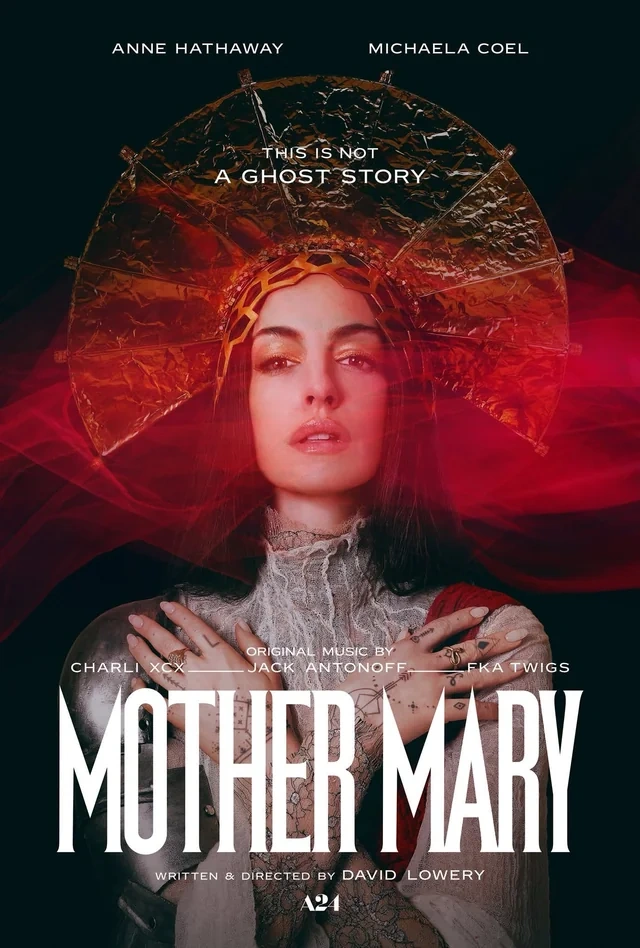
David Lowery's Mother Mary blends pop spectacle with metaphysical dread, folding celebrity, intimacy, and identity into a genre-smearing, thought-provoking film led by Anne Hathaway and Michaela Coel.
There is something almost audacious about a film that attempts to merge pop spectacle with metaphysical dread. Mother Mary, directed by David Lowery, does precisely that. It is not content with being a music film, nor a psychological drama, nor even a ghost story. Instead, it exists in the uneasy overlap between all three, staging a confrontation between celebrity, intimacy, and the fragile architecture of identity.
The Pop Star as Ruin
At the centre of the film is a fictional global icon played by Anne Hathaway. This is not the polished, invulnerable pop figure that contemporary media often sells. Instead, Mother Mary is introduced at a moment of fracture. Her career has stalled following a mysterious incident, and she retreats from the spectacle of fame into something quieter and more unsettling.
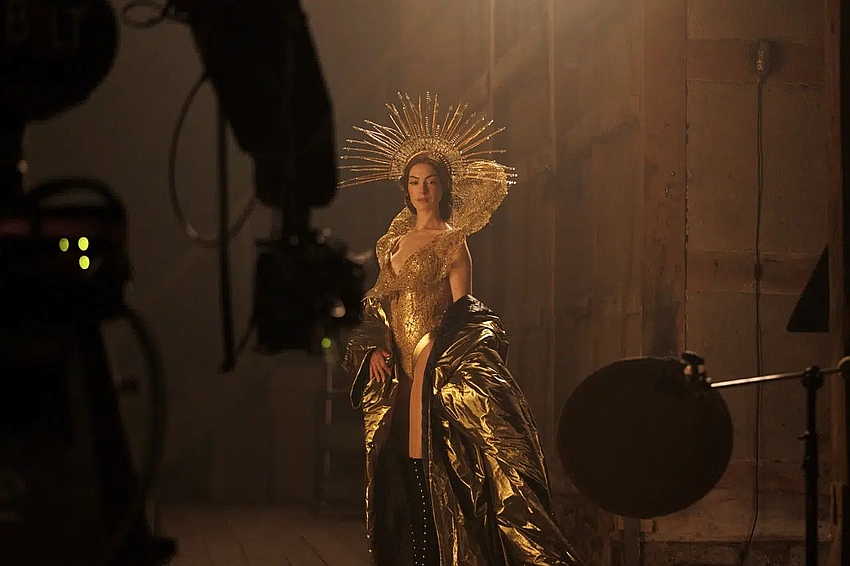
The narrative hinges on her reunion with Sam Anselm, a fashion designer portrayed by Michaela Coel. Their shared past is not merely emotional but constitutive. Sam helped construct Mary’s public persona, suggesting that the “pop star” is less an individual than a collaborative fiction.
This premise is where the film begins to gesture towards something more intellectually ambitious. Fame is not simply corrosive. It is ontologically unstable. The self that is performed becomes indistinguishable from the self that is lived.
Fashioning the Body, Dressing the Ghost
Clothing in Mother Mary is not decorative. It is epistemological. The request that drives the plot, Mary asking Sam to design a comeback dress, is less about aesthetics and more about reconstitution. Who is Mary, if she is to return?
The film literalises this crisis through its flirtation with the supernatural. A ghostly presence, sometimes rendered as the “Red Woman”, emerges as a manifestation of unresolved trauma and creative blockage.
This is where the film risks incoherence but also achieves its most striking imagery. The body becomes a site of haunting. The costume becomes a vessel. To design a dress is to exorcise a past self.
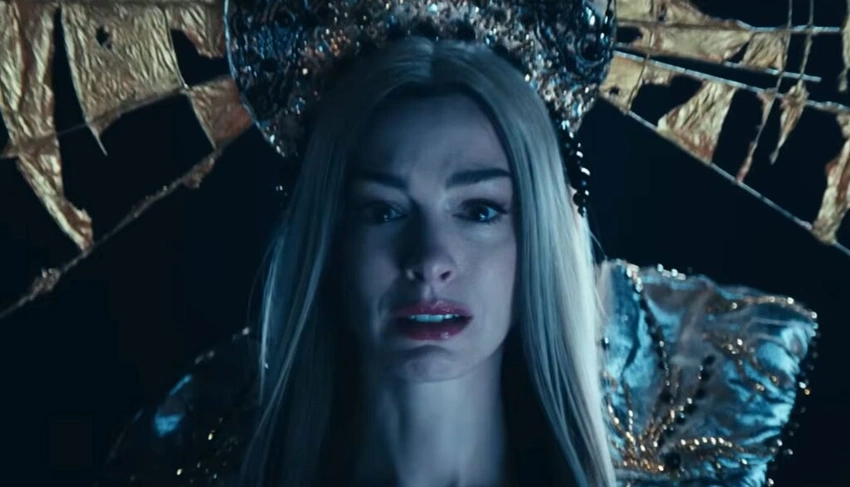
There is a lineage here that feels distinctly gothic, even if filtered through pop iconography. The séance sequences and ritualistic performance gestures align the film less with conventional music biopics and more with something like a stylised exorcism narrative.
Soundtrack as Interior Monologue
The involvement of artists such as Charli XCX, Jack Antonoff, and FKA Twigs signals an ambition to situate the film within contemporary pop discourse.
Crucially, the songs are performed by Hathaway herself, which alters their function. They are not external performances inserted into the narrative. They operate as extensions of Mary’s psyche.
This blurring of diegetic and non-diegetic sound reinforces the film’s central concern. Where does performance end and authenticity begin? The answer the film offers is not reassuring. There is no clear boundary.
The Two-Hander Structure
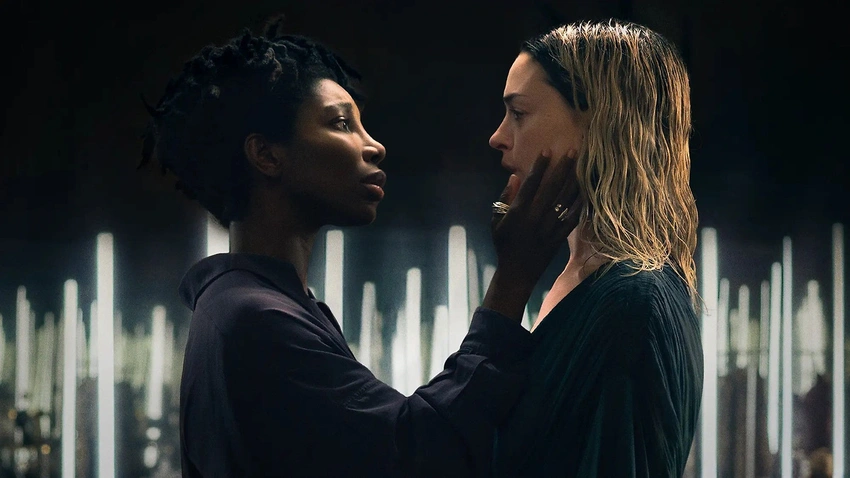
Despite its aesthetic scale, Mother Mary is fundamentally a two-character drama. The relationship between Mary and Sam is the film’s emotional core. Critics have noted that it functions almost as a “two-hander”, with the surrounding spectacle serving as amplification rather than distraction.
Their dynamic is fraught with resentment, dependency, and an almost metaphysical connection. One reading suggests that Sam is not simply a former collaborator but the origin point of Mary’s identity as a star. To reunite is therefore to confront the conditions of one’s own creation.
The film’s ambiguity about their relationship, whether it is romantic, artistic, or something less definable, is both a strength and a limitation. It gestures towards queerness and intimacy but does not fully articulate either.
Spectacle Versus Substance
Visually, the film is difficult to dismiss. Its use of space, particularly the isolated countryside atelier where much of the narrative unfolds, creates an atmosphere that is both intimate and claustrophobic.
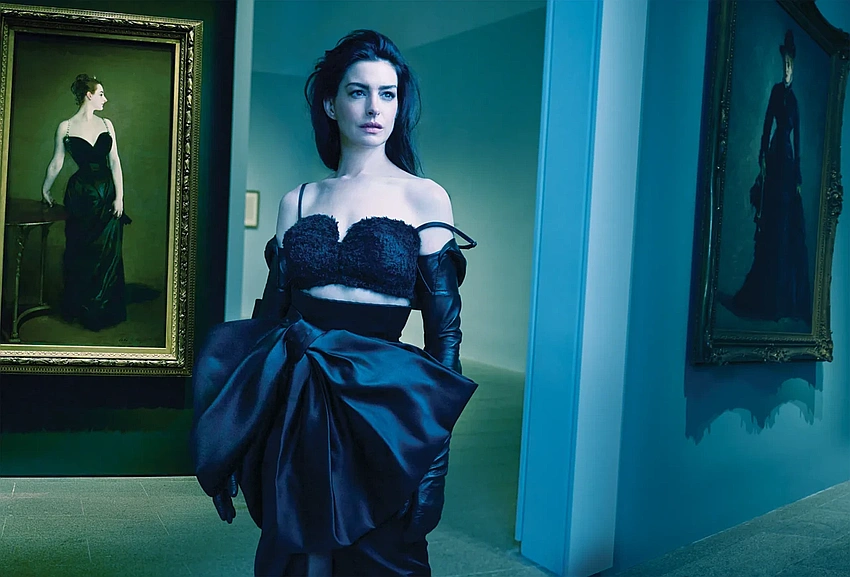
Yet this visual richness is not always matched by narrative clarity. Some critical responses have pointed to a certain opacity in the script, where thematic ambition overwhelms coherence.
This tension is not accidental. It reflects the film’s broader preoccupation with excess. Pop stardom itself is excessive. It is too much image, too much sound, too much self. The film mirrors this condition, sometimes to its own detriment.
A Pop Myth for the Present
What ultimately makes Mother Mary compelling is not its success but its insistence on risk. It refuses the familiar arc of redemption that defines many narratives about celebrity. Instead, it offers something closer to transformation without resolution.
The ending, deliberately ambiguous, suggests that identity is not recovered but reconfigured.
In this sense, the film belongs to a broader cultural moment fascinated by the instability of the self in the age of hyper-visibility. The pop star becomes a figure through which larger anxieties about authorship, embodiment, and authenticity are played out.
Mother Mary is not an easy film to categorise, nor is it entirely successful. But it is undeniably interesting. It treats pop not as surface but as structure. It understands that to be a star is to be haunted, not only by the public but by the selves one has had to invent.
And in that haunting, the film finds its most unsettling truth.
#MotherMaryFilm #DavidLowery #AnneHathaway #MichaelaCoel #PopCulture
