Flip Phones Fading? Why Book-Style Foldables Are Dominating!

Flip Phones Fading? Why Book-Style Foldables Are Dominating!
Once the darling of nostalgia, flip phones are losing ground to larger, productivity-focused book-style foldables. Is retro chic out, or is this just a new chapter in mobile tech?
Remember when the Motorola Razr made its grand return in 2019, sparking a wave of nostalgia with its foldable OLED display? It felt like the clamshell flip phone was back, and brands like Samsung, Oppo, Vivo, and Xiaomi all jumped into the race. But fast forward to today, and that initial scramble seems to have cooled dramatically.
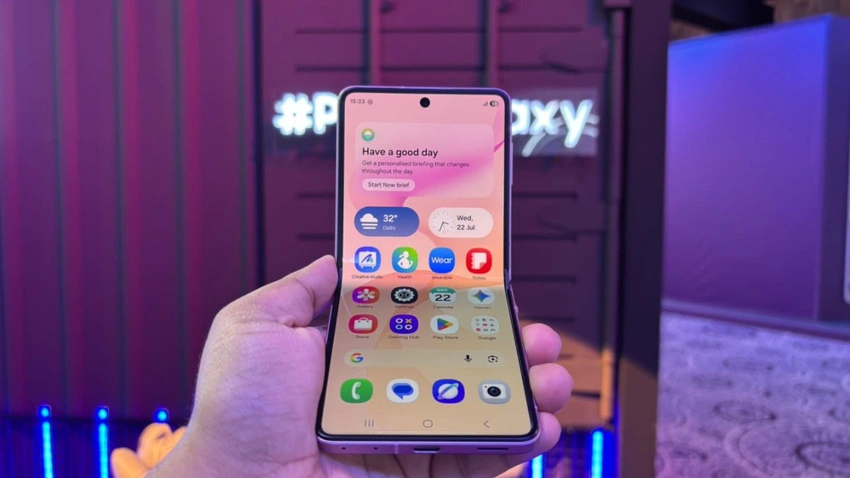
Where are all the flip phones? Apart from Samsung's Galaxy Z Flip 8, the segment looks surprisingly sparse. Even a rumored successor to Samsung's cheaper Galaxy Z Flip FE hasn't materialized.
So, are flip phones truly falling out of fashion?
It appears the engineering behind flip-style foldables forces some significant compromises.
We're talking about painful trade-offs in areas like battery life, thermal management, and even camera optics.
For a device meant to be our daily companion, these aren't minor drawbacks.
Data from Counterpoint Research paints a clear picture. Original Equipment Manufacturers (OEMs) are rapidly shifting their focus away from clamshell-style foldables. Why? Consumer preferences are driving a strong move towards productivity-focused, 'book-style' models.
It's a major pivot. Counterpoint projects that book-style devices will soon capture a whopping 65 per cent to 76 per cent of total foldable shipments, a significant jump from a previous 52 per cent.
But what happened to the flip? To understand this divide, I recently spoke with Tarun Pathak, Director at Counterpoint Research. He highlighted a critical shift: “At one point in time, the sales of flip were higher than the full-sized book type.
Now, things have reversed - almost 67 per cent of users are preferring book type as compared to flip.”
While the initial buzz for flips heavily relied on novelty and fashion, daily usage quickly exposed their inherent limitations.
Users, it seems, crave more than just a compact design. Pathak emphasized that 'most users want more screen.' This makes perfect sense in an age where our phones are central to everything from work to entertainment.
A larger, uninterrupted display area offered by book-style foldables simply provides a superior experience for browsing, multitasking, and media consumption.
The early days saw a clear split in demographics and lifestyle alignment for flip phones. They were fashionable, a statement piece. However, over time, users began to prioritize practicality and functionality over sheer aesthetic appeal.
The market has matured, and with it, consumer expectations for what a foldable phone should deliver have evolved.
It's no longer just about the cool factor; it's about genuine utility. Retro chic is charming, but in the long run, productivity often wins.

Login to comment.
No thots yet. Be the first to share your thoughts!