Phone Addiction is Making Movies Dumber

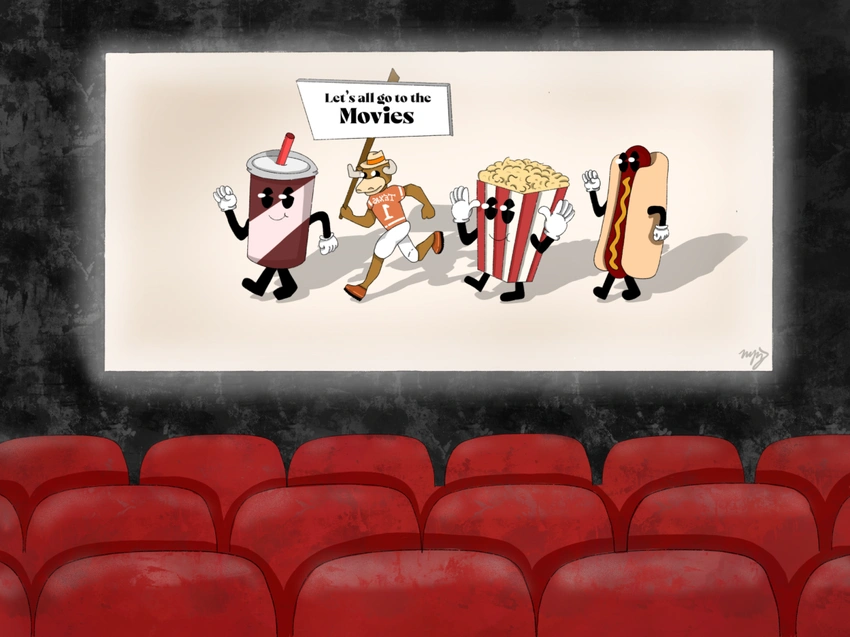
Phone Addiction is Making Movies Dumber
Phone Addiction is Making Movies Dumber
Smartphones are rewiring how we watch: notifications, short-form videos, and endless scrolling train our attention, nudging cinema from patient long takes to rapid cuts. This piece examines the cognitive and aesthetic sh
It is tempting to treat cinema as a stable art form, one that evolves aesthetically but resists cultural erosion. Yet the screen has never been immune to the habits of its viewers. What changes now is not simply taste, but attention itself.
Attention span, in its simplest form, is the duration for which one can sustain focus before distraction intervenes. Increasingly, that duration is being reshaped by the logic of the smartphone. Notifications, short-form videos, and endless scroll are not just distractions. They are training mechanisms.
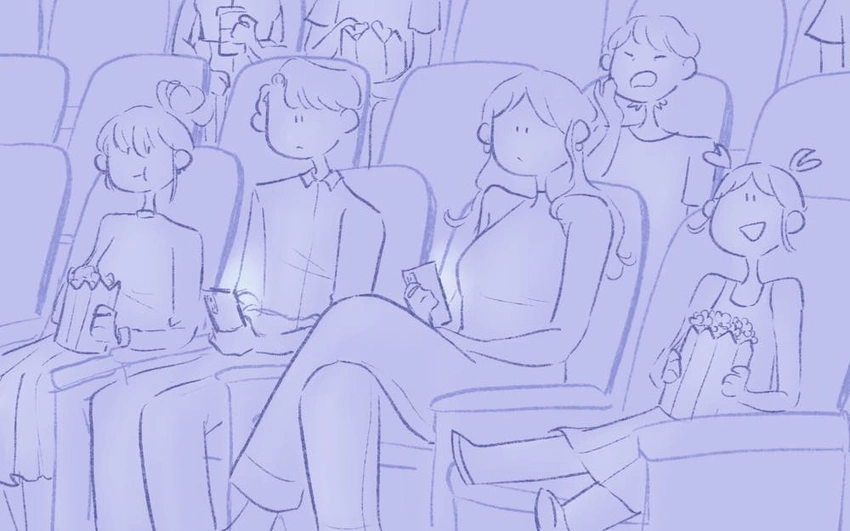
Heavy consumption of short-form digital content correlates with reduced attention span and diminished cognitive engagement. Another body of research suggests that constant smartphone use fragments focus and disrupts memory and decision-making processes. What emerges is not merely distraction, but a rewiring of expectation. We begin to prefer interruption.
Cinema, inevitably, responds.
From Long Takes to Jump Cuts
There was a time when slowness was not an aesthetic risk. Directors could linger. Scenes could breathe. Silence was not an absence but a form of presence.
Now, pacing has become anxious.
The shift is subtle but pervasive. Films increasingly rely on rapid editing, compressed exposition, and narrative immediacy. The fear is not boredom in the classical sense, but abandonment. If a viewer is habituated to switching stimuli every few seconds, a lingering shot becomes a liability.

Research into short-form video consumption suggests that rapid context-switching trains the brain to expect constant novelty, making sustained attention more difficult. This has implications for narrative form. If attention cannot be held, narrative must adapt to chase it.
What results is not simply faster cinema, but thinner cinema. Scenes no longer unfold; they deliver.
Watching Films While Not Watching Films
The smartphone does not merely shape attention before or after a film. It intrudes during.
Studies on viewing conditions show that watching films on smartphones leads to lower engagement and higher susceptibility to distraction compared to larger screens. Even more striking is the finding that smartphone viewers are more vulnerable to external interruptions, fragmenting their experience of narrative continuity.
This produces a paradox. Films are still made as if they demand immersion, yet they are consumed in fragments, often alongside other stimuli. The viewer becomes what might be called a divided spectator, only partially present.
Cinema, in response, begins to anticipate this divided attention. It simplifies. It repeats. It foregrounds spectacle over subtlety.
Narrative Simplification and the Fear of Losing You
To say that films are becoming “dumber” is perhaps inelegant, but not entirely inaccurate. What is at stake is not intelligence in a moral sense, but complexity.
Complex narratives require cognitive labour. They demand memory, inference, and patience. But if audiences are increasingly conditioned to process information in brief, high-intensity bursts, then complexity becomes risky.
The rise of hyper-explicit storytelling is telling. Characters explain their motivations. Plot points are reiterated. Visual storytelling gives way to verbal clarification. It is as though films no longer trust the viewer to keep up.
This is not solely an artistic failure. It is an adaptive strategy.
Smartphone addiction, or what researchers term problematic smartphone use, is associated with constant partial attention, a state in which focus is distributed across multiple stimuli but rarely deepened. In such a cognitive environment, ambiguity becomes frustrating rather than intriguing.
Cinema adjusts by removing ambiguity.
The Algorithmic Imagination
There is another layer to this transformation, one less visible but equally consequential. The same platforms that cultivate short attention spans also shape the metrics through which success is measured.
Streaming services track completion rates, drop-off points, and viewer engagement. If audiences frequently abandon slow or complex films, algorithms will favour those that retain attention through immediacy.
Thus, the logic of the smartphone feeds back into the logic of production.
The result is a feedback loop. Short attention spans produce simplified films. Simplified films reinforce short attention spans. The system stabilises itself.
A Medium at a Crossroads
It would be simplistic to declare the death of cinematic intelligence. There remain filmmakers who resist these pressures, who insist on slowness, ambiguity, and formal experimentation.
But they increasingly occupy the margins.
The mainstream, shaped by the cognitive habits of the smartphone age, moves in a different direction. It becomes louder, faster, clearer, and in some sense, emptier.
The question is not whether cinema is becoming dumber, but whether it is becoming something else entirely. A medium no longer designed for immersion, but for retention. Not for contemplation, but for continuation.
In that shift, something essential is at risk.
#Cinema #AttentionSpan #Smartphones #FilmCulture #ShortFormVideo
