Technicolor: The Greatest Invention and Loss of Cinema

Technicolor: The Greatest Invention and Loss of Cinema
Technicolor: The Greatest Invention and Loss of Cinema
From hand-tinting to the three-strip process, Technicolor reshaped film color. This look back explains the invention, its dazzling palette, and why that vanished way of seeing still haunts cinema memory.
There’s a very specific kind of awe when you first see a true Technicolor print on the big screen. The reds feel almost unreasonable, the greens slightly unreal, as if cinema has decided it doesn’t have to obey the colour palette of everyday life. It’s both the greatest invention of film colour and one of its great losses, a vanished way of seeing.
When Colour Really Arrived
Colour experiments in cinema go back to hand-tinting and early additive systems, but Technicolor was where colour stopped being a novelty and became part of film language. Founded in 1915, the company developed a series of processes, from early two-colour systems to the three-strip process introduced in the early 1930s.
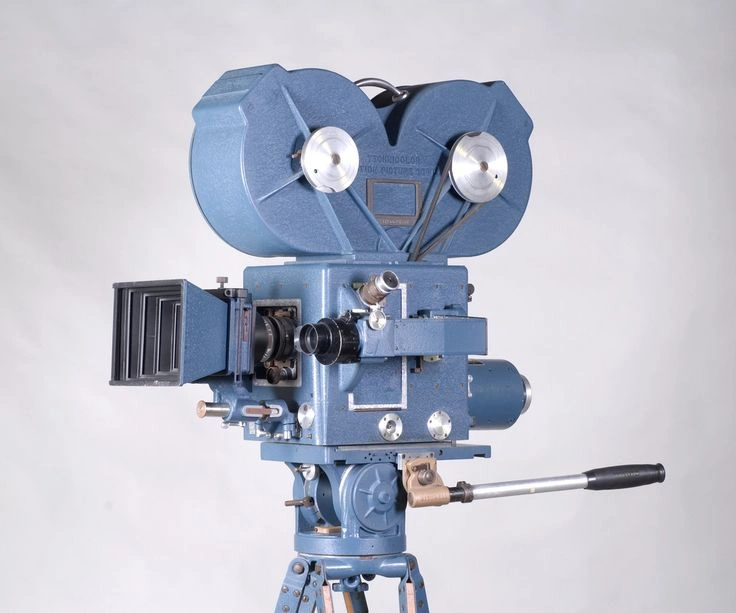
The famous three-strip process used a special camera that split incoming light through a prism onto three separate black-and-white negatives, each recording a different portion of the spectrum. These were later turned into dyed “matrix” films and transferred onto a single print through a dye-imbibition process which is a painstaking, almost artisanal form of mass production.
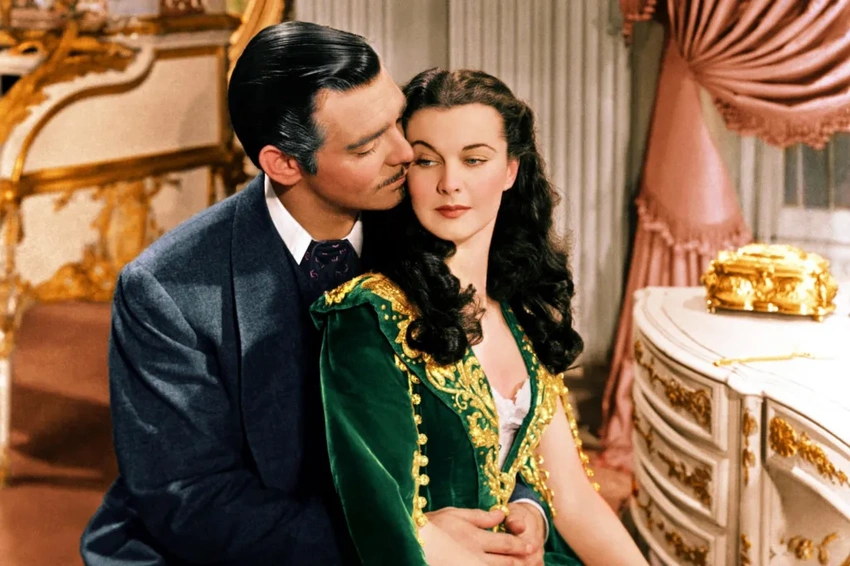
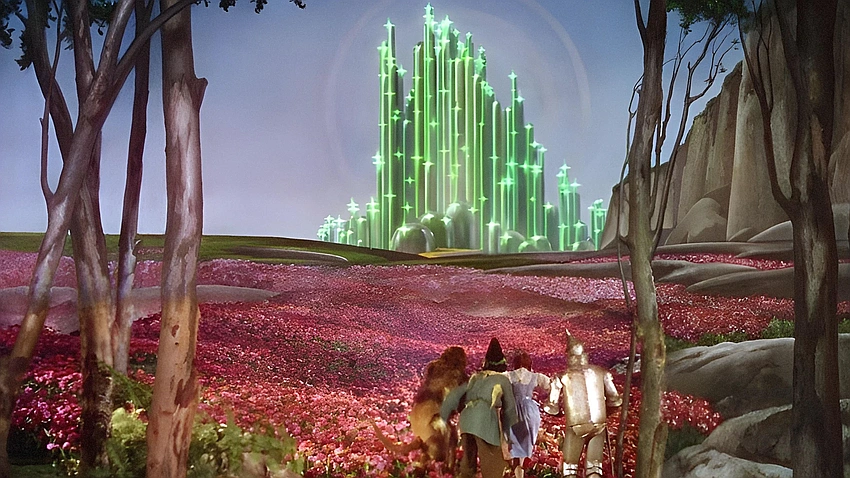
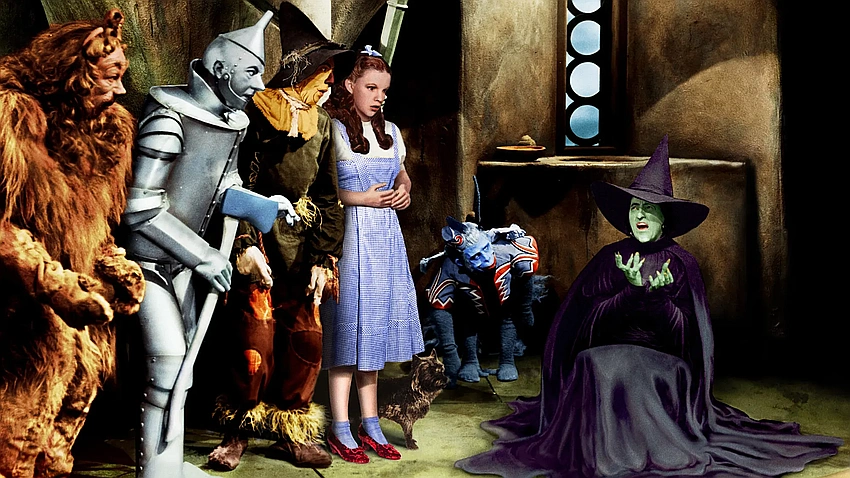
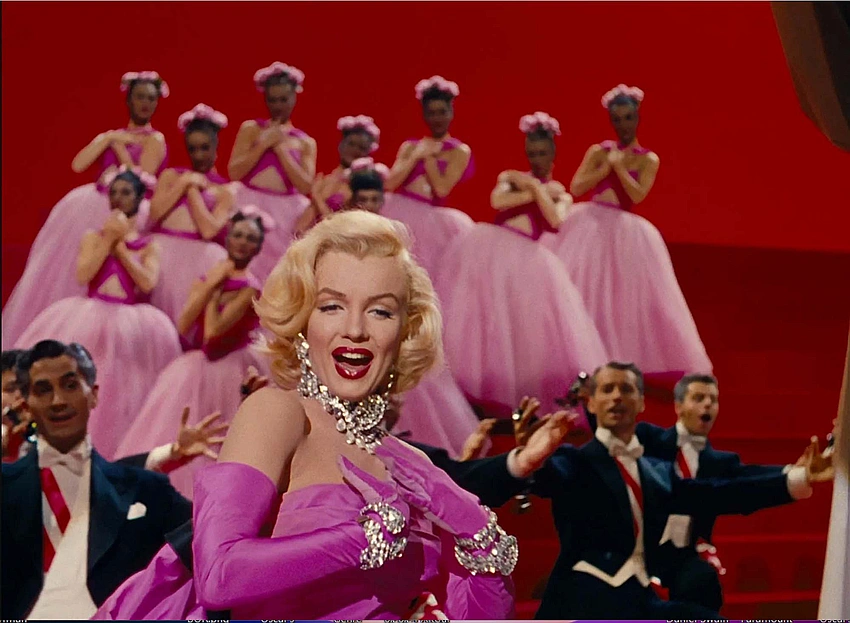
This is the system that gave us the saturated dreamscapes of The Wizard of Oz and the grand, burnished tableaux of Gone with the Wind, both released in 1939 and often cited as milestones in the history of colour cinema. It wasn’t just that audiences were seeing colour; they were seeing a very particular, carefully engineered intensity of colour that would define the visual memory of Hollywood’s so-called Golden Age.
Colour as Aesthetic Discipline
One of the fascinating things about Technicolor is that studios didn’t own the cameras, they rented them, along with Technicolor technicians and colour “supervisors” who oversaw costume, set design and lighting to keep everything within the system’s limits.
Because splitting the light across three negatives reduced sensitivity, Technicolor productions required far more illumination than black-and-white films. Sets ran boiling under intense lighting, and the system demanded high budgets and meticulous planning. In other words, colour wasn’t simply added to films; films had to be built around colour.
Technicolor imposed a kind of chromatic discipline: directors, designers and cinematographers had to think structurally about colour. Costumes were chosen not just for character but for how they would print in dye-transfer; sets were painted to complement rather than compete with skin tones; entire genres, especially musicals and fantasies, developed around Technicolor’s capacity for spectacle.
The result is that Technicolor cinema feels curated at the level of hue. Those famous reds, blues and greens are not “naturalistic” at all; rather, they are highly mediated, almost painterly decisions.
Why We Lost It
Given how beloved those images are, it’s tempting to imagine that Technicolor must have been killed off by some philistine conspiracy. The reality is more mundane and more brutal: time and money.
From the 1950s, single-strip colour negative stocks such as Eastmancolor allowed studios to shoot on standard cameras and process prints through ordinary labs, rather than renting bulky three-strip cameras and sending everything to Technicolor’s own facilities. These newer processes were faster, cheaper, and more flexible for location shooting.
By the mid-1950s, the three-strip camera was effectively obsolete; the last American feature photographed with it was shot in 1954. The dye-transfer printing process lingered longer, but even that was eventually abandoned in the United States in the mid-1970s as too slow and expensive for an industry that needed ever more prints, ever more quickly.
There was a brief, almost nostalgic revival of dye-transfer printing from 1997 to 2002, used for restorations and a handful of contemporary films, before it was discontinued again after corporate restructuring. By then, digital intermediate workflows and computerised colour grading were on the rise, offering immense control over the image but severing it from the chemical and mechanical specificity of Technicolor.
Today, the Technicolor name survives mostly in post-production and visual effects branding, itself buffeted by bankruptcies, spin-offs and financial crises, a far cry from its dominance as a film-colour monopoly in the mid-20th century.
The Loss You Can’t Stream
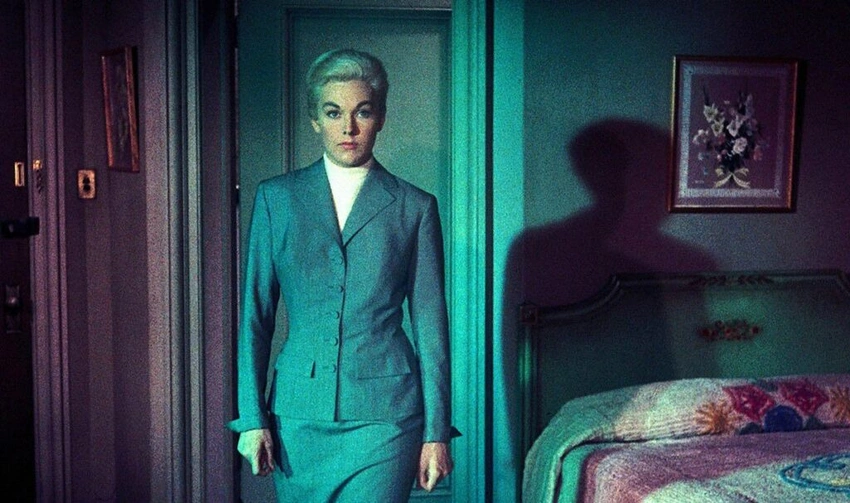
On one level, what’s gone is material. Dye-transfer prints created images with extremely stable dyes and black-and-white separation masters, which means many Technicolor prints have kept their colours astonishingly well compared to early chromogenic Eastmancolor prints that often fade towards a muddy magenta. Archivally, Technicolor was over-engineered in the best possible way; in the age of crumbling colour negatives, those gaudy musicals suddenly look like serious acts of conservation.
On another level, the loss is aesthetic and cultural. Because Technicolor was so demanding, it encouraged a kind of maximalist, stylised cinema: a world where colour was not just realistic but expressive, theatrical, sometimes delirious. Contemporary digital cinema can do almost anything, but that very flexibility means it rarely has such a distinct, recognisable “signature”. When a modern film deliberately imitates Technicolor – as some recent period pieces have done – it is drawing on a visual memory that no longer has a living industrial base.
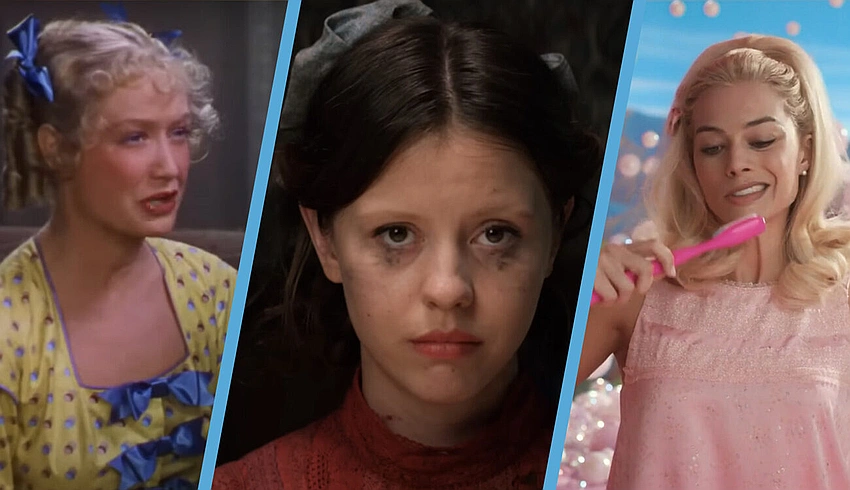
Technicolor sits at a strange crossroads of cinema history: a “primitive” technology that still looks futuristic, an industrial monopoly that produced some of the most sensuous images ever made. Its rise shows how technology can prompt art to think more deeply about itself; its fall shows how little that matters once economic conditions change.
We live in an age where virtually any colour grade can be conjured on a laptop. And yet, every time I see that old credit “Colour by Technicolor”, I’m reminded that there was a moment when colour was not a filter, not a preset, but an entire world-building apparatus. That is why Technicolor feels to me like both the greatest invention of cinema and one of its most haunting losses.
['#Technicolor', '#FilmHistory', '#Cinematography', '#ColorInFilm', '#VintageCinema']
