Kelsey Lu’s So Help Me God Finds Beauty in Surrender


Kelsey Lu’s So Help Me God Finds Beauty in Surrender
Kelsey Lu’s So Help Me God Finds Beauty in Surrender
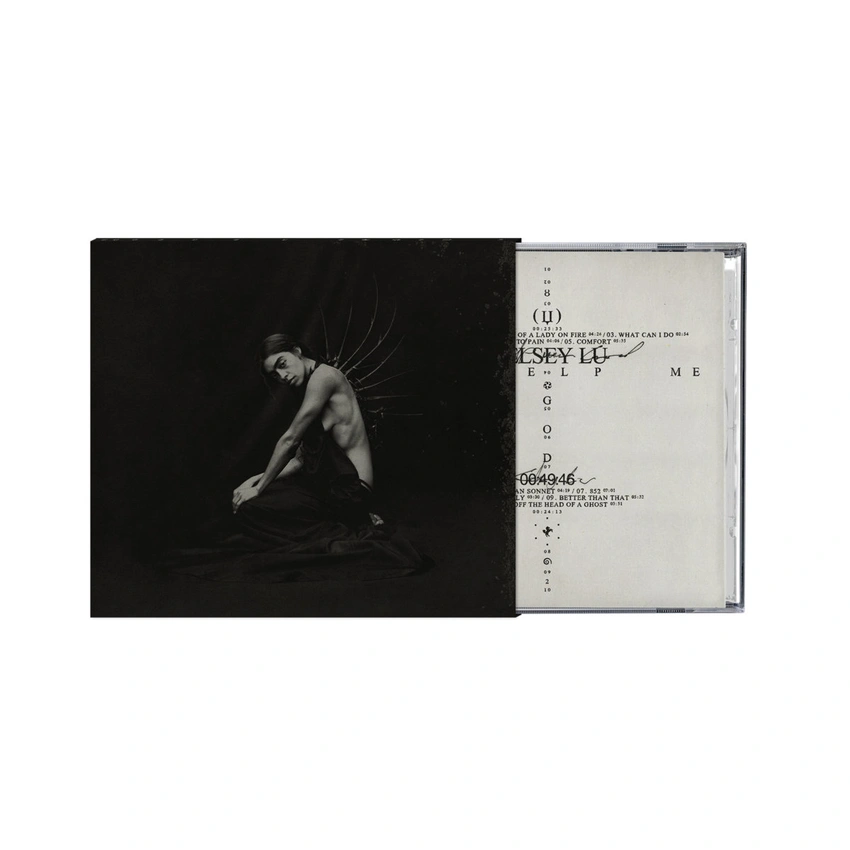
Kelsey Lu returns with So Help Me God after seven years, trading trend-chasing for patience. A meditative, emotionally dense album that unfolds slowly, inviting careful listening.
There is something quietly radical about an artist refusing urgency. In an industry where musicians are expected to remain permanently visible, Kelsey Lu's So Help Me God arrives after seven years with little concern for algorithms, trends or the pressure to produce. The wait becomes part of the album's meaning. Rather than returning with a louder or more commercially obvious record, Lu has made something patient, meditative and emotionally difficult. It is an album that asks for attention instead of demanding it.
That patience shapes the listening experience from the very first track. The songs unfold gradually, allowing arrangements to breathe and emotions to accumulate instead of rushing towards catharsis. Listening to So Help Me God feels less like moving through a sequence of pop songs and more like wandering through interconnected emotional spaces where grief, desire, faith and memory constantly overlap. The record resists neat resolution, choosing ambiguity instead.
The language of transformation
At its core, So Help Me God is an album about change. Its emotional landscape is defined by endings, particularly the aftermath of broken relationships, yet heartbreak never becomes its only subject. Loss functions as the beginning of a larger transformation rather than its conclusion.
Many contemporary break-up albums revolve around blame or confession. Lu takes a different route. Their songwriting seems more interested in examining emotional states than constructing narratives with clear heroes and villains. Feelings appear fragmented, unfinished and often contradictory, much like memory itself. This uncertainty gives the record remarkable emotional depth because it refuses the comforting illusion that healing follows a predictable path.
Instead, the album accepts that recovery is uneven. Moments of vulnerability coexist with moments of strength, and hope frequently appears alongside exhaustion.
Sound as emotional architecture
Perhaps the most fascinating aspect of So Help Me God is its refusal to remain inside a single musical language. Chamber pop, soul, ambient music, experimental electronics and art pop drift into one another with surprising ease. These genre shifts never feel ornamental. They become part of the emotional storytelling.

The production constantly expands and contracts. Songs begin with apparent simplicity before unexpected textures emerge. Rhythms dissolve, strings swell into silence and electronic elements interrupt otherwise intimate arrangements. These changes rarely feel dramatic for their own sake. Instead, they mirror the instability of emotional experience, where certainty can disappear within seconds.
Lu's classical background remains central throughout the record. The cello is not simply another instrument within the mix but an extension of the voice itself. Together they create a sense of physical intimacy that few contemporary pop records achieve. Rather than competing for attention, the instrumental arrangements and vocals continually respond to one another, producing music that feels almost tactile.
Spirituality without certainty
The album's title inevitably introduces questions about religion and belief, but So Help Me God avoids presenting faith as a fixed destination. Spirituality appears less as doctrine than as an ongoing search for meaning.
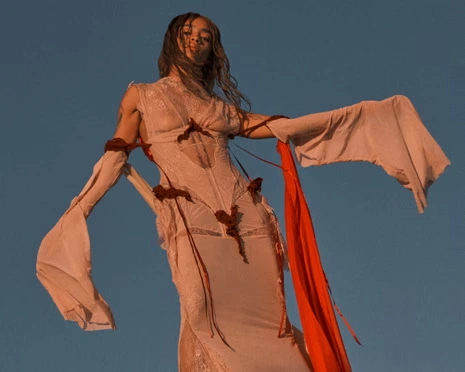
This openness makes the record especially compelling. Rather than separating the sacred from ordinary human experience, Lu allows spirituality to emerge through vulnerability itself. Love, grief, loneliness and forgiveness become forms of reflection rather than obstacles to it.
From a humanities perspective, the album recalls traditions in literature where transcendence is discovered not through certainty but through doubt. Pain is never romanticised, yet neither is it dismissed as meaningless. Instead, suffering becomes one way of understanding the self, however incomplete that understanding may remain.
The result is an album that treats emotional experience with unusual seriousness without ever becoming self-important.
Pop music beyond immediacy
One of the most striking qualities of So Help Me God is how little it seems interested in contemporary expectations of pop music. Many albums today are designed around immediate impact, shorter attention spans and instantly memorable hooks. Lu moves in the opposite direction.
Several tracks unfold slowly, rewarding repeated listening rather than instant familiarity. Their structures frequently resist predictable verse and chorus patterns, allowing songs to evolve organically instead of mechanically. This does not make the album inaccessible. Instead, it asks listeners to engage with music as a sustained experience rather than background entertainment.

That approach feels increasingly rare within contemporary pop culture. The album suggests that accessibility does not require simplicity and that emotional complexity can still exist within popular music.
A record that trusts its audience
What ultimately makes So Help Me God so affecting is its confidence in silence, space and restraint. Lu never seems anxious about whether every moment will immediately resonate. The album trusts that listeners will remain present long enough for its emotional architecture to reveal itself.
There is also an impressive coherence despite its stylistic diversity. Every sonic detour, unexpected collaboration and shifting texture serves the album's larger meditation on identity, healing and renewal. Nothing feels included simply to demonstrate ambition.
So Help Me God is therefore more than a long-awaited second album. It is an argument for artistic patience in an era obsessed with constant visibility. Instead of chasing immediacy, Kelsey Lu has created a work that grows richer through repeated listening, inviting us to inhabit uncertainty rather than escape it. It reminds us that some of the most rewarding art does not provide answers. It simply teaches us how to remain with the questions.
