Halsey’s The Great Impersonator: Finding the Self Through Other Voices


Halsey’s The Great Impersonator: Finding the Self Through Other Voices
Halsey’s The Great Impersonator: Finding the Self Through Other Voices
Halsey’s The Great Impersonator redraws pop’s boundaries, showing how imitation can reveal more about the artist than the borrowed style. Illness, memory, and mortality twist identity into something unborrowable.
Pop music has always been fascinated by authenticity. Artists are expected to be vulnerable, but only in ways that remain marketable. They are encouraged to reinvent themselves, yet criticised when those reinventions appear too calculated. Halsey's The Great Impersonator sits directly inside this contradiction. Built around musical influences spanning several decades, the album initially appears to be an exercise in imitation. Instead, it becomes something far stranger. By borrowing familiar aesthetics, Halsey ends up revealing the parts of herself that cannot be borrowed at all.
Rather than asking whether the album succeeds as homage, I found myself asking a different question: what does it mean to perform your own identity when illness, memory and mortality begin to reshape it?
Identity as performance
The title itself invites multiple readings. An impersonator copies someone else, but every impersonation inevitably reveals something about the person doing the imitation. Throughout the record, Halsey adopts sonic references from artists who shaped her musical imagination without dissolving into simple pastiche. The influences function less as costumes than as historical conversations.
That makes The Great Impersonator feel surprisingly literary. It resembles intertextual fiction, where every borrowed voice deepens rather than weakens the author's own perspective. Identity here is not presented as something original or pure. Instead, it emerges through accumulated influences, memories and cultural inheritance.
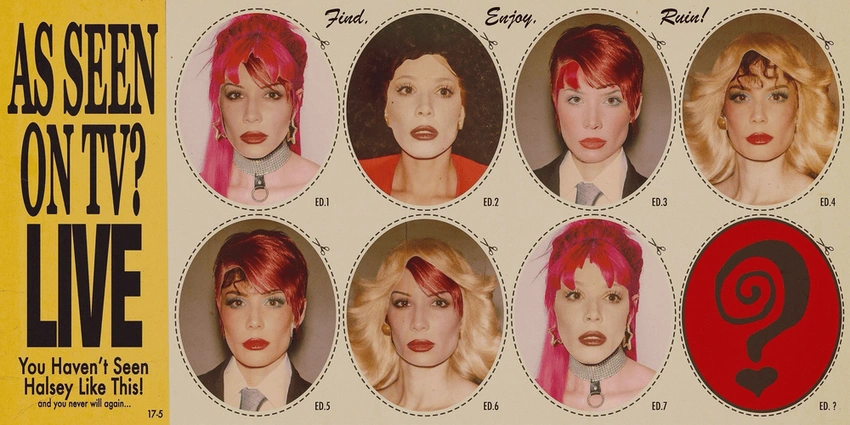
The album rollout reflected this idea visually, with Halsey recreating iconic musicians across different eras. Yet the music itself refuses straightforward mimicry. The references exist, but they continually fold back into autobiographical songwriting, preventing the concept from becoming merely nostalgic. The result is an album that understands influence as an act of dialogue rather than imitation.

Illness changes the language of pop
The emotional centre of the album lies elsewhere. Halsey wrote much of the record after publicly discussing diagnoses including lupus and a rare T-cell disorder, and that context changes how the songs are heard. These are not dramatic narratives invented for artistic effect. They are meditations on survival, uncertainty and the frightening possibility that one's future may suddenly become finite.
What impressed me most is that the album avoids reducing illness to inspiration. Instead, sickness becomes a condition through which every other emotion is refracted. Love becomes more fragile. Parenthood acquires greater urgency. Fame appears increasingly absurd against the reality of physical vulnerability.
Many contemporary pop records treat confession as spectacle. Here confession feels quieter. Even when the production expands into rock or theatrical pop, the emotional core remains remarkably restrained. The record rarely asks the listener for sympathy. It simply documents what it means to continue imagining a future while recognising that the future itself has become unpredictable.

The archive of popular music
Listening to The Great Impersonator also feels like moving through an archive of twentieth-century popular music. Rock, folk, alternative and classic pop continually appear and disappear without ever becoming museum pieces.
What interests me is how these references resist simple nostalgia. Nostalgia often imagines the past as stable and complete. Halsey's album does the opposite. The past remains fragmented, constantly rewritten through present experience.
Memory is often understood not as retrieval but as reconstruction. Every act of remembering also transforms what is remembered. The Great Impersonator follows a similar logic. Musical history is not reproduced faithfully but filtered through illness, adulthood, motherhood and artistic maturity.
The result feels like an album about how influence lives inside us long after we first encounter it.
Vulnerability without sentimentality
Perhaps the album's greatest achievement is its refusal to sentimentalise suffering.
Pop music frequently frames vulnerability as a moment of triumph. Pain exists only to produce resilience. Halsey is less interested in resolution than endurance. Many of these songs remain suspended inside uncertainty, allowing fear and hope to coexist without forcing either to win.

That emotional ambiguity is rare within mainstream pop. It trusts listeners to inhabit discomfort rather than immediately escaping it.
There are moments where the ambitious concept threatens to overshadow the songs themselves. The references can become so prominent that listeners inevitably search for musical comparisons instead of remaining inside Halsey's own narrative. Yet even those moments reinforce the album's central concern. The tension between performance and authenticity is precisely what the record wants us to experience.¹²³
Beyond reinvention
For years, discussions around Halsey's career have focused on reinvention. Each era seemed to arrive with a different visual identity, different sonic palette and different narrative.
The Great Impersonator suggests that reinvention may be the wrong framework altogether.
Rather than becoming someone new, Halsey assembles every previous version of herself alongside the artists who shaped her imagination. The album argues that identity is cumulative rather than transformative. We do not abandon old selves. We carry them forward, layering new experiences over older influences until the boundaries become impossible to separate.
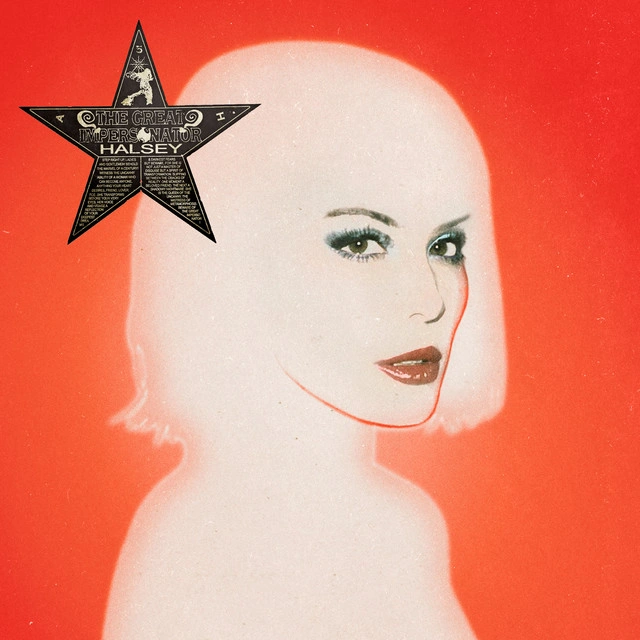
That idea resonates well beyond pop music. It speaks to how all cultural identities are constructed through inheritance, adaptation and performance.
What stays with me after The Great Impersonator is not its ambitious concept, although that is undeniably impressive. It is the strange intimacy of hearing an artist use borrowed musical languages to articulate experiences that are unmistakably her own.
The album understands that influence does not erase individuality. Sometimes it makes individuality easier to recognise. She borrows voices to speak more honestly. She looks backwards to confront the future. She performs identities only to arrive at something deeply personal. It reminds us that originality has never meant existing without influence. Sometimes the most truthful portrait of the self is assembled from the echoes of everyone who came before.
#Halsey #TheGreatImpersonator #IdentityInMusic #AlbumReview #PopCulture
