The Victorian Internet's Echo: What Telegram's Collapse Teaches Us

The Victorian Internet's Echo: What Telegram's Collapse Teaches Us
The telegraph, the 19th-century's internet, transformed society then faded. Its story offers chilling insights into the rise, fall, and potential collapse of today's social media platforms.
The Victorian Internet's Echo: What Telegram's Collapse Teaches Us
Before the internet, before radio, there was the telegraph. Hailed as the “Victorian Internet,” this network of wires and dots-and-dashes revolutionized communication in the 19th century, connecting continents and shrinking the world. Today, as we navigate the turbulent waters of social media's impact and potential decline, the story of the telegraph offers some uncomfortable, yet crucial, lessons.

The World-Shrinker's Reign
When Samuel Morse sent his famous message, 'What hath God wrought,' in 1844, he ignited a revolution. Suddenly, information could travel faster than a horse, faster than a ship.
Businesses thrived on instant market data, governments communicated across empires, and personal messages transcended vast distances.
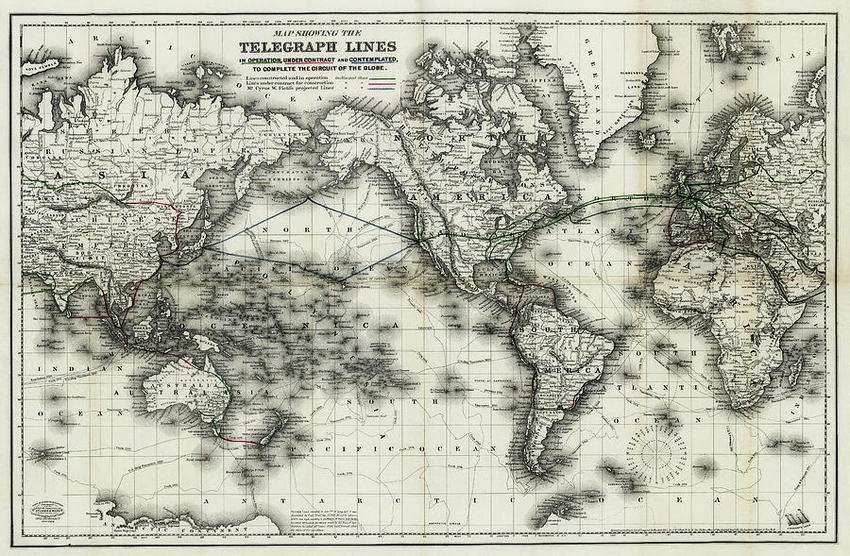
The telegraph fostered a truly global consciousness, creating network effects that were unprecedented at the time.
For the Victorians, it felt like magic, an always-on connection. This new medium sparked both utopian dreams of global understanding and dystopian fears of information overload and privacy loss. Sound familiar?
The early telegraph era mirrors the intoxicating promise and chaotic reality of social media's early days.
The Cracks in the Wires
Yet, this marvel wasn't without its problems.
Like today's social feeds, the telegraph struggled with accuracy. Misinformation, or 'telegraphic errors,' were rampant.
The sheer volume of messages overwhelmed people, leading to 'telegram fatigue.' Costs were high, leading to a class divide in who could afford instant communication.
Furthermore, security was a constant concern, with messages intercepted and codes broken.
Perhaps the most striking parallel is the evolution of communication norms. What started as formal messages quickly became a medium for everything, including trivialities.
As Tom Standage points out in 'The Victorian Internet,'
The electric telegraph, like its modern successor, quickly became a victim of its own success, transforming from a novel communication medium into a mundane utility.
This shift from revolutionary to routine, and then to something often perceived as burdensome, is a pathway social media knows all too well.
Beyond the Wires: What’s Next for Our Digital Lives?
The telegraph didn't vanish overnight, but it was gradually superseded. The telephone offered more direct, richer communication. Radio provided broadcast information to the masses.
Fax machines offered instant document transfer. Each new technology chipped away at the telegraph's unique value proposition until it became obsolete for most practical purposes, eventually ceasing commercial operation in many countries by the late 20th century.
This history isn't a prediction that Facebook will disappear tomorrow, but a powerful cautionary tale. Social media platforms, too, face increasing fatigue, privacy scandals, misinformation crises, and the emergence of new, often more niche, communication tools. Will platform 'enshittification,' privacy breaches, or simply a better, less overwhelming alternative lead to a mass exodus?
The telegraph's story suggests that even the most revolutionary communication technologies can fall from grace when they fail to adapt or are outpaced by innovation.

Login to comment.
No thots yet. Be the first to share your thoughts!