The Future Belongs to People Who Can Work Alone

The Future Belongs to People Who Can Work Alone
The Future Belongs to People Who Can Work Alone
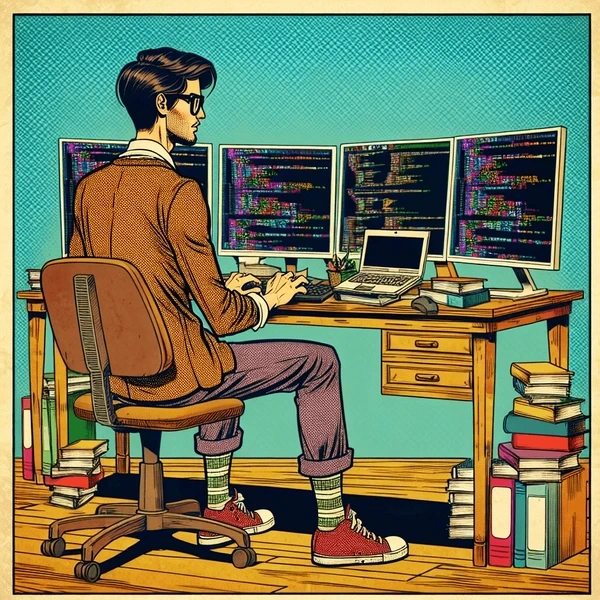
Is solitude becoming a superpower in the age of AI noise?
There’s a paradox in the modern startup world: we celebrate founders as visionaries, but we expect them to work like corporate employees. Meetings, presentations, product documentation, deadlines - all supposedly necessary so everyone can “stay on the same page.” But history suggests that most transformative work wasn’t created by committees. It came from people who could sit with a problem long enough that it became part of their brain.
If the last decade rewarded collaboration, the next decade will reward solitude.
The Real Constraint in Building
One thing I’ve learned while building my company is that the hardest part isn’t coming up with ideas. The world is full of ideas. Every coffee shop is buzzing with them. The real challenge is putting in the uninterrupted hours required to turn one idea into something real - and then repeating that for years.
Most people can’t work alone long enough to push something to the finish line. They get bored, or anxious, or lonely. They need someone else in the room to feel like progress is happening. They need validation from everyone including their investors and moms and friends and social media.
Solitude forces you to confront the truth: is this idea actually good, or am I just excited because others are excited with me?
When you build alone, you find out very quickly whether you're truly a builder.
Schools Created Thinkers, Not Doers
We’ve been trained from childhood to perform thinking in public. Classrooms reward the student who raises their hand fastest - not the one who thinks longest. Group projects teach us to divide responsibility to avoid risk. The result is a generation of highly verbal people who can explain everything and build nothing.
Startups now reflect this pattern. Pitch decks appear before prototypes. Meetings happen before product. We have founders who are “leading” companies without ever having opened a blank screen to create the thing that company supposedly sells.
This isn’t a criticism of collaboration. It’s a criticism of how little we’ve practiced solitude. Because solitude is where proof happens.
The Maker’s Advantage
Some people are builders not because they were taught to be, but because they feel physically uncomfortable not making things. To them, a clear afternoon is a gift - not time to schedule another call.
They know a secret: if you want to build the future, you must spend more time in the future than the present. That means hours staring at your product, holding a problem like a jewel and turning it over again and again until it refracts the right answer.
The ability to work alone is really the ability to stay with a thought long enough for it to mature. Ideas have a lifecycle: excitement → doubt → boredom → fear → breakthrough. Most people bail out somewhere between doubt and boredom.
Builders have a longer patience for boredom.
A Personal Turning Point
A few years ago, I tried starting a company with a friend. We had everything founders are supposed to have, energy, strategy, and the kind of enthusiasm that makes strangers nod politely on Zoom calls. But whenever we met, we talked about building instead of actually building. The hours slipped away in discussions. The product remained a sketch. After a few months of “aligning,” we aligned on nothing.
When my partner left, I was forced to work alone. I dreaded it at first. The silence was loud. But strangely, once I stopped explaining and started creating, progress accelerated. I quit my startup later but I learned to actually build.
It wasn’t talent. It was solitude.
The Era of Solo Builders
AI changes the equation dramatically. Before, to build software, you needed a team: designer, developer, marketer, operations. Now, a single person with discipline can command a small army of digital workers. The bottleneck isn’t skill anymore - it’s focus.
The people who thrive in this new world will be those who:
• don’t need constant validation
• can endure boredom long enough to create something interesting
• prefer building to talking about building
• get feedback after shipping, not before
In the past, companies were built by teams. In the future, companies will be built by individuals who later choose to hire teams.
Solitude Is Not Isolation
Working alone doesn’t mean rejecting collaboration. It means not depending on it to move forward. Collaborators should add velocity, not permission.
There’s a myth that great builders are lone wolves. In reality, they are wolves when they build, and humans when they ship. They use solitude for depth and community for direction.
The best founders I know toggle: alone → ship → feedback → alone.
The Courage to Be Quiet
It takes courage to work alone. There is no applause during the building phase. There is only the internal anxiety of What if this is stupid? But that fear is evidence that the work matters.
When you can survive the quiet stage, when other people think you’ve disappeared — you learn that silence is where the future is built.
Most people want to be seen building. Few want to build before being seen.
The New Competence
In a noisy world, solitude is a superpower. Not because it’s romantic, but because it’s rare. The future will belong to people who can create without witnesses. To those who don’t need the world to believe in something before they’ve proven it true.
The silent room is the new frontier. And the people who can sit in that room longest will define what’s next.
#startups #entrepreneurship #founders #statupculture #career

Login to comment.
No thots yet. Be the first to share your thoughts!