Victoria Monét’s Frequency of Love: Learning to Love at a Different Tempo


Victoria Monét’s Frequency of Love: Learning to Love at a Different Tempo
Victoria Monét’s Frequency of Love: Learning to Love at a Different Tempo
Victoria Monét shifts from the playful confidence of Jaguar II to a softer, more personal sound on Frequency of Love, exploring commitment, heartbreak, motherhood and the work of letting someone in.
Victoria Monét has spent years writing love songs for other people. From her work behind the scenes with Ariana Grande to the self-assured sensuality of Jaguar II, she has demonstrated an instinct for turning romantic desire into exceptionally good pop music. With Frequency of Love, however, she seems less interested in seduction than in what happens once the excitement settles. The album is about intimacy, commitment, heartbreak and the difficult business of allowing another person to know you properly.
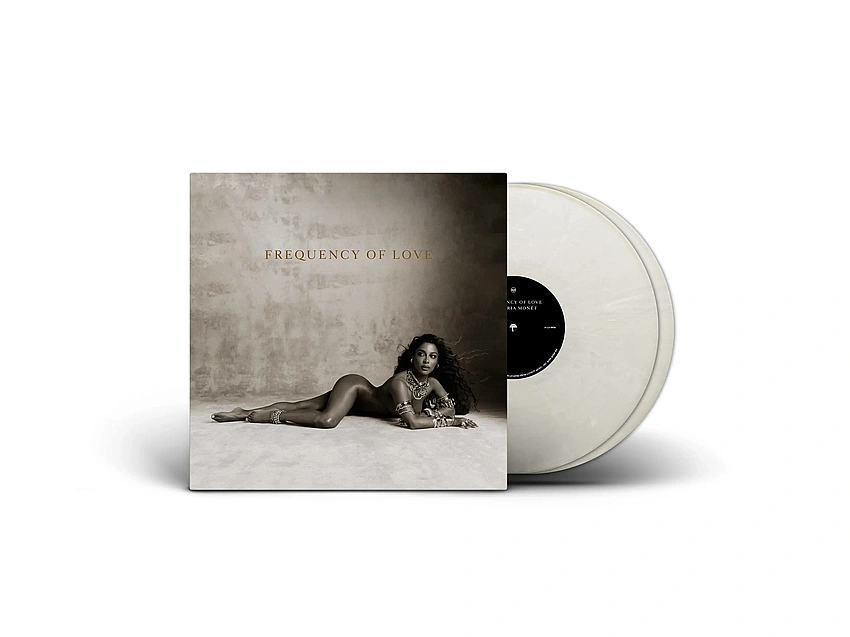
Its title takes inspiration from 528Hz, a frequency commonly associated with love and emotional healing. Monét uses this idea as the conceptual framework for her second studio album, a 22-track project that moves away from the mischievous confidence of Jaguar II towards something considerably softer. There is a clear sense of personal recalibration here, informed by her experiences with relationships, motherhood and her growing interest in wellness. The question is whether this gentler approach gives her songwriting enough room to develop.
The romance of slowing down
The most immediate change is musical. Where Jaguar II moved between funk, disco, dancehall and contemporary R&B, Frequency of Love spends much of its running time in slower, more restrained territory. Its production favours soft percussion, warm basslines, strings and carefully layered vocals. Monét sounds less interested in commanding the dance floor than in creating the atmosphere of a private conversation.
There is a certain appeal to this shift. On ‘Say Dat’, she sings about making herself emotionally available while asking the other person to do the same. ‘Let Me’ approaches romance with similar openness, replacing the games of seduction with a desire for mutual commitment. Even ‘Almost’, with its characteristic sexual wordplay, retains the humour that has always made Monét such an engaging songwriter. Her ability to move between sincerity and cheekiness remains one of the album's strongest qualities.
But the restraint can become repetitive. The tempos rarely rise above a leisurely pace, and several tracks share such similar production textures that they begin to blur together. A shorter record might have allowed its strongest ideas to register more distinctly.

Looking backwards to move forwards
Monét's relationship with R&B history is central to the record. The album draws from the romantic vocabulary of 1990s and early-2000s R&B, incorporating familiar melodic references and interpolations. ‘Almost’ plays with Brandy's ‘Almost Doesn't Count’, while ‘I Want You’ revisits the emotional territory of Dru Hill's ‘In My Bed’. These are not simply nostalgic gestures. They place Monét within a tradition of R&B songwriting that treats romantic uncertainty, physical desire and emotional vulnerability as equally worthy subjects.
The more unexpected influences are often the most rewarding. ‘That's Why I Love You’, featuring Bruno Mars, draws on Italian singer Bruno Lauzi's ‘Ritornerai’, giving the song a bolero-influenced arrangement. Its acoustic guitar and percussion offer a welcome change from the album's otherwise muted electronic palette. ‘Lose Myself’, featuring Chlöe, moves into house music, while ‘Reach Out’, with production from Kaytranada, brings some much-needed rhythmic urgency.
These moments reveal an artist with a wider musical appetite than the album's overall atmosphere sometimes allows. Monét has the instincts to move beyond contemporary R&B, although her affection for the music that came before her occasionally threatens to overshadow her own identity.

Love beyond romance
The album becomes more affecting when Monét moves away from romantic relationships altogether. Her daughter Hazel contributes vocals to ‘Come Back To You’ and ‘You Mean the World to Me’, the latter also featuring Leon Thomas. These songs introduce a different understanding of love, one grounded in motherhood, responsibility and the compromises involved in building a career.
It is moving to hear Hazel's voice within the record. It changes the emotional register of the album, giving its larger ideas about devotion a more intimate context. Love here is no longer simply about finding someone who reciprocates your feelings. It also concerns the people for whom you make sacrifices, the promises you try to keep and the life you want to build beyond yourself.
‘You Hurt Me Too’ offers another welcome shift, with fuzzed-out 808s, strings and harp creating a more dramatic sound. Its arrangement cuts through the album's prevailing softness, suggesting that heartbreak does not necessarily have to be expressed through restraint.
Finding the right frequency
I find Frequency of Love most interesting when Monét allows its different emotional and musical registers to coexist. Her songwriting remains sharp, her vocal arrangements are gorgeous, and her willingness to approach love without the usual pop cynicism is refreshing. However, the album's length and recurring production choices make it difficult to sustain that interest across all 22 tracks. Its best ideas are sometimes buried beneath an excess of similar-sounding material.
Still, there is something admirable about an artist choosing not to reproduce the formula that brought her recognition. Jaguar II established Monét as a formidable solo performer; this record finds her exploring what she wants to say beyond that success. She does not always find the most compelling way to express it, but the shift towards tenderness, motherhood and emotional openness gives the album a perspective worth hearing.
Frequency of Love may not have the immediate pull of its predecessor, but it reveals a Victoria Monét who is willing to let the music breathe, even when it occasionally takes a little too long to get somewhere.

Login to comment.